Recommended Free Tools
Four maintenance areas deserve priority because they can change how a vehicle operates: tires, brakes, steering and suspension components, and the battery with its charging system. Tires have the clearest documented links to traction, fuel use and tire life; brakes are safety-critical; and NHTSA maintenance guidance specifically includes steering, suspension and battery checks.
The correct service action depends on the vehicle. Use the tire and loading placard and owner’s manual for tire pressure, size and maintenance instructions, and use a qualified technician when a brake, steering, suspension or charging-system concern needs diagnosis.
As an Amazon Associate I earn from qualifying purchases.
The four parts and what they affect
No single source ranks these parts by danger or repair cost. They affect different aspects of vehicle operation, so the practical approach is to maintain each according to the evidence available for that system and the instructions for your specific vehicle.
| Part or system | Documented concern | Owner action supported by guidance | Important limitation |
|---|---|---|---|
| Tires | Traction, vehicle control, durability and fuel consumption | Check cold pressure monthly, inspect tread and damage, include the spare, and replace at the cited tread limit | Pressure and replacement size are vehicle-specific |
| Brakes | Safe vehicle operation | Follow the owner’s manual and obtain qualified inspection or service when needed | No universal inspection interval or repair threshold is established here |
| Steering and suspension | Systems that maintenance guidance says should be inspected | Include them in scheduled maintenance and have concerns evaluated | The cited material does not quantify ride, alignment or handling effects |
| Battery and charging system | Maintenance condition and readiness for travel | Have the battery and charging system checked when maintenance or replacement is needed | No service-life number or diagnostic threshold is established here |
NHTSA’s TireWise guidance covers tire maintenance and replacement. Its safety-defect material identifies brakes among equipment affecting safe operation under federal motor-vehicle safety standards, while its maintenance checklist includes tire pressure, steering, suspension and battery checks.
#1 Best Overall

- OE REPLACEMENT: Designed and engineered to OE specifications for fit, form, and function. OEM Equivalent Part Number: 22742382
- DURABLE MATERIAL: Manufactured using high-quality materials, these brake pads are resistant to wear and corrosion, extending their lifespan and reliability
- ENHANCED SAFETY: Bendix Premium ceramic brake pads are designed to reduce brake fade and ensure consistent braking performance, enhancing safety on the road
- VEHICLE APPLICATION: (Please see the product description for a complete list of applicable models) Cadillac Escalade 2020-2008, Escalade ESV 2020-2008, Escalade EXT 2013-2008, XTS 2015-2013, XTS 2019-2017, Chevrolet Avalanche 2013-2008, Cheyenne 2018-2007, Express 1500 2014-2009, Silverado 1500 2018-2005,
- Silverado 1500 Classic 2007, Silverado 1500 LD 2019, Suburban 2020-2014, Suburban 1500 2014-2007, Tahoe 2020-2008, GMC Savana 1500 2014-2009, Sierra 2018-2007, Sierra 1500 2018-2005, Sierra 1500 Classic 2007, Sierra 1500 Limited 2019, Yukon 2020-2008, Yukon XL 2020-2015, Yukon XL 1500 2014-2008
1. Tires: the part with the clearest day-to-day effects
Traction and control depend on the contact patches
Tires are the only parts of the vehicle that touch the road. NHTSA explains that tread provides gripping action and traction, particularly on wet or icy roads. That makes tread condition and inflation practical safety checks rather than cosmetic maintenance. Tire condition also relates to durability and fuel consumption, so neglect can create operating costs as well as a control problem.
NHTSA reports that 511 people died in tire-related crashes in 2024. The figure appears on the agency’s TireWise page and is a national crash statistic, not a prediction of the risk for a particular vehicle or driver.
Check pressure at least monthly, with the tires cold
Pressure changes as tires heat during driving, so perform the check when the tires are cold. NHTSA recommends checking all tires, including the spare, at least once a month. A basic pressure gauge kept in the vehicle makes the check possible even when a fuel station gauge is unavailable.
PC Slower Than It Used to Be?
A free scan shows the junk files, broken settings and background clutter dragging Windows down - then fixes them in one click.Free scan · Windows 10 & 11Outdated Drivers Are Slowing You Down
One free scan finds every outdated or missing driver and matches the right update for your exact hardware.Free scan · exact hardware matchRank #2

- OE REPLACEMENT: Designed and engineered to OE specifications for fit, form, and function
- DURABLE MATERIAL: Manufactured using high-quality materials, these brake pads are resistant to wear and corrosion, extending their lifespan and reliability
- ENHANCED SAFETY: Bendix Premium ceramic brake pads are designed to reduce brake fade and ensure consistent braking performance, enhancing safety on the road
- INDUSTRY-TESTED RELIABILITY: Rigorously tested to meet or exceed industry standards, these brake pads are a trusted choice for daily commute vehicles
- VEHICLE APPLICATION: Lexus HS250h 2012-2010, Pontiac Vibe 2010-2009, Scion xB 2015-2008, xD 2014-2008, Toyota Corolla 2019-2009, Matrix 2014-2009, Prius V 2017-2012, RAV4 2018-2006
- Find the vehicle’s tire and loading information placard, usually on a doorjamb or another vehicle-specific location, or consult the owner’s manual.
- Read the recommended cold pressure for the front and rear positions. Some vehicles specify different values, and a temporary spare can have its own requirement.
- Remove the valve cap and measure each tire with a pressure gauge before driving or after the vehicle has been parked long enough to cool.
- Add or release air until the pressure matches the placard or manual specification, then refit the valve cap.
- Inspect the spare as well. A spare that has lost pressure may not be ready when it is needed.
Use the vehicle’s recommended pressure, not the maximum pressure molded into the tire sidewall. The sidewall marking describes a tire limit; it is not the vehicle maker’s setting for normal operation.
Inflation affects fuel use and tire life
The TireWise page attributes several broad consumer figures to NHTSA: proper inflation can save as much as 11 cents per gallon, only 19 percent of consumers properly inflate their tires, and correct inflation can extend average tire life by 4,700 miles. These are agency figures presented on that page; the page’s publication year is not established in the available material, and the numbers should not be treated as a guarantee for every tire, route or driving style.
Know when tread and size require action
NHTSA advises replacing tires at 2/32 inch of remaining tread. That is a replacement threshold, not a target for continuing to drive until the last possible moment; damage, irregular wear or age-related concerns can require earlier professional evaluation. Inspect all tires for conditions that warrant a technician’s opinion, and do not assume that matching tread depth alone proves a tire is suitable.
Rank #3

- OE REPLACEMENT: Designed and engineered to OE specifications for fit, form, and function
- DURABLE MATERIAL: Manufactured using high-quality materials, these brake pads are resistant to wear and corrosion, extending their lifespan and reliability
- ENHANCED SAFETY: Bendix Premium ceramic brake pads are designed to reduce brake fade and ensure consistent braking performance, enhancing safety on the road
- INDUSTRY-TESTED RELIABILITY: Rigorously tested to meet or exceed industry standards, these brake pads are a trusted choice for daily commute vehicles
- VEHICLE APPLICATION: Acura EL 2005-1997, Honda Civic 2011-1996, Insight 2014-2010
Replacement tires should be the original size or another size recommended by the vehicle manufacturer. A different size can alter the specifications the vehicle was designed around, so choose only a manufacturer-approved alternative. Confirm the size, load information and other requirements in the owner’s manual or on the vehicle placard before buying.
2. Brakes: a safety-critical system
Why brakes belong on every maintenance list
NHTSA identifies brakes among the parts most affecting a vehicle’s safe operation under federal motor-vehicle safety standards. That designation supports treating brake maintenance as a safety matter, not an optional comfort upgrade.
The available federal guidance does not establish one inspection interval, a universal wear measurement or a single repair threshold that applies to every car, truck or driving pattern. Brake design, vehicle weight, usage and the manufacturer’s schedule differ. A mileage rule copied from another vehicle can therefore be misleading.
Rank #4
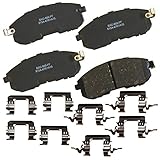
- OE REPLACEMENT: Designed and engineered to OE specifications for fit, form, and function
- DURABLE MATERIAL: Manufactured using high-quality materials, these brake pads are resistant to wear and corrosion, extending their lifespan and reliability
- ENHANCED SAFETY: Bendix Premium ceramic brake pads are designed to reduce brake fade and ensure consistent braking performance, enhancing safety on the road
- INDUSTRY-TESTED RELIABILITY: Rigorously tested to meet or exceed industry standards, these brake pads are a trusted choice for daily commute vehicles
- VEHICLE APPLICATION: INFINITI I35 2004-2002, Nissan Altima 2006-2002, Cube 2014-2009, Maxima 2003-2002, Sentra 2014-2007, Sentra 2019-2018, Versa 2012-2007, Renault Safrane 2009, Safrane 2015-2013, Suzuki SX4 2014-2013, SX4 Crossover 2012
Use the vehicle schedule and qualified diagnosis
- Open the owner’s manual and locate the scheduled-maintenance section for brake inspections or service.
- Follow the intervals and procedures specified for your model, including any severe-service schedule that applies to frequent towing, mountainous driving or other conditions your manual defines.
- If braking feels different or a dashboard warning appears, arrange an inspection by a qualified technician rather than selecting a repair from a generic mileage chart.
- Ask the technician to explain the finding, the measurement used and whether the recommendation is immediate, scheduled or optional. Keep the repair record with the vehicle’s maintenance history.
Do not infer that a quiet brake system is automatically healthy, or that noise alone identifies one particular failed part. The cited guidance supports professional inspection when service is needed, but it does not provide a symptom-to-repair diagnosis.
Independent reader supportYour contribution helps us test, update, and keep practical guides available for everyone.3. Steering and suspension: inspection categories that support control
What the maintenance guidance actually establishes
NHTSA’s maintenance materials specifically list steering components and suspension for inspection. That makes them legitimate parts of a maintenance plan even though the available text does not quantify their separate effects on ride quality, alignment or handling.
What’s actually slowing this PC down?
Pick the symptom - the matching free tool is one click away.
Because these systems connect the driver’s inputs and the vehicle’s movement, a technician should evaluate them when a scheduled inspection calls for it or when the vehicle develops a driving concern. The correct inspection scope depends on the vehicle’s design and the manufacturer’s instructions.
Best Value

- OE REPLACEMENT: Designed and engineered to OE specifications for fit, form, and function
- ADVANCED FRICTION MATERIALS: These brake pads feature advanced friction materials that provide superior stopping power, even under high temperatures and heavy loads
- ENHANCED SAFETY: Bendix Priority 1 Brake Pads are designed to reduce brake fade and ensure consistent braking performance, enhancing safety on the road
- INDUSTRY-TESTED RELIABILITY: Rigorously tested to meet or exceed industry standards, these brake pads are a trusted choice for daily commute vehicles
- VEHICLE APPLICATION: Lexus ES300h 2018-2013, ES350 2018-2007, HS250h 2012-2010, Pontiac Vibe 2010-2009, Toyota Avalon 2018-2008, Camry 2024-2007, Matrix 2013-2009, RAV4 2018-2006
Build them into routine service
- Check the owner’s manual for the maintenance schedule and any inspection items covering steering or suspension.
- Tell the technician about any change you have noticed in how the vehicle responds, tracks or feels. Describe when it occurs, such as during turning, braking or over uneven pavement, without trying to diagnose the cause yourself.
- Request an inspection before replacing parts. Steering and suspension concerns can involve different components, and the available guidance does not support choosing a repair from a general online symptom list.
- After service, confirm which parts were inspected, what condition was found and whether a follow-up check is required.
There is no evidence here for a universal replacement interval, a parts ranking or a claim that one steering or suspension component is always the most important. Vehicle-specific maintenance information is the appropriate authority.
4. Battery and charging system: readiness for starting and travel
Battery checks are part of maintenance
NHTSA’s vehicle-maintenance guidance includes battery checks. Its road-trip guidance advises having a mechanic check the battery and charging system for repairs or replacement when needed. This supports treating the battery and charging system as a maintenance category, especially before a long trip or when the vehicle’s service schedule calls for attention.
A practical check-and-service process
- Consult the owner’s manual for the battery location, inspection instructions and any warnings about working around the electrical system.
- Include the battery in scheduled maintenance rather than waiting for a no-start event to reveal a problem.
- Before a long journey, ask a mechanic to check both battery condition and the charging system, because a battery check alone does not establish that the system supplying it is operating correctly.
- When a technician recommends repair or replacement, ask whether the finding concerns the battery, the charging system or both, and keep the result in your service records.
The cited material does not provide a universal battery lifespan, a voltage number or a consumer diagnostic procedure. Avoid treating an age-based rule or a single test value as applicable to every vehicle.
Quick wins for a faster PC:
Scan for outdated or missing drivers - takes under a minuteDriver Scan →Repair Windows errors before they cause bigger problemsFix Now →Fix the driver behind crashes, sound loss and screen glitchesFind Drivers →How to prioritize the four checks
Use this order when you are preparing a vehicle for normal driving or a trip. It is a maintenance workflow, not a ranking of which failure is most dangerous or expensive.
- Start with tires. Check cold pressure, tread and visible condition on all road tires and the spare. Use the placard or manual for pressure and size.
- Confirm brake maintenance. Review the owner’s manual schedule and arrange qualified service if the vehicle has a braking concern or a warning indicator.
- Include steering and suspension. Make sure scheduled inspections have not been skipped, and describe any change in vehicle response to the technician.
- Check battery readiness. Before extended travel, request a battery and charging-system check when maintenance or replacement may be due.
Keep the vehicle-specific information together
Store the owner’s manual, maintenance records and tire information where you can access them. The manual and placard provide details that a generic checklist cannot: pressure by axle, approved tire sizes, service intervals and inspection procedures. Record the date of each check, the measured tire pressures and any professional findings. This makes it easier to spot a missed service and gives the next technician useful context.
NHTSA’s general maintenance checklist is available in its Maintain Your Vehicle guide. For the federal safety-standard context around safety-critical equipment, see Motor Vehicle Safety Defects and Recalls. Neither replaces the instructions written for your particular vehicle.
Quick Recap
Product prices and availability are accurate as of the date/time indicated and are subject to change. Any price and availability information displayed on Amazon at the time of purchase will apply.




