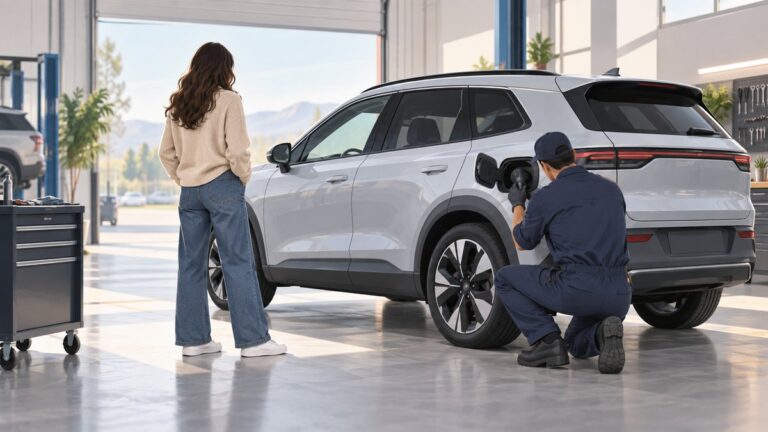
Short answer: For an older, budget-priced Ford Escape, start with 2010–2012, preferably with the conventional 3.0-liter V6 if its lower fuel economy and your local emissions rules are acceptable. For a newer Escape, investigate 2023–2025 first, but do not skip the VIN-specific recall search or a professional inspection.
The years that deserve the most caution are 2008 because of unusually high owner-complaint volume, 2013–2014 because of several important safety and engine-related campaigns, and 2020–2022 because the 2020 redesign introduced new drivetrains and some vehicles were affected by engine and rearview-camera recalls. A model-year ranking is only a screening tool: the individual Escape’s engine, drivetrain, maintenance history, rust, accident history, mileage, and open recalls matter more than the badge on the title.

As an Amazon Associate I earn from qualifying purchases.
Ford Escape model years at a glance
| Shopping priority | Years to screen first | Configuration or condition to seek | Main qualification |
|---|---|---|---|
| Older, inexpensive SUV | 2010–2012 | Well-maintained example; 3.0-liter V6 is the preferred conventional-powertrain target | Inspect carefully for rust, leaks, cooling problems, suspension wear, and transmission issues |
| Newer Escape | 2023–2025 | Powertrain that fits your needs, with completed recalls and complete service records | These are not guaranteed trouble-free; check the VIN and inspect all electronic safety systems |
| Years requiring extra investigation | 2008, 2013–2014, 2017, 2020–2022 | Only buy when the price, records, VIN history, and inspection justify the risk | Complaint patterns and recall exposure vary by engine, trim, build date, and VIN |
There is no authoritative reliability table that can prove one Escape year is best for every climate, engine, mileage range, and owner. Consumer Reports provides survey-based reliability context, CarComplaints provides owner-reported complaint patterns, NHTSA and Ford are the key sources for safety recalls and remedies, and IIHS provides crash-test information. Those sources answer different questions and should not be treated as interchangeable.
The best older Ford Escape years: 2010–2012
The 2010–2012 Escapes are the most defensible older-generation shopping zone for buyers who want a relatively simple and inexpensive compact SUV. They are mature versions of the second-generation design, and they avoid the concentrated 2013 1.6-liter EcoBoost fire campaign that makes some later Escapes particularly difficult to recommend.
#1 Best Overall

- Detailed repair and maintenance coverage trusted by professional technicians and DIYers for decades.
- Clear step-by-step instructions supported by wiring diagrams, diagnostic charts, and technical illustrations.
- Covers routine maintenance through advanced repairs, making it the go-to resource for keeping your vehicle running reliably.
The preferred target is generally the 3.0-liter V6 when the buyer values a conventional powertrain and is willing to accept worse fuel economy. That is a practical configuration preference, not a formal reliability ranking. A four-cylinder or hybrid Escape from these years should not be rejected automatically. A clean, documented four-cylinder can be a better purchase than a neglected V6, and hybrid battery condition and service history matter more than the word “hybrid” on the vehicle.
What to inspect on a 2010–2012 Escape
- Rust: Examine the subframes, rocker panels, suspension mounting points, brake and fuel lines, and the underside of the doors and liftgate. Rust can make an otherwise inexpensive Escape uneconomical to repair.
- Cooling system: Look for low coolant, dried residue, overheating history, radiator or hose replacement, and a cooling fan that does not operate correctly.
- Oil leaks: Inspect around the engine, valve-cover area, oil pan, transmission, and beneath the vehicle after the test drive.
- Transmission behavior: Hesitation, harsh engagement, slipping, delayed reverse, or unexplained shuddering deserves diagnosis before purchase.
- Suspension and steering: Listen for clunks over bumps and check for uneven tire wear, loose steering, worn bushings, and failing wheel bearings.
- Maintenance evidence: Receipts for fluid changes, brakes, cooling-system work, suspension repairs, and major service are worth more than a seller’s verbal assurance.
If you plan to perform basic maintenance yourself, a Ford Escape repair manual can be useful, but select the edition that matches the exact model year, engine, drivetrain, and market. A manual for a four-cylinder Escape is not automatically appropriate for a V6 or hybrid.
The best newer Ford Escape years: 2023–2025
For someone shopping newer used or nearly new, 2023–2025 is the better starting point within the current generation. The 2020 Escape was a major redesign with new powertrains, while the 2023 model received refreshed styling, a revised trim structure, Sync 4, and an available larger infotainment screen. Changes to the 2024 and 2025 models were comparatively limited, which makes them less of a first-year redesign gamble than 2020.
The Tool Desk
Outbyte PC Repair FREERepair Windows errors before they cause bigger problemsFix Now →Outbyte Driver Updater FREEFix the driver behind crashes, sound loss and screen glitchesFind Drivers →That does not make every 2023–2025 Escape reliable or free of recalls. Consumer Reports characterizes the 2024 Escape as less reliable than other cars from its model year and lists 10 NHTSA recalls on the cited vehicle page. Its 2022 page characterizes that model as less reliable than same-year peers and lists 20 recalls. Recall totals can change as campaigns are added or records are updated, so those numbers are warning signals rather than permanent reliability rankings.
2025 Escape powertrains and fuel-economy trade-offs
Ford’s 2025 technical specifications list the following broad powertrain choices:
- 1.5-liter EcoBoost: Available drivetrain combinations vary by configuration.
- 2.0-liter EcoBoost: The more powerful gasoline choice, with all-wheel-drive availability depending on trim and specification.
- 2.5-liter hybrid: Available with front- or all-wheel drive. Ford lists 39 mpg combined for both configurations in its 2025 specifications.
- 2.5-liter plug-in hybrid: Ford lists 101 combined MPGe and an EPA-estimated 37 miles of electric range.
Those fuel-economy and range figures are manufacturer-published specifications, not evidence of long-term reliability. A hybrid or plug-in hybrid can be attractive for fuel savings, but the buyer should confirm battery, charging, warranty, and recall details for the specific VIN. The plug-in hybrid makes the most sense when the owner can charge regularly and has a use case that takes advantage of its electric range.
Ford Escape years that deserve the most caution
2008: high complaint volume, but not an automatic rejection
CarComplaints identifies the 2008 Escape as having the most overall complaints in its database. The same source rates 2014 worse after considering factors such as repair cost and the mileage at which problems are reported. This is owner-complaint data, not a controlled failure-rate study. Older vehicles have also had more years to accumulate complaints.
Windows Errors? Fix Them Before They Spread
Repair common Windows errors and clear accumulated junk for a smoother, more stable PC - no reinstall needed.Free scan · no reinstallOutdated Drivers Are Slowing You Down
One free scan finds every outdated or missing driver and matches the right update for your exact hardware.Free scan · exact hardware matchA 2008 Escape can still be worth considering if it has unusually strong maintenance records, limited corrosion, and a clean inspection. Do not treat the complaint count as proof that every 2008 vehicle is defective. However, compare it against a similar 2010–2012 vehicle before accepting a large repair-risk discount.
Rank #2

- Step-by-step procedures written from a complete teardown and rebuild, giving you the confidence to tackle repairs at any skill level.
- Over 700+ clear photos and diagrams that simplify complex systems, helping you complete jobs faster and with fewer mistakes.
- Comprehensive troubleshooting and fault-finding guides to quickly diagnose problems and reduce costly downtime.
2005–2007: additional safety caution
Consumer Reports notes the rollover-test concern associated with 2005–2007 Escapes. Electronic stability control became standard on non-hybrid Escapes beginning with the 2008 model year, addressing an important part of the safety concern. That makes 2008 and later preferable from this specific safety-equipment perspective, although 2008 has its own complaint-volume warning.
For a 2005–2007 vehicle, verify the actual safety equipment, inspect the tires and suspension closely, and be especially skeptical of a low-priced example with rust, accident damage, or incomplete records.
2013–2014: the most important avoid-or-investigate range
The 2013 Escape is particularly concerning when equipped with the 1.6-liter EcoBoost. Ford’s 13S12 recall documents describe localized cylinder-head overheating that could lead to an oil leak and fire. NHTSA recall material identifies the affected 2013 1.6-liter vehicles. The VIN—not merely the year or engine badge—determines whether a particular vehicle was included and whether the remedy was completed.
Free tools Windows power users keep installed
One-click scans. No signup required.
The 2013–2014 period also includes other important safety campaigns. Ford and NHTSA documentation covers shifter-cable-bushing failures that could prevent the transmission from remaining in the selected gear. Airbag-related campaigns also affected vehicles from these model years.
A 2013 or 2014 Escape is not automatically disqualified. It should normally be purchased only after the VIN proves applicable recalls were completed, an independent mechanic confirms that the engine and cooling system are sound, and the price compensates for the added risk. A cold-start inspection, cooling-system check, scan-tool diagnosis, and underbody inspection are especially important.
2017: investigate brake and engine-related history
CarComplaints lists 2017 among the Escape years with the most brake complaints. That is a screening signal, not a quantified failure rate. Before buying, confirm that the brake pedal is firm, the vehicle stops straight, there is no vibration or grinding, and the rotors, pads, calipers, and brake lines are in acceptable condition.
Check the VIN for applicable recalls and campaigns on 2.0-liter vehicles, including engine-block-heater-related work where applicable. Also investigate any history of overheating, warning lights, coolant loss, rough running, or engine repairs.
Rank #3

- Step-by-step procedures written from a complete teardown and rebuild, giving you the confidence to tackle repairs at any skill level.
- Over 700+ clear photos and diagrams that simplify complex systems, helping you complete jobs faster and with fewer mistakes.
- Comprehensive troubleshooting and fault-finding guides to quickly diagnose problems and reduce costly downtime.
2020–2022: first-year redesign and recall-heavy caution
The 2020 Escape began a major redesign and introduced new powertrains. Consumer Reports cautions that extensive redesigns can carry elevated reliability risk because the manufacturer has changed more engineering systems at once. That does not mean every 2020 is a bad vehicle, but it is a reason to demand stronger documentation than you might for a mature design.
Ford and NHTSA recall 23S27 covers certain 2020–2023 Escape hybrid and plug-in-hybrid vehicles using the 2.5-liter engine. Ford states that an engine failure could release oil and fuel vapor near hot engine or exhaust components, creating an engine-compartment-fire risk. Depending on the vehicle, the remedy can include a software update, inspection, or engine replacement. Do not assume that a hybrid recall is resolved merely because the seller says the vehicle was serviced; verify the VIN and obtain repair documentation.
Certain 2020–2022 Escapes were also included in rearview-camera campaigns. The camera image could be incorrectly displayed, delayed, frozen, or missing. Test the camera every time the vehicle is shifted into reverse and confirm that the applicable campaign has been completed.
How to evaluate a specific Ford Escape before buying
1. Run the VIN through both Ford and NHTSA
Start with Ford’s recall search and NHTSA’s VIN recall lookup. Search the actual VIN, not a generic model-year recall list. Recall coverage can vary by build date, engine, trim, drivetrain, and VIN. Ask the seller or dealer for the repair order showing that completed campaigns were actually performed.
Pay particular attention to the 2013 1.6-liter EcoBoost fire campaign, 2013–2014 shifter-cable and airbag campaigns, 2017 engine-block-heater-related campaigns where applicable, 2020–2023 2.5-liter hybrid and plug-in-hybrid engine campaign 23S27, and 2020–2022 rearview-camera campaigns.
2. Check the vehicle’s history separately from its recall status
A recall lookup does not replace accident, title, mileage, ownership, or service-history research. A vehicle history report can add that context, but it cannot prove that a car is mechanically sound. Compare the report with the odometer, service invoices, inspection stickers, and the seller’s description. A clean history report is not a substitute for examining the vehicle for previous collision repairs or flood damage.
3. Inspect the engine cold
Arrange to see the vehicle before it has been warmed up. A warm engine can hide hard starting, smoke, rough running, misfires, or cooling-system symptoms. Watch the startup, idle, exhaust, temperature gauge, warning lamps, and engine sounds. Check for coolant residue, oil contamination, unexplained fluid loss, and evidence of overheating.
Rank #4
Ask for permission to use an OBD2 scanner for Ford Escape before purchase. It may reveal stored or pending diagnostic codes that do not appear during a short drive. It is not a substitute for a mechanic, and the scanner must support the vehicle’s year and diagnostic systems. A recently cleared code history can also be a warning sign.
4. Test the drivetrain and brakes under varied conditions
- Shift from park into drive and reverse while listening for abnormal delay or impact.
- Accelerate gently and firmly to check for hesitation, misfire, shudder, or transmission slip.
- Drive over uneven pavement to expose suspension and steering noises.
- Brake from several speeds on a safe road and check for vibration, pulling, noise, or a soft pedal.
- On an AWD model, confirm that the system has no warning message and ask for evidence of appropriate maintenance.
- On a hybrid or plug-in hybrid, check warning messages, charging operation where applicable, battery-related fault codes, and recall documentation.
5. Test every safety and convenience system
Confirm that the rearview camera appears promptly and clearly, the instrument cluster has no unexplained warning lamps, and backup sensors, blind-spot alerts, lane-assistance features, climate controls, windows, locks, lights, and infotainment all operate correctly. Electronic faults can be expensive to diagnose, and a short test drive may not expose an intermittent display or camera problem.
6. Pay for an independent inspection
The most useful final step is an Ford Escape pre-purchase inspection by an independent mechanic who can place the vehicle on a lift, scan its systems, evaluate its cooling and transmission condition, and identify structural rust or accident repairs. This is particularly important for 2008, 2013–2014, 2017, and 2020–2022 vehicles, but it is worthwhile for any used Escape. The inspection cost is small compared with an engine, transmission, hybrid-system, or rust-related repair.
Independent reader supportYour contribution helps us test, update, and keep practical guides available for everyone.What should make you walk away?
Reject or pause the purchase when the seller will not provide the VIN, refuses an independent inspection, starts the vehicle before you arrive despite an agreed cold start, or cannot explain missing maintenance records. Also be cautious when you find:
- an open safety recall that cannot be confirmed as repairable or scheduled;
- coolant loss, overheating evidence, oil mixed with coolant, or repeated misfire codes;
- transmission hesitation, slipping, delayed engagement, or a gear-selection problem;
- severe underbody or structural rust;
- airbag, ABS, traction-control, powertrain, or hybrid-system warning lamps;
- a rearview camera or display that is frozen, delayed, or missing;
- mismatched paint, poorly repaired collision damage, flood indicators, or inconsistent mileage;
- a price that does not leave room for age-related repairs.
A completed recall is not the same as a clean bill of health. Recalls address defined safety defects or risks; they do not cover ordinary wear, neglected fluids, corrosion, prior accident damage, or every possible engine and transmission failure.
Recommended Free Tools
Ford Escape safety context
The 2020–2026 Escape has good crashworthiness results in several IIHS tests, but the updated side test is rated Marginal. IIHS also reports that the updated moderate-overlap rating applies to 2022–2026 vehicles built after May 2022, with rear-seat improvements tied to the build date. Therefore, do not generalize one IIHS result to every trim, model year, or build configuration. Check the specific vehicle’s test details through IIHS ratings if crash protection is a major buying priority.
For older Escapes, the 2005–2007 rollover-test concern and the absence of standard electronic stability control on non-hybrid models are reasons to favor 2008 and later when the rest of the vehicle is equal. Safety equipment and crash performance are only part of the purchase decision, however; a newer vehicle with an open recall or serious structural damage is not automatically safer than a properly maintained older vehicle.
How to choose between two Escape listings
- Eliminate paperwork problems first: remove vehicles with an unclear VIN, title issue, unexplained mileage, or inaccessible service records.
- Eliminate safety and structural problems next: check recalls, airbag status, rust, accident repairs, and warning lamps.
- Compare powertrains honestly: a 3.0-liter V6 may suit a buyer seeking a conventional older drivetrain, while a hybrid may suit a buyer prioritizing fuel economy. Neither choice overcomes poor maintenance.
- Use condition to break close calls: choose the Escape with documented fluid service, lower corrosion, better tires and brakes, and a clean inspection—even if it is not the “best” model year.
- Price the repairs before making an offer: suspension bushings, wheel bearings, brakes, cooling components, HVAC repairs, and rust work are normal possibilities on a high-mileage Escape.
Final buying verdict
The safest way to use a Ford Escape year ranking is as a filter, not as a buying decision. Screen 2010–2012 first for an older budget Escape, with the 3.0-liter V6 as the preferred conventional configuration when fuel economy is acceptable. Screen 2023–2025 first for a newer vehicle, while remembering that the 2020 redesign and later recall history make VIN verification essential.
Best Value
Approach 2008, 2013–2014, 2017, and 2020–2022 with extra investigation rather than automatic condemnation. The right individual Escape is the one with completed VIN-specific recalls, a clean history, strong maintenance records, acceptable rust, no unexplained warning signs, and an independent inspection that supports the price.
Do these 3 things before closing this tab:
1Clear out junk files and repair common Windows errors2Fix the driver behind crashes, sound loss and screen glitches3Repair Windows errors before they cause bigger problemsFrequently Asked Questions
Is the 2008 Ford Escape the worst year to buy?
It is one of the years that deserves caution because CarComplaints records the most overall complaints for 2008. That database is based on owner reports rather than a controlled failure-rate study, and older vehicles have had more time to accumulate complaints. A well-maintained, rust-free 2008 can still be worth considering, but a comparable 2010–2012 Escape is usually the better place to start.
Should I avoid every 2013 or 2014 Ford Escape?
No, but these years require unusually careful screening. The 2013 1.6-liter EcoBoost was involved in a cylinder-head overheating and fire-risk recall, and 2013–2014 Escapes were also affected by shifter-cable and airbag-related campaigns. Buy one only after a VIN check confirms applicable recalls were completed, an independent mechanic approves the vehicle, and the price reflects the added risk.
Which Ford Escape engine is best for an older used purchase?
For a 2010–2012 Escape, the 3.0-liter V6 is the preferred conventional-powertrain target for buyers who prioritize a familiar drivetrain over fuel economy. A four-cylinder or hybrid can still be a good purchase if its condition and records are better. Engine choice should be evaluated together with rust, transmission condition, maintenance, and inspection results.
Are 2023–2025 Ford Escapes reliable?
They are the newer Escape years worth investigating first, particularly because 2023 brought a refresh and 2024–2025 changes were comparatively limited. They are not automatically trouble-free: recall counts and reliability assessments vary, and some earlier current-generation Escapes had engine or camera campaigns. Run the VIN through Ford and NHTSA and have the specific vehicle inspected.
Quick wins for a faster PC:
Fix the driver behind crashes, sound loss and screen glitchesFind Drivers →Repair Windows errors before they cause bigger problemsFix Now →The Bottom Line
Bottom line: Start with 2010–2012 for an older Escape and 2023–2025 for a newer one. Treat 2008, 2013–2014, 2017, and 2020–2022 as investigate-before-buying years. The VIN-specific recall record and independent inspection matter more than any generic model-year ranking.
Quick Recap
Product prices and availability are accurate as of the date/time indicated and are subject to change. Any price and availability information displayed on Amazon at the time of purchase will apply.