Windows Errors? Fix Them Before They Spread
Repair common Windows errors and clear accumulated junk for a smoother, more stable PC - no reinstall needed.Free scan · no reinstallCrashes, No Sound, or Screen Glitches?
Random freezes, missing sound and display glitches usually trace back to one bad driver. Find and replace yours safely.Free scan · under a minuteThe Kawasaki Ninja H2R is the most powerful Ninja, with Kawasaki claiming 322 hp at 14,000 rpm for 2026. It is also a closed-course-only hypersport, not a street-legal motorcycle. Among road-legal models, the supercharged Ninja H2 and H2 Carbon lead the current U.S. lineup with a claimed 240 hp at 11,500 rpm.
This ranking covers the current U.S.-market Ninja model families across Kawasaki’s sport, supersport, hypersport, and sport-touring categories. It uses Kawasaki’s published maximum-horsepower figures, not rear-wheel dyno results or independent acceleration tests.
As an Amazon Associate I earn from qualifying purchases.
The Kawasaki Ninja power ranking
The table ranks each current U.S. Ninja family by Kawasaki’s claimed maximum horsepower. The model year is included because Kawasaki’s figures can change between years and may differ between markets. ABS, KRT, anniversary, carbon-fiber, and paint editions are grouped together when they use the same engine output.
Free tools Windows power users keep installed
One-click scans. No signup required.
| Rank | Model | Model year | Claimed maximum power | Power peak | Engine character | Road status |
|---|---|---|---|---|---|---|
| 1 | Kawasaki Ninja H2R ABS | 2026 | 322 hp | 14,000 rpm | Supercharged inline-four hypersport | Closed-course only |
| 2 | Kawasaki Ninja H2 / H2 Carbon ABS | 2026 | 240 hp | 11,500 rpm | Supercharged 998cc inline-four | Street-legal |
| 3 | Kawasaki Ninja H2 SX SE ABS | 2026 | 207 hp | 10,000 rpm | Supercharged sport-touring inline-four | Street-legal |
| 4 | Kawasaki Ninja ZX-14R ABS | 2025 | 197 hp | 10,000 rpm | Naturally aspirated inline-four | Street-legal |
| 5 | Kawasaki Ninja ZX-10R | 2026 | 190 hp | 11,500 rpm | 998cc inline-four supersport | Street-legal |
| 6 | Kawasaki Ninja 1100SX ABS | 2026 | 134 hp | 9,000 rpm | 1,099cc inline-four sport-tourer | Street-legal |
| 7 | Kawasaki Ninja ZX-6R | 2026 | 127 hp | 13,000 rpm | 636cc inline-four supersport | Street-legal |
| 8 | Kawasaki Ninja 650 | 2026 | 67 hp | 8,000 rpm | Parallel-twin sportbike | Street-legal |
| 9 | Kawasaki Ninja ZX-4RR ABS | 2026 | 56 hp | 11,500 rpm | 399cc inline-four supersport | Street-legal |
| 10 | Kawasaki Ninja 500 | 2026 | 51 hp | 10,000 rpm | 451cc parallel-twin sportbike | Street-legal |
| 11 | Kawasaki Ninja 300 ABS | 2026 | 38.9 hp | 11,000 rpm | Small-displacement parallel twin | Street-legal |
Method note: These are Kawasaki-published maximum-horsepower figures as researched on August 11, 2026. They are not rear-wheel horsepower measurements. Specifications and availability can change, and international versions may have different ratings.
#1 Best Overall

- 【DOT Certified & High-Impact Protection】 This full face motorcycle helmet meets or exceeds DOT FMVSS-218 standards, ensuring professional-grade safety. Built with a rugged ABS shell and energy-absorbing EPS, these motorcycle helmets dot approved provide ultimate defense for street bikes, cruisers, and sport bikes
- 【Optimized Airflow for All-Weather Riding】 Experience superior ventilation with 4 strategically placed air intakes and exhaust vents. This full face helmet design minimizes wind resistance and fogging, keeping you cool during summer rides and providing a reliable full face helmet adult option for rainy or cold weather
- 【Quick-Release Dual Visor System】 Adapt to any light condition with ease. Our full face helmet motorcycle features a tool-free quick-release system. Each order includes a pre-installed tinted shield plus a bonus clear visor, making these full face motorcycle helmets for men and women versatile for both bright days and night riding
- 【Washable Lining & Comfort Fit】 Maintain freshness on every journey with our fully removable and machine-washable interior. The moisture-wicking sponge padding makes these motorcycle helmets for adults incredibly comfortable for long-distance trips, ensuring a snug fit for these full face motorcycle helmets dot certified
- 【Complete Bundle & Perfect Sizing】 We include a premium carrying bag for easy storage and scratch protection. Whether you are searching for motorcycle helmets for women or men, TRIANGLE offers 4 sizes (S-XL) to ensure a secure fit. Please measure your head circumference to find the perfect full face motorcycle helmet for women or men
What each Kawasaki Ninja is built to do
1. Ninja H2R ABS: 322 hp
The Ninja H2R wins the numerical contest by a wide margin. Its supercharged engine produces Kawasaki’s published 322-hp maximum at 14,000 rpm, making it the most powerful Ninja in this comparison.
The important qualification is that the H2R is intended for closed-course use. It should not be treated as a normal commuter, touring bike, or street-legal purchase. Its place at the top of this list answers the question of which Ninja has the highest claimed output, but not which Ninja is the most practical or accessible.
2. Ninja H2 and H2 Carbon ABS: 240 hp
The street-legal Ninja H2 and H2 Carbon are the strongest road-going Ninjas in the researched U.S. lineup. Kawasaki claims 240 hp at 11,500 rpm from the supercharged 998cc inline-four.
Quick wins for a faster PC:
Repair Windows errors before they cause bigger problemsFix Now →Fix the driver behind crashes, sound loss and screen glitchesFind Drivers →The H2 Carbon is a trim variation rather than a separate power category for this ranking. Its carbon-fiber bodywork does not give it a different engine-output position, so both models share second place.
3. Ninja H2 SX SE ABS: 207 hp
The Ninja H2 SX SE places third with a claimed 207 hp at 10,000 rpm. It uses supercharging to deliver more peak power than the naturally aspirated ZX-14R, even though its mission is sport touring rather than maximum track aggression.
That mission is visible in the equipment: the H2 SX SE combines its forced-induction engine with electronic cruise control, advanced rider-assistance features, electronic suspension, and touring-oriented equipment. It is best understood as a long-distance hypersport—a fast motorcycle designed to cover distance—rather than a stripped-down track machine.
4. Ninja ZX-14R ABS: 197 hp
The ZX-14R is the highest-output naturally aspirated Ninja in this comparison, with Kawasaki claiming 197 hp at 10,000 rpm. That puts it below the supercharged H2 variants but above the ZX-10R on the manufacturer’s peak-power scale.
The latest U.S. specification located for the ZX-14R is model year 2025. That does not establish a 2026 U.S. redesign or confirm continued availability beyond the researched specification, so buyers should check Kawasaki’s current model listing and local inventory before treating it as a current-year purchase.
Rank #2

- Ultra light weight durable aerodynamic thermoplastic alloy shell;
- 3-level top ventilation control and 5-position ventilation channel;
- Heavily cushioned and comfortable interior, Removable and washable;
- Beautiful glossy UV protective finish;
- Aerodynamic rear venturi-effect exhaust spoiler; DOT Approved; Meets Federal Motor Vehicle Safety Standard 218 (FMVSS 218);
5. Ninja ZX-10R: 190 hp
The 2026 Ninja ZX-10R produces a published 190 hp at 11,500 rpm. Its lower peak number than the ZX-14R does not make it a less serious performance motorcycle. The ZX-10R is Kawasaki’s liter-class supersport, with a more overtly race-oriented chassis and electronics package.
Its equipment includes electronic rider aids, launch control, cornering management, and quick shifting. Those features, along with chassis setup, aerodynamics, gearing, tire choice, and rider skill, can matter more on a circuit than a seven-horsepower difference in a manufacturer specification.
6. Ninja 1100SX ABS: 134 hp
The Ninja 1100SX makes a claimed 134 hp at 9,000 rpm from its 1,099cc inline-four. It ranks in the middle of this list because it offers substantially more output than the middleweight Ninjas while remaining much more road-focused than the ZX-series supersports.
Do these 3 things before closing this tab:
1Scan for outdated or missing drivers - takes under a minute2Repair Windows errors before they cause bigger problems3Fix the driver behind crashes, sound loss and screen glitchesCruise control, integrated rider aids, and sport-touring equipment are central to the 1100SX’s appeal. It is a sensible choice for riders who want strong highway and back-road performance without accepting the riding position, maintenance demands, and track-focused compromises of a ZX-10R or ZX-6R.
7. Ninja ZX-6R: 127 hp
The 2026 Ninja ZX-6R claims 127 hp at 13,000 rpm and 52.1 lb-ft of torque. Its 636cc inline-four revs much higher than the parallel-twin engines used in the Ninja 650, Ninja 500, and Ninja 300.
The ZX-6R is a true middleweight supersport rather than simply a more powerful version of the Ninja 650. Its high-rpm engine, supersport chassis, and track-oriented layout make it a different type of motorcycle, even though it has less peak horsepower than the larger 1100SX.
8. Ninja 650: 67 hp
The 2026 Ninja 650 claims 67 hp at 8,000 rpm. Its parallel-twin engine emphasizes usable road performance and approachable torque delivery instead of the high-rpm character of Kawasaki’s four-cylinder ZX models.
That makes the Ninja 650 a road-friendly sportbike, not a lower-powered supersport. It has enough output for everyday riding, highway use, and spirited cornering while generally asking less of the rider than a ZX-6R or ZX-10R.
Rank #3

- High Quality: The helmet shell is made of carbon fiber material, which is stronger and safer, and has a high-density EPS buffer layer. After a professional crash test, it perfectly better withstand pressure.
- DOT Approved: DOT Safety Standards. Carbon fiber Shell with Aerodynamic Design prevents buffeting and lifting. High density fully vents EPS liner to greatly absorb impact.
- Lightweight: Carbon fiber ultra-light helmet shell, only weighs about 1150g, mesh inner lining is comfortable, breathable and not stuffy, which can better reduce the stress fatigue of long-distance motorcycles or urban cyclists
- Comfy Wearing: Comfortable riding experience, adequate ventilation and fresh air during hot weather, liner with thick foam for softness and comfort.
- More Suitable: suitable for motorcycle, biker, scooter, skateboarding, cycling, pilot, touring helmet, Suitable for adults, teenagers, men and women.
9. Ninja ZX-4RR ABS: 56 hp
The ZX-4RR claims 56 hp at 11,500 rpm from a 399cc inline-four. It ranks below the Ninja 650 on peak horsepower, but that ranking misses the reason enthusiasts buy the ZX-4RR.
The small four-cylinder engine, high-revving power delivery, quick shifter, traction control, and supersport hardware give the ZX-4RR a distinctive character. It is a performance-package and experience choice, not a horsepower winner. A rider who values engine sound, revs, and track-oriented behavior may prefer it to a more powerful but less exotic parallel-twin motorcycle.
10. Ninja 500: 51 hp
The 2026 Ninja 500 produces a claimed 51 hp at 10,000 rpm and 31.7 lb-ft of torque. Its 451cc parallel twin places it below the ZX-4RR and Ninja 650 by maximum output.
The Tool Desk
Outbyte PC Repair FREEClear out junk files and repair common Windows errorsFree Scan →Outbyte Driver Updater FREEScan for outdated or missing drivers - takes under a minuteDriver Scan →For a newer rider, however, peak horsepower is only one buying factor. The Ninja 500’s manageable size, approachable performance, and everyday usability can make it a better fit than a more powerful supersport. It is designed to be ridden frequently, not merely admired for its specification sheet.
11. Ninja 300 ABS: 38.9 hp
The 2026 Ninja 300 ABS is the lowest-output model in this current U.S. comparison, with Kawasaki listing 38.9 hp at 11,000 rpm. Its small parallel-twin engine and fully faired bodywork retain the core Ninja sportbike formula in a compact package.
The Ninja 300 remains relevant for riders who want a lightweight, small-displacement motorcycle or who are shopping the used market for an approachable fully faired bike. Its lower output is a limitation for outright acceleration, but it can also make the bike easier to learn on and less intimidating in daily traffic.
Why the Ninja 650 outranks the ZX-4RR
The ranking is based strictly on claimed peak horsepower, so the Ninja 650’s 67 hp puts it above the ZX-4RR’s 56 hp and the Ninja 500’s 51 hp. That does not mean the 650 is automatically faster in every situation or more exciting to every rider.
What’s actually slowing this PC down?
Pick the symptom - the matching free tool is one click away.
The ZX-4RR uses a 399cc inline-four that reaches its power peak at 11,500 rpm, while the Ninja 650 uses a lower-revving parallel twin. The ZX-4RR’s engine layout, rev range, quick shifter, traction control, and supersport hardware give it a sharper and more specialized personality. The 650’s advantage is its broader road usability and stronger position as an everyday motorcycle.
Rank #4

- FMVSS-218 & DOT Certified – Ensuring Top-Tier Safety with Rigorous Quality Control on Every Helmet Batch.
- Available in S, M, L, XL – Fits Head Circumference 21.3" - 24" (54-61 cm), Ensuring Comfort and a Secure Fit.
- Durable Construction & Comfort – Reinforced ABS Shell, Adjustable Chin Strap, Removable Liner for Easy Cleaning.
- Aerodynamic Shape – Reduces Wind Drag and Noise, Adjustable Sun Visor for Superior Sun Protection and Visibility in Any Condition.
- Versatile Use – Ideal for Adults & Teens in Motorcycle, Biking, ATV, Karting, Skiing & More. Perfect Gift for Family & Friends.
This is the clearest example of why a horsepower list is not a complete performance ranking. Engine configuration and power delivery can be just as important to the riding experience as the number at the top of the specification sheet.
Horsepower is not the same as performance
Kawasaki’s maximum-horsepower figure is useful for comparing the manufacturer’s claimed peak output, but it cannot predict every real-world result. A higher number does not automatically guarantee a quicker quarter-mile, higher top speed, or faster lap time.
- Weight: A lighter motorcycle may accelerate or change direction more effectively despite having less peak power.
- Torque curve: Where and how strongly an engine produces torque affects roll-on acceleration and how often the rider must shift.
- Gearing: Final-drive ratios and transmission spacing can change acceleration in particular gears.
- Aerodynamics: Wind resistance becomes increasingly important at high speed.
- Electronics: Traction control, launch control, cornering management, and quick shifting can help a rider use available power.
- Chassis and tires: Suspension, brakes, geometry, and tire grip may matter more than peak output on a technical road or racetrack.
- Rider and conditions: Rider skill, surface quality, temperature, wind, and tire condition all influence measured performance.
For that reason, this article does not convert Kawasaki’s figures into rear-wheel horsepower or claim independent acceleration, top-speed, or lap-time results. Those would require controlled testing and documented third-party sources.
Choosing a Ninja by mission
| If your priority is… | Start with… | Why |
|---|---|---|
| The highest possible number | Ninja H2R | It has the 322-hp claim, but it is closed-course only. |
| The most power in a road-legal Ninja | Ninja H2 or H2 Carbon | The supercharged street bike claims 240 hp. |
| Supercharged performance with touring equipment | Ninja H2 SX SE | It combines 207 hp with cruise control, electronic suspension, rider aids, and touring equipment. |
| Naturally aspirated straight-line performance | Ninja ZX-14R | Its 197-hp claim is the highest among the naturally aspirated models listed. |
| Track-focused liter-bike performance | Ninja ZX-10R | Its race-oriented chassis and electronics matter as much as its 190-hp claim. |
| Middleweight supersport riding | Ninja ZX-6R | The 636cc inline-four produces 127 hp and revs to its power peak at 13,000 rpm. |
| Small-bike four-cylinder character | Ninja ZX-4RR | Its 399cc inline-four, quick shifter, traction control, and supersport equipment distinguish it from the parallel twins. |
| Daily road use and approachable performance | Ninja 650 or Ninja 500 | Both prioritize manageable road performance over extreme output. |
| Small-displacement learning or used-bike value | Ninja 300 | It is the least powerful option here and remains compact and approachable. |
Why sport-tourers are included
This comparison includes the Ninja H2 SX SE and Ninja 1100SX because Kawasaki presents them within its broader Ninja family and markets them as sport-oriented motorcycles. They are not direct substitutes for a ZX-10R or ZX-6R: their riding positions, equipment, comfort priorities, and intended use are different.
If “Ninja sports bike” is intended to mean only conventional sport and supersport models, remove the H2 SX SE and 1100SX from the list and state that narrower definition. Including them gives a more complete picture of the current U.S. Ninja family, but it also means the ranking compares several distinct motorcycle categories.
Independent reader supportYour contribution helps us test, update, and keep practical guides available for everyone.Historical and international Ninja models are outside this list
“Every Kawasaki Ninja” can also mean every Ninja ever sold worldwide. That would be a much larger research project. Kawasaki identifies the 1984 GPz900R as the first motorcycle to carry the Ninja name, and the company has since sold many discontinued or market-specific models.
Examples outside this current U.S. comparison include the GPz900R/Ninja 900, Ninja 250, Ninja 400, Ninja 1000, Ninja 125, ZX-7R, ZX-9R, ZX-12R, and electric Ninja e-1. Their horsepower ratings vary by model year, emissions specification, market, and measurement standard. They should not be mixed into this table without a dedicated historical model-year and market database.
Recommended Free Tools
Ownership items to verify before buying
Power is only one part of choosing a Ninja. Once you have selected a model, maintenance and storage equipment should be matched to the exact motorcycle rather than bought from the name alone.
Best Value
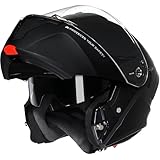
- 【DOT Safety & Intercom Ready】 This modular motorcycle helmet DOT approved features a high-strength ABS shell, lightweight 3.6 lbs design, and energy-absorbing EPS liner. It is professionally designed to be intercom-compatible, ensuring safety and connectivity for all modular motorcycle helmets users
- 【Quick-Release & 3 Visors System】 Our flip up full face helmet offers a tool-free quick-release system. Built as an all-weather modular helmet, it includes a 3-visor setup (clear shield, inner drop-down sun visor, and bonus smoke shield) for maximum light protection during street riding
- 【Eyewear Friendly & Smooth Flip Up】 Designed as a comfortable flip up motorcycle helmet, the interior padding comfortably accommodates glasses without pressure. The smooth one-handed mechanism allows easy transitions, while 3 strategic vents provide optimized airflow for a quiet ride
- 【Custom Fit & Replacement-Ready Liner】 Whether seeking modular motorcycle helmets for men or a modular motorcycle helmet for women, please measure head circumference before purchase for an optimal fit. The removable, moisture-wicking liner ensures long-term freshness and custom comfort
- 【Complete Bundle with Carrying Bag】 This flip up motorcycle helmet for women and men comes with a protective carrying bag for easy storage. It is the ideal choice among flip up motorcycle helmets for men looking for a streamlined, aerodynamic, and quiet ride
If you own one of these bikes, a Kawasaki Ninja service manual can be more useful than a generic motorcycle guide. Match the manual to the exact model, year, engine, and market; a manual for a Ninja 650, for example, should not be assumed to cover a ZX-6R, ZX-4RR, or an older Ninja 400.
For outdoor storage or a garage where the motorcycle is exposed to dust, a Kawasaki Ninja motorcycle cover is another sensible ownership accessory. Check the cover’s model compatibility, dimensions, mirror clearance, ventilation, and heat-resistance instructions rather than assuming every sportbike cover fits every Ninja.
A battery is similarly model-specific. If you are shopping for a Kawasaki Ninja replacement battery, verify the exact year and model, terminal arrangement, dimensions, technology, and part number before ordering. “Ninja” is not sufficient fitment information, particularly when comparing a Ninja 300, Ninja 500, Ninja 650, and ZX-series motorcycle.
ZX-series owners who perform chain cleaning, rear-wheel removal, or track preparation may also consider a rear paddock stand for Kawasaki Ninja. Confirm whether the motorcycle uses spools or requires a compatible swingarm support, and check the stand’s load rating and lifting geometry before use.
Bottom-line ranking
The Ninja H2R is the outright horsepower champion at 322 hp, but its closed-course-only status makes it a specialized machine rather than a normal road-bike recommendation. The 240-hp Ninja H2 and H2 Carbon are the power leaders among street-legal Ninjas, followed by the 207-hp H2 SX SE sport-tourer.
Below them, the 197-hp ZX-14R and 190-hp ZX-10R show why category matters: the ZX-14R emphasizes high-output road performance, while the ZX-10R brings a more track-focused chassis and electronics package. At the other end, the Ninja 650, ZX-4RR, Ninja 500, and Ninja 300 offer different combinations of usability, engine character, size, and rider accessibility—not merely lower versions of the same motorcycle.
Research date: August 11, 2026. Kawasaki specifications, model-year availability, and market equipment are subject to change.
Frequently Asked Questions
Which Kawasaki Ninja has the most horsepower?
The 2026 Kawasaki Ninja H2R ABS has the highest published output in this comparison, with 322 hp at 14,000 rpm. It is intended for closed-course use only.
What is the most powerful street-legal Kawasaki Ninja?
The 2026 Ninja H2 and Ninja H2 Carbon ABS are the most powerful road-legal models listed, with Kawasaki claiming 240 hp at 11,500 rpm.
Why does the Ninja 650 rank above the ZX-4RR?
This list ranks manufacturer-claimed peak horsepower. The Ninja 650 claims 67 hp, compared with 56 hp for the ZX-4RR. The ZX-4RR remains the more specialized high-revving inline-four supersport, so the horsepower ranking does not determine which bike is faster or more exciting for every rider.
Is the Kawasaki Ninja H2R street legal?
No. The H2R is marketed for closed-course use and should not be treated as a street-legal daily motorcycle. The street-legal H2 and H2 Carbon are separate models.
The Bottom Line
In short: the 2026 Ninja H2R is the most powerful Ninja at 322 hp, while the street-legal Ninja H2 and H2 Carbon lead road-going models at 240 hp. The figures are Kawasaki’s claimed maximum outputs, so use them to compare engine ratings—not as a substitute for independent acceleration, dyno, or track testing.
Quick Recap
Product prices and availability are accurate as of the date/time indicated and are subject to change. Any price and availability information displayed on Amazon at the time of purchase will apply.




