No published market record proves that a defined group of “insiders” is quietly buying these five cars. What can be established is more useful: each is a documented example of European coachbuilding, with a named body specialist, identifiable historical significance and, in several cases, auction or provenance records. Use the list as a research starting point—not as an investment ranking or a claim of current buying activity.
Coachbuilt cars reward careful identification. The chassis, body designer, construction method, restoration file and ownership history can matter as much as the badge on the radiator. The five examples below span one-off art-deco design, Bentley fastbacks and dropheads, and the long-running separate-chassis Rolls-Royce Phantom VI.
| # | Preview | Product | Price | |
|---|---|---|---|---|
| 1 |

|
Classic Car: The Definitive Visual History | $22.00 | Buy on Amazon |
| 2 |

|
100 Most Collectible Cars: Timeless Icons of Automotive Excellence | $25.15 | Buy on Amazon |
| 3 |

|
Muscle & Chrome: Classic American Cars | $12.00 | Buy on Amazon |
| 4 |

|
100 Years of American Cars (320 Pages) | $20.00 | Buy on Amazon |
| 5 |
|
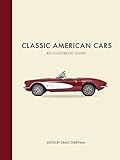
Classic American Cars: An Illustrated Guide | $10.39 | Buy on Amazon |
As an Amazon Associate I earn from qualifying purchases.
What “coachbuilt” means
Rolls-Royce Motor Cars PressClub defines coachbuilding as “the art and science of creating bespoke bodywork on a pre-assembled chassis, a craft that predates the motor car itself.” In the classic-era system, a manufacturer delivered a rolling chassis—frame, engine, suspension and running gear—to a specialist firm. That coachbuilder then designed and fitted a body to a client’s requirements.
The Tool Desk
Outbyte Driver Updater FREEFix the driver behind crashes, sound loss and screen glitchesFind Drivers →Outbyte PC Repair FREERepair Windows errors before they cause bigger problemsFix Now →This arrangement allowed the same mechanical model to appear in several body styles, sometimes from different firms. It also means that “coachbuilt” is not a synonym for “rare” or “expensive.” A one-off body, a limited production run from a known firm and a marque’s in-house custom department are different kinds of evidence.
#1 Best Overall
Industrial practice changed as manufacturers brought body construction inside their own factories and adopted semi-monocoque structures. Rolls-Royce says the Silver Shadow introduced semi-monocoque construction in October 1965. The separate-chassis Phantom VI continued in small numbers until 1993, however, with coachwork supplied by H. J. Mulliner and Park Ward Ltd.
How to read this five-car selection
The selection uses four practical tests: a named coachbuilder and body style; a documented production figure or one-off status; provenance, restoration or maintenance records where a source provides them; and a clear distinction between an auction estimate, a realized sale and a manufacturer’s production claim.
Those records describe individual cars or model histories. They do not establish a broad buying trend, an appreciation rate or a consensus collector ranking. Auction catalogues can document a car’s condition and history, but neither an estimate nor a single result guarantees what another example will be worth.
1. 1948 Talbot-Lago T26 Record Sport Coupé by Saoutchik
Why it matters
Bonhams’ Quail Lodge catalogue describes this Talbot-Lago as a unique one-off design by Saoutchik. It also records the car’s “Le Grand Prix du Salon” award in Paris in 1950. That combination—an identifiable body artist, a singular body and a period show award—makes it a strong illustration of coachbuilding as automotive couture rather than standardized production.
What the catalogue documents
The same catalogue refers to matching numbers and an exceptional restoration. “Matching numbers” is a specific statement about the relationship between the car’s major components and its recorded identity; it is not a guarantee that every part is original. The restoration claim likewise needs to be read alongside invoices, photographs and inspection findings rather than accepted as a substitute for them.
What a prospective owner should verify
- That the surviving body is the Saoutchik design described in the catalogue, not a later replacement or recreation.
- Chassis, engine and gearbox numbers against the marque’s records and the car’s paperwork.
- Restoration scope: structural metalwork, wood framing, paint, trim, mechanical rebuilding and any work left untouched.
- Whether the Paris award and ownership history are supported by period documentation.
The one-off status is the central fact here. It demonstrates scarcity, but it does not by itself establish a market value or prove that collectors are currently seeking the model.
2. 1954 Bentley R-Type Continental by H. J. Mulliner
Design and coachbuilder
The R-Type Continental fastback is a landmark example of a manufacturer’s high-performance chassis receiving a carefully resolved bespoke body. A Bonhams Goodwood Revival catalogue describes the coachwork as developed by Rolls-Royce stylist John Blatchley in collaboration with H. J. Mulliner.
Quick wins for a faster PC:
Scan for outdated or missing drivers - takes under a minuteDriver Scan →Repair Windows errors before they cause bigger problemsFix Now →Fix the driver behind crashes, sound loss and screen glitchesFind Drivers →That attribution matters because it identifies both the design leadership and the firm that built the body. Calling the car merely a “rare Bentley” loses the information that explains its shape, construction and place in the history of coachbuilt touring cars.
What the Bonhams record does—and does not—say
The catalogue includes provenance and service documentation for the example it describes. It gives an estimate of £425,000–£525,000. That range is an auction estimate, not a realized sale price, a current valuation or evidence of an annual return. It should not be compared directly with a sold result for a different car.
Questions to ask before purchase
- Does the body number and configuration correspond with the H. J. Mulliner-built specification?
- Is the provenance continuous, and are servicing claims supported by dated invoices?
- Has the fastback body been repaired or replaced, and can the work be inspected from inside the structure?
- Which components are original, rebuilt, or substituted, and how are those changes recorded?
For this model, documentation is part of the object. A persuasive file can distinguish an authentic, carefully maintained car from one whose appearance has been recreated without equivalent historical evidence.
Rank #3
3. Bentley S-Type Continental, including Park Ward-bodied cars
A model that was coachbuilt by definition
A Bonhams catalogue states that the S-Type Continental was available only as a coachbuilt car. The catalogue reports 431 S1 Continentals produced between 1955 and 1959, with 185 of those bodied by Park Ward. These are model and coachbuilder production figures, not a count of cars currently surviving or a measure of market demand.
Windows Errors? Fix Them Before They Spread
Repair common Windows errors and clear accumulated junk for a smoother, more stable PC - no reinstall needed.Free scan · no reinstallOutdated Drivers Are Slowing You Down
One free scan finds every outdated or missing driver and matches the right update for your exact hardware.Free scan · exact hardware matchThe S-Type Continental is therefore useful for understanding a different form of rarity from the Talbot-Lago. It was not a single artistic experiment; it was a limited series in which body attribution still changes the identity of an individual car.
How to compare an S-Type Continental correctly
| Question | Why it matters |
|---|---|
| Which S1 body style? | Different coachbuilt configurations can have different historical and practical significance. |
| Who built the body? | Park Ward is specifically documented for 185 of the 431 S1 Continentals; do not apply that figure to every S-Type variant. |
| What is the production evidence? | The 431 and 185 figures come from a Bonhams catalogue and describe production, not surviving examples. |
| What records accompany the car? | Ownership, restoration and maintenance files help establish whether the individual example matches its claimed specification. |
When a seller uses “coachbuilt” as a general rarity label, ask for the actual body firm, body number and configuration. The S-Type Continental shows why those details are more informative than the word alone.
4. 1948 Delahaye Type 135M Three-Position Drophead Coupé by Pennock
Body style and historical interest
This Delahaye combines a Type 135M chassis with Pennock coachwork in a three-position drophead coupé configuration. The layout gives the car a distinctive place in pre-war and immediate post-war grand touring history: it can present as an enclosed coupé, an open tourer or an intermediate arrangement, depending on how the roof is configured.
The documented sale
Bonhams reported that this example sold for £153,125 at its MPH Beaulieu sale. The report also described its restoration and recorded mileage. That figure is a single auction result for one car. It is not a typical value for every Type 135M, a forecast or proof of an ongoing trend.
Do these 3 things before closing this tab:
1Clear out junk files and repair common Windows errors2Scan for outdated or missing drivers - takes under a minute3Repair Windows errors before they cause bigger problemsRank #4
How to interpret mileage and restoration
Recorded mileage is useful only when the chain of evidence is clear. Ask whether the reading is supported by old invoices, registration documents and service entries, and whether the restoration altered the instruments or drivetrain. A restored car can be mechanically excellent while retaining little original material; another can preserve original components but require substantial recommissioning. The catalogue’s description should be a starting point for inspection, not a substitute for it.
5. Rolls-Royce Phantom VI with H. J. Mulliner or Park Ward coachwork
Why the Phantom VI belongs on a classic coachbuilding list
The Phantom VI represents the separate-chassis tradition after much of the industry had moved toward integrated body construction. Rolls-Royce says the model continued in small numbers until 1993, with coachwork supplied by H. J. Mulliner and Park Ward Ltd. Its significance is institutional as much as stylistic: the chassis-and-coachbuilder relationship remained available to clients long after mass production had standardized most luxury bodies.
What is distinctive about this category
“Phantom VI” does not identify one uniform body. A buyer must establish which firm built the body, its original configuration and any later changes. Limousines, formal touring bodies and special commissions can differ substantially in design, weight, equipment and restoration requirements.
The model’s long production life also makes date and specification essential. A car built near the end of the run should not be described as though it were an early example, and a body attributed to one coachbuilder should not be casually reassigned to the other.
Recommended Free Tools
Due-diligence priorities
- Obtain chassis and body records from the marque’s archive or an established specialist.
- Confirm whether the body remains in its original form and identify any major alterations.
- Inspect the structure, hydraulic systems, engine, transmission and electrical equipment independently.
- Budget for specialist maintenance only after an inspection; comparable running-cost and parts-availability figures are not established by the records discussed here.
Comparing the five without turning rarity into hype
| Car | Coachbuilder or attribution | Evidence type | What it establishes |
|---|---|---|---|
| 1948 Talbot-Lago T26 Record Sport Coupé | Saoutchik | Bonhams Quail Lodge catalogue | Unique one-off design, 1950 Paris award reference, matching numbers and restoration description. |
| 1954 Bentley R-Type Continental | H. J. Mulliner; design developed with John Blatchley | Bonhams Goodwood Revival catalogue | Coachwork attribution, provenance and service documentation; £425,000–£525,000 estimate for one example. |
| Bentley S-Type Continental | Coachbuilt model; 185 S1 examples bodied by Park Ward | Bonhams catalogue | 431 S1 Continentals produced from 1955 to 1959, including the Park Ward figure. |
| 1948 Delahaye Type 135M Drophead Coupé | Pennock | Bonhams MPH Beaulieu sale report | One reported realized price of £153,125, plus restoration and mileage description. |
| Rolls-Royce Phantom VI | H. J. Mulliner or Park Ward Ltd | Rolls-Royce historical account | Separate-chassis production continued in small numbers until 1993 with coachbuilder-supplied bodies. |
The table deliberately keeps unlike evidence separate. A one-off designation is not interchangeable with a production count; a sale result is not interchangeable with an estimate; and a manufacturer’s model history is not an independent market forecast.
Best Value
A practical inspection sequence for any coachbuilt classic
- Identify the body precisely. Record the coachbuilder, body style, chassis number and body number. If the attribution is uncertain, pause the purchase process until an archive or qualified marque specialist can examine it.
- Build the ownership chain. Match registration documents, invoices, photographs and catalogue descriptions. Note every unexplained gap rather than treating an attractive story as proof.
- Separate originality from restoration quality. Ask which metal, wood, trim, paint and mechanical components survive, which were rebuilt and which were replaced. Require photographs and invoices for major work.
- Check mechanical condition independently. Commission a cold-start inspection, road test and lift inspection by a technician familiar with the model. A polished body can conceal structural or drivetrain work.
- Read prices in context. Label each number as an estimate, a realized sale or a production figure, and attach the source and date. Never use one auction record to promise future appreciation.
- Plan ownership around the actual car. Confirm storage, servicing access, documentation quality and intended use. The available records do not provide a universal running-cost or parts-availability comparison, so those questions require model-specific advice.
How modern coachbuilding continues the tradition
Contemporary programmes show that coachbuilding did not end with the classic era, but modern limited production should not be mixed with historic production or investment claims. Bentley’s official Mulliner overview lists the Batur Convertible, Batur, Bacalar, Speed Six Continuation and Blower Continuation. Bentley states that the Batur Convertible is limited to 16 cars and the Batur coupé to 18; it also describes the Bacalar, announced in 2020, as a return to Mulliner coachbuilding.
Rolls-Royce describes its current Coachbuild commissions as individually specified one-off creations that will not be replicated. Its March 2026 Coachbuild Collection announcement presents a car and a multi-year programme of experiences, with clients invited through the Private Office network. The announcement identifies Sweptail (2017), Boat Tail (2021) and Droptail (2023) as recent landmark coachbuilt cars.
Chris Brownridge, Chief Executive of Rolls-Royce Motor Cars, called Coachbuild “the pinnacle expression of this incredible brand, and an unmatched concept in the luxury sector.” That is a marque executive’s description of the modern programme, not an independent judgment about the historic cars in this guide.
What’s actually slowing this PC down?
Pick the symptom - the matching free tool is one click away.
What this list can—and cannot—tell you
These five cars show several ways coachbuilding can matter: a Saoutchik one-off with a documented show award; a Mulliner fastback whose provenance is part of its appeal; a Bentley model produced only as coachbuilt cars; a Pennock drophead with a recorded auction result; and a Phantom VI that preserved the separate-chassis system into the modern era.
They do not prove that “insiders” are quietly buying a particular shortlist. No named independent statistic establishes that trend, and the available records do not provide comparative running costs, parts data or investment performance. The defensible way to approach a purchase is to verify the body, authenticate the history, inspect the structure and mechanics, and keep every price claim tied to the exact evidence behind it.
Quick Recap
Product prices and availability are accurate as of the date/time indicated and are subject to change. Any price and availability information displayed on Amazon at the time of purchase will apply.




