What’s actually slowing this PC down?
Pick the symptom - the matching free tool is one click away.
The Ferrari 296 GTB and McLaren Artura are both two-seat, rear-wheel-drive plug-in hybrid coupes with twin-turbo V6 engines, but the available specifications do not establish a universal winner. Ferrari publishes stronger headline performance figures for the 296 GTB; US listings show a lower starting price for the Artura, though the listed cars are from different model years. For everyday use, buyers should compare the exact cars and their own routines: matched evidence on cargo capacity, comfort, charging and real-world economy is not available here.
What separates the Ferrari 296 GTB and McLaren Artura?
Both cars combine a twin-turbocharged V6 with an electric motor, send power to the rear wheels and seat two people. That shared format makes them natural alternatives, but it does not make their published figures directly comparable. The available numbers come from different sources, model years and rating conventions. They describe specifications, not a controlled head-to-head test.
As an Amazon Associate I earn from qualifying purchases.
The clearest distinction is what each source establishes. Ferrari’s specification material gives detailed figures for the 296 GTB, including its engine, battery and claimed acceleration. The accessible US comparison from Cars.com supplies a set of database figures for a 2025 296 GTB and a 2026 Artura, including listed prices and an Artura electric-range estimate. Those figures are useful as a snapshot, not as proof that one car is faster, more efficient or more affordable in every market.
For the Ferrari, the available specification extract identifies a 120-degree, 2,992 cm³ V6 paired with an electric motor, an eight-speed F1 dual-clutch transmission and a 7.45 kWh high-voltage battery. Ferrari gives the engine-only output as 663 cv and the maximum hybrid-system output as 610 kW, or 830 cv. These figures describe different parts of the powertrain: the engine-only figure is not the same as total system output.
#1 Best Overall

- Please Attention, This is Collectible Diecast Model Car, not toy, intended for ages 15 years and older
- 1/18 Diecast Model Car
- Officially licensed
- Steerable wheels and rubber tires
- Made of Diecast with some plastic parts
For the Artura, the accessible Cars.com page describes the 2026 US comparison car as a twin-turbo gas/electric V6 and lists 691 hp and a 7 kWh battery. The page does not provide an extracted engine-only output or transmission specification. McLaren’s official page did not expose technical text in the material accessible for this comparison, so filling those gaps with a figure from a different market or model year would risk creating a false like-for-like table.
How do their powertrains and published specifications compare?
| Specification | Ferrari 296 GTB | McLaren Artura |
|---|---|---|
| Configuration | Twin-turbo V6 with an electric motor; rear-wheel drive; two seats. Ferrari specifies a 120-degree, 2,992 cm³ V6. (Ferrari specification material; Cars.com comparison) | Twin-turbo gas/electric V6; rear-wheel drive; two seats. The accessible Cars.com comparison describes the 2026 car this way. |
| Engine output | 663 cv, according to Ferrari’s specification material. | Not stated as a separate engine-only figure in the accessible Cars.com comparison. |
| Combined output | 610 kW (830 cv), according to Ferrari. Cars.com lists 819 hp for the 2025 US-market car. | Cars.com lists 691 hp for the 2026 US-market car. |
| Battery | 7.45 kWh in Ferrari’s specification material. | 7 kWh in Cars.com’s 2026 comparison. |
| Transmission | Eight-speed F1 dual-clutch transmission, according to Ferrari. | Not stated in the accessible Cars.com comparison. |
| Dimensions and weight | 4,565 mm long, 1,958 mm wide and 1,187 mm high, with a 2,600 mm wheelbase. Ferrari lists 1,470 kg dry weight with optional lightweight content. | Not stated in the accessible comparison in a form that supports a matched comparison. |
| Fuel capacity | 65 litres, according to Ferrari. | Not stated in the accessible comparison. |
Why the horsepower figures need a caveat
Ferrari’s combined figure is stated in cv, a metric horsepower unit; Cars.com’s US comparison reports horsepower for both cars. Ferrari also has a separate engine-only rating, which should not be confused with total hybrid-system output. Since the sources do not establish a shared rating method for all these numbers, converting or lining them up as if they were measured on one basis would imply more certainty than the evidence supports. The figures are best read with their source and unit attached.
There is a second reason to keep the numbers labelled: Cars.com’s 819 hp entry is for a 2025 296 GTB in its US database, while Ferrari’s specification extract states 830 cv. Those are not presented as a single standardized result. Likewise, Cars.com’s 691 hp Artura figure is for a 2026 US-market listing, not necessarily every Artura sold in every country or year. A buyer should check the exact market-specific technical sheet rather than assume a database figure applies unchanged to another configuration.
Free tools Windows power users keep installed
One-click scans. No signup required.
The useful takeaway is the broad architecture and the attribution, not a simplistic ranking obtained by putting unlike units side by side. Ferrari supplies a detailed manufacturer system-output claim; the accessible US listing gives a separate database output for each model year. Neither source is a matched independent measurement of both cars under identical conditions.
What the battery figures do—and do not—tell you
The listed battery capacities are close in size, but capacity alone does not establish electric range, charging time or day-to-day efficiency. Those outcomes depend on more than the kWh figure, and the available material does not provide a harmonized comparison of test cycles or charging conditions. A buyer who expects to drive on electric power regularly should confirm the exact market-specific range and charging details for the model year and configuration under consideration.
Ferrari’s 7.45 kWh figure comes from its specification material; Cars.com lists 7 kWh for the 2026 Artura. The small numerical difference does not show which car can travel farther electrically, how quickly either battery can be replenished or how much electric driving an owner will achieve in normal use. The source material does not give a matched charging-time figure, charging conditions or a common range-test procedure.
Which car is quicker?
Ferrari’s published 296 GTB figures are 2.9 seconds from 0 to 100 km/h, 7.3 seconds from 0 to 200 km/h and a maximum speed above 330 km/h. These are manufacturer claims from Ferrari specification material, not results from a matched independent test.
Rank #2

- Collectible Model Car
Autocar India reports a 0–100 km/h time of 3 seconds for the Artura in a secondary India-market comparison. That figure is not a same-day, same-method result against Ferrari’s claim, so the tenth-of-a-second difference does not establish which car is quicker in a controlled comparison. The accessible Cars.com page does not provide a directly matched acceleration test for its 2026 Artura listing.
In other words, the available figures allow a reader to report what Ferrari claims for its car and what Autocar India reports for the Artura, but not to calculate a definitive gap between them. They come from different contexts: one is a manufacturer specification, the other a secondary comparison for the India market. A rigorous verdict would require testing both specific cars with the same measurement approach and comparable conditions.
How to use these performance figures
- For a specification-sheet comparison, keep Ferrari’s manufacturer claim separate from the secondary Artura figure and label each source.
- For a meaningful performance verdict, look for tests using the same units, surface, conditions, measurement method and model-year configuration.
- Do not treat a top-speed claim or a launch time as a prediction of performance in ordinary road use; neither figure describes ride comfort, visibility or ease of use.
What do the electric-range figures mean?
Cars.com lists an 11–21-mile electric-range figure for the 2026 Artura in its US comparison, along with a 7 kWh battery. The extracted listing does not make the range test basis clear. An older Ferrari technical document gives the 296 GTB a 25 km full-electric-mode range, but the current applicability and test basis of that number are not established.
Those figures cannot support a reliable range winner. They use different units, come from different source contexts and do not identify a common test cycle. The Ferrari number is also from an older document, while the Artura range appears in a current US comparison of a different model year. A direct comparison requires current figures for the relevant country and model year, measured on a common basis.
Quick wins for a faster PC:
Scan for outdated or missing drivers - takes under a minuteDriver Scan →Clear out junk files and repair common Windows errorsFree Scan →Fix the driver behind crashes, sound loss and screen glitchesFind Drivers →For a prospective owner, the practical question is not just the published maximum. Check the exact car’s official range rating for your market, whether a daily route fits that rating with a sensible margin, and whether you can charge where the car will normally be parked. The available specifications do not establish real-world electric range, charge time or the effect of temperature and driving conditions for either car.
Use the Artura’s 11–21-mile Cars.com entry as a range shown by that US listing, not as a guaranteed distance on every trip. The listing extract does not make clear why it presents a span or what test basis produced it. Similarly, Ferrari’s older 25 km figure should not be treated as a current, directly comparable certification without confirming its applicability for the specific market and model year. If electric operation is important to your commute, ask for the official local rating and the conditions under which it was measured.
How do their listed prices compare?
| Car and model year | Cars.com US starting MSRP | What the figure represents |
|---|---|---|
| Ferrari 296 GTB, 2025 | $343,000 | Cars.com-listed US starting MSRP; page accessed in 2026, with no specific publication date shown. |
| McLaren Artura, 2026 | $255,400 | Cars.com-listed US starting MSRP; page accessed in 2026, with no specific publication date shown. |
This is a cross-year US list-price snapshot, not a like-for-like quote. It does not account for options, taxes, fees, availability or the price of a specific vehicle. It also should not be applied to another country, where pricing and equipment may differ. Before treating the gap as a buying-cost advantage, compare cars from the same model year and market with the equipment you actually want.
Rank #3

- The 1/43 FERRARI RACING 296 GT3 2023 is a novelty from 2024 in the Bburago Ferrari Signature collection, representing an iconic 1:43rd scale racing car.
- This miniature model is made of metal, ensuring both strength and fidelity to detail for an immersive experience.
- Inspired by the Ferrari GT3 of the 2023 season, this replica captures the essence of performance and elegance associated with the brand
- Featuring high-quality workmanship and remarkable precision, this replica promises to delight collectors with its authentic appearance.
- Whether it's for display in a collectible storefront or for collecting fun, this novelty from 2024 is a valuable addition to any miniature car collection.
On the figures Cars.com lists, the Artura’s 2026 starting MSRP is $87,600 below the 2025 296 GTB’s listed starting MSRP. That arithmetic describes only the displayed US starting prices for two different model years. It is not a measure of the price difference between equivalently equipped cars, nor does it establish how much either vehicle will cost to buy in a particular transaction. Options, taxes, fees, availability and the exact vehicle can change the final amount.
Crashes, No Sound, or Screen Glitches?
Random freezes, missing sound and display glitches usually trace back to one bad driver. Find and replace yours safely.Free scan · under a minutePC Slower Than It Used to Be?
A free scan shows the junk files, broken settings and background clutter dragging Windows down - then fixes them in one click.Free scan · Windows 10 & 11Cars.com’s page was accessed in 2026 and does not show a specific publication date for these entries. Treat the prices as a dated marketplace snapshot, not a dealer offer or a guarantee that a car is available at that price. For an actual purchase, request written quotes for cars from the same market and, where possible, the same model year and comparable equipment. The available figures do not support a broader ownership-cost comparison: they do not establish insurance, maintenance, financing or resale costs.
Which one is easier to live with every day?
The available comparison does not establish an everyday-usability winner. It identifies both as two-seat coupes and provides no usable matched figures for luggage volume or ground clearance. It also does not give a sound same-market, same-model-year comparison of ride comfort, charging time, real-world fuel use or visibility. Those omissions matter because a high-performance coupe can fit one owner’s routine and frustrate another’s, even when both cars share the same basic seating and drivetrain layout.
The Ferrari’s published dimensions offer context, but not a direct practicality verdict. Ferrari lists the 296 GTB at 4,565 mm long, 1,958 mm wide and 1,187 mm high, with a 2,600 mm wheelbase. It also lists a 1,470 kg dry weight when optional lightweight content is fitted and a 65-litre fuel capacity. No matched Artura measurements in the accessible comparison allow those numbers to be turned into a size, weight or range advantage.
Nor does the fact that both cars are plug-in hybrids prove that they will be equally convenient to charge or economical to run. The accessible material does not provide comparable real-world fuel consumption, charging times or energy costs. Those questions depend on the exact car, local electricity and fuel prices, and the owner’s driving and charging routine—details not established by the specifications summarized here.
Check the cargo space with your own luggage
Do not infer luggage capacity from exterior dimensions or styling. Take the bags you expect to use, or measure them, and check the exact car. Verify whether the available space works with both seats occupied and whether any storage is affected by the particular configuration. The comparison material does not provide a matched luggage-volume figure that can substitute for this check.
Think about the bags you actually carry rather than a nominal capacity figure alone. A weekend bag, work equipment or a particular carry-on may have dimensions that do not fit the available opening or shape of a storage area. The source comparison does not provide a usable luggage-volume figure for either car, so there is no supported cargo-capacity winner to name. If you cannot bring your own bags, measure them and ask to see how they fit in the exact car being considered.
Rank #4
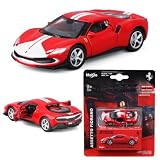
- This is Collectible Diecast Model Car, not toy, intended for ages 15 years and older
- Highly detailed model of the Fe rrari Series Model
- Highly detailed model of the Ferrari Series Model
- Die-cast metal body with plastic parts
- Electrostatic paint coating
Test your roads, ramps and parking arrangements
Ferrari publishes the 296 GTB’s exterior dimensions, but a width or height figure does not answer whether a particular driveway, garage entrance, speed bump or parking space is workable. No matched ground-clearance comparison is available. If those details matter, inspect or test the exact configured car on the roads and entrances you use most, and confirm the relevant measurements with the seller rather than relying on an assumed advantage.
For a buyer with a tight garage or steep approach, the practical check is specific: measure the entrance and parking space, consider the route over ramps and speed bumps, and assess manoeuvring where you normally park. The available figures do not include a matched ground-clearance measurement, so neither car can be declared safer for a particular driveway from this comparison alone. Ferrari’s published width is useful to take to that check, but it does not replace trying the actual car and confirming dimensions with the seller.
The Tool Desk
Outbyte Driver Updater FREEFix the driver behind crashes, sound loss and screen glitchesFind Drivers →Outbyte PC Repair FREEClear out junk files and repair common Windows errorsFree Scan →Evaluate comfort and visibility on a realistic drive
The available sources do not establish which car rides more comfortably or offers better visibility. A short, smooth-road demonstration may not reveal how either feels on your regular route. If possible, arrange a test drive that includes the road surfaces, low-speed manoeuvres and parking situations you encounter. Pay attention to whether you can enter and exit comfortably, judge the car’s edges and remain at ease for the length of your usual drive.
Comfort is a personal fit question as well as a specification question. Try the seat and driving position for long enough to notice whether they suit you, and include the kinds of streets and parking manoeuvres you use regularly. The available comparison gives no matched comfort or visibility assessment, so a confident ranking would be unsupported. A demonstration drive can answer those questions for your body, roads and preferences more directly than an unverified general claim.
Make charging part of the routine, not just the spec sheet
Neither battery capacity nor a published range figure tells you whether charging is convenient at home, work or other regular destinations. Confirm the exact car’s charging requirements, connection and charging time for your market and configuration. Then consider whether reliable access to a suitable charging point fits your routine. The evidence available here does not establish a charging-time winner or a real-world running-cost advantage.
Before choosing either plug-in hybrid for electric commuting, check whether you can charge reliably where the car is normally parked and whether your usual route fits the confirmed local range rating with room for variation. Ask the seller for charging details applicable to that exact model year and market. The material summarized here does not provide a matched charge-time figure, charging-cost estimate or real-world economy comparison, so those should be established separately rather than inferred from battery size.
Recommended Free Tools
How should you decide between them?
- Set the comparison scope. Choose the country and model years you are actually shopping. Avoid comparing a 2025 US listing with a 2026 US listing as if they were same-year prices or specifications.
- Separate the number types. Label manufacturer claims, marketplace database figures and secondary-source comparisons. Keep units and test methods attached to each figure.
- Get a same-basis electric-range comparison. Request current market-specific ratings and their test cycles for both cars. Do not rank the older Ferrari range figure against the Artura range listing without that context.
- Test the physical fit. Bring your luggage, check your garage and usual ramps, and assess entry, visibility and manoeuvring in the exact cars you might buy.
- Compare actual configurations and offers. Ask for written pricing for comparable model years and equipment in your market. A starting MSRP is not a transaction quote.
- Choose based on your priorities. If headline published performance is central, Ferrari supplies detailed manufacturer claims for the 296 GTB. If the US starting-price snapshot matters, Cars.com lists a lower figure for the later-model-year Artura. Neither point answers the practical questions that the available evidence leaves open.
As you check the figures, keep a simple record of which model year, country and source each number describes. That avoids mixing Ferrari’s manufacturer specification claims, Cars.com’s US database entries and Autocar India’s secondary Artura comparison into a false single test. For a buying decision, ask for the technical sheet and quote for the actual car, then evaluate how it fits your needs in person.
Best Value
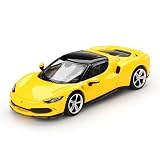
- Brand new box.
- Real rubber tires.
- Detailed interior, exterior,
- Made of diecast metal with some plastic parts.
- Officially licensed product
Verdict: which car should you choose?
The available figures make the 296 GTB’s manufacturer-claimed performance and the Artura’s lower listed US starting MSRP easy to identify, but they do not produce a fair, all-purpose winner. The cars’ published power ratings, electric ranges, prices and acceleration figures are not all based on a shared market, model year or test method. For a real purchase decision, use those numbers as starting points, then validate price, charging, cargo fit and driving comfort on the exact cars available to you.
Choose the 296 GTB if Ferrari’s published performance claims are a major part of your decision and the exact car’s price and practical fit work for you. The cited figures are 830 cv of hybrid-system output, 2.9 seconds to 100 km/h, 7.3 seconds to 200 km/h and a maximum speed above 330 km/h; they remain Ferrari claims rather than a matched test result. Consider the Artura if the Cars.com US starting-price snapshot is relevant to your shopping and you want to investigate its listed 2026 configuration further. Its displayed $255,400 starting MSRP is lower than the 2025 Ferrari listing, but the model years differ and the prices are not transaction quotes.
Neither conclusion settles luggage capacity, ride comfort, charging convenience, real-world economy or visibility. Those are exactly the areas where the available comparison lacks matched evidence, and they can determine whether a two-seat supercar fits everyday life. Confirm the specifications and price for your market, then test the specific car against your own roads, bags, parking and charging access before making the choice.
Do these 3 things before closing this tab:
1Repair Windows errors before they cause bigger problems2Scan for outdated or missing drivers - takes under a minute3Clear out junk files and repair common Windows errorsFrequently Asked Questions
Which is faster, the Ferrari 296 GTB or McLaren Artura?
Ferrari claims the 296 GTB reaches 100 km/h in 2.9 seconds, 200 km/h in 7.3 seconds and exceeds 330 km/h. Autocar India reports a 3-second 0–100 km/h time for the Artura, but that secondary India-market figure is not a matched test against Ferrari’s claim. It does not establish a controlled winner.
How much does the Ferrari 296 GTB cost compared with the McLaren Artura?
Cars.com lists US starting MSRPs of $343,000 for the 2025 296 GTB and $255,400 for the 2026 Artura. The $87,600 difference is between listed starting prices for different model years, not a like-for-like quote. Options, taxes, fees, market and availability affect the price of a specific car.
Which has more electric range?
The Cars.com US comparison lists 11–21 miles for the 2026 Artura, while an older Ferrari technical document gives the 296 GTB 25 km in full-electric mode. The test basis and current applicability of the Ferrari figure are not established, and the Artura listing’s basis is unclear. These figures do not support a reliable range winner.
Are the 296 GTB’s 830 cv and Cars.com’s 819 hp figures contradictory?
They are figures from different contexts: Ferrari’s specification material states 830 cv (610 kW) of hybrid-system output, while Cars.com lists 819 hp for a 2025 US-market 296 GTB. The available material does not establish a shared rating method. Keep the source, unit and model-year context attached rather than treating them as directly interchangeable.
Which car is more practical for everyday use?
There is not enough matched evidence to name a universal winner. Both are two-seat coupes, but the available comparison does not establish a luggage-volume, ground-clearance, ride-comfort, charging-time, real-world fuel-use or visibility advantage. Test the exact cars with your bags, routes, parking and charging routine.
Can the Ferrari 296 GTB or McLaren Artura be driven on electric power alone?
Both are described as plug-in hybrid cars. An older Ferrari document gives a 25 km full-electric-mode range, and Cars.com lists an 11–21-mile range for the 2026 Artura. Because the figures have unclear or different test bases and model-year contexts, confirm the official local rating and charging details for the particular car.
The Bottom Line
The Ferrari 296 GTB has detailed manufacturer-claimed performance figures; Cars.com’s US snapshot lists a lower starting MSRP for the 2026 Artura than for the 2025 Ferrari. Neither is a matched comparison, and the available facts do not settle everyday practicality. Compare the same market and model year, then check the exact cars for price, cargo fit, charging, comfort and visibility.
Quick Recap
Product prices and availability are accurate as of the date/time indicated and are subject to change. Any price and availability information displayed on Amazon at the time of purchase will apply.




