For the best overall BMW 5 Series, choose the E39. It combines the model’s classic rear-wheel-drive balance, restrained design, useful body styles, strong engines, and enough comfort and technology to remain genuinely livable. The G30 is the best modern all-rounder, while the E34 is the strongest classic alternative. The current G60/G61 is the most technologically capable 5 Series, but it ranks last for now because its design, interface, size, and long-term ownership record have not yet proved as cohesive.
This ranking evaluates each generation as a complete 5 Series family—not simply by its M5. The criteria are driving character, design coherence, engineering importance, comfort, everyday usability, range of body styles and powertrains, and long-term reputation relative to each generation’s era.
As an Amazon Associate I earn from qualifying purchases.
The BMW 5 Series generations, ranked worst to best
The ranking below runs from #8, worst overall, to #1, best overall. “Worst” does not mean unsuccessful or undesirable. Every generation has a compelling version; the question is which family delivers the strongest complete 5 Series experience.
| Rank | Generation | Production era | Best described as |
|---|---|---|---|
| 8 | G60/G61 | 2023–present | Most capable, least resolved |
| 7 | E12 | 1972–1985 in some markets | Foundational original |
| 6 | E60/E61 | 2003–approximately 2010 | Technological leap with costly complexity |
| 5 | E28 | 1981–1987/1988, depending on market | Focused driver’s car |
| 4 | F10/F11/F07 | From the 2010 model year | Comfort and refinement specialist |
| 3 | G30/G31 | From 2017 | Best modern all-rounder |
| 2 | E34 | 1987–1996, with Touring production extending later | Engineering sweet spot |
| 1 | E39 | 1995–2004, with Touring production continuing into the early 2000s | The benchmark |
8. G60/G61: The most capable, but least resolved 5 Series identity
Production era: 2023–present for the G60 sedan; the G61 Touring followed in major markets.
#1 Best Overall
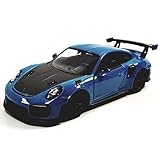
- Doors Open
- Pullback Action
- Die Cast Metal Body
- PULL BACK ACTION WITH FREE ROLLING WHEELS
The eighth-generation 5 Series is not a technical failure. It is spacious, fast, quiet, highly digitized, and unusually flexible. BMW now offers combustion engines, plug-in hybrids, and the fully electric i5 within the same broad 5 Series family. That breadth alone makes the G60/G61 one of the most ambitious generations in the model’s history.
The generation was introduced with BMW Operating System 8.5, a Curved Display, expanded digital services, QuickSelect interaction, 48-volt mild-hybrid combustion models, plug-in-hybrid variants, and i5 electric derivatives. BMW’s global launch began in October 2023, and production is centered at Dingolfing. The exact powertrain and equipment mix varies significantly by market and model year.
Its problem is not capability; it is identity. The car is larger and more technology-led than the traditional 5 Series, and its exterior and interior design have divided opinion. The screen-heavy interface also changes how the driver interacts with basic functions. Those criticisms are partly subjective, but they matter when ranking a car whose appeal has historically depended on a clear sporting-luxury identity.
Recommended Free Tools
The long-term ownership case is also provisional. Older generations have had decades to establish their reliability patterns, parts ecosystems, enthusiast support, depreciation behavior, and repair costs. The G60/G61 has not had that time. Its current position should therefore be treated as temporary rather than definitive.
Why the G60/G61 still makes sense
- Electric choice: The i5 gives buyers a fully electric 5 Series without leaving the family.
- Powertrain breadth: Buyers can choose combustion, plug-in-hybrid, or battery-electric propulsion, depending on market.
- Long-distance ability: Quiet highway travel, modern assistance systems, and a spacious cabin are major strengths.
- Digital functionality: Charging information, connectivity, and BMW’s latest operating system are substantially more advanced than in older generations.
The versions worth investigating are the i5 for buyers committed to electric driving, the 530e or 550e where plug-in capability fits the owner’s charging routine, and six-cylinder combustion versions for drivers who still want BMW’s traditional smoothness. Availability, specifications, and naming vary by market and model year, so the exact vehicle should be verified by VIN and local BMW documentation.
Verdict: The G60/G61 is the most technologically expansive 5 Series, but its size, styling, screen-led interface, and unproven long-term record make it the least convincing expression of the classic 5 Series brief—for now.
7. E12: The foundational original
Production era: Introduced in 1972; BMW historical material records production continuing in some markets into 1985. BMW reports 702,242 E12 cars produced.
The Tool Desk
Outbyte PC Repair FREEClear out junk files and repair common Windows errorsFree Scan →Outbyte Driver Updater FREEScan for outdated or missing drivers - takes under a minuteDriver Scan →The E12 is where the 5 Series began. BMW identifies it as the first model to carry the 5 Series name, establishing the basic formula of a front-engine, longitudinally powered, rear-wheel-drive executive sedan with sporting intent. The generation was a major commercial success, selling almost 700,000 examples according to BMW’s historical account.
It also established the naming convention that later became familiar throughout BMW’s range. The 520 designation helped create the template for the company’s model-number system, while the later six-cylinder 525 and the M535i expanded the E12 beyond its original entry-level role.
As a driving machine, the E12 has a strong historical and emotional appeal. Its early-1970s proportions are clean and restrained, its mechanical architecture is comparatively straightforward, and its compact dimensions make it feel more intimate than every modern 5 Series. For enthusiasts who want the original BMW executive-sedan concept in its clearest form, the E12 is difficult to replace.
It ranks seventh because a modern generation ranking must consider more than purity. Compared with the E28, the E12 offers less performance and powertrain breadth. Compared with the E34 and E39, it offers less refinement, safety, space, and day-to-day usability. Age brings additional concerns: corrosion, regional scarcity, parts availability, and the possibility that a seemingly complete car will require extensive recommissioning.
Best E12 versions to investigate
Look for a six-cylinder car with strong documentation and evidence of careful restoration or preservation. Rare market-specific variants can be desirable, but the M535i should not be treated as representative of ordinary E12 ownership. Its historical importance and performance make it a separate collector proposition.
Verdict: The E12 is the essential origin story and an appealing classic, but it is too age-sensitive and limited in everyday ability to rank higher as a complete 5 Series family.
6. E60/E61: A technological leap with costly complexity
Production era: E60 sedan from 2003; E61 Touring from 2004, with production ending around 2010.
The E60 was the boldest design and engineering reset in the 5 Series’ history up to that point. BMW’s technical material highlights active steering, an aluminum front-end structure, head-up display, adaptive directional headlights, and the expansion of technologies previously associated with the 7 Series.
Free tools Windows power users keep installed
One-click scans. No signup required.
That ambition gave the E60 genuine strengths. Many markets received excellent straight-six engines, the range was broad, the chassis could be highly rewarding, and the E61 Touring added practical appeal. The generation also produced the spectacular V10 M5, although the M5’s drama should not define the ordinary E60 range.
Rank #2
- Authentic 1:36 Scale: Meticulously crafted 1964 1/2 Ford Mustang model car with impressive 5-inch length.
- Realistic Details: Die-cast metal body with opening doors and eye-catching blue finish.
- Interactive Play: Engaging pull-back action for thrilling motion across smooth surfaces.
- Collectible Quality: Ideal for model car enthusiasts and collectors seeking miniature automotive replicas.
- Brand: KiNSMART, a trusted name in die-cast vehicle models and toys.
The exterior design was distinctive and controversial when new. That has helped the E60 age into a more recognizable and interesting shape than its initial reception suggested, but the same boldness will not appeal to every buyer. Inside, early iDrive and the growing number of electronic systems created a steeper learning curve and greater potential repair exposure than earlier 5 Series cars.
The E60 occupies an awkward middle ground today. It lacks the mechanical simplicity of an E28, while its early electronic integration is less polished than that of a later G30. It can feel both analog and complicated: rewarding to drive, but expensive to diagnose when neglected.
Condition and maintenance history matter more than the badge. Later six-cylinder cars with complete service records are generally the most sensible enthusiast targets. V8 and M5 versions offer more performance but also create greater mechanical and financial exposure. A specialist inspection is much more important than a low purchase price.
Do these 3 things before closing this tab:
1Scan for outdated or missing drivers - takes under a minute2Clear out junk files and repair common Windows errors3Fix the driver behind crashes, sound loss and screen glitchesFor someone assessing the generation’s electronic systems and maintenance requirements, a generation-specific BMW E60 service manual can be more useful than a generic repair reference. Coverage should be checked carefully because engine, body style, model year, and market determine which procedures apply; E61 Touring coverage may differ from E60 sedan coverage.
Verdict: The E60 deserves respect for pushing the 5 Series into the modern electronic era, but its complexity, divisive design, and uneven ownership reputation keep it out of the upper half.
5. E28: The focused driver’s car
Production era: 1981–1987 or 1988, depending on market and production reference.
The E28 refined the E12 formula rather than reinventing it. BMW’s historical material describes improvements in space, weight, occupant safety, suspension, electronic systems, anti-lock brakes, onboard computing, and fuel injection. It also introduced BMW’s first diesel 5 Series and, more importantly for enthusiasts, the first production M5.
The E28’s strongest argument is focus. It is compact, mechanical, upright, and easy to understand as a sporting sedan. Visibility is good, the rear-wheel-drive layout remains central to the experience, and the car creates a more direct relationship between driver inputs and chassis behavior than most later 5 Series generations.
It is more complete than the E12 but still unmistakably old-school. That is its appeal and its limitation. Compared with an E34 or E39, the E28 offers less refinement, safety, space, corrosion resistance, and high-speed quietness. The best examples are now collectible and can be expensive relative to their original position in the market, while ordinary examples may require extensive recommissioning.
Best E28 versions to investigate
A well-maintained 535i or manual six-cylinder car is the traditional enthusiast choice, provided the body and mechanical history are sound. The M5 belongs in a separate collector discussion: its desirability and specialized maintenance needs can make its ownership equation completely different from that of a regular E28.
Verdict: The E28 is more emotionally focused than the E12 and more historically important than its fifth-place position suggests. It loses points mainly because later generations became much better at being both sports sedans and luxury cars.
Crashes, No Sound, or Screen Glitches?
Random freezes, missing sound and display glitches usually trace back to one bad driver. Find and replace yours safely.Free scan · under a minuteWindows Errors? Fix Them Before They Spread
Repair common Windows errors and clear accumulated junk for a smoother, more stable PC - no reinstall needed.Free scan · no reinstall4. F10/F11/F07: The comfort-and-refinement generation
Production era: F10 sedan launched for the 2010 model year; F11 Touring and F07 Gran Turismo derivatives broadened the family.
The F10 corrected several criticisms directed at the E60. BMW emphasized sporting and elegant design, comfort and safety technology, efficiency, and driving dynamics at launch. In daily use, the F10 feels more conventional, quieter, and easier to operate as an executive car.
Its ranking reflects how well it performs the practical 5 Series mission. The cabin is mature, long-distance comfort is excellent, and the automatic transmission integration is strong. Depending on market and year, the family included efficient four-cylinder engines, smooth six-cylinders, diesels, a V8, hybrid applications, and the M5.
The trade-off is reduced intimacy. The F10 is heavier and more isolated than the E28, E34, E39, and in some respects the E60. It is a very effective car, but it does less to remind the driver why the 5 Series became an enthusiast benchmark.
What’s actually slowing this PC down?
Pick the symptom - the matching free tool is one click away.
Engine and model-year differences are especially important. Modern turbocharged powertrains, electronics, and optional chassis systems mean that two F10s with similar mileage can present very different ownership prospects. Reliability should be evaluated at the individual-car level rather than assigned to the entire generation. A documented car with the right inspection can be a satisfying compromise; an inexpensive, neglected example can quickly erase its purchase-price advantage.
Best F10 versions to investigate
A well-documented six-cylinder 535i or 540i-equivalent, depending on market and year, is the natural starting point. Later cars may offer improved infotainment and drivetrain updates. Diesel and hybrid versions can make sense for specific driving patterns, but they deserve specialist checks that account for their individual powertrain and charging or emissions systems.
Rank #3

- Highly detailed 1:24 scale diecast model kit of 1929 Ford Model A
- Comes with everything needed for assembly including screwdriver
- Features opening parts, rolling wheels and pre-painted metal body
- Easy to assemble, creates fully functional rolling replica model car
- Fun and educational STEM activity for kids to build realistic miniature vehicle
Verdict: The F10 is the generation to choose when comfort, technology, refinement, and everyday usability matter more than maximum analog feedback.
3. G30/G31: The best modern all-rounder
Production era: G30 sedan launched globally for February 2017; G31 Touring and long-wheelbase variants expanded the range in selected markets.
Quick wins for a faster PC:
Scan for outdated or missing drivers - takes under a minuteDriver Scan →Repair Windows errors before they cause bigger problemsFix Now →Fix the driver behind crashes, sound loss and screen glitchesFind Drivers →The G30 is where BMW most successfully combined modern luxury-car capability with recognizable 5 Series proportions and driving character. BMW’s launch material highlighted enhanced dynamics, driver-assistance systems, connectivity, and a new operating system. BMW also stated that approximately 7.9 million 5 Series cars had been sold across the first six generations before the G30 arrived.
The G30 is not as pure or tactile as the E39, but it is more comfortable, safer, faster, quieter, and easier to live with. It offers a broad engine range, electrified variants, sophisticated assistance technology, strong highway manners, and a cabin that generally feels more cohesive than the E60’s early digital environment or the G60’s more radical interface.
Its main disadvantages are the ownership costs associated with a modern BMW and its growing dependence on software and electronics. The driving experience also varies substantially with wheel size, suspension configuration, xDrive, trim, and engine. A heavily optioned, large-wheel version can feel like a very different car from a simpler rear-wheel-drive model.
Best G30 versions to investigate
- 540i: Often the enthusiast sweet spot in markets where it is offered, combining six-cylinder smoothness with strong everyday performance.
- 530i: A sensible daily-driver choice for buyers who value efficiency and adequate performance over maximum output.
- Plug-in hybrid: Worth considering where home or workplace charging and local incentives make the electric range genuinely useful.
Always confirm exact equipment and powertrain by VIN and market. BMW model names can cover different engines and specifications across regions and model years.
Verdict: The G30 is the strongest recommendation for a buyer who wants a contemporary 5 Series without moving all the way into the G60’s styling and interface philosophy.
2. E34: The engineering sweet spot before the E39
Production era: 1987–1996, with Touring production extending beyond the sedan.
The E34 is arguably the broadest and most mature classic 5 Series. BMW’s historical account describes greater refinement, improved space, occupant safety, and suspension development. During its life, the family added or expanded important capabilities including the Touring body style, all-wheel drive, V8 power, six-speed manual availability, traction and stability systems, and a wider range of engines.
Its appeal is balance. The E34 retains the clear, upright BMW design language and mechanical readability of the earlier cars while adding a meaningful increase in comfort and structural sophistication. It is also a superb platform for different types of owner. A four-cylinder or six-cylinder sedan can serve as a traditional daily driver, a V8 can provide effortless performance, and the Touring adds genuine practicality.
Do these 3 things before closing this tab:
1Repair Windows errors before they cause bigger problems2Fix the driver behind crashes, sound loss and screen glitches3Clear out junk files and repair common Windows errorsThe E34 ranks second because the E39 tightened the formula further. The E34 can feel more upright and less polished, and age-related corrosion, cooling-system work, suspension wear, electrical faults, and parts scarcity make condition decisive. It is important to separate the reputation of a well-preserved E34 from the reality of buying a decades-old used car.
BMW’s historical account also illustrates the scale of the transition to the next generation: the E39 became the first large-scale production car made almost completely of light alloy and ultimately achieved a 1.47-million-unit sales record.
Best E34 versions to investigate
A rust-free six-cylinder sedan or Touring with strong records is the broadest recommendation. The 540i adds V8 performance, while the M5 is best considered a specialized collector or enthusiast purchase rather than a typical E34 ownership choice.
Verdict: The E34 is the most complete classic 5 Series family and the best bridge between old-school BMW feel and modern usability.
1. E39: The benchmark
Production era: 1995–2004, with Touring production continuing into the early 2000s.
The E39 wins because it delivers the most convincing total package. BMW’s official history describes it as an evolutionary but highly advanced fourth generation, with a substantial increase in body torsional stiffness, extensive use of light alloy, aluminum power units, improved passenger and cargo space, navigation, active seats, Dynamic Stability Control, and the 400-horsepower E39 M5. BMW records approximately 1.47 million units sold through the generation’s production run.
Rank #4
- Die-cast metal body with plastic parts
- Opening doors and engine compartment
- Detailed chassis
- Package Dimensions: 10.6 L x 23.5 H x 11.5 W (centimeters)
What makes the E39 special is not one statistic. It is the way the parts reinforce one another: restrained styling, an excellent seating position, a relatively compact footprint, strong straight-six and V8 choices, rear-wheel-drive balance, mature suspension tuning, useful Touring practicality, and enough electronics to feel modern without overwhelming the car’s basic controls.
It remains one of the clearest expressions of the classic BMW executive-sedan formula. The E39 feels like a luxury car without losing its sporting purpose, and it feels like a driver’s car without demanding the compromises associated with an older sports sedan.
The E39 is not automatically reliable today
Every E39 is old. Cooling systems, suspension components, rubber parts, corrosion, electrical systems, automatic transmissions, and neglected maintenance can turn a cheap car into an expensive project. The correct conclusion is not that every E39 is dependable. It is that a properly maintained E39 offers the best combination of qualities once the buyer accounts honestly for age and condition.
For owners or buyers who want a generation-specific reference, Bentley Publishers offers an BMW 5 Series E39 service manual covering 1997–2003 cars. Check the exact model-year, engine, body-style, and market coverage before relying on any manual for a particular vehicle.
Best E39 versions to investigate
- 528i and 530i: Often the strongest balance of performance and running costs, subject to market and model year.
- 540i: The choice for effortless V8 pace and a more special character, with correspondingly greater running-cost exposure.
- M5: A collector-grade flagship whose value and maintenance requirements should not be used to judge ordinary E39 ownership.
Verdict: The E39 is the 5 Series generation against which the others are judged. It is not the newest, fastest, safest, or most efficient, but it is the most cohesive.
Independent reader supportYour contribution helps us test, update, and keep practical guides available for everyone.Why this ranking changes depending on what you want
There is no single correct order for every buyer. The overall ranking favors cohesion, but a different priority can produce a different winner.
| If your priority is… | Start with… | Why |
|---|---|---|
| Best complete classic | E39 | The strongest combination of design, dynamics, comfort, and usability. |
| Classic BMW feel with more practicality | E34 | Broader body-style and powertrain range while retaining old-school character. |
| Compact analog driving | E28 | Focused dimensions, direct controls, and strong sporting identity. |
| Historical importance | E12 | The original 5 Series and the generation that established the formula. |
| Best modern all-rounder | G30 | Contemporary safety and comfort without abandoning recognizable 5 Series proportions. |
| Maximum comfort and refinement | F10 | Quiet, mature, technology-rich daily usability. |
| Most dramatic technology | E60 | Active steering, head-up display, advanced lighting, and a bold electronic reset. |
| Electric or plug-in ownership | G60/G61 | The only generation in the ranking with the i5 and the newest plug-in options. |
The M5 caveat: do not confuse the flagship with the whole generation
The M5 can change how enthusiasts remember a generation, but this article ranks the complete 5 Series family. The E28 introduced the production M5; the E34, E39, and E60 each have especially important flagship versions, and the E39 M5’s 400-horsepower V8 and the E60 M5’s V10 can dominate enthusiast discussion.
That does not mean the rest of the range delivers the same ownership experience. An M5’s engine, market value, maintenance requirements, rarity, and collector appeal can be radically different from those of a 520i, 530i, 535i, or 540i. If the question is specifically “which M5 generation is best,” the ranking requires separate criteria and should not simply copy this list.
Buying any used 5 Series generation: condition beats the badge
The older the generation, the more the purchase becomes an inspection and documentation exercise. A generation’s reputation is useful for narrowing the search, but it cannot substitute for examining the individual car.
- Verify the exact identity. Confirm the generation, model year, engine, transmission, body style, drivetrain, and market specification. Names such as 530i, 540i, 530e, and M5 do not guarantee identical equipment or powertrains across all markets and years.
- Inspect the body and structure. On classic generations, corrosion and previous repairs can matter more than mileage. Check the underside, suspension mounting areas, body seams, and evidence of poorly repaired accident damage.
- Demand maintenance documentation. A thick file of invoices is more valuable than a seller’s general claim that the car has been maintained. Look for evidence that age-related components and major service items were actually addressed.
- Test every electronic system. This is especially important on the E60, F10, G30, and G60. Confirm that displays, driver-assistance systems, climate controls, navigation or connected services, lighting systems, and warning messages behave as expected.
- Match the powertrain to the use case. A plug-in hybrid only makes sense if charging is convenient. An electric i5 requires a realistic charging plan. A V8 or M5 may be desirable, but performance and collector appeal come with a different financial exposure.
- Budget beyond the purchase price. Tires, brakes, suspension, cooling systems, electronics, specialist labor, and age-related rubber or corrosion repairs can quickly exceed the difference between a cheap example and a properly maintained one.
- Use the correct repair information. Generation-specific service literature is particularly valuable for older cars, but coverage must be checked against the exact engine, model year, body style, and market.
In practical terms, a well-maintained E39 can be a better ownership proposition than a neglected G30, just as a documented G30 can be a safer purchase than an inexpensive E39 with deferred maintenance. The generation tells you what the car was designed to be; the inspection tells you what it is now.
Quick wins for a faster PC:
Scan for outdated or missing drivers - takes under a minuteDriver Scan →Clear out junk files and repair common Windows errorsFree Scan →Final ranking at a glance
- E39 — The most cohesive expression of the traditional 5 Series formula.
- E34 — The most complete classic family and an outstanding balance of feel and practicality.
- G30/G31 — The best modern all-rounder.
- F10/F11/F07 — A refined, comfortable, highly usable executive car.
- E28 — A focused, mechanical driver’s car with major historical importance.
- E60/E61 — Innovative and distinctive, but complex and uneven.
- E12 — The historically essential original, limited today by age and capability.
- G60/G61 — Technically ambitious and highly capable, but still the least resolved 5 Series identity.
The G60/G61 position is provisional because it is the current generation. Its long-term reliability, repair costs, residual values, and enthusiast reputation are still developing. If those concerns matter less than electrification, technology, safety, and quiet travel, it may be the best choice for your needs even though it ranks eighth overall here.
Frequently Asked Questions
Which BMW 5 Series generation is the best overall?
The E39 is the best overall 5 Series generation in this ranking because it combines restrained design, strong engines, rear-wheel-drive balance, comfort, Touring practicality, and manageable technology. Its age means condition and maintenance history are more important than the badge.
Which BMW 5 Series is best for a modern daily driver?
The G30/G31 is the strongest modern all-rounder. It offers contemporary safety, comfort, connectivity, strong highway manners, and a broad range of engines without adopting the G60’s more controversial design and screen-led interface. The exact choice should still be verified by model year, engine, drivetrain, and VIN.
Is the E39 BMW 5 Series reliable?
A well-maintained E39 can be an excellent ownership proposition, but no E39 should be considered automatically reliable today. Cooling systems, suspension, rubber components, corrosion, electronics, automatic transmissions, and deferred maintenance can create substantial costs.
Free tools Windows power users keep installed
One-click scans. No signup required.
Which 5 Series generation is best for an enthusiast?
For compact, analog driving, the E28 is the most focused choice. For the best complete classic, the E39 is stronger. For a newer enthusiast daily driver, the G30—especially a well-specified six-cylinder car such as a 540i where available—is the most balanced option.
Why does the current G60/G61 rank last?
The G60/G61 is highly capable and offers the broadest powertrain choice, including the electric i5. It ranks last because its design and interface are less universally cohesive with the traditional 5 Series identity, and its long-term reliability and ownership record are not mature enough to outweigh the established reputations of older generations.
The Bottom Line
The bottom line
Choose the E39 for the best overall balance, the E34 for the most complete classic-family experience, and the G30 for the safest modern recommendation. Pick the E28 for focused analog character, the F10 for comfort, or the G60/G61 for electrification and the latest technology. Whichever generation you choose, buy the condition and maintenance history—not merely the model number.
Quick Recap
Product prices and availability are accurate as of the date/time indicated and are subject to change. Any price and availability information displayed on Amazon at the time of purchase will apply.




