Do these 3 things before closing this tab:
1Scan for outdated or missing drivers - takes under a minute2Clear out junk files and repair common Windows errors3Fix the driver behind crashes, sound loss and screen glitchesAn electric car can cost less per kilometre to power than a petrol car, particularly when most charging is at home. That does not automatically make it cheaper to own overall: the purchase and financing costs, annual distance, electricity tariff, charging mix, maintenance and resale value all affect the result. There is no single defensible October 2026 break-even answer for every South African driver; compare specific vehicles using dated prices and your own tariffs and driving pattern.
What total cost of ownership includes
Total cost of ownership (TCO) is the cost of buying and using a vehicle over a defined period, less any value recovered when it is sold. A useful comparison accounts for more than the price at the dealership or the cost of a full battery and tank of fuel.
As an Amazon Associate I earn from qualifying purchases.
The International Energy Agency’s EV Total Cost of Ownership Tool describes a method combining purchase costs, ongoing costs such as fuelling or charging and maintenance, and financing. For a South African comparison, you should also include other costs when you have reliable, comparable figures for both cars—such as insurance, home-charging equipment and installation, and resale value. State which costs are included rather than implying the calculation is complete when it is not.
The Tool Desk
Outbyte PC Repair FREERepair Windows errors before they cause bigger problemsFix Now →Outbyte Driver Updater FREEScan for outdated or missing drivers - takes under a minuteDriver Scan →Use the same ownership period and driving distance for both vehicles. Match vehicles by size, passenger and luggage needs, equipment and practical use. Comparing cars with different roles or specifications can make the arithmetic exact while making the conclusion irrelevant.
#1 Best Overall

- Flex Level 1 EV Charger - The EVDANCE Level 1 electric car charger is compatible with J1772 electric vehicles and plug-in hybrid vehicles (North American Standard). *Tesla requires a SAE J1772 adapter.
- Convenient to Use - This charger has both NEMA 6-20 plug for 16A 240V charging (3.68kW, 10-12 mi/h) and a NEMA 6-20 to 5-15 plug adapter for 12A 120V charging (1.44kW, 2-5 mi/h). The included bag makes it easier to carry on the go. It also has a 25ft cable length, you can use it flexibly from anywhere in the garage or driveway.
- Check Your Outlet Type -This charger works with standard 120V NEMA 5-15/5-20 outlets (2-5 mph charging speed) and 240V NEMA 6-20 outlets (10-12 mph) . It's not compatible with NEMA 6-15/10-30/14-30/14-50/6-50 outlets – you'll need a NEMA 14-50/14-30/10-30/6-50 to 6-20 adapter (sold separately) to connect.
- Compatible EV Models -This EV charger works with most major electric vehicles, including Ford, Chevrolet, Hyundai, Audi, Nissan Ariya, Rivian R1S, Kia, and others. However, it's not compatible with Mini Cooper Electric Hardtop,Toyota Prus Prime/Z4X/RAV4Prime, Porsche Taycan Base/4S/Turbo/Turbo S or Tesla models (Tesla requires a J1772 to Tesla Adapter, sold separately). For a full list of compatible models, check out the Full Compatibility List on our product page.
- Indication Displays - LED display that can tell you the status as well as indicate errors while charging your electric vehicle.
A practical TCO formula
For each vehicle, calculate:
Total ownership cost = purchase and financing cost + energy cost + maintenance and other included costs + home-charging setup cost − resale proceeds.
Then divide that total by the kilometres driven during the ownership period to estimate cost per kilometre. If you leave out an item, label the result accordingly—for example, “before insurance and resale”—rather than treating an incomplete total as the full cost of ownership.
Handle financing consistently. You can add the cash purchase price and the loan’s interest and fees, or use the total of the loan payments, but do not add the loan principal on top of the purchase price a second time. Use actual offers for the vehicles being compared; do not assume that a common interest rate, deposit or loan term applies to both.
It helps to separate the result into upfront and recurring costs. The purchase price, financing arrangement and any home-charger equipment or installation are tied to getting the vehicle and setting it up. Energy and maintenance accrue while you own it; resale proceeds are realised at the end of the chosen period. This breakdown makes it easier to see why a cheaper kilometre of driving does not necessarily mean a cheaper vehicle over the whole period. It also helps a reader identify which assumptions drive the comparison rather than relying on a single headline total.
Keep a simple input sheet for each car: vehicle and trim, price date and source, ownership years, kilometres per year, fuel or electricity consumption, fuel price month and zone, electricity tariff and charging shares, financing method, maintenance scope, charger costs, and whether insurance and resale are included. Recording those items alongside the result makes the calculation reproducible and easier to update when a tariff or fuel price changes.
Why the answer varies in South Africa
Electricity costs depend on where and how you charge
A home-charging cost is not one national rate. Eskom publishes multiple tariff categories, and a household buying electricity from a municipality may pay a retail tariff that differs from an Eskom-direct tariff. Use the rate that applies to the driver’s account, including any relevant time-of-use periods or other tariff rules. The Eskom-reported average NERSA-approved price increase for Eskom-direct customers was 8.76% from 1 April 2026; Eskom reported an average 9.01% increase for municipal bulk purchasers from 1 July 2026. Those are average increases for different customer groups, not the electricity price for every household.
Public charging is a separate input. Do not use a home tariff to price public fast charging, or assume a public-charging price based on a partial list of providers. The available evidence does not establish a complete, comparable set of public fast-charging prices for October 2026. If you rely on public charging, collect the prices and applicable fees for the chargers you would actually use and date those figures.
Rank #2

- 【Efficient Charging】VDLPOWERVP level 2/level 1 EV charger is equipped with NEMA 6-20 Plug(220V/240V), it offers 16A current and up 3.5kW output. Two charging options, low current charging can effectively reduce battery wear and prolong service life. Choosing to connect the conversion line for charging can realize a full day's commute mileage in one night.
- 【Level 1 & Level 2 EV Charger Adapter】This portable ev charger is equipped with NEMA 6-20 plug (Level 2, 240V, 16A) and NEMA 5-15 adapter (Level 1, 110V, 12A), you can connect our electric vehicle chargers to a standard household socket or a dedicated industrial socket, use it flexibly from anywhere in the garage or driveway.
- 【Intelligent Charging-Durable and Safe】The intelligent chip design of its control box can keep monitoring the charging status at any time, provides multiple safety protections such as lightning protection and leakage protection. This electric vehicle charger is made of premuim and sturdy materials and is FCC certified. EV Control box is IP65 waterproof and dustproof.
- 【Easy Charging and Indication Displays】Just connect to the outlet and the car, the ev charger can work properly. LED indicators that can tell you the status as well as indicate errors while charging your electric vehicle. It can help you get the charging station status information quickly.
- 【Portable Design】The ev charger has a 20ft charge cable, which is long enough for you to charge without getting tangled.The appropriate cord length and weight allow you to easily put it in the trunk of an electric car whether you are visiting friends or renting a vacation house.
When checking a household rate, identify who supplies the account and which tariff category applies; an Eskom bulk-price adjustment does not by itself tell a municipal customer what they pay at the meter. If a tariff has time-of-use periods or other conditions, use a charging pattern that reflects when the car is likely to be plugged in. Do not quietly assume every charging session happens in the cheapest period. If you cannot establish a reliable household rate or charging schedule, present the electricity calculation as a scenario and name the assumption.
Fuel prices change by month and price zone
Petrol prices must be tied to a date and relevant price zone. The Department of Mineral and Petroleum Resources said in its July 2026 fuel notice that South Africa’s fuel prices are adjusted monthly in response to international and local factors. A scenario using a particular pump price should not be presented as a countrywide price for a different month.
SARS lists carbon fuel levy components effective from 1 April 2026 of 19 cents per litre for petrol and 23 cents per litre for diesel. These figures are components of the fuel price, not the full pump price. Do not substitute them for a dated, zone-specific retail price.
The July 2026 notice’s wording is direct: “South Africa’s fuel prices are adjusted monthly, informed by international and local factors.” The practical implication is to label the month and price zone next to every fuel-price input, and to refresh it for a later comparison. A price used in a past scenario remains useful for understanding that scenario, but it should not be carried forward as if it were today’s price.
Annual kilometres and ownership period change the comparison
Energy savings accumulate with kilometres driven. A driver covering more distance may offset a higher purchase cost sooner than a driver covering little distance, but the result still depends on the energy rates, charging mix and other costs. A longer ownership period also changes how much time there is for running-cost differences to accumulate and makes resale estimates more consequential. Compare the same annual distance and years of ownership for both cars, and state them next to the result.
Annual distance should reflect the intended use, not just an appealing round number. If the owner’s mileage is uncertain, it can be more informative to show separate low- and high-distance cases than to conceal uncertainty in a single estimate. Keep all other inputs unchanged when comparing those cases; otherwise it becomes impossible to tell whether a changed result comes from kilometres or from a different tariff, price or vehicle assumption.
How to calculate a fair comparison
- Choose genuinely comparable cars. Record the make, model, trim and model year for each, then check that they meet similar needs for size, range or refuelling practicality, equipment and use. Record the date and source of each purchase price.
- Set one ownership horizon and distance. Choose the number of years and kilometres per year that reflect the intended owner. Multiply them to get total kilometres. Keep these assumptions identical for both vehicles.
- Calculate petrol or diesel use. Use a consumption figure appropriate to the vehicle and the driver’s use, expressed in litres per 100 km. Multiply litres per 100 km by total kilometres, then divide by 100 to estimate litres over the ownership period. Multiply by a fuel price for the named month and price zone. If the vehicle uses diesel, use the corresponding diesel price.
- Calculate electricity use from the driver’s charging mix. Use an electricity-consumption figure in kWh per 100 km and multiply by total kilometres divided by 100. Split the resulting energy between home charging and public charging using the driver’s expected shares. Multiply each share by its own applicable price. Prefer billed charging energy and applicable fees when available; do not price all charging at a household tariff if some will take place at public chargers.
- Add purchase and financing costs. Use dated prices and the actual financing terms under consideration. Treat the purchase price and loan payments consistently, so principal is counted once. Include relevant fees when they are known and apply the same accounting method to both cars.
- Add maintenance and other costs you can support. Use comparable service schedules or cost estimates for the specific cars. Add insurance, home-charger hardware and installation, or other categories only where you have defensible figures for both the comparison and its scope. Do not assume that one vehicle has zero maintenance or that a charger installation has a universal price.
- Account for resale, if you have comparable estimates. Subtract the estimated sale value at the end of the chosen period from each vehicle’s cost. Make the estimate’s source and date clear. If dependable comparable estimates are unavailable, leave resale out of both calculations and say so.
- Report the result as a scenario. Show the models, prices, fuel and electricity inputs, charging split, consumption assumptions, distance, ownership period and included cost categories. Report the total cost and, if useful, the cost per kilometre. Do not turn a result for one pairing into a universal claim about all EVs and petrol cars.
Calculation templates
Fuel cost: fuel consumption in litres per 100 km × total kilometres ÷ 100 × the dated fuel price per litre.
Rank #3

- 【Reliable Safety with PBE & LRC Tech】Powered by ELEGRP's exclusive PBE technology, this level 2 EV charger provides reliable protection against surges, leakage, and overloads—trusted by over 300 million households since 2000. The J1772 charger features advanced LRC tech for better conductivity, cooler operation, and stable charging speed
- 【Dual Charging Model】Charging speed depends on your outlet type. Use the NEMA 6-20 plug for Level 2 240V fast charging at up to 3.84kWh (11-14 miles/hr). For slower Level 1 charging 120V, use the included 5-15 adapter, offering 1.44kWh (4-5 miles/hr)
- 【Max 25FT Reach &and IP67 Weatherproof Reliability】 Our 25FT portable cable offers the maximum length allowed by NEC safety standards for garage, wall, or outdoor use. This electric car charger is IP67 waterproof and built for cold weather, from -21°F to 121°F, including heavy rain, or snow
- 【U.S.-Based Expert Support & and 2-Year Warranty】Get real help from our U.S.-based support team, available Mon–Sat (5 AM–3 PM PT) for fast, professional assistance. Every ELEGRP charger is backed by a 2-year replacement warranty, so you can charge your vehicle with confidence
- 【Universal J1772 Compatibility】Compatible with all SAE J1772 certified EVs, BEVs, and PHEVs. For Tesla owners: a J1772-to-NACS adapter (sold separately) may be required. Please verify your car compatibility before purchase and contact our support team with any questions
Electricity cost: (total kilometres ÷ 100 × electricity consumption in kWh per 100 km) split by charging location, then multiply each portion by its applicable price per kWh and add any applicable charging fees.
These formulas give estimates, not measured outcomes. Keep the units consistent and use inputs that reflect the route, driving conditions and charging behaviour you expect. Where consumption figures come from different test methods, disclose that limitation instead of implying they are directly equivalent.
For example, the energy calculation first estimates total fuel litres or electricity kilowatt-hours, then prices that quantity using the matching unit rate. Do not mix a per-kilometre consumption figure with a per-100-kilometre formula, or a monthly fuel price with a levy component. For an EV, the split between home and public charging is a split of energy, not simply a count of charging sessions: a few public fast-charge stops may deliver a different portion of total energy than the number of visits suggests.
Before comparing totals, check that the same categories are counted for both cars. If maintenance is included for one vehicle but unavailable for the other, either find a comparable estimate, exclude the category from both, or clearly identify the asymmetry and its likely effect. The same discipline applies to insurance, financing fees and resale assumptions. A transparent partial comparison is more useful than a superficially complete one that mixes incompatible figures.
How to interpret published cost claims
A lower energy cost per kilometre is only one part of TCO. An EV that is inexpensive to charge at home may still cost more overall if its purchase and financing costs exceed the petrol car’s by more than the owner saves on energy and other included costs over the chosen period. Conversely, a particular vehicle pairing and usage pattern could produce a different result. The comparison has to be calculated with the actual inputs.
Windows Errors? Fix Them Before They Spread
Repair common Windows errors and clear accumulated junk for a smoother, more stable PC - no reinstall needed.Free scan · no reinstallOutdated Drivers Are Slowing You Down
One free scan finds every outdated or missing driver and matches the right update for your exact hardware.Free scan · exact hardware matchThe National Business Initiative’s 2023 assessment said battery-electric vehicles could reach cost parity with light internal-combustion passenger vehicles in 2023–2025 in a modeled case that excluded import tariffs and local manufacturing. That is a historical model with stated exclusions, not proof that all EVs had reached parity or that they do so in South Africa in October 2026.
ChargePoint SA advertises a five-year comparison of an electric car and a petrol crossover that reports a total favouring the EV in its 2026 comparison. Treat that as a provider’s scenario, not a result that transfers automatically to another buyer: check its vehicle prices, energy rates, distance, maintenance assumptions, charging mix and ownership horizon against your own inputs before relying on it.
Rank #4
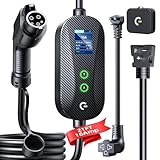
- Universal J1772 EV Charger: Compatible with all J1772-equipped EVs and PHEVs, this portable EV charger seamlessly powers brands like Ford, GM, Nissan, Audi, BMW, Kia, Hyundai, Honda, and Chevy. No more compatibility worries—just plug in and charge confidently. Whether you’re at home or on the road, this versatile electric car charger ensures your vehicle is always ready to go
- Smart Charging, Your Way: Customize your charging experience with adjustable current settings (8A, 10A, 12A, 16A) and a flexible 0–12H delay timer. Simply press and hold the “A” or “T” button for 3 seconds to start the adjustment, then press briefly to select, and finally hold again for 3s to confirm. The bright LCD screen displays real-time data like voltage, current, and power, putting you in command. Note: Once charging has started, the settings cannot be adjusted. You will need to stop charging before making any changes
- Plug Anywhere, Charge Anytime: No matter where you are, power up confidently. Supports NEMA 5-15 / 5-20 (120V丨8-12A) and NEMA 6-20 (240V丨8-16A) outlets—ideal for home, garage, or road trips. Compact and portable, it’s the perfect balance of power and freedom
- Safety You Can Trust: Built with triple overcurrent protection, a fireproof PC shell, and an IP67 waterproof rating, this portable EV charger ensures safety in any condition. It operates reliably in temperatures from -22°F to 122°F, so you can charge worry-free, rain or shine. Trust in advanced engineering that puts your safety first—because every charge should be secure
- 2-Year Professional Care & Support: If any compatibility or operational issues arise, contact the Grasside Team via Amazon Message Center for a prompt response within 12 hours. Backed by a 2-Year Grasside Care, this J1772 charger offers long-term support and peace of mind
AutoTrader’s October 2026 article frames a scenario around whether an EV charged on Eskom power costs less to run than a petrol car at R30 per litre. R30 per litre is that article’s scenario input, not an established national October 2026 retail petrol price. A result calculated at that figure answers only the conditional question posed by that scenario.
These examples illustrate why the word “cheaper” needs a qualifier. A claim may refer to the energy bill, a five-year total, or a particular model pairing. Check what the quoted number includes: whether it counts the purchase price and financing, which fuel and electricity rates it uses, and whether the result includes charger setup, maintenance and resale. If an article gives a single total without its assumptions, it is difficult to apply to another household or to update when prices change.
Recommended Free Tools
The IEA’s tool is useful as a framework because it combines purchase cost with ongoing fuelling or charging, maintenance and financing. It does not remove the need for local inputs. A tool output is only as relevant as the vehicle prices, tariff, fuel price, driving assumptions and cost categories entered for the case you want to evaluate.
Independent reader supportYour contribution helps us test, update, and keep practical guides available for everyone.Charging access can change the practical cost
Before assuming an EV’s home-charging cost, confirm that charging at home is feasible. A home charger may require equipment and electrical installation; the cost depends on the vehicle, the existing installation and the work required. Check connector and vehicle compatibility, installation requirements and the household’s tariff before adding a quote to the TCO calculation. If a home installation is not possible, model the public-charging prices and locations the driver can realistically use instead.
For a driver who charges partly at home and partly in public, use a blended cost based on the expected share of energy from each source, not an unweighted average of two prices. If the charging mix is uncertain, calculate separate home-heavy and public-heavy scenarios. That makes the effect visible without pretending the future split is known.
When obtaining a home-charger quote, make sure the quote covers the equipment and the installation work that the household needs, and verify that the unit is compatible with the vehicle. The IEA tool itself treats whether a home charger will be installed as a relevant TCO input. That is a prompt to account for the decision, not evidence of a universal installation cost or a reason to assume every EV owner will install one. Keep a quote’s date and scope with the calculation.
Quick wins for a faster PC:
Clear out junk files and repair common Windows errorsFree Scan →Scan for outdated or missing drivers - takes under a minuteDriver Scan →Charging convenience also belongs in the practical comparison even when it is not assigned a dollar value. If the driver cannot reliably charge at home and has not confirmed usable public charging locations and prices, a home-tariff-only calculation does not represent that driver’s likely costs. Make the charging assumption explicit and test a second scenario if access is uncertain.
Best Value
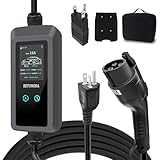
- 2026 CHARGING UPGRADE: The upgraded J1772 charger features four adjustable current levels (8A/10A/13A/16A) and an intelligent delay timer from 1 to 12 hours. Whether you're charging at night or during off-peak hours, you can enjoy smarter energy usage, lower costs, and complete convenience — all on your own schedule.
- ONE CHARGER FOR EVERY J1772 EV/PHEV: Works seamlessly with all SAE J1772 electric vehicles and plug-in hybrids—from Tesla (with adapter) to Ford, GM, Nissan, Audi, BMW, Kia, Hyundai, Honda, Chevy, and more. Ideal for both home and travel, this 16A Level 1 & 2 charger keeps your EV fully charged and ready whenever you hit the road.
- LEVEL 1 & 2 PORTABLE CHARGER ANYTIME: Designed for maximum flexibility, the BETUMODA Level 1 & 2 EV charger features both 5-15 and 6-20 plug compatibility. Whether you're charging at home, at a friend’s house, or on the road, you can stay powered up anywhere. NEMA 6-20 plug for Level 2 EV charging (240V, 16A, 3.68kW, 9–12 miles/hr) and a NEMA 5-15 adapter for Level 1 EV charging . NOTE: The 5-15 adapter is compatible only with 5-15 outlets and should not be used above 16A—protecting both your vehicle and your home’s electrical system.
- COMPLETE CONTROL INSTANTLY: Many EV chargers only show minimal information, leaving you guessing. Our upgraded charger, equipped with a 2.8-inch Touch LED display, provides comprehensive, real-time updates on voltage, current, and power load. The built-in delayed start timer lets you set charging exactly when it’s convenient for you. With just one glance, you can monitor and manage every aspect of your charging session—making each charge smarter, safer, and more efficient.
- BUILT FOR SAFETY AND DURABILITY: Charge with confidence every time. This portable EV charger is equipped with advanced protection features—including overheat, overvoltage, and overcurrent protection—and is FCC and CE certified. Its intelligent control box features a smart monitoring chip to track charging status in real time. With an IP65-rated housing, every charge is safe, reliable, and worry-free.
Common pitfalls to avoid
- Comparing unlike vehicles: a small, lightly equipped car and a larger crossover may serve different needs. Match practical use before comparing costs.
- Calling running cost total cost: a per-kilometre energy advantage leaves out purchase, finance and other ownership categories.
- Using a national electricity or fuel price: use the household’s actual tariff and a dated fuel price for the relevant zone.
- Pricing every EV charge at home: include the share and applicable cost of public charging when it is part of the owner’s routine.
- Counting the loan principal twice: use one consistent financing method, not the vehicle price plus the principal component of all loan payments.
- Assuming unverified savings or costs: do not set EV maintenance to zero, assign a generic charger installation price, or use incomparable resale estimates.
- Hiding the time horizon: a result without years owned and kilometres driven cannot show how running costs accumulate.
Each pitfall can make a calculation look more precise than it is. The remedy is not to abandon comparison, but to name the boundaries: which cars, which dates, which tariffs and which costs. If an input is unknown, leave it out consistently or show a clearly labelled scenario rather than filling the gap with an unsupported number.
What you can conclude—and what you cannot
As of October 2026, the available figures support a scenario-based method, not a single current South African break-even kilometre or a universal verdict. The cited material does not establish comparable October 2026 primary-source model prices, zone-specific fuel prices, or a complete public fast-charging price set. Without those inputs, a precise break-even claim would be misleading.
You can still reach a useful conclusion for a specific buyer by using current quotations and tariffs, matching the vehicles, and publishing every key assumption. Recheck electricity tariffs, monthly fuel prices, vehicle prices, public charging rates and financing terms when making or updating the calculation: a change in any of these can alter the result.
Free tools Windows power users keep installed
One-click scans. No signup required.
A good conclusion should therefore be conditional: for the named vehicles, at the stated purchase prices and rates, under the stated driving and charging pattern, one option has the lower estimated total over the selected period. If the buyer drives more or less, uses a different tariff, charges publicly more often, or chooses different financing, the answer may change. That is a more useful answer than declaring that EVs or petrol cars are always cheaper.
Frequently Asked Questions
Is it cheaper to run an EV on Eskom power than a petrol car at R30 per litre?
It depends on the vehicles’ energy consumption and the applicable electricity rate. R30 per litre is the scenario used by AutoTrader in its October 2026 article, not an established national October 2026 petrol price. For a fair answer, compare dated fuel and electricity prices, include the EV’s actual charging mix, and distinguish energy cost from total ownership cost.
How much does it cost to charge an electric car in South Africa?
There is no single national home-charging rate. Use the tariff that applies to your household account, noting that Eskom publishes multiple tariff categories and municipal retail rates may differ from Eskom-direct rates. Price public fast charging separately using the current prices and fees for chargers you would actually use.
What costs should I include when comparing an electric and petrol car?
At minimum, compare purchase and financing costs, energy, and maintenance over the same ownership period and kilometres. Include charger equipment and installation, insurance or resale only when you have comparable figures, and state which categories are included or omitted.
What’s actually slowing this PC down?
Pick the symptom - the matching free tool is one click away.
Does an EV’s lower cost per kilometre mean it will cost less overall?
Not necessarily. Lower energy costs may be outweighed by a higher purchase and financing cost over the period you own the vehicle. The result depends on the specific models, distance driven, tariffs, charging mix, maintenance and any resale estimate.
How should I compare home charging with public charging?
Estimate the share of energy expected from each location, then multiply each share by its applicable rate and fees. Do not price public charging at the household tariff or use an unweighted average of home and public prices. If the split is uncertain, show separate charging-mix scenarios.
The Bottom Line
An EV may save on energy when charged at home, but that alone cannot settle total ownership cost. Compare similar vehicles over the same years and kilometres, use dated local fuel prices and the actual electricity tariff and charging mix, and include financing and other costs only where the figures are comparable. Treat the outcome as a scenario for a specific buyer, not a universal South African break-even verdict.
Quick Recap
Product prices and availability are accurate as of the date/time indicated and are subject to change. Any price and availability information displayed on Amazon at the time of purchase will apply.