An electric car can cost less to run in the UAE without costing less to own. The result depends on the exact cars, what you pay for them, how you charge or refuel, insurance, maintenance, financing and resale value over the same period. Compare those costs for your own emirate, driving distance and charging access—not just the electricity and petrol bills.
PwC Middle East’s 2024 UAE outlook found private EV ownership marginally more expensive than petrol-car ownership in its model, largely because of higher initial vehicle and insurance costs. Its commercial comparison found an EV cost advantage, with fleet discounts among the relevant factors. Those are modeled findings, not a guarantee for an individual buyer. The method below helps you calculate your own comparison.
As an Amazon Associate I earn from qualifying purchases.
What total ownership cost includes
Set one ownership period—for example, the number of years you genuinely expect to keep the car—and one distance for both vehicles. Then add the costs you expect to incur during that period and subtract the value you expect to recover when you sell. A lower energy bill is only one part of the result.
Do these 3 things before closing this tab:
1Fix the driver behind crashes, sound loss and screen glitches2Clear out junk files and repair common Windows errors3Scan for outdated or missing drivers - takes under a minuteFor a like-for-like comparison, include:
- The actual purchase price after dealer discounts, fees and other transaction costs.
- Financing charges, if you borrow. Keep the car’s purchase price and the cost of borrowing distinct so you do not count the principal twice.
- Insurance quotes based on the same driver, location, coverage and excess.
- Petrol or electricity for the distance you expect to drive.
- Scheduled maintenance, repairs, tyres and any service package.
- Registration and other recurring charges.
- Home-charger equipment, electrical work, installation and any building approval costs.
- Expected resale value at the end of the period.
A useful basic calculation is:
Total ownership cost = purchase price + financing charges + insurance + energy + maintenance and repairs + tyres + registration and other recurring charges + charging installation costs − expected resale value.
#1 Best Overall

- Flex Level 1 EV Charger - The EVDANCE Level 1 electric car charger is compatible with J1772 electric vehicles and plug-in hybrid vehicles (North American Standard). *Tesla requires a SAE J1772 adapter.
- Convenient to Use - This charger has both NEMA 6-20 plug for 16A 240V charging (3.68kW, 10-12 mi/h) and a NEMA 6-20 to 5-15 plug adapter for 12A 120V charging (1.44kW, 2-5 mi/h). The included bag makes it easier to carry on the go. It also has a 25ft cable length, you can use it flexibly from anywhere in the garage or driveway.
- Check Your Outlet Type -This charger works with standard 120V NEMA 5-15/5-20 outlets (2-5 mph charging speed) and 240V NEMA 6-20 outlets (10-12 mph) . It's not compatible with NEMA 6-15/10-30/14-30/14-50/6-50 outlets – you'll need a NEMA 14-50/14-30/10-30/6-50 to 6-20 adapter (sold separately) to connect.
- Compatible EV Models -This EV charger works with most major electric vehicles, including Ford, Chevrolet, Hyundai, Audi, Nissan Ariya, Rivian R1S, Kia, and others. However, it's not compatible with Mini Cooper Electric Hardtop,Toyota Prus Prime/Z4X/RAV4Prime, Porsche Taycan Base/4S/Turbo/Turbo S or Tesla models (Tesla requires a J1772 to Tesla Adapter, sold separately). For a full list of compatible models, check out the Full Compatibility List on our product page.
- Indication Displays - LED display that can tell you the status as well as indicate errors while charging your electric vehicle.
Then divide the total by the kilometres driven during the ownership period to get a cost per kilometre. Keep the period and distance identical for both cars. This measure helps compare different usage patterns, but it does not replace the total: a lower cost per kilometre can still mean more money spent overall if you drive much farther.
How to build a fair comparison
1. Pick genuinely comparable cars
Compare vehicles of similar size, equipment and intended use. A small petrol hatchback and a large electric SUV are not a clean comparison unless that is the choice you are actually considering. Note the exact trim and any equipment that changes the price, insurance quote, energy consumption or resale assumption.
2. Use transaction prices, not mismatched sticker prices
Record what each car would cost you after the dealer’s actual discount and applicable fees. Do not compare one car’s list price with another car’s discounted offer. If you are financing, record the down payment, borrowing terms and financing charges separately. For an ownership-cost comparison, count the car’s price once and add the cost of financing; do not add all loan principal payments on top of the purchase price.
3. Set your real distance and time horizon
Use your expected annual kilometres and the number of years you expect to own the car. The energy total depends directly on distance; depreciation, warranty exposure and resale value depend on the time horizon as well. If you are unsure, run more than one plausible distance and ownership period rather than treating a single estimate as certain.
4. Get insurance quotes on equal terms
Request quotes using the same driver details, emirate, coverage level and excess for both vehicles. A quote for comprehensive cover is not comparable with a quote for a different coverage level. Do not assume that the cars’ purchase prices alone predict your premium; use written quotes for the specific vehicles and circumstances.
5. Add maintenance, tyres and fees
Use the service schedule and package terms for the specific cars, and include costs you will actually bear during your chosen period. Add repairs, tyres, registration and other recurring charges as applicable. A package should be counted only for the services and period it covers; do not also include those same covered services as separate costs.
Rank #2

- 【Efficient Charging】VDLPOWERVP level 2/level 1 EV charger is equipped with NEMA 6-20 Plug(220V/240V), it offers 16A current and up 3.5kW output. Two charging options, low current charging can effectively reduce battery wear and prolong service life. Choosing to connect the conversion line for charging can realize a full day's commute mileage in one night.
- 【Level 1 & Level 2 EV Charger Adapter】This portable ev charger is equipped with NEMA 6-20 plug (Level 2, 240V, 16A) and NEMA 5-15 adapter (Level 1, 110V, 12A), you can connect our electric vehicle chargers to a standard household socket or a dedicated industrial socket, use it flexibly from anywhere in the garage or driveway.
- 【Intelligent Charging-Durable and Safe】The intelligent chip design of its control box can keep monitoring the charging status at any time, provides multiple safety protections such as lightning protection and leakage protection. This electric vehicle charger is made of premuim and sturdy materials and is FCC certified. EV Control box is IP65 waterproof and dustproof.
- 【Easy Charging and Indication Displays】Just connect to the outlet and the car, the ev charger can work properly. LED indicators that can tell you the status as well as indicate errors while charging your electric vehicle. It can help you get the charging station status information quickly.
- 【Portable Design】The ev charger has a 20ft charge cable, which is long enough for you to charge without getting tangled.The appropriate cord length and weight allow you to easily put it in the trunk of an electric car whether you are visiting friends or renting a vacation house.
6. Estimate resale consistently
Subtract the expected resale value of each car at the same age and usage. Resale assumptions can materially change the result, so identify them as estimates, not guaranteed prices. If you cannot confidently predict the value, calculate more than one outcome—such as a lower and a higher resale estimate—and see whether the decision changes.
PC Slower Than It Used to Be?
A free scan shows the junk files, broken settings and background clutter dragging Windows down - then fixes them in one click.Free scan · Windows 10 & 11Crashes, No Sound, or Screen Glitches?
Random freezes, missing sound and display glitches usually trace back to one bad driver. Find and replace yours safely.Free scan · under a minuteHow to calculate petrol and EV energy costs
Petrol car
Use the car’s expected fuel consumption and the petrol price that applies where you refuel. A simple calculation is:
Petrol cost = kilometres driven ÷ kilometres per litre × price per litre.
Use a realistic consumption figure for the specific car and your driving, not a fuel-economy figure from a different model. Use the current local fuel price for the same period as your comparison. UAE petrol prices can change; the material available for this guide does not establish a current monthly price, so do not treat an old price or an example from another month as today’s rate.
Electric car
Estimate the electricity needed for your kilometres, then apply the prices for the charging you will actually use. If the vehicle’s consumption is stated in kWh per 100 km, a starting estimate is:
Electricity used = kilometres driven × kWh per 100 km ÷ 100.
Rank #3

- 【Reliable Safety with PBE & LRC Tech】Powered by ELEGRP's exclusive PBE technology, this level 2 EV charger provides reliable protection against surges, leakage, and overloads—trusted by over 300 million households since 2000. The J1772 charger features advanced LRC tech for better conductivity, cooler operation, and stable charging speed
- 【Dual Charging Model】Charging speed depends on your outlet type. Use the NEMA 6-20 plug for Level 2 240V fast charging at up to 3.84kWh (11-14 miles/hr). For slower Level 1 charging 120V, use the included 5-15 adapter, offering 1.44kWh (4-5 miles/hr)
- 【Max 25FT Reach &and IP67 Weatherproof Reliability】 Our 25FT portable cable offers the maximum length allowed by NEC safety standards for garage, wall, or outdoor use. This electric car charger is IP67 waterproof and built for cold weather, from -21°F to 121°F, including heavy rain, or snow
- 【U.S.-Based Expert Support & and 2-Year Warranty】Get real help from our U.S.-based support team, available Mon–Sat (5 AM–3 PM PT) for fast, professional assistance. Every ELEGRP charger is backed by a 2-year replacement warranty, so you can charge your vehicle with confidence
- 【Universal J1772 Compatibility】Compatible with all SAE J1772 certified EVs, BEVs, and PHEVs. For Tesla owners: a J1772-to-NACS adapter (sold separately) may be required. Please verify your car compatibility before purchase and contact our support team with any questions
Multiply that by the relevant price per kWh. Account for charging losses where possible, and separate home, public AC and public DC charging if you expect to use more than one. The electricity price alone is not the full charging cost if you need to buy and install a home charger or complete electrical work.
Do not assume that a public charging rate applies to electricity used at home. In Dubai, DEWA says home EV charging behind the customer’s meter is added to the normal electricity bill at standard residential rates. The amount therefore depends on the applicable residential billing and the customer’s electricity use. For a home-charging estimate, use your own bill and the applicable residential rate rather than applying a public-charger tariff.
Charging costs and access in the UAE
Dubai home charging
DEWA says a home charger can be installed at a customer’s premises behind the customer’s meter. In Dubai, DEWA advises customers to use DEWA-approved electrical contractors for electrical equipment installation, including home charging stations. Before treating home charging as an available or inexpensive option, confirm approval with the relevant landlord or building management, check that your parking space and electrical supply can support the installation, and establish any associated costs. A home charger’s purchase price, electrical work and installation belong in the ownership calculation.
What’s actually slowing this PC down?
Pick the symptom - the matching free tool is one click away.
Home access is not just a tariff question. A driver who cannot install a charger at home may rely more heavily on public charging, with different prices, time requirements and practical availability. Confirm your actual arrangements before assuming that a home-charging scenario applies.
DEWA EV Green Charger rates
DEWA lists registered EV Green Charger consumption rates of AED 0.7 per kWh for AC charging and AED 1.2 per kWh for DC charging, plus VAT. DEWA’s FAQ says these rates apply from 30 September 2024. It also lists a AED 500 security deposit and AED 20 delivery charge for individual and business accounts. Separately, the UAE Ministry of Energy and Infrastructure’s National Demand Side Management Program 2050 Annual Report 2024 gives the same AC and DC rates as the national EV charging tariff effective January 2025.
These published figures have different stated effective dates, and charging-service terms can change. Confirm the current rate, VAT treatment and applicable account terms before calculating. DEWA states that its EV Green Charger network is within Dubai; its rates and coverage should not be assumed to describe every emirate. Check the relevant local charging options and electricity arrangements for your own location.
Rank #4
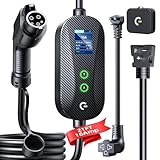
- Universal J1772 EV Charger: Compatible with all J1772-equipped EVs and PHEVs, this portable EV charger seamlessly powers brands like Ford, GM, Nissan, Audi, BMW, Kia, Hyundai, Honda, and Chevy. No more compatibility worries—just plug in and charge confidently. Whether you’re at home or on the road, this versatile electric car charger ensures your vehicle is always ready to go
- Smart Charging, Your Way: Customize your charging experience with adjustable current settings (8A, 10A, 12A, 16A) and a flexible 0–12H delay timer. Simply press and hold the “A” or “T” button for 3 seconds to start the adjustment, then press briefly to select, and finally hold again for 3s to confirm. The bright LCD screen displays real-time data like voltage, current, and power, putting you in command. Note: Once charging has started, the settings cannot be adjusted. You will need to stop charging before making any changes
- Plug Anywhere, Charge Anytime: No matter where you are, power up confidently. Supports NEMA 5-15 / 5-20 (120V丨8-12A) and NEMA 6-20 (240V丨8-16A) outlets—ideal for home, garage, or road trips. Compact and portable, it’s the perfect balance of power and freedom
- Safety You Can Trust: Built with triple overcurrent protection, a fireproof PC shell, and an IP67 waterproof rating, this portable EV charger ensures safety in any condition. It operates reliably in temperatures from -22°F to 122°F, so you can charge worry-free, rain or shine. Trust in advanced engineering that puts your safety first—because every charge should be secure
- 2-Year Professional Care & Support: If any compatibility or operational issues arise, contact the Grasside Team via Amazon Message Center for a prompt response within 12 hours. Backed by a 2-Year Grasside Care, this J1772 charger offers long-term support and peace of mind
Charging-network figures have a date attached
PwC Middle East’s 2024 report described the UAE’s 2023 deployment as around 2,000 public charge points, more than 65% of them slow chargers. Those are historical figures for 2023, not a current station count. They should not be used to infer that a particular driver has convenient charging access today. Check current local maps and the stations available on your routes.
What published cost comparisons do—and do not—show
PwC’s modeled ownership comparison
PwC Middle East’s 2024 UAE outlook found that private EV total cost of ownership was marginally higher than internal-combustion-engine (ICE) ownership in its model. The report attributed the difference mainly to higher initial vehicle and insurance costs, despite lower EV energy costs. In its commercial comparison, EVs had a cost advantage; fleet discounts were part of the context.
This is useful evidence against the idea that lower electricity costs automatically make every EV cheaper to own. It is not an estimate for your car, driver profile, financing offer or emirate. Treat it as a dated model finding, then calculate with your own prices and assumptions.
A manufacturer’s running-cost illustration
In April 2026, NIO MENA published estimates per 1,000 km of AED 280 for a petrol car using Super 98, AED 45 for EV home charging, AED 120 for public AC charging and AED 180 for DC fast charging. Its example petrol car averaged 12 km per litre, and the company attributed the calculation to pump prices at the time of publication.
These are manufacturer-published running-cost estimates, not an independent total-ownership study. They do not include purchase price, depreciation, insurance or the other costs required for a full comparison. Do not apply the figures as universal 2026 rates: recalculate with the exact vehicles, local tariff and fuel price relevant to you. An April 2026 NIO executive statement that EV running costs can be up to 84% lower is also a company claim about running costs, not independent evidence that total ownership costs are lower.
Test whether your answer changes with assumptions
A comparison is more useful when it shows what could change the result. Once you have a base estimate, change one assumption at a time, then combine realistic changes into alternative scenarios. The point is not to predict a single certain future; it is to identify which costs matter enough to affect your choice.
Best Value
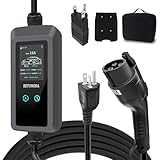
- 2026 CHARGING UPGRADE: The upgraded J1772 charger features four adjustable current levels (8A/10A/13A/16A) and an intelligent delay timer from 1 to 12 hours. Whether you're charging at night or during off-peak hours, you can enjoy smarter energy usage, lower costs, and complete convenience — all on your own schedule.
- ONE CHARGER FOR EVERY J1772 EV/PHEV: Works seamlessly with all SAE J1772 electric vehicles and plug-in hybrids—from Tesla (with adapter) to Ford, GM, Nissan, Audi, BMW, Kia, Hyundai, Honda, Chevy, and more. Ideal for both home and travel, this 16A Level 1 & 2 charger keeps your EV fully charged and ready whenever you hit the road.
- LEVEL 1 & 2 PORTABLE CHARGER ANYTIME: Designed for maximum flexibility, the BETUMODA Level 1 & 2 EV charger features both 5-15 and 6-20 plug compatibility. Whether you're charging at home, at a friend’s house, or on the road, you can stay powered up anywhere. NEMA 6-20 plug for Level 2 EV charging (240V, 16A, 3.68kW, 9–12 miles/hr) and a NEMA 5-15 adapter for Level 1 EV charging . NOTE: The 5-15 adapter is compatible only with 5-15 outlets and should not be used above 16A—protecting both your vehicle and your home’s electrical system.
- COMPLETE CONTROL INSTANTLY: Many EV chargers only show minimal information, leaving you guessing. Our upgraded charger, equipped with a 2.8-inch Touch LED display, provides comprehensive, real-time updates on voltage, current, and power load. The built-in delayed start timer lets you set charging exactly when it’s convenient for you. With just one glance, you can monitor and manage every aspect of your charging session—making each charge smarter, safer, and more efficient.
- BUILT FOR SAFETY AND DURABILITY: Charge with confidence every time. This portable EV charger is equipped with advanced protection features—including overheat, overvoltage, and overcurrent protection—and is FCC and CE certified. Its intelligent control box features a smart monitoring chip to track charging status in real time. With an IP65-rated housing, every charge is safe, reliable, and worry-free.
- Annual distance: Check a lower and higher mileage. Energy costs scale with distance, while purchase, insurance and many fixed fees do not scale in the same way.
- Ownership period: Compare the period you expect to keep the car with a shorter or longer one. Resale and depreciation assumptions may shift with age and kilometres.
- Charging mix: Compare a home-heavy case with one that uses more public AC or DC charging. Use the prices and access you can actually obtain.
- Energy prices: Recalculate using the current petrol price and applicable electricity rates. A dated example is not a substitute for a current bill or price.
- Insurance: Use the actual quotes you receive. If quotes are not final, test a higher and lower estimate rather than presenting one guess as fact.
- Resale value: Test a lower resale outcome as well as your central estimate. If this changes which car appears cheaper, resale uncertainty is a key part of the decision.
- Installation: For an EV, include charger and electrical costs only after confirming that your residence allows the installation and determining the work required.
If an EV is cheaper only in a high-mileage, home-charging scenario, that is a meaningful result: it tells you which conditions the saving depends on. If neither option remains cheaper when you vary uncertain resale or insurance assumptions, describe the decision as sensitive to those factors rather than declaring a universal winner.
A practical comparison worksheet
Build one column for the EV and one for the petrol car. Use the same ownership period, kilometres and driver assumptions in both columns. Keep receipts, written quotes and published terms alongside your estimates so you can distinguish confirmed costs from assumptions.
| Input | What to enter |
|---|---|
| Vehicle and trim | Exact make, model, year and equipment for each car |
| Purchase | Actual transaction price after discounts and fees |
| Financing | Down payment and financing charges, counted without duplicating principal |
| Ownership period | Same number of years for both vehicles |
| Distance | Expected annual kilometres and total kilometres |
| Energy | Vehicle consumption, current petrol price or relevant electricity rates, and expected charging mix |
| Insurance | Quotes with matching driver, location, coverage and excess |
| Other running costs | Maintenance, repairs, tyres, registration and recurring charges |
| Charging setup | Home charger, electrical work, installation and approvals, if applicable |
| Resale | Estimated value at the end of the same period |
| Result | Total ownership cost and total cost per kilometre |
Make the assumptions visible. Label estimates as estimates, record the date of energy prices and quotes, and avoid mixing a current offer for one car with a list price for the other. If you later receive a better quote or learn that home installation is not permitted, update that input rather than quietly changing the comparison’s basis.
The Tool Desk
Outbyte Driver Updater FREEFix the driver behind crashes, sound loss and screen glitchesFind Drivers →Outbyte PC Repair FREEClear out junk files and repair common Windows errorsFree Scan →How to interpret the result
The cheaper option in your calculation is the one with the lower total cost over your chosen period and usage—not necessarily the one with the lowest monthly energy bill. If the difference is small relative to uncertain resale, insurance or installation costs, the arithmetic may not support a confident cost-only winner. In that case, use the scenario results to see what would make one option cheaper, and make sure those conditions fit your actual driving and parking situation.
There is no single UAE-wide answer that applies to every driver. Private and commercial buyers can face different purchase prices and discounts, while emirate, residence, charging mix and annual distance affect the inputs. A defensible comparison is specific to the two vehicles and the buyer’s real costs.
Quick Recap
Product prices and availability are accurate as of the date/time indicated and are subject to change. Any price and availability information displayed on Amazon at the time of purchase will apply.




