Recommended Free Tools
Cold weather can cut an electric car’s usable driving range because the battery delivers energy less efficiently at low temperature while cabin heating and battery-temperature control consume additional electricity. The size of the drop depends on the model, outside temperature, heater type, speed, route, tire pressure, battery condition, and whether the car was preconditioned. There is no single winter-loss percentage that applies to every EV.
You can reduce avoidable consumption and make a cold-weather trip more predictable by preconditioning while plugged in, starting with extra charge, using seat and steering-wheel heat when practical, keeping tires at the recommended pressure, moderating speed, and planning additional charging time. Those steps manage the effect; they cannot eliminate the underlying loss.
As an Amazon Associate I earn from qualifying purchases.
How much range does an electric car lose in cold weather?
The most useful answer is a measured result with its conditions attached, not a universal rule. Different tests use different vehicles, temperatures, heater settings, speeds and definitions of efficiency.
Free tools Windows power users keep installed
One-click scans. No signup required.
| Study and conditions | Reported result | How to use the number |
|---|---|---|
| AAA, 2026: three EVs tested on a controlled chassis dynamometer at 20°F, 75°F and 95°F, with HVAC set to 72°F | Calculated driving range was 39.0% lower at 20°F than at 75°F; MPGe was 35.6% lower | Applies to the tested EVs and this protocol, not a forecast for every model or trip. AAA’s 2026 report describes the test. |
| AAA, 2019: controlled test of five EVs, comparing 20°F with 75°F while HVAC heat was used | Average driving range decreased 41% | This older result has a small sample and specific test settings; treat it as historical controlled-test evidence, not an owner guarantee. AAA’s 2019 study gives the methodology. |
| U.S. Department of Energy summary, 2020: controlled laboratory testing of all-electric vehicles | Nearly 40% decrease in fuel economy in cold temperatures | The DOE summary is a broad laboratory finding, not a prediction for a particular car. DOE’s summary provides the scope. |
These figures are not interchangeable: range, MPGe and fuel economy are related but different measures. A car that loses 39% of calculated range in one test will not necessarily lose 39% on your commute. Highway speed, wind, snow, hills, traffic, cabin temperature and battery state all change the result. Compare vehicles only when outside temperature, HVAC setting, preconditioning, heater design, model year, drive cycle and speed are also comparable.
#1 Best Overall

- Keep Your Battery Ready for Freezing Weather: When temperatures drop, this heating pad maintains your battery’s cold cranking amps – so your vehicle still starts on the coldest mornings. Just place it under the battery, and it delivers consistent, efficient warmth before you turn the key.
- Simple Plug‑In Operation with Auto Shut‑Off: Plug the 72‑inch cord into any standard 120V AC outlet. In 10–30 minutes, the pad warms your battery to around 68°F. The built‑in thermostat then turns itself off automatically. Unplug and drive – no need to watch or guess.
- Durable, Slim & Easy to Install: At only 1.8mm thin, this 8.5" x 5.5" pad slides right under your battery in the tray or box – no tools or extra hardware required. The waterproof silicone coating resists oil, battery acid, and wear, while the 60W heating element transfers warmth efficiently.
- Specs You Can Rely On: Runs on 120V AC, 60W power with a 2‑prong plug. The 72‑inch cord gives you flexibility to reach nearby outlets. Designed for high heat transfer and built to last under tough under‑hood or under‑battery conditions.
- Important Compatibility Note: This battery warmer is designed for standard lead‑acid and AGM batteries. It is not intended for use with lithium‑ion, Ni‑Cd, batteries that have an ABS plastic case, or inside an insulated battery box. Please check your battery type before use.
Why cold weather reduces EV range
Low temperature changes battery performance
An EV battery is designed to operate over a temperature range. In the cold, the battery cannot deliver and accept energy as readily as it does at moderate temperature. The vehicle therefore spends energy warming the battery and may limit power or charging speed until the pack reaches a suitable temperature. That energy is unavailable for propulsion, so the same stored charge moves the car fewer miles.
The effect is not a fixed penalty because battery chemistry, pack size, insulation, software and thermal-management hardware differ by vehicle. A mild morning near freezing and a 20°F trip are not equivalent conditions, and a car parked indoors starts from a different thermal state than one left outside overnight.
Cabin heat is a large electrical load
An internal-combustion car can use waste engine heat for the cabin. An EV must make cabin heat electrically. The DOE’s 2024 technical comparison says conventional HVAC systems in the technologies it examined typically require 2,000–4,000 watts, while a heated seat uses about 50 watts per seat. Those are report figures for the described systems, not a consumption rating for every current model.
Do these 3 things before closing this tab:
1Clear out junk files and repair common Windows errors2Scan for outdated or missing drivers - takes under a minute3Repair Windows errors before they cause bigger problemsBecause cabin heat can draw much more power than a seat heater, warming the whole cabin has a noticeable effect on a short trip or a long drive in severe cold. Lowering the cabin set point when you remain comfortable and using localized heat can reduce that demand.
Battery temperature management also uses energy
The car may heat the battery before driving, maintain its temperature while moving, or condition it before fast charging. This protects performance and charging capability but consumes electricity. On a very cold day, the battery and cabin can require heat at the same time, so the range display may fall faster than expected during the first part of a trip.
Rank #2
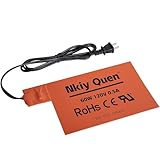
- Efficient Heating:Features built-in precision heating wires that quickly generate uniform heat, directly acting on the bottom of the battery to effectively enhance battery activity in low-temperature environments, ensuring stable cold start current and preventing vehicle start-up difficulties caused by severe cold weather.
- Constant Temperature:Built-in thermostat automatically cuts off power when the overall temperature reaches approximately 122°F, preventing overheating and potential battery damage. Temperature may rise briefly during the heating process due to rapid heat transfer, and requires 15-20 minutes of continuous heating for the most accurate temperature. Due to the difference in the distribution of the heating wire, there may be a slight temperature difference between different locations. The thermostat is constructed with secondary insulation, resulting in a delay in heat transfer.
- Safety Specifications:The silicone heating pad measures 8.2 inches × 5.5 inches. Its ultra-thin design allows it to seamlessly integrate into the bottom of most battery trays or battery boxes without occupying additional space. No modifications to the installation structure are required—simply place it and use it.
- Quality Material:The outer layer is made of high-quality orange silicone, which is soft, wear-resistant, and resistant to battery acid corrosion. It also has excellent insulation properties to prevent electrical leakage hazards and is suitable for a variety of complex working conditions.
- Easy Installation:Simply place it directly under the battery, connect it to a 120V AC power source, and it will start working. Be sure to unplug it promptly after use. Please note: This product is not suitable for lithium-ion batteries, nickel-cadmium batteries, ABS battery cases, or insulated battery boxes.
Cold-weather conditions can add driving resistance
Winter trips often involve wet or slushy roads, snow, headwinds, traffic and lower tire pressure. Each can raise energy use. AAA specifically includes properly inflated tires, smooth driving and avoiding sustained high speeds in extreme temperatures among its efficiency strategies. Do not assume a dashboard range change is caused only by the air temperature.
Heat pump or resistance heater: what difference does it make?
A heat pump moves heat from outside air into the cabin. An electric resistance heater makes heat directly. The DOE says a heat pump is more efficient than resistance heat in most conditions, but its advantage varies with outside temperature, system design and vehicle controls. Some EVs combine a heat pump with resistance heating.
| Heating detail | Evidence and practical meaning |
|---|---|
| Heat-pump comparison | In a DOE 2024 comparison of two battery-electric vehicles, the configuration using a heat pump plus resistance heater had 38% lower total HVAC power draw at 20°F than the vehicle using resistance heat. This is a bounded two-vehicle result, not a promise for every heat-pump EV. Read the DOE technical report. |
| Seat heating | The same DOE report cites about 50 watts per heated seat, compared with 2,000–4,000 watts for conventional HVAC in its comparison. Seat heat can therefore be a lower-energy way to keep occupants comfortable, provided the cabin itself remains safe and suitable. |
| Very cold conditions | A heat pump still needs to work against a larger temperature difference as the air gets colder and may rely on resistance heat. Its benefit can shrink; it does not prevent winter range loss. |
When comparing vehicles, ask which heater is fitted, whether a resistance element supplements the heat pump, and how the test temperature and cabin setting were controlled. A trim level or model year can change the hardware.
Preconditioning: the highest-value step before leaving
If your vehicle supports it, schedule cabin and battery preconditioning while the car is connected to a charger. The DOE explains that many EVs can warm the cabin and battery from grid electricity, shifting some warm-up energy away from the battery’s stored driving energy. Preconditioning does not create extra energy; it starts the trip with a warmer, more efficient system.
- Plug in before the scheduled departure.
- Use the vehicle’s app, infotainment screen or charging schedule to set a departure time and enable cabin and battery preconditioning if separate controls are provided.
- Allow enough time for the schedule to run in the expected temperature; follow the vehicle’s instructions for whether the battery must be at a particular charge level.
- Unplug shortly before leaving and confirm that the cabin is comfortable and the charge level covers the planned route with a margin.
In a DOE program record reporting Argonne National Laboratory data, preconditioning reduced energy consumption by 9%–20% in a 7.5-mile regulatory city-driving cycle at 20°F. That is a short, specific test cycle, not a guaranteed saving for an owner’s commute or road trip. DOE’s winterizing guidance and the 2024 technical report describe the conditions.
Rank #3

- 500W Practical Heater: 12v 500w car heater can be used for windshield defrosting, defogging and deicing. With this 500w 4 holes air outlets car heater, you no longer have to worry about the warmth in the car.
- Wide Application: The heater can be applied for heating 12V car(gasoline engine), storage battery cars, RV and all kinds of other vehicles. Check the car battery is 12V or 24V. The red line is connected to the positive, and black line is connected to the negative.
- Excellent Quality: It is made of high quality metal materials, sturdy and durable, and effectively prevents high temperature deformation and cracking.
- Excellent Performance: Car demister has high heat conversion rate and realtime heating. 12V heater has the characteristics of compact size, high temperature, low energy consumption, low noise, and the temperature is as high as 86~100 degrees Celsius.
- Package Include: 1xcar heater, 4xaluminum foil telescopic tube, 2xclamps, 4xfastener, 2xbracket.
Practical fixes while the car is parked
Choose warmer parking when possible
A garage or covered area can reduce how cold the vehicle and battery become before departure. DOE recommends covered parking when practical. It will not make the car immune to cold, but it can reduce the amount of energy needed to reach operating temperature.
The Tool Desk
Outbyte PC Repair FREEClear out junk files and repair common Windows errorsFree Scan →Outbyte Driver Updater FREEFix the driver behind crashes, sound loss and screen glitchesFind Drivers →Start with a winter margin
Use the vehicle’s cold-weather consumption and the route’s elevation, speed and charging availability to decide your starting charge. The dashboard estimate may adapt as conditions change, so do not plan to arrive at a charger or destination with only a few predicted miles remaining. For an unusually cold or remote trip, add more margin than you would in mild weather and identify alternative charging locations before leaving.
Driving techniques that reduce avoidable consumption
Use targeted heat when it suits the occupants
Heated seats and a heated steering wheel warm the people touching them rather than the entire cabin. AAA recommends these features, along with reducing cabin heat when comfortable, as ways to manage energy demand. Keep windows clear and maintain a safe cabin temperature; comfort and visibility take priority over a small efficiency gain.
Check tire pressure
Cold air can lower tire pressure. Check all tires when cold and inflate them to the vehicle maker’s recommended pressure shown on the door placard or in the owner’s manual. Do not use the maximum pressure molded into the tire sidewall as a substitute for the vehicle specification.
Moderate speed and drive smoothly
AAA advises avoiding sustained high speeds in extreme temperatures. Smooth acceleration and anticipation reduce unnecessary power peaks, especially on a slippery or congested route. Drive for road conditions first: a small energy saving is never worth compromising traction or stopping distance.
What’s actually slowing this PC down?
Pick the symptom - the matching free tool is one click away.
Rank #4

- This FVPE car kettle features automatic 12V/24V voltage recognition for plug-and-play operation. As a small electric kettle, it has a 450ml capacity, stands 9 inches tall with a 3.1-inch top diameter. The moderate volume meets daily water demands and will not occupy excessive space inside the vehicle.
- This travel electric kettle comes with boiling and heat preservation functions, with adjustable temperature ranging from 86°F to 203°F. You can adjust the water temperature as needed to prepare milk powder, coffee, tea and honey water for a pleasant drinking taste. The FVPE car water boiler inner liner is made of food-grade 304 stainless steel and BPA-free, suitable for daily drinking.
- This compact car electric kettle is equipped with responsive touch buttons for effortless daily operation. It features built-in dry burn protection and a triple-layer insulated housing for safer daily use. Designed with an upper-narrow and lower-wide tapered body as a portable car kettle, it fits well into the cup holders of most vehicles. It comes with a 39‑inch cigarette lighter plug cable.
- This 12V electric water boiler is fitted with a backlit LED digital display, allowing you to clearly check the real-time water temperature in dim car environments. The streamlined button panel consists of power, temperature adjustment and setting keys for intuitive daily operation.
- This portable kettle for travel comes with practical accessories including a storage bag and a removable tea strainer. The storage bag makes it easy to store and carry during trips and camping, while the strainer can effectively filter tea residues.It suits long‑commute drivers, road‑trip enthusiasts and professional truckers, and is ideal for long‑distance travel, waiting in traffic, car camping and family outdoor activities to prepare different hot drinks in the vehicle and meet your hot water needs on the go.
Account for winter route conditions
Snow, slush, standing water, strong wind and steep grades can increase consumption beyond the temperature effect measured in laboratory tests. If the route changes or traffic becomes slow, watch the trend in energy use rather than relying only on the original range estimate.
Planning charging on a cold-weather trip
- Estimate the usable winter distance. Start from your own recent cold-weather consumption if you have it. Otherwise, treat published test percentages as a warning that available distance may be materially lower, not as an exact personal adjustment.
- Map charging before departure. Choose a primary station and at least one practical alternative. Check opening status, connector type, expected power and access requirements in the vehicle or charging provider’s current information.
- Allow for slower early charging. A cold battery may limit charging power until it warms. If the vehicle offers battery preconditioning for a fast charger, enable it according to the owner’s instructions while navigating to that station.
- Budget extra time. AAA recommends planning for more frequent charging in cold regions. Add time for a stop that takes longer than expected rather than scheduling the trip around an ideal charging speed.
- Use the 80%–100% charging trade-off deliberately. DOE notes that many batteries reduce charging power in the 80%–100% state-of-charge range during fast charging. For a long winter leg, compare the extra distance gained by charging above 80% with the time required for the slower final portion. A lower target may be sensible when another reliable charger is available; a higher target can be worthwhile when the next stop is far away or uncertain.
Charging outdoors in snow or sleet
Snow and sleet can freeze an outdoor charging connector. DOE suggests a magnetic EV charging-inlet connector cover or bag to protect the charging hardware. This accessory protects the connector; it does not restore range or warm the battery. Confirm that any cover is compatible with the vehicle inlet and charging equipment, and follow both manufacturers’ instructions for storage and use. DOE’s winterizing article contains the cited guidance.
Before connecting, clear loose snow and ice without forcing the latch or scraping electrical contacts. If the connector, inlet or cable is wet, frozen or damaged, use the vehicle and charger instructions rather than improvising a repair.
Independent reader supportYour contribution helps us test, update, and keep practical guides available for everyone.What winter range studies do—and do not—tell you
AAA’s 2026 test is recent and directly relevant, but it covered only three EV models in a controlled test cell. Its 20°F, 75°F and 95°F results were produced with the HVAC set to 72°F on a chassis dynamometer. A real driver may see a smaller or larger change because of speed, wind, hills, traffic, preconditioning, tire pressure, heater configuration, battery age and route length.
The 2019 AAA result used five EVs and is useful historical context, but vehicle technology and software have changed. DOE’s 2020 nearly-40% laboratory finding is a broad summary. None of these sources determines the behavior of a particular model, current software version or individual battery.
Best Value

- Premium Softness, Long-Lasting Heat of Cordless Heated Blanket on the Go: Experience cloud-like comfort from the double-sided flannel fabric of our portable heated blanket while enjoying customizable warmth through 3 heat settings for up to 16 hours of cordless use. With 9 strategically placed heating zones, rechargeable heated blanket provides steady, safe heat wherever you need the wearable heated blanket. Our battery powered heated blanket is lightweight and great for travel, camping, work.
- Ultra-Soft Comfort with Rapid, Smart Heating: The heated shawl cordless is crafted from double-sided, breathable, non-shedding 800g luxury flannel. This portable heated shawl surrounds you in cloud-like softness. The battery heated blanket 's insulation cotton layer preserves steady, gentle warmth, while nine AI temperature-regulated zones of battery operated heated blanket spread balanced heat across your chest, shoulders, and back. Reaches warmth in 3 seconds for quick, efficient comfort.
- Instant Warmth with Smart 3 Temp Settings: This heated blanket battery operated blanket makes temperature control effortless. Hold the button of the heated wearable blanket cordless to start, then choose your ideal level for the battery powered blanket: Red for High 149°F, White for Medium 131°F, and Blue for Low 113°F. The fast-heating system of the heated blanket battery spreads heat evenly and safely. Our rechargeable electric blanket gives you dependable comfort from morning to night.
- Cozy Freedom from the Heated Wearable Blanket You Can Carry Anywhere: Designed for easy warmth on the go, this cordless heating blanket keeps you comfortable at home, long trips, outdoor adventures, or simply winding down after a busy day. Soft and cordless, the heated wearable blanket hoodie drapes naturally over your shoulders, back, or legs, offering personalized comfort. A wonderful gift for loved ones of all ages, great for holidays, birthdays, & anyone appreciates thoughtful, cozy care.
- True Portable Comfort with Extended Runtime of our Heated Throw Blanket Enjoy all-day warmth with our secure, certified 20000mAh battery, offering up to 16 hours. Store the battery of heated blanket for car safely in the integrated pocket and power your usb heated blanket through a wall socket, laptop, or car using the included plug, USB cable & car adapter. A flexible cordless design of the travel blanket makes it perfect for home, office, heated blanket for camping , or outdoor heated blanket.
For a meaningful comparison between two cars, keep these variables visible: outside temperature; cabin temperature and HVAC setting; preconditioning; heat-pump or resistance configuration; model and model year; drive cycle and speed; and whether the result is range, MPGe, energy consumption or cost.
How cold weather changes the cost of driving
Using the energy prices and vehicle test results in AAA’s 2026 comparison, the extra cost associated with driving 1,000 miles in the 20°F scenario was estimated at $32.11 when charging at home and $76.93 when using public charging. Those are study estimates tied to its price inputs and tested vehicles, not current rates for every region.
| Charging context in AAA’s 2026 comparison | Estimated increase per 1,000 miles at 20°F | Qualification |
|---|---|---|
| Home electricity | $32.11 | Based on the study’s home-rate assumptions and EV test results. |
| Public charging | $76.93 | Based on the study’s public-charging price assumptions and EV test results; actual tariffs, fees and memberships vary. |
Cold weather can therefore affect both trip logistics and operating cost: you may buy more kilowatt-hours, stop more often and pay a higher per-kilowatt-hour rate away from home.
Quick wins for a faster PC:
Repair Windows errors before they cause bigger problemsFix Now →Fix the driver behind crashes, sound loss and screen glitchesFind Drivers →Clear out junk files and repair common Windows errorsFree Scan →Troubleshooting an unexpectedly large range drop
The range estimate falls rapidly after departure
- Check whether cabin heat, windshield defrost or battery warm-up is running continuously.
- Compare the energy-consumption display after the first several miles; a short warm-up period can look worse than the stabilized trip.
- Verify tire pressures and look for snow, slush or strong headwinds that raise resistance.
Fast charging is much slower than usual
- The battery may be cold or already near the 80%–100% state-of-charge range where many vehicles taper power.
- If supported, use the car’s battery-preconditioning function while navigating to the charger.
- Check the charger and connector for ice, moisture or damage, and follow the vehicle and charger instructions.
The car will not reach the planned destination
- Reduce nonessential cabin heating while maintaining safe visibility and comfort.
- Lower speed where road and traffic conditions safely allow.
- Use the next reliable charger rather than trying to stretch the final miles, and update the route with the vehicle’s live range estimate.
Cold-weather EV checklist
- Plug in and schedule cabin and battery preconditioning before departure.
- Park indoors or under cover when practical.
- Begin with a charge level that includes a cold-weather and route margin.
- Check cold tire pressures against the vehicle manufacturer’s recommendation.
- Use seat and steering-wheel heat strategically and avoid unnecessary sustained high speed.
- Identify primary and backup charging locations, allowing for extra stops and slower charging.
- Protect an outdoor charging inlet from snow or sleet with only a compatible, manufacturer-approved cover or bag.
- Expect charging power to taper near 80%–100% state of charge and decide whether the added range justifies the extra time.
Bottom line
Winter range loss is a combination of reduced low-temperature battery performance and the electricity required for cabin and battery heating. Controlled studies have measured roughly 39%–41% range reductions around 20°F under their stated conditions, but your result may differ substantially. Preconditioning while plugged in, sensible heating, correct tire pressure, moderate speeds and deliberate charging plans make cold trips easier and more predictable; none guarantees a fixed number of extra miles.
Quick Recap
Product prices and availability are accurate as of the date/time indicated and are subject to change. Any price and availability information displayed on Amazon at the time of purchase will apply.




