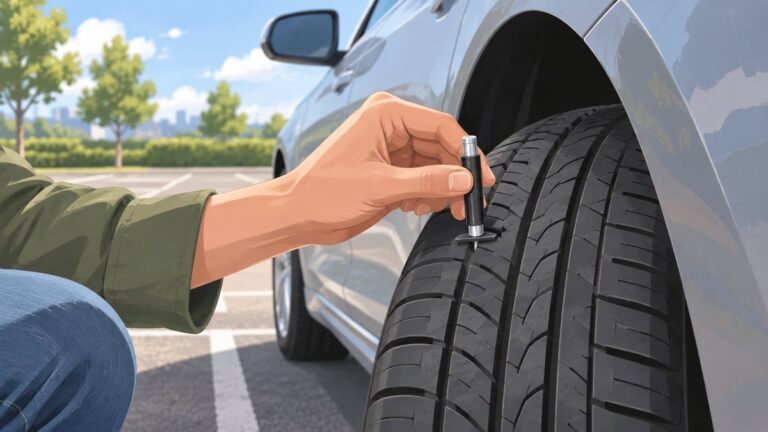
Usually, conventional DOT 3 and DOT 4 brake fluids can be mixed without immediately separating or destroying the brake system. However, they are not universally interchangeable. DOT 4 has higher minimum boiling-point requirements, so it can often replace DOT 3 when the vehicle manufacturer permits it. DOT 3 should not normally replace DOT 4 because it can reduce the system’s thermal margin. If DOT 3 is used in a DOT 4 system only as an emergency top-up, restore the specified DOT 4 fluid as soon as possible.
The rule to remember: Follow the specification on the reservoir cap and in the owner’s manual—not simply the higher DOT number. Never substitute DOT 5 silicone fluid or mineral-based hydraulic oil for DOT 3 or DOT 4.
DOT 3 vs. DOT 4 at a glance
| Characteristic | DOT 3 | DOT 4 |
|---|---|---|
| Minimum dry boiling point | 205°C / 401°F | 230°C / 446°F |
| Minimum wet boiling point | 140°C / 284°F | 155°C / 311°F |
| Typical chemistry | Glycol-ether or polyglycol-based | Usually glycol ethers, often with borate esters; formulations vary |
| Moisture behavior | Hygroscopic: absorbs moisture | Hygroscopic: absorbs moisture |
| Cold-viscosity limit at −40°C under FMVSS 116 | Maximum 1,500 mm²/s | Maximum 1,800 mm²/s |
| Color under FMVSS 116 | Colorless to amber | Colorless to amber |
| Can it mix with conventional DOT 3/DOT 4? | Generally yes, if both are compliant, conventional glycol-based fluids—but the vehicle manufacturer’s instructions still control | |
| Compatible with DOT 5 silicone fluid? | No | |
| Compatible with mineral hydraulic oil? | No | |
Those boiling-point figures are federal minimum compliance values, not the guaranteed boiling point of every bottle on a parts-store shelf. A premium DOT 3 may exceed the DOT 3 minimum, and a particular DOT 4 may substantially exceed the DOT 4 minimum. The product label and the vehicle manufacturer’s specification matter more than the DOT number alone. The requirements appear in Federal Motor Vehicle Safety Standard No. 116.
What does “DOT” mean in brake fluid?
In the United States, DOT 3 and DOT 4 identify performance classifications associated with FMVSS 116. The classification covers much more than boiling point. It also addresses viscosity, corrosion protection, water tolerance, chemical stability, compatibility with brake-system materials, and packaging.
The Tool Desk
Outbyte Driver Updater FREEScan for outdated or missing drivers - takes under a minuteDriver Scan →Outbyte PC Repair FREERepair Windows errors before they cause bigger problemsFix Now →#1 Best Overall

- Brake Fluid DOT 4 – Reliable Performance: STP Synthetic DOT 4 brake fluid is designed to help protect brake systems and support consistent braking performance in a wide range of driving conditions
- Brake Fluid DOT 4 Compatibility: This brake fluid DOT 4 formula works with ABS, disc, and drum systems and is suitable for vehicles requiring DOT 3 or DOT 4 specifications
- High-Temperature Protection: Advanced dot4 brake fluid formulation helps resist brake failure caused by vapor lock while maintaining performance under high heat conditions
- Break Fluid System Protection: This break fluid helps protect against corrosion and wear, supporting the longevity and reliability of key brake system components
- Suitable for Multiple Applications: Compatible with cars and trucks this versatile formula works with a wide range of brake fluids requirements
That means the number is not a simple consumer quality score. DOT 4 is not automatically the correct or “better” fluid for every car. It represents a different minimum performance category, and a vehicle’s seals, hydraulic-control components, operating temperatures, and cold-weather requirements may have been designed around a specific specification.
Why DOT 4 has a higher boiling point
Brake fluid transfers pressure from the master cylinder to the calipers or wheel cylinders. Under hard, repeated braking, the fluid can become very hot. Liquid is effectively incompressible, but vapor is compressible. If fluid gets hot enough to vaporize, the pedal can become long or soft and braking performance can deteriorate.
Dry boiling point
The dry boiling point is measured using new or essentially water-free fluid. FMVSS 116 sets minimum dry equilibrium reflux boiling points of 205°C (401°F) for DOT 3 and 230°C (446°F) for DOT 4.
Wet boiling point
The wet boiling point represents fluid after controlled humidification in a laboratory test. It is intended to reflect the reduced thermal margin of fluid that has absorbed moisture during service. FMVSS 116 sets minimum wet boiling points of 140°C (284°F) for DOT 3 and 155°C (311°F) for DOT 4.
Recommended Free Tools
“Wet” does not mean a test performed with an arbitrary amount of water. It is a defined test procedure. The practical point is that moisture lowers boiling resistance, which is why old fluid can be a problem even when the reservoir is full. The NHTSA laboratory test procedure for FMVSS 116 describes the testing method.
Why DOT 3 and DOT 4 usually mix
Conventional DOT 3 and DOT 4 fluids are generally members of the same broad glycol-based family. Ford describes both as glycol-based, while common commercial products are described as polyglycol or polyglycol-based fluids. Their shared chemistry is why compliant conventional products are generally miscible rather than immediately separating into layers.
DOT 4 commonly uses glycol ethers and borate esters to achieve higher boiling performance, but that is not a universal formula rule. Formulations vary. For example, ATE describes a DOT 4 product that meets the legal requirements without boric-acid esters. It is more accurate to say that DOT 4 often uses borate-ester chemistry, not that every DOT 4 product does.
Mixing is therefore usually physically possible. That does not mean it is always approved for a particular vehicle, nor does it mean the resulting blend has the full, predictable performance of the original DOT 4 product. The result depends on the formulations, their proportions, and the condition of the fluid already in the system.
Castrol describes compliant conventional DOT 3 and DOT 4 products as compatible, while recommending that owners avoid unnecessary mixing to preserve the superior characteristics of the DOT 4 product. Continental gives similar vehicle-specific advice. In other words, “miscible” and “recommended as a deliberate replacement” are not the same thing.
Are DOT 3 and DOT 4 interchangeable?
| What the vehicle specifies | What to use |
|---|---|
| DOT 3 or DOT 4 | Either compliant grade, along with any additional viscosity or manufacturer approval required by the manual |
| DOT 3 only | DOT 3. Do not automatically upgrade to DOT 4 unless the manufacturer permits it |
| DOT 4 only | DOT 4. Do not routinely substitute DOT 3 |
| DOT 4 LV, DOT 4 Low Viscosity, or ISO 4925 Class 6 | The specified low-viscosity product—not just any bottle labeled DOT 4 |
| DOT 5 | DOT 5 silicone fluid only where specifically designed for it; do not use DOT 3 or DOT 4 |
| Mineral oil, LHM, or another mineral-based hydraulic fluid | Use only the fluid specified for that system; DOT 3 and DOT 4 are not substitutes |
When DOT 4 can replace DOT 3
DOT 4 can often replace DOT 3 because its minimum dry and wet boiling points are higher. But “often” is not “always.” Check the owner’s manual, reservoir cap, service information, and any manufacturer-specific approval.
Rank #2

- Mixes well with conventional fluids
- Low-moisture formula provides excellent vapor lock protection
- Ideal for hydraulic and disc brakes
Some manufacturers and products explicitly permit the substitution. Castrol markets a DOT 4 product for systems requiring DOT 3 or DOT 4. ACDelco says its DOT 4 can be used in a vehicle requiring DOT 3. A specific 2020 Toyota Corolla owner’s manual lists FMVSS 116 DOT 3 or DOT 4, along with SAE J1703 or J1704, for that application. These are examples of documented permission, not a universal rule for every DOT 3 vehicle.
If the cap says DOT 3 but the manual does not mention DOT 4, use DOT 3. A higher number does not override the manufacturer’s specification.
Free tools Windows power users keep installed
One-click scans. No signup required.
When DOT 3 should not replace DOT 4
DOT 3 has lower minimum boiling-point requirements. Using it as a normal replacement in a DOT 4 system can remove thermal reserve that the vehicle’s braking system was designed to have. It may also fail an additional manufacturer or low-viscosity requirement.
There is a narrow emergency distinction. ACDelco advises that DOT 3 may be added to a DOT 4 system when the level is critically low and no correct fluid is available, but the system should then be flushed and refilled with DOT 4. That is an emergency measure to restore a usable fluid level—not approval for a permanent DOT 3 fill.
ABS, ESC, and the DOT 4 LV issue
Many modern vehicles use ABS, electronic stability control, and sophisticated hydraulic-control units. These systems can require fluid with a particular low-temperature viscosity so that valves and channels operate quickly, especially in cold weather.
Products may be identified as:
- DOT 4 LV;
- DOT 4 Low Viscosity;
- ISO 4925 Class 6; or
- a manufacturer-specific approval or fluid designation.
A regular DOT 4 label does not automatically mean the product is a suitable substitute for DOT 4 LV. Both may meet the basic DOT 4 boiling-point requirements while having different cold-flow characteristics. Continental and ATE specifically discuss low-viscosity requirements for modern electronic brake systems.
If the manual specifies DOT 4 LV or ISO Class 6, buy that exact type. Do not choose ordinary DOT 4 simply because it has a higher advertised boiling point.
What to do in common situations
Only DOT 3 is available for a DOT 4 vehicle
- If the level is safely above MIN: do not downgrade the fluid just for convenience. Obtain the specified DOT 4 or have the vehicle serviced.
- If the level is critically low: first look for a leak and follow the vehicle manufacturer’s emergency guidance. If a temporary DOT 3 addition is specifically permitted or is the only practical way to restore the level, add only enough to reach a safe level.
- Afterward: drive only as necessary to obtain service, if the brakes are functioning normally and there is no leak or warning condition. Have the system flushed or thoroughly bled and refilled with the specified DOT 4.
If the pedal is soft, the brake warning light remains on, fluid is visibly leaking, or the level falls again, do not assume adding fluid has made the vehicle safe. Have it repaired or towed.
DOT 4 was added to a DOT 3 vehicle
If the product was a conventional, compliant DOT 4 and the vehicle does not prohibit it, this is usually not an immediate contamination disaster. However, check the manual. If the vehicle specifies DOT 3 only, restore the specified fluid at the next practical service rather than continuing to top up with whatever is available.
Honda provides a useful example: one owner’s manual specifies Honda Heavy Duty DOT 3 but allows DOT 3 or DOT 4 from a sealed container as a temporary replacement if the specified fluid is unavailable, followed by a flush and refill with DOT 3. The specific model and manual control the decision.
DOT 3 and DOT 4 were accidentally mixed
For a small accidental mix of conventional, compliant DOT 3 and DOT 4:
Rank #3
- Ideal for hydraulic and disc brakes
- Mixes well with conventional fluids
- Low-moisture formula provides excellent vapor lock protection
- Do not panic or assume the seals have been instantly destroyed.
- Stop adding random fluids and identify both products.
- Confirm that neither product was DOT 5 silicone, mineral oil, petroleum-based fluid, or an unknown specialty fluid.
- Check the vehicle’s required specification, including any low-viscosity requirement.
- Restore the specified fluid as soon as practical. If the vehicle requires DOT 4, have the system flushed or thoroughly bled with fresh DOT 4.
- Arrange an inspection if the pedal feels soft, the warning light is on, the fluid is contaminated, or the reservoir level keeps falling.
A small DOT 3/DOT 4 cross-mix is very different from filling a DOT 3 or DOT 4 system with DOT 5 or mineral oil.
The entire system was filled with the wrong DOT grade
Do not treat a complete wrong-grade fill as equivalent to a small top-up. Stop using the vehicle if braking performance is abnormal, and contact the manufacturer or a qualified brake technician for the correct flush and bleeding procedure. The technician may need to follow a vehicle-specific process for the ABS/ESC hydraulic unit.
DOT 5 was added by mistake
Do not drive the vehicle until the contamination has been assessed. DOT 5 is silicone-base fluid, whereas DOT 3, DOT 4, and DOT 5.1 non-SBBF are non-silicone categories under FMVSS 116. Ford and Honda warn against adding DOT 5 to systems that specify DOT 3 or DOT 4.
Do these 3 things before closing this tab:
1Repair Windows errors before they cause bigger problems2Scan for outdated or missing drivers - takes under a minute3Clear out junk files and repair common Windows errorsHave the incorrect fluid removed according to the vehicle manufacturer’s service procedure. A simple reservoir drain and refill may not remove contamination from the master cylinder, lines, calipers, wheel cylinders, or ABS/ESC unit.
Mineral oil or an unknown fluid was added
Treat this as serious contamination. Mineral-based hydraulic oil can damage rubber components designed for DOT brake fluid. Do not attempt to make the mixture acceptable by adding DOT 3 or DOT 4 on top of it. Do not drive until the manufacturer or a qualified brake specialist has identified the fluid and determined the required repair or replacement procedure.
DOT 5.1 is not the same as DOT 5
The names are dangerously similar:
- DOT 5: silicone-base brake fluid. It is not interchangeable with DOT 3 or DOT 4.
- DOT 5.1: non-silicone-base brake fluid. Its chemistry is closer to conventional DOT 3 and DOT 4, but the vehicle manufacturer’s specification still controls.
DOT 5.1 is not “DOT 5 with a small upgrade.” FMVSS 116 separately identifies DOT 5 silicone-base fluid and DOT 5.1 non-silicone-base fluid. Read the complete label, not just the number.
How to choose the correct bottle
- Read the reservoir cap. It may state DOT 3, DOT 4, DOT 5, a low-viscosity requirement, or a manufacturer-specific fluid.
- Check the owner’s manual. Look for the brake-fluid specification, not just a generic parts-store recommendation.
- Check service information for modern vehicles. ABS, ESC, brake-by-wire systems, hybrids, and EVs may have additional requirements.
- Match the exact grade and viscosity. If the manual calls for DOT 4 LV or ISO 4925 Class 6, use a product that states that requirement.
- Look for relevant approvals. Compare SAE, ISO, JASO, or OEM approvals where the vehicle requires them.
- Buy a sealed container. Brake fluid absorbs moisture from the atmosphere. FMVSS 116 packaging warnings instruct users to keep it clean, dry, and tightly closed. Toyota likewise advises using newly opened fluid.
- Do not select by color. DOT 3, DOT 4, and DOT 5.1 non-silicone fluid may be colorless to amber under FMVSS 116. Age and formulation can also change appearance.
Safe top-up procedure
A top-up is not a substitute for finding out why the level is low. Low fluid can result from a hydraulic leak, worn brake pads or shoes, a recent repair, or another system problem.
Windows Errors? Fix Them Before They Spread
Repair common Windows errors and clear accumulated junk for a smoother, more stable PC - no reinstall needed.Free scan · no reinstallOutdated Drivers Are Slowing You Down
One free scan finds every outdated or missing driver and matches the right update for your exact hardware.Free scan · exact hardware match- Park on level ground and allow hot brake components to cool.
- Clean the area around the reservoir cap before opening it so dirt cannot fall into the system.
- Check the level against the MIN and MAX marks.
- Confirm the required fluid specification and any LV or OEM approval.
- Add only fresh fluid from a sealed container.
- Fill to just under MAX; do not overfill.
- Secure the cap.
- Rinse brake-fluid spills from painted surfaces promptly with water, following the vehicle and product guidance.
- Inspect for leaks and monitor the level. If it drops again, have the brake system repaired.
Do not pour drained fluid back into the reservoir. Do not leave a partly used container open, because the fluid can absorb moisture while stored.
If the system is being flushed or bled
There is no universal bleeding order that is safe to publish for every vehicle. Procedures vary with brake layout, ABS/ESC hardware, integrated hydraulic units, and service equipment.
Follow the vehicle-specific service manual and use its bleeding sequence. During the job:
Rank #4

- DOT 4 Synthetic Brake Fluid//Quart
- Use the specified fresh fluid from a sealed container.
- Prevent dirt, water, petroleum products, mineral oil, and other fluids from entering the reservoir.
- Keep the reservoir from running dry.
- Do not reuse drained brake fluid.
- Check carefully for leaks.
- Confirm a firm pedal and normal warning-light behavior before driving.
A Hyundai service bulletin emphasizes using the recommended DOT 3 or DOT 4 fluid, controlling contamination, maintaining the reservoir level during bleeding, and following the applicable shop manual.
What’s actually slowing this PC down?
Pick the symptom - the matching free tool is one click away.
Does DOT 4 absorb moisture faster than DOT 3?
Both conventional DOT 3 and DOT 4 fluids are hygroscopic, meaning they absorb moisture. The rate depends on the particular formulation, system design, seals, reservoir exposure, climate, and use. It is not accurate to apply one universal moisture-absorption rate to every DOT 3 or DOT 4 product.
For the same reason, there is no universal replacement interval based solely on the DOT number. Follow the vehicle manufacturer’s maintenance schedule and the fluid manufacturer’s instructions. If no vehicle guidance exists, a product manufacturer may provide its own recommendation, but that recommendation should not be presented as a universal DOT-grade rule.
Special cases
Motorcycles and hydraulic clutches
Many motorcycles and manual-transmission vehicles use brake fluid in a hydraulic clutch. Check the clutch reservoir and its manual separately. Do not assume that the specification for the brake reservoir applies to every hydraulic system on the vehicle.
Hybrids and electric vehicles
Hybrids and EVs do not automatically use a fundamentally different brake-fluid chemistry. Their vehicle-specific requirements still matter, however. Regenerative braking changes how often friction brakes are used, while vehicle mass and hydraulic-control hardware can make wet boiling performance and low-viscosity requirements particularly important.
Classic and specialty vehicles
Some older or specialty vehicles use mineral-based hydraulic fluids rather than conventional DOT brake fluid. Check the cap, manual, and service information before assuming any fluid labeled DOT belongs in the system.
Practical decision tree
- What does the reservoir cap or owner’s manual specify? Start there.
- Does it list DOT 3 or DOT 4? Use either only when both are explicitly permitted for that vehicle.
- Does it specify DOT 4 LV, ISO 4925 Class 6, or another approval? Match that additional requirement.
- Is the level merely near MIN or critically low? A critically low level requires investigation for leaks or brake wear, not just a convenient top-up.
- What is the available fluid? Conventional compliant DOT 3/DOT 4 is a different situation from DOT 5 silicone, DOT 5.1, mineral oil, racing fluid, or an unknown product.
- Is this routine maintenance or an emergency? A temporary emergency top-up may be acceptable under manufacturer guidance; it is not the same as a permanent substitution.
- Are there warning signs? A soft pedal, visible leak, warning light, or falling fluid level means the vehicle needs diagnosis and possibly towing.
Frequently Asked Questions
Will mixing DOT 3 and DOT 4 damage the brake seals?
A small mix of conventional, compliant DOT 3 and DOT 4 generally does not immediately destroy the seals because the fluids share a broad glycol-based chemistry. The vehicle’s manufacturer may nevertheless prohibit mixing, and a mixed system should be restored with the specified fresh fluid. DOT 5 silicone and mineral oil are different and can cause serious compatibility problems.
Is DOT 4 always better than DOT 3?
No. DOT 4 has higher minimum dry and wet boiling-point requirements, which may provide more thermal margin, but the correct fluid is the one specified for the vehicle. A system may require DOT 3, DOT 4 LV, or a manufacturer-specific formulation.
Can I use DOT 5.1 instead of DOT 4?
Not automatically. DOT 5.1 is non-silicone and chemically closer to DOT 3 and DOT 4, but it must still meet the vehicle manufacturer’s required specification and viscosity characteristics. DOT 5 silicone is not interchangeable with DOT 3 or DOT 4.
Quick wins for a faster PC:
Fix the driver behind crashes, sound loss and screen glitchesFind Drivers →Repair Windows errors before they cause bigger problemsFix Now →Scan for outdated or missing drivers - takes under a minuteDriver Scan →How do I know whether fluid is DOT 3 or DOT 4 by its color?
You cannot reliably identify the grade by color. FMVSS 116 permits DOT 3, DOT 4, and DOT 5.1 non-silicone fluid to be colorless to amber. Use the container label and vehicle documentation instead.
The Bottom Line
Bottom line: Conventional DOT 3 and DOT 4 are generally miscible, but “can mix” does not mean “universally interchangeable.” Use the exact fluid specified by the vehicle. DOT 4 may replace DOT 3 only where permitted; DOT 3 belongs in a DOT 4 system only as a manufacturer-authorized emergency top-up, followed by restoration with DOT 4. Never substitute DOT 5 silicone fluid or mineral oil, and pay attention to low-viscosity requirements on ABS- and ESC-equipped vehicles.