Windows Errors? Fix Them Before They Spread
Repair common Windows errors and clear accumulated junk for a smoother, more stable PC - no reinstall needed.Free scan · no reinstallOutdated Drivers Are Slowing You Down
One free scan finds every outdated or missing driver and matches the right update for your exact hardware.Free scan · exact hardware matchShort answer: Donut Lab has claimed a production-ready all-solid-state battery, but that claim has not been independently established. The company announced the battery on January 5, 2026, promising 400 Wh/kg, a five-minute full charge, 100,000-cycle life, extreme-temperature operation, and OEM-scale production. Finland’s VTT did test customer-supplied cells, including rapid-charge and self-discharge tests. However, those public reports do not establish the cell’s chemistry, the claimed energy density, or the 100,000-cycle figure. A later expert investigation reported that the tested cell behaved more like conventional lithium-ion technology; Donut Lab disputes that conclusion.
The important distinction is between a cell that can be charged quickly and a verified all-solid-state battery that delivers the claimed performance in a production vehicle. The available record supports the first point more strongly than the second.
As an Amazon Associate I earn from qualifying purchases.
This assessment reflects the public evidence available through August 12, 2026. It does not prove that Donut Lab’s battery is conventional lithium-ion, either. It means the company’s headline claims remain contested and incompletely documented.
Free tools Windows power users keep installed
One-click scans. No signup required.
What Donut Lab claimed
On January 5, 2026, Donut Lab announced what it called the world’s first all-solid-state battery ready for use in OEM production vehicles. The company said the battery was already being used in Verge Motorcycles and would be on the road during the first quarter of 2026.
#1 Best Overall

- High density negative paste, improves performance and increases battery life
- Enhanced life alloy or Silver Calcium stamped alloy increases cycle life and improves performance
- Calcium lead positive grid, maximizes conductivity and allows for low resistance
- Robust envelope separator with puncture resistant back, allows for increased acid circulation and prevents shorts. Improved acid circulation, helps the battery to remain cool, and extend battery life
- Vent cap design that resists acid leakage
Donut Lab’s headline claims included:
- 400 Wh/kg energy density;
- Full charging in five minutes;
- 100,000-cycle life;
- Safe repeated full discharge;
- Operation across extreme temperatures; and
- Scalability to major automotive production volumes.
Those are manufacturer claims, not findings that have all been independently reproduced. In particular, “production-ready” is a much broader claim than “a laboratory cell produced an impressive charging result.” It implies repeatable manufacturing, consistent quality, vehicle integration, safety validation, and a supply chain capable of producing automotive quantities.
What VTT actually measured
VTT Technical Research Centre of Finland confirmed on February 20, 2026, that it had performed laboratory measurements on battery devices supplied by Donut Lab. That work is significant because it shows an outside research organization tested real devices rather than merely repeating a press release. It is not, however, a complete validation of every specification Donut Lab announced.
The principal public charge-performance report, dated February 9, tested one customer-supplied cell. The customer identified that cell as a solid-state cell. The report used a nominal capacity of 26 Ah, a maximum charging voltage of 4.3 V, and charging tests at 5C and 11C.
Quick wins for a faster PC:
Repair Windows errors before they cause bigger problemsFix Now →Fix the driver behind crashes, sound loss and screen glitchesFind Drivers →C-rate describes charging or discharging current relative to a battery’s nominal capacity. Using the report’s nominal 26 Ah figure as simple arithmetic, 5C corresponds to approximately 130 amps and 11C to approximately 286 amps. An ideal constant-current 11C charge would take about 5.5 minutes. Real batteries generally taper current near full charge, and a test conducted at 11C is not automatically proof of a complete five-minute charge from empty to 100 percent. The test protocol, state-of-charge window, taper behavior, temperature, and usable energy all matter.
VTT’s work therefore supports a narrower statement: the supplied cell could be subjected to very high-rate charging under laboratory conditions. It does not, by itself, prove that an entire vehicle pack can safely accept a full charge in five minutes.
Capacity and self-discharge results
A second VTT report measured capacity and self-discharge. Its initial capacity test recorded an end-discharge result of 26.668 Ah. In the self-discharge test, the cell’s voltage fell from 3,861 mV to 3,733 mV over 240 hours, or 10 days.
Rank #2

- ✅Batter dimensions: 10.75" L x 6.81" W x 8.98" H, Terminal: Tapered terminal (Left negative (-), Right positive (+)). ✅Please ensure to verify the dimensions and terminal position before making a purchase to guarantee compatibility with your vehicle to avoid any fitment issues.
- With a 70AH capacity and 710 cold cranking amps (CCA). Provides reliable performance and long service life, Up to 2 times the cycle life of conventional batteries. If your car's original battery is an AGM type, you must continue using an AGM battery, as your car will not accept a "downgrade" to a flooded battery. Nominal Voltage:12V. Charging Voltage:14.4~15.0V. Acceptable Charging Current:0~21A. Operating Temperature Range: -22°F~158°F.
- Heat / Cold Resistance: The materials used in the construction of AGM batteries (such as glass fiber mats and specialized separators) have better heat resistance. This allows AGM batteries to maintain their performance and capacity even in the hottest climates, They are also more resistant to extreme temperatures, making them ideal for hot or cold regions.
- Low Self-Discharge: AGM batteries have lower self-discharge rates compared to flooded batteries. Self-discharge refers to the loss of capacity that batteries experience over time when not in use. In hot climates, when the battery may need to be stored for extended periods or not frequently used, AGM batteries can better maintain charge, providing higher voltage output and easier engine start-up in any climate.
- Enhanced Safety: AGM batteries have a lower risk of acid leaks and spills compared to flooded batteries. This is because the acid is absorbed and held within the glass fiber mats, reducing the risk of corrosion or damage to surrounding components,this makes AGM batteries more durable and long-lasting, is also two to three times longer than flooded batteries. AGM batteries also have a lower risk of explosion and are safer to handle, making them ideal for high-performance vehicles.
Those results are consistent with a functioning rechargeable cell and support Donut Lab’s argument that the device was not merely a supercapacitor. But they do not identify the chemistry or establish all-solid-state construction. The voltage change also should not be described as a measured 3.3-percent capacity loss: voltage and remaining capacity are related differently depending on chemistry, state of charge, temperature, load history, and the cell’s voltage curve.
Recommended Free Tools
Several additional VTT reports addressed related performance characteristics. According to the public record, the reports did not establish the two commercial claims most relevant to the controversy: 400 Wh/kg energy density and 100,000-cycle life.
Why fast charging does not prove solid-state chemistry
“Solid-state” describes the battery’s electrolyte and internal construction, not simply its charging speed. An all-solid-state battery is generally understood to use a solid electrolyte in place of the liquid or gel electrolyte used in conventional lithium-ion designs. Some products described as solid-state can instead be hybrid or semi-solid systems, which is why the exact cell architecture and terminology matter.
A fast-charge result can demonstrate useful electrical and thermal behavior, but it cannot by itself answer questions such as:
- What electrolyte does the cell use?
- Does it contain a liquid or gel component?
- What are the cathode, anode, separator, and interface materials?
- Is the cell genuinely all-solid-state, or does it use a hybrid design?
- Does the tested cell represent the cells installed in a production vehicle?
IEEE Spectrum’s technical review highlighted a second gap: the reported testing did not weigh the cells in a way that would validate the claimed gravimetric energy density. That matters because 400 Wh/kg is a mass-normalized figure. To verify it, an evaluator needs the delivered electrical energy and a clearly defined mass boundary—whether that means active materials, a complete cell, a module, or a finished battery pack.
What’s actually slowing this PC down?
Pick the symptom - the matching free tool is one click away.
A cell-level figure cannot be casually compared with a pack-level figure. A vehicle battery must also include packaging, current collectors, cooling or heating hardware, busbars, sensors, protective electronics, structural components, and safety margins. Even if a 400 Wh/kg cell were eventually verified, the usable pack-level energy density would be lower.
Rank #3

- Fast Starting Power: This 12V 70Ah 760 CCA delivers strong, steady starts is ready for any weather in any season.
- Made to Last: With its 120-minute Reserve Capacity supports longer run times and a longer overall battery lifespan.
- All Power, No Mess AGM Design: Sealed and spill-proof, the MM-H6 is built with high discharge output and deep discharge recovery to keep power steady when it counts.
- Strength That Starts on the Inside: The rugged construction resists shock, vibration, and harsh conditions, delivering reliable performance across a wide range of temperatures and tough environments.
- Tested Tough & Certified Safe: Mighty Max batteries are built in an ISO-certified facility and meet CE standards for quality, safety, and reliability
The 100,000-cycle claim has a similar evidence problem
Cycle life is not a single number without a test definition. A credible 100,000-cycle claim would need to specify, among other things:
- What percentage of the battery’s capacity was used on each cycle;
- Charge and discharge rates;
- Temperature and cooling conditions;
- Voltage limits and charging protocol;
- How much capacity or power capability remained at the end;
- Whether the result came from one cell or a statistically meaningful group; and
- Whether the test represented vehicle use rather than a narrow laboratory regime.
The public VTT reports described capacity, charging, self-discharge, and related measurements, but they did not publicly validate Donut Lab’s 100,000-cycle claim. A capacity result from an initial test is not a cycle-life result.
A later investigation challenged the chemistry claim
In June 2026, a battery-focused investigation led by researcher Ryan Inis Hughes of the Ziroth channel was reported by Electrek. The investigation said more than 20 battery experts reviewed the available evidence. Its reported conclusion was that the tested cell’s voltage curves and expansion behavior were characteristic of conventional lithium-ion chemistry rather than the solid-state or sodium-based chemistry associated with Donut Lab’s public positioning.
That conclusion is important, but it should be stated precisely. It is a reported expert-backed investigation, not a peer-reviewed paper, a formal VTT finding, or a court determination. It analyzes the evidence that was publicly available; it does not constitute a definitive chemical dissection of every Donut Lab battery.
Electrek also reported that five VTT tests had been published without addressing the 400 Wh/kg and 100,000-cycle claims. That does not make the VTT tests worthless. It means the tests answered narrower performance questions than the company’s marketing claims raised.
Donut Lab rejects the criticism
Donut Lab issued a statement on June 9, 2026, rejecting the later criticism. The company said the Ziroth video and related coverage repackaged earlier allegations, questioned the critic’s commercial relationship with CATL, and maintained that Donut Lab stood behind its technical data and commitments. The company also said it was progressing on schedule.
Rank #4
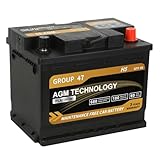
- ✅ Perfect Fit & Compatibility: BCI Group Size 47 (H5), 12V 60Ah, 680CCA, 100RC. Dimensions: 9.52" L x 6.89" W x 7.48" H. Terminal: Tapered terminal (Left negative (-), Right positive (+)). Ensure proper fit by comparing the size, terminal position, and CCA with your original battery. This ensures compatibility and avoids any fitment issues for your vehicle.
- ✅ Reliable Starting Power in All Conditions: Delivers 680 Cold Cranking Amps (CCA) for reliable engine starts, even in freezing weather. This automotive battery is built to perform consistently within a wide temperature range from -22°F to 158°F, withstanding short-term extremes from -40°F to 75°F, ensuring maximum performance no matter the weather.
- ✅ Advanced AGM Technology for High Performance: Specially designed for vehicles with start-stop technology and those requiring greater power, this AGM battery delivers up to 2X the cycle life of conventional batteries. With its high-density negative paste, it ensures improved conductivity, longer battery life, and faster recharge times. Maintenance-free design—no need to add liquid or water.
- ✅ Durable & Safe Design: This group 47 battery is 18X more vibration-resistant than standard batteries, ensuring a longer service life and reliable performance. Its leak-proof, non-spillable design offers enhanced safety, and the absence of free acid guarantees stable performance, preventing acid leakage and internal corrosion. Ideal for tough conditions.
- ✅ Not for Deep Cycle Applications: Please note that this is a starting battery and is not designed for deep-cycle applications such as solar or marine use. It is ideal for vehicles with higher electrical accessory loads or those that need a high CCA starting battery with enhanced cyclic performance. Verify that the battery type and specifications match your vehicle's requirements.
That response belongs in the assessment because the central chemistry dispute is not uncontested. At present, the public record contains three different layers of evidence:
- Donut Lab’s claims: an all-solid-state, 400 Wh/kg battery with five-minute charging, 100,000-cycle life, and production readiness.
- VTT’s measurements: laboratory testing of customer-supplied cells, including 5C and 11C charging, an approximately 26.668 Ah capacity result, and a self-discharge measurement.
- The later investigation: an expert review that interpreted the cell’s behavior as conventional lithium-ion and challenged the unsupported headline specifications.
Those layers do not yet form a single, independently verified story.
Independent reader supportYour contribution helps us test, update, and keep practical guides available for everyone.What this means for the Verge TS Pro
The Verge TS Pro is the vehicle most closely associated with Donut Lab’s announcement. Verge’s product page markets the electric motorcycle with a 20.2 kWh or 33.3 kWh battery, claimed range of up to 370 miles, and charging in under 10 minutes under specified conditions. Verge lists a starting U.S. price of $29,900 and says deliveries are available in 11 countries, including the United States.
These are Verge’s product-page specifications and claims. They should not be treated as independent confirmation that customer-delivered motorcycles contain the disputed Donut Lab cells, or that those cells deliver 400 Wh/kg or 100,000 cycles. A motorcycle being available to order is also not the same as an independent audit of its battery chemistry and production configuration.
For a prospective buyer, the practical questions are more specific than the announcement headline:
- Which battery size and chemistry are included in the particular motorcycle being ordered?
- Does “under 10 minutes” refer to a complete charge, a specified charging window, or ideal conditions?
- What charger, grid connection, temperature range, and state-of-charge limits are required?
- What warranty covers capacity loss, charging performance, and battery replacement?
- Are the advertised range and charging figures independently measured or manufacturer-tested?
Until those details are documented for delivered vehicles, the Verge TS Pro should be described as a motorcycle promoted with Donut Lab battery technology—not as independent proof that Donut Lab’s broader battery claims have been settled.
Best Value
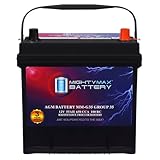
- Fast Starting Power: This 12V 55Ah 650 CCA delivers strong, steady starts is ready for any weather in any season.
- Made to Last: With its 100-minute Reserve Capacity supports longer run times and a longer overall battery lifespan.
- All Power, No Mess AGM Design: Sealed and spill-proof, the MM-G35 is built with high discharge output and deep discharge recovery to keep power steady when it counts.
- Strength That Starts on the Inside: The rugged construction resists shock, vibration, and harsh conditions, delivering reliable performance across a wide range of temperatures and tough environments.
- Tested Tough & Certified Safe: Mighty Max batteries are built in an ISO-certified facility and meet CE standards for quality, safety, and reliability
What would settle the controversy?
The most useful next step would be a transparent, independently supervised battery-validation program. It should test multiple production-intent cells, not just a single customer-supplied sample, and should connect each test result to a traceable manufacturing lot.
A convincing evidence package would include:
- Chemistry and architecture disclosure: a clear description of the electrolyte, electrodes, separator or solid layer, interfaces, and any liquid or gel component.
- Independent materials analysis: appropriate non-destructive and, where necessary, destructive laboratory analysis capable of checking the claimed construction.
- Complete energy-density accounting: delivered watt-hours, voltage limits, charge/discharge conditions, and the exact mass boundary used for the Wh/kg calculation.
- Full-charge testing: time from a defined starting state of charge to a defined end state, including taper behavior, charger power, temperature, and safety limits.
- Cycle-life testing: a published protocol showing depth of discharge, rates, temperature, endpoint criteria, sample size, and retained capacity and power.
- Production evidence: repeatability data across multiple cells and packs, manufacturing yield, quality-control information, and vehicle-level safety validation.
Until that information is available, the responsible conclusion is not that Donut Lab’s battery is fake, nor that it is proven. The responsible conclusion is that the strongest public evidence verifies testing of a rechargeable cell and rapid-charge behavior, while leaving the all-solid-state designation and the largest performance claims unresolved.
Sources and attribution
This article’s assessment is based on Donut Lab’s January 5, 2026 announcement; VTT’s February 20 announcement and February 9 charge-performance report; VTT’s capacity and self-discharge report; IEEE Spectrum’s technical review; Electrek’s reporting on the Ziroth investigation; Donut Lab’s June 9 response; and Verge’s TS Pro product page. Product specifications and performance figures attributed to Donut Lab or Verge are manufacturer claims unless explicitly identified as laboratory measurements.
Frequently Asked Questions
Has Donut Lab proved that it made the world’s first production-ready all-solid-state battery?
No. Donut Lab made that claim, but the public evidence available through August 12, 2026 does not independently establish the cell’s all-solid-state chemistry, 400 Wh/kg energy density, 100,000-cycle life, or OEM-scale production readiness.
What did VTT’s testing confirm?
VTT tested customer-supplied battery devices in its laboratory. Public reports document charging tests at 5C and 11C on one nominal 26 Ah cell, an initial end-discharge result of 26.668 Ah, and a self-discharge voltage decline over 240 hours. Those results support the existence of a functioning rechargeable cell and rapid-charge testing, but they do not identify the chemistry or validate every Donut Lab claim.
Does an 11C charging test prove a five-minute full charge?
No. An ideal 11C constant-current charge would take roughly 5.5 minutes, but real charging usually tapers near full. A complete five-minute-charge claim also needs defined starting and ending states of charge, charger power, temperature, safety limits, and pack-level testing.
Is the Verge TS Pro independently confirmed to use Donut Lab’s claimed solid-state battery?
Not by the public evidence covered here. Verge markets the TS Pro with a 20.2 kWh or 33.3 kWh battery, up to 370 miles of claimed range, and charging in under 10 minutes under specified conditions. Those are product-page claims and do not independently confirm the disputed cell chemistry in customer-delivered motorcycles.
What is the later Ziroth investigation’s conclusion?
The investigation led by Ryan Inis Hughes and reported by Electrek said more than 20 battery experts reviewed the available evidence and concluded that the tested cell’s voltage curves and expansion behavior resembled conventional lithium-ion technology. That is an attributed expert-investigation conclusion, not a peer-reviewed or legal determination, and Donut Lab disputes it.
The Bottom Line
Bottom line: Donut Lab may have demonstrated a rechargeable cell capable of rapid-charge testing, but its public evidence does not yet prove the much larger claim: a production-ready all-solid-state battery delivering 400 Wh/kg and 100,000 cycles. The Verge TS Pro remains a real product marketed with impressive battery specifications, but it is not independent confirmation of the disputed technology. Treat the breakthrough as a claim awaiting fuller chemistry, energy-density, cycle-life, and production validation.
Quick Recap
Product prices and availability are accurate as of the date/time indicated and are subject to change. Any price and availability information displayed on Amazon at the time of purchase will apply.




