Sometimes—but vehicle-to-grid (V2G) charging is not automatically a money-saving upgrade. Your result depends on the bidirectional charger and installation price, the tariff or grid-service payment, charging and discharging losses, taxes and network fees, how often the car is available, battery-aging costs, and whether your exact vehicle, charger and utility are approved to work together.
The International Energy Agency’s 2026 overview uses an illustrative owner benefit of about USD 500 per year and indicates roughly two years of payback for lower-cost AC equipment versus as long as 10 years for DC equipment. Those are scenario results, not a promise to a household. A 2025 Eastern Denmark model found residential savings of €176 on average, with payback ranging from five to 23 years by equipment supplier. The right answer is therefore a local calculation, not a universal headline number.
As an Amazon Associate I earn from qualifying purchases.
What V2G charging does
Ordinary EV charging moves electricity from the grid into the vehicle. Vehicle-to-grid charging reverses that flow when the vehicle is plugged in: a bidirectional charger can send some stored energy back to the grid, usually when electricity is expensive or when a grid operator needs balancing capacity. Software schedules charging and export around your departure time and the rules of the tariff or aggregator.
V2G is different from two related functions:
- Vehicle-to-home (V2H) supplies a house or building, reducing grid purchases or providing backup power. It may not export to the public grid.
- Vehicle-to-load (V2L) powers appliances directly from the vehicle through an outlet or adapter. It is not a grid-participation service.
To earn grid or energy value, you generally need all of the following: an EV with bidirectional capability, a compatible certified charger, an approved interconnection, a tariff or aggregator that accepts exported energy or ancillary services, and enough time plugged in for dispatches. A car that supports only unidirectional charging, V2H or V2L cannot be assumed to support V2G.
#1 Best Overall
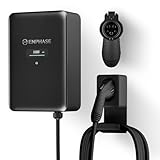
- 9× FASTER CHARGING: Get faster, smarter EV charging up to 11.5 kW (up to 46 miles/hour). Perfect for overnight charging or quick top-ups.
- REVENUE GRADE METER: Eligible for utility rebate programs with accurate, compliant energy monitoring.
- SOLAR CHARGING: Seamlessly connects with your home solar system so you can use more of your own clean energy.
- 5-YEAR WARRANTY: Backed by an industry-leading 5-year warranty for peace of mind.
- SECURE ACCESS: Prevent unauthorized use with app-based control or RFID card access for added safety.
What published payback figures actually show
Published numbers span a wide range because they describe different countries, hardware, tariffs, operating patterns and services. Treat each figure as a bounded scenario rather than a market-wide forecast.
| Source and setting | Reported value | How to interpret it |
|---|---|---|
| International Energy Agency, 2026 overview | Bidirectional AC chargers available below USD 1,500; DC chargers USD 5,000 and up | Broad equipment-market ranges. Installation, permits, switchgear and metering can add to the installed price. |
| International Energy Agency, 2026 illustrative home case | About USD 500 annual owner benefit; approximately two-year AC payback and up to 10 years for DC | An assumed annual benefit used for comparison, not a guaranteed return or a current quote. |
| Menchaca Santos et al., eTransportation/DTU, 2025, Eastern Denmark | Average residential savings of €176; five- to 23-year payback depending on supplier | One modeled year with local prices, equipment and driving data. Results are not portable to another tariff or country. |
| Menchaca Santos et al., eTransportation/DTU, 2025, heavy-duty fleet | €330,000 modeled savings when V2G was combined with FCR-D; three- to 17-year payback | A fleet-scale case with reserve-market participation, not an individual-car estimate. |
| Applied Energy modeling, 2024, 2030 scenarios | €310–€2,780 per EV-year | Future modeled outcomes that vary with prices, charging-hour restrictions, power and user behavior. |
| Ofgem case study, 2021 | Historical potential system saving of £3.5 billion per year and an illustrative sub-five-year payback using about £1,000 cost | Historical regulator framing, not a current household calculation. |
The spread between these figures is the central lesson: the payment available in your market and your actual utilization matter more than a generic “V2G savings” claim.
How to calculate your own simple payback
Start with this ratio:
Simple payback (years) = net installed bidirectional-equipment cost ÷ annual net V2G benefit.
Free tools Windows power users keep installed
One-click scans. No signup required.
“Net installed cost” should include the charger, electrical work, switchgear, metering, permitting, certification and any required communications equipment, minus a confirmed incentive. Do not use the device price alone.
Annual net benefit should include every cash flow caused by V2G:
- Payments for exported energy or grid services.
- Retail energy purchases avoided when the vehicle supplies your home.
- Electricity bought to recharge the battery.
- Round-trip conversion and battery losses.
- Taxes, network charges, demand charges and aggregator or platform fees.
- An allowance for incremental battery wear and any reserve you keep to protect mobility.
Count each kilowatt-hour once. The same discharge cannot be recorded both as an avoided household import and as a paid export. Compare V2G with the realistic alternative available to you—often ordinary smart charging or a stationary battery—rather than comparing it with doing nothing.
A clearly labeled example
Suppose a hypothetical installation costs USD 3,000 after all site work and produces a verified USD 500 net benefit in a year. The simple ratio is six years. If the benefit falls to USD 250 because the car is away during high-value periods, the ratio becomes 12 years. Neither example predicts your result; they show why utilization and netting assumptions must appear beside any payback number.
The Tool Desk
Outbyte PC Repair FREERepair Windows errors before they cause bigger problemsFix Now →Outbyte Driver Updater FREEScan for outdated or missing drivers - takes under a minuteDriver Scan →Rank #2

- AI-POWERED SMART CHARGING & APP CONTROL – This ev charger level 2 uses Autel’s AI-integrated smart app to schedule charging around time-of-use utility rates, helping lower your monthly bill while boosting station utilization. Start or stop sessions remotely, adjust current from low to high amps, view real-time energy data, and get alerts if anything looks off.
- ULTRAFAST 80A PERFORMANCE FOR HOME – Delivering up to 19.2 kW / 80A, this charger adds about 70 miles of range per hour and powers your EV up to 14x faster than a standard Level 1 outlet, so you can fully recharge overnight or between customer visits. This 80 amp ev charger is a high-power level 2 ev charger that future-proofs your setup for larger-battery EVs and busy households.
- BUILT FOR 24/7 RELIABILITY & THEFT PROTECTION – Engineered for a 10-year lifespan with internal temperature monitoring and a flame-retardant enclosure. Dual-network Wi-Fi + Wi-SUN keep your charger online with >99.9% uptime, so drivers always find a live station. Custom tamper-resistant screws plus remote locking provide double theft protection for both residential and commercial installs.
- FAST INSTALL & FLEXIBLE STATION MANAGEMENT – Hardwired design for maximum power and reliability (100A circuit recommended for full 80A output; professional electrician install suggested). One-click configuration lets installers set up a charging station in about 10 minutes, then you can easily manage pricing, access, and usage in the app.
- CSA CERTIFIED, REBATE READY & UNIVERSAL J1772 – UL certified by CSA and eligible for many U.S. rebates, incentives, and tax credits to help reduce your installation cost. The 25 ft SAE J1772 cable works with all EVs and PHEVs in North America and with Tesla vehicles when used with a NACS adapter (not included). Backed by a 5-year warranty, 24/7 expert support, and Autel’s proven EV charger technology for long-term peace of mind.
Simple payback also omits financing cost, changing tariffs, downtime and the possibility that the equipment remains useful after the nominal payback date. For a more realistic decision, model several tariff and availability cases instead of one optimistic year.
Hardware and installation costs
AC and DC systems have different cost and use profiles. The IEA’s 2026 overview places bidirectional AC equipment below USD 1,500 in broad market terms and bidirectional DC equipment at USD 5,000 or more. AC can therefore reach a shorter equipment-only payback in the IEA’s illustrative comparison, while DC may provide higher power but requires a larger capital outlay.
A quote should identify the complete installed system, not just the charger:
- Continuous and peak bidirectional power rating.
- Compatibility with the vehicle’s connector, communication protocol and software version.
- Main-panel capacity, cabling, protection, isolation and transfer equipment.
- Utility interconnection studies, export limits, meter changes and inspection fees.
- Local grid-code certification and commissioning.
- Subscription, aggregator enrollment or communications charges.
An inexpensive hardware listing can produce a poor payback if electrical upgrades or certification add substantial cost. Ask the installer to separate one-time charges from recurring fees and to state which party handles utility approval.
Recommended Free Tools
Tariffs, losses and market rules decide whether energy arbitrage works
V2G arbitrage is profitable only when the value of the discharged electricity exceeds the cost of charging it after efficiency losses and charges. A large difference between off-peak and peak prices is not enough by itself.
A 2025 Energy Policy study of workplace charging in Switzerland found that the low-to-high time-of-use spread must overcome round-trip losses. It examined policy options such as reimbursing taxes and network charges, subsidizing charging stations and widening time-of-use spreads. Those effects are specific to the market design studied.
Check how your bill treats both directions of energy. Export compensation may be a wholesale-linked credit, a fixed rate, a service payment or no payment at all. Taxes and network charges may still apply to imported energy, exported energy or both. An aggregator can also retain part of the gross revenue. Request a statement showing the expected net payment per dispatched kilowatt-hour, not just the headline tariff.
Rank #3

- Charge with Confidence: ChargePoint builds reliable, flexible EV charging stations for home, business, and fleets. Get 24/7 support and access to hundreds of thousands of North American charging locations.
- Charge Smart: With the user-friendly ChargePoint Mobile App, you can control your electric car charger, manage reminders, connect to smart home devices, find stations, get data and charging info, and access the latest features. Note: WiFi is needed for certain functionalities and troubleshooting steps if connectivity issues arise.
- Vast Network: Wherever you go, ChargePoint’s network includes 274k+ stations across North America and Europe and 565k+ roaming partner stations.
- Safe & Durable: Rely on this UL-certified EV charger for safe home charging. It can be installed indoors or outdoors by an electrician and includes a cold-resistant cable.
- Fast & Powerful: This EV charger charges 9× faster than a 120V outlet, delivering up to 45 mi/hr., dependent upon your vehicle. It features a J1772 connector for all non-Tesla EVs and requires a 20A or 80A circuit. For Tesla EVs, this will require an adapter.
A Germany-focused analysis also considered taxation, ancillary-service participation, degradation and replacement costs. Its assumptions should not be applied outside the relevant German regulatory setting without checking local tax treatment.
What’s actually slowing this PC down?
Pick the symptom - the matching free tool is one click away.
Availability, driving and charging behavior
An EV can earn value only when it is connected, has enough state of charge to discharge and can do so without compromising the driver’s next trip. A commuter who leaves home before the evening peak may miss the most valuable dispatch window. A vehicle parked at home or a workplace for predictable periods has more opportunities.
Model your own schedule by recording:
- Hours plugged in at home and at work on weekdays and weekends.
- Minimum state of charge required for unexpected trips.
- Departure times that cannot be changed.
- Maximum charging and discharging power at each location.
- Periods when the utility or aggregator forbids export.
The Applied Energy 2030 scenarios identify price characteristics, charging-hour restrictions, charging power and user behavior as material drivers of value. A system that is technically capable of daily dispatch may still have low utilization if your mobility needs keep the battery reserved.
Battery degradation and warranty treatment
Battery aging has both calendar and cycle components. Average state of charge and depth of cycling affect degradation, so every V2G calculation should include an allowance for incremental wear. Managed dispatch can reduce stress: the IEA reports that controlled state-of-charge and cycling strategies can limit degradation, and some modeled comparisons show less capacity loss than unmanaged charging. That does not make cycling cost-free.
The IEA notes that current EV battery warranties commonly guarantee 70% capacity retention after eight to 10 years or 160,000 kilometers, but exact terms vary by manufacturer and market. A warranty may exclude grid export, restrict operation to approved chargers or impose energy-throughput limits. Obtain the written warranty language for your exact model year and trim before assigning any battery value.
To estimate a wear allowance, ask for the modeled extra energy throughput, the assumed replacement or residual-value cost and the treatment of calendar aging. If a provider cannot explain those assumptions, present the payback as incomplete rather than treating battery use as free.
Compatibility, certification and control
V2G interoperability remains limited. ISO 15118-20 standardizes a CCS communication protocol for bidirectional operation, but implementations differ among vehicle makers and charger suppliers. Some manufacturers permit operation only with approved proprietary equipment or limit total energy throughput.
Rank #4
- 7× FASTER CHARGING: Get fast, reliable EV charging up to 9.6 kW (38 miles/hour) in a compact, flexible design that’s easy to use anywhere.
- REVENUE GRADE METER: Eligible for utility rebate programs with accurate, compliant energy monitoring.
- SOLAR CHARGING: Seamlessly connects with your home solar system so you can use more of your own clean energy.
- 5-YEAR WARRANTY: Backed by an industry-leading 5-year warranty for peace of mind.
- SECURE ACCESS: Prevent unauthorized use with app-based control or RFID card access for added safety.
Before ordering, verify the complete combination:
- Write down the vehicle make, model year, trim, battery and firmware version.
- Confirm that the vehicle supports grid export—not merely V2H or V2L—and record any state-of-charge or throughput limits.
- Obtain the charger’s exact model, firmware requirements, power rating and local grid-code certification.
- Ask the utility whether that charger-vehicle combination is eligible for interconnection and export.
- Confirm that an aggregator or tariff accepts your meter type and location.
- Get written warranty and support responsibility from the vehicle, charger and software providers.
A “V2G-ready” label without a compatible vehicle, approved firmware and an available program has no dependable payback value.
Residential and fleet economics are different
Households usually have one vehicle, limited dispatch hours and a mobility requirement. Fleets can aggregate many batteries, but their vehicles may have demanding duty cycles and high power needs. Reserve-market products can change the economics more than simple energy-price arbitrage.
Do these 3 things before closing this tab:
1Repair Windows errors before they cause bigger problems2Fix the driver behind crashes, sound loss and screen glitches3Clear out junk files and repair common Windows errors| Use case | What creates value | Evidence and limitation |
|---|---|---|
| Residential V2G or V2H | Time-of-use shifting, avoided imports, export payments and occasional backup | Eastern Denmark model: €176 average savings and five- to 23-year payback by supplier; local and modeled. |
| Remote or flexible household | More plugged-in hours and less conflict with departure needs | The same Denmark work found V2H more suitable for users with flexible charging patterns. |
| Heavy-duty fleet | Aggregated capacity and ancillary services such as frequency containment reserves | Modeled €330,000 savings and three- to 17-year payback when V2G was combined with FCR-D; not transferable to a private car. |
For a fleet, include dispatch telemetry, depot electrical upgrades, vehicle downtime, driver schedules and reserve-market qualification. A household calculation should not borrow a fleet’s revenue rate.
Independent reader supportYour contribution helps us test, update, and keep practical guides available for everyone.How V2G compares with simpler alternatives
Use the same decision axes for every option: installed cost, annual net benefit after losses and fees, compatibility and warranty, plugged-in hours, dispatch restrictions and local compensation.
- Smart charging: often requires less hardware because it shifts charging without exporting energy. It can capture a portion of time-of-use savings with less battery cycling.
- Stationary storage: stays at the property and may be easier to operate for daily self-consumption, but it does not provide vehicle mobility and has its own purchase and replacement cost.
- V2H without export: can reduce household imports or provide resilience where grid-export approval is unavailable. Its value is tied to your retail tariff and outage priorities rather than an external service payment.
- V2G: offers the broadest potential revenue but also the most conditions: export approval, market access, interoperability and battery-use restrictions.
If smart charging already meets your goal, V2G must earn enough additional net value to justify the bidirectional equipment and added complexity.
A buyer’s payback checklist
- Define the benefit: list export, grid-service, avoided-import and backup values separately.
- Request a complete installed quote: include electrical work, permits, metering, certification, software and subscriptions.
- Obtain the settlement formula: show gross payment, losses, taxes, network charges and aggregator share.
- Map your schedule: use actual plugged-in and departure hours, not a theoretical 24-hour connection.
- Set a mobility reserve: specify the minimum state of charge and maximum dispatch depth you will permit.
- Price battery wear: include throughput, calendar aging and any warranty or replacement effect.
- Run scenarios: calculate low, central and high tariff, utilization and benefit cases.
- Check approval in writing: confirm vehicle, charger, firmware, utility and aggregator compatibility before paying a deposit.
- Compare alternatives: calculate smart charging, stationary storage or V2H on identical assumptions.
Common reasons a projected payback fails
The quoted price excludes site work
Recalculate with the installed price, including panel upgrades, protection, metering and inspection. A device-only price is not a payback input.
Outdated Drivers Are Slowing You Down
One free scan finds every outdated or missing driver and matches the right update for your exact hardware.Free scan · exact hardware matchPC Slower Than It Used to Be?
A free scan shows the junk files, broken settings and background clutter dragging Windows down - then fixes them in one click.Free scan · Windows 10 & 11The car is unavailable during valuable periods
Use your actual parking and departure record. Reduce the annual benefit when the vehicle must retain charge or is away from the charger.
Best Value

- Dual Charging on a Single Circuit: Charge two EVs simultaneously with the HCS-D40’s dual-port design, delivering 32 Amps to one vehicle or 16 Amps to two vehicles, minimizing the need for costly electrical upgrades.
- Commercial-Grade Durability with Rugged Connector: Designed for heavy-duty use, the HCS-D40 features a rugged connector that withstands drops, rollovers, and harsh environments, perfect for high-traffic or commercial settings.
- Reliable Performance in All Weather Conditions: The HCS-D40 includes a NEMA 4-rated enclosure and a flexible cable that remains operational even in extreme cold, ensuring reliable charging in any climate.
- Fast and Efficient Charging for Two EVs: Charge one vehicle at 32 Amps or two vehicles at 16 Amps each, providing up to 31 miles of range per hour, ideal for EVs with up to 7.7kW acceptance rates.
- Safe, Long-Lasting Installation for High-Traffic Use: The HCS-D40 hardwired station offers a robust installation for homes and businesses, with safety certification to UL 2594 standards and a 5-year limited warranty for long-term reliability.
Gross export revenue is mistaken for profit
Subtract charging energy, round-trip losses, taxes, network charges and platform fees before dividing by cost.
The vehicle supports only V2H or V2L
Ask for confirmation of public-grid export for the exact trim and firmware. Do not rely on a generic model-family claim.
The warranty does not cover the proposed operation
Obtain written limits on cycling, throughput and approved equipment. Add any uncovered risk to the wear allowance or reject the calculation.
The program or tariff changes
Show how payback changes if the service payment, export credit or participation hours fall. A long payback is especially sensitive to policy and tariff changes.
Can you sell electricity from your EV back to the grid?
Only where the utility, regulator and participating market permit it. In practice, a certified charger and an aggregator or utility program usually manage dispatch, metering and settlement. You cannot assume that plugging an EV into a bidirectional charger creates a right to export or a retail payment. Confirm the interconnection process, export limit, contract term, fees and tax treatment before treating any payment as income.
When V2G is financially sensible
V2G has a stronger case when the vehicle is connected for long, predictable periods; the tariff has meaningful net spreads or a dependable ancillary-service payment; installation costs are low; the charger and vehicle are fully approved; and managed cycling keeps battery costs modest. It is a weaker case when the car is rarely parked, export compensation is low, DC hardware is required, or the warranty excludes the operation.
Use the published figures as context, not as a promise. The decision should rest on a documented local quote, settlement statement, compatibility confirmation and a scenario calculation that includes losses, fees, utilization and battery aging.
Quick Recap
Product prices and availability are accurate as of the date/time indicated and are subject to change. Any price and availability information displayed on Amazon at the time of purchase will apply.




