No—regular unleaded gasoline rated at 87 octane is sufficient for the 3.6L Pentastar applications covered by the cited Jeep, Ram and Dodge guidance. Jeep’s 2026 Wrangler FAQ specifies 87 octane using the (R+M)/2 method, the 2020 Ram 1500 manual lists 87 octane for its 3.6L engine, and the 2019 Dodge Durango manual says premium is not required and provides no benefit over regular in its 3.6L engine.
The engine name alone is not enough to identify your fuel requirement. Model year, vehicle, calibration, market and engine configuration can change the instruction. Before filling up, use the fuel section of your own owner’s manual as the final authority, and check its ethanol limit as well as its octane number.
As an Amazon Associate I earn from qualifying purchases.
At a glance: the fuel specifications documented for the 3.6L
| Vehicle guidance | Specified octane | Ethanol information | What the source establishes |
|---|---|---|---|
| Jeep Wrangler, 2026 FAQ, 3.6L Pentastar V6 | 87 octane, (R+M)/2 | Not stated in the quoted FAQ language | Regular unleaded is specified for the available 3.6L V6. |
| Ram 1500, 2020 owner’s manual, 3.6L engine | 87 octane, (R+M)/2 | 0–15% ethanol | The manual’s fuel-selection table identifies 87 octane and permits ethanol within that range. |
| Dodge Durango, 2019 owner’s manual, 3.6L engine | Regular 87 octane | E-85 and blends above 15% are prohibited | The manual states that premium is not required and will not benefit these engines. |
These are vehicle-specific specifications, not a blanket certification for every car, truck or SUV ever fitted with an engine marketed as a 3.6L Pentastar. If your manual, fuel-filler label or market-specific documentation gives a different instruction, follow that instruction.
What’s actually slowing this PC down?
Pick the symptom - the matching free tool is one click away.
Why premium is not needed in these applications
Octane is an anti-knock rating. A higher number indicates greater resistance to the uncontrolled combustion commonly called knock or detonation. It does not automatically mean the fuel contains more energy, cleans the engine better or is a universal performance upgrade.
#1 Best Overall

- Suitable for use in fuel injected and carbureted engines
- Provides more boost than most other brands
- Promotes clean fuel burn for fewer emissions
- Designed for engines and vehicles not equipped with emissions aftertreatment systems
- Available for Motorcycles in 2 ounce bottle
The 3.6L applications cited here are calibrated to operate on regular fuel at the specified rating. The strongest wording comes from the 2019 Dodge Durango owner’s manual, in the 3.6L engine fuel-requirements section: “The use of higher octane ‘Premium’ gasoline is not required, as it will not provide any benefit over ‘Regular’ gasoline in these engines.” That statement applies to the engines and model-year coverage of that manual; it should not be expanded to unrelated engines or later vehicles without checking their documentation.
Using premium solely because it has a larger octane number therefore does not satisfy a missing requirement—the cited manuals do not identify a premium requirement. The relevant decision is whether the pump fuel meets the minimum octane and ethanol limits printed for your exact vehicle.
What the manufacturer documents say
2026 Jeep Wrangler with the 3.6L Pentastar V6
Jeep’s official 2026 Wrangler FAQ says the available 3.6L Pentastar V6 will meet emissions requirements and provide its stated efficiency and performance when using “high-quality unleaded regular gasoline having an octane rating of 87, as specified by the (R+M)/2 method.” The FAQ is direct about both the fuel type and the rating method.
Rank #2

- Restores lost horsepower and performance. Antiknock formulation stops engine knock and pings caused by low quality fuel.
- Typical results boost octane over 20 points or 2 rating numbers. Contains the highest concentrate of real MMT allowed for street use.
- Works with all unleaded gasoline, ethanol E10, E15, E85 and racing fuel. One bottle treats up to 20 gallons of gasoline
- Will not harm catalytic converters or oxygen sensors. Use with all fuel injected, direct injected, GTDI & carbureted street, racing, supercharged and turbo engines.
- Bottle is designed to work in ALL gas tanks including standard, obstructed and capless (no gas cap) systems.
The wording is tied to the Wrangler application and the 2026 model information. It does not establish the correct fuel for every Jeep model, every earlier Wrangler, or a different engine offered in the same vehicle line. Treat the FAQ as confirmation for that cited application, then verify the label and manual for the vehicle in your driveway.
2020 Ram 1500 with the 3.6L engine
The 2020 Ram 1500 owner’s manual includes a fuel-selection table for its 3.6L engine. The entry is “87 Octane (R+M)/2 Method, 0-15% Ethanol.” This combines two requirements that are easy to overlook: the octane rating and the permitted ethanol range.
That table is specific to the 2020 Ram 1500 manual. A Ram with another model year, a different engine or a market-specific fuel system may have different wording. Do not copy the table to a V8, turbocharged engine or another vehicle simply because the displacement appears similar.
Rank #3
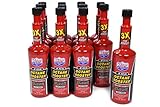
- Suitable for use in fuel injected and carbureted engines
- Provides more boost than most other brands
- Promotes clean fuel burn for fewer emissions
- Designed for engines and vehicles not equipped with emissions aftertreatment systems
2019 Dodge Durango with the 3.6L engine
The 2019 Dodge Durango manual identifies regular 87 octane for its 3.6L engine and explicitly says premium is not required or beneficial over regular in these engines. It also warns against E-85 and ethanol blends above 15% for the 3.6L engine.
Recommended Free Tools
The premium statement is useful because it answers the common “will premium help?” question in the manufacturer’s own terms. It is not an invitation to ignore the rest of the fuel specification: the octane number, ethanol percentage and exact vehicle application still matter.
How to verify your own vehicle before buying fuel
Because “3.6L Pentastar” is an engine description rather than a complete vehicle identification, use this short procedure whenever there is uncertainty:
Rank #4

- BOOSTS OCTANE UP TO 5 NUMBERS: This improved formula raises octane levels by up to 50 points, helping your engine perform at its peak.
- ELIMINATES KNOCKING AND PINGING: Reduces engine knock and detonation caused by low-octane fuel, ensuring smoother and more reliable engine operation.
- INCREASES THROTTLE RESPONSE AND POWER: Enhances throttle response and overall power output, making it ideal for racers, tuners, and everyday drivers alike.
- WIDE COMPATIBILITY: Formulated for use with a broad range of unleaded gasoline engines, whether on the track or during daily commutes.
- EASY TO USE: Each 16 fl oz can treats your fuel tank directly, providing a concentrated dose of performance-enhancing additives in one simple application.
- Identify the exact vehicle. Record the make, model, model year, body style and market. A Wrangler, Ram 1500 and Durango are separate applications even when their displacement is similar.
- Confirm the engine and fuel type. Check the engine badge, build information or owner’s manual. Do not assume the 3.6L gasoline engine has the same requirement as a V8, turbocharged engine or diesel offered beside it.
- Open the fuel section of the owner’s manual. Look for headings such as “Fuel Requirements,” “Fuel Selection” or “Fuel Recommendations.” Use the manual issued for your model year and region.
- Read the fuel-filler-door label. The label may state the minimum octane or identify prohibited fuel. If it conflicts with an unofficial chart or forum post, use the manufacturer documentation and ask a dealer to resolve the discrepancy.
- Record both numbers. Write down the required octane method and the allowed ethanol percentage. An octane-compliant fuel can still be unsuitable if its ethanol content exceeds the vehicle’s limit.
- Check the pump label before inserting the nozzle. In the United States, the posted octane number normally uses the (R+M)/2 anti-knock index referenced by the cited Jeep and Ram documents. Other countries may display a different rating convention, so use your market’s manual rather than converting numbers by guesswork.
Octane and ethanol are separate checks
Choosing 87 octane answers only the octane part of the question. The 2020 Ram specification permits 0–15% ethanol, while the 2019 Durango manual says not to use E-85 or blends above 15% in its 3.6L engine. Those limits are not interchangeable: a fuel can display the expected octane and still carry an ethanol percentage your manual prohibits.
What “0–15% ethanol” means
The Ram table allows gasoline containing no ethanol through a blend containing 15% ethanol for the cited 3.6L application. Read the pump’s ethanol labeling when it is provided, especially where E15 and E85 are sold next to ordinary gasoline.
Free tools Windows power users keep installed
One-click scans. No signup required.
Why E-85 is a different product
E-85 is a high-ethanol fuel, not simply a premium version of gasoline. The cited Durango manual specifically prohibits E-85 and blends above 15% for its 3.6L engine. Never treat an E-85 dispenser as an octane upgrade. If your manual does not identify your vehicle as flex-fuel, do not select E-85 on the assumption that the 3.6L badge makes it acceptable.
Best Value

- Restores Performance & Treats Fuel System: This STP gas treatment works as an effective gas treatment poured directly into your gas tank to help restore lost power and acceleration during regular fill-ups
- For Gasoline Engine Compatibility:This advanced fuel additive for gasoline engines is suitable for use in cars & trucks, helping support reliable engine performance
- Cleans and Protects Fuel System: This fuel treatment includes high-performance detergents that help keep the fuel system clean while supporting efficient combustion
- Boosts Octane and Reduces Knock: Formulated to deliver an octane boost, this additive helps reduce engine knock and ping when added to your fuel tank, promoting smoother operation
- Versatile Gas Additive Solution: This gas additive helps improve MPG and restore engine performance by enhancing fuel quality and combustion efficiency
If you are unsure what was dispensed
Stop and check the vehicle’s manual, fuel-filler label and the station receipt or pump selection. If you believe you used a prohibited blend, contact the manufacturer’s roadside assistance or a qualified service facility for model-specific instructions before relying on general advice. The correct response can depend on how much fuel was added and whether the engine has been started.
Common mistakes that lead to the wrong fuel choice
- Assuming premium is “better.” The cited Dodge manual says premium provides no benefit over regular for its covered 3.6L engines. Higher octane is not a substitute for following the specified fuel.
- Using a specification from another engine. A vehicle lineup can include V6, V8, turbocharged and diesel engines with different requirements. Match the instruction to the engine actually installed.
- Ignoring model year. A 2019 manual, 2020 manual and 2026 FAQ document different vehicles and publication years. Their numbers support the cited applications, not every subsequent redesign.
- Checking octane but not ethanol. The Ram and Durango documents show why both details belong in the decision.
- Confusing rating systems. The cited U.S. specifications use (R+M)/2. A number printed under another country’s convention should be interpreted through that vehicle’s regional manual.
- Relying on a generic internet chart. A chart may omit trim, calibration, emissions market or flex-fuel differences. The owner’s manual and fuel-filler label identify the vehicle-specific requirement.
Does premium improve power, economy or engine life?
The cited manufacturer documents do not establish a power, fuel-economy or longevity advantage from premium in these 3.6L applications. The Dodge manual goes further by saying premium will not provide a benefit over regular for the specified engines. Do not pay for premium, octane booster or fuel additives to satisfy a requirement that the manual does not impose.
If your vehicle knocks, runs poorly or displays a warning after refueling, do not assume premium is the cure. Verify that the fuel was the correct octane and ethanol blend, then use the diagnostic procedure in the vehicle manual or seek qualified service. Persistent symptoms can have causes unrelated to fuel grade.
Do these 3 things before closing this tab:
1Fix the driver behind crashes, sound loss and screen glitches2Repair Windows errors before they cause bigger problems3Scan for outdated or missing drivers - takes under a minuteBottom line for owners
For the cited 3.6L Pentastar applications, fill with high-quality regular unleaded rated at 87 octane by the (R+M)/2 method. Keep ethanol within the limit your vehicle specifies—0–15% in the cited Ram table, with E-85 and blends above 15% prohibited in the cited Durango manual. Because the question does not identify your vehicle’s model year, configuration or market, confirm those instructions in your own owner’s manual before treating them as universal.
Quick Recap
Product prices and availability are accurate as of the date/time indicated and are subject to change. Any price and availability information displayed on Amazon at the time of purchase will apply.




