You do not automatically need an 800cc motorcycle. This displacement can be an excellent middleweight for highway travel, touring and confident daily riding, but “800cc” is only the engine’s swept volume. Engine layout, tuning, weight, seat height, riding position and your local licence rules matter just as much.
Choose an 800cc model when you hold the required entitlement, can control its mass at walking pace and will regularly use its highway, passenger or luggage capability. A smaller motorcycle is usually easier to learn on and more economical for short, urban-only trips.
As an Amazon Associate I earn from qualifying purchases.
What “800cc” actually tells you
Engine displacement is the combined volume swept by the pistons. It is expressed in cubic centimetres (cc), so an 800cc motorcycle has roughly 800 cubic centimetres of total cylinder displacement. That number does not establish a motorcycle’s horsepower, acceleration, fuel use, weight or difficulty to ride.
The Tool Desk
Outbyte PC Repair FREERepair Windows errors before they cause bigger problemsFix Now →Outbyte Driver Updater FREEFix the driver behind crashes, sound loss and screen glitchesFind Drivers →The Fédération Internationale de Motocyclisme’s 2026 Supersport Next Generation rules demonstrate why the label is broad: they cover four-cylinder engines over 400cc up to 800cc, three-cylinder engines over 500cc up to 900cc, and two-cylinder engines over 600cc up to 990cc. Two motorcycles sold as “800s” can therefore have different throttle response, engine braking, peak power, vibration, dimensions and cooling requirements.
#1 Best Overall

- 2 Visors Included: Clear + Smoked and 1 Neck Scarf for Winter Use
- Streamlined Aerodynamic Design Reduces Wind Noise and Drag
- Advanced and Lightweight Durable ABS Shell
- Quick Release Clasp and Strap and Removable Inner Lining Pads
- Meets or Exceeds FMVSS-218 and DOT Safety Standards
Engine layout changes the experience
| Layout | What can differ at similar displacement | Questions to ask during a test ride |
|---|---|---|
| Parallel twin | Often packaged compactly, with a broad, controllable response when tuned for road use. | Is the first part of the throttle smooth in traffic? How much engine braking do you feel when closing the throttle? |
| Triple | Can combine strong low- and mid-range response with an eager high-rpm character. | Does the response feel predictable when you make small inputs at low speed? |
| Four-cylinder | May be physically wider and can deliver a different rev range, sound and top-end emphasis. | Is the power easy to meter where you ride, or does it encourage higher speeds than you want? |
These are tendencies, not guarantees. Cam timing, gearing, ride-by-wire calibration, emissions equipment and the motorcycle’s intended use can make two engines with the same cylinder count feel unlike each other.
Examples from current motorcycles
Suzuki describes the 2026 V-Strom 800 as using a 776cm³ parallel twin. Its manufacturer description emphasizes smooth, controllable power from low rpm, free-revving performance higher in the range, daily town practicality and capability on highways, back roads and country trails. Those are Suzuki’s claims, not independent instrumented test results.
Triumph describes the Trident 800 as an 800cc triple that responds immediately to throttle input, with performance intended to aid overtaking and corner exits. Triumph also highlights self-cancelling indicators as an everyday convenience. Again, these are manufacturer descriptions rather than laboratory measurements.
Recommended Free Tools
How much performance does an 800cc motorcycle provide?
An 800cc motorcycle generally offers more reserve than a small commuter when joining a fast road, climbing with a passenger or overtaking. The useful question is not whether it is “fast enough,” but whether the model delivers that reserve in a way you can control and whether your roads and riding habits justify carrying it.
Rank #2

- 【DOT Certified & High-Impact Protection】 This full face motorcycle helmet meets or exceeds DOT FMVSS-218 standards, ensuring professional-grade safety. Built with a rugged ABS shell and energy-absorbing EPS, these motorcycle helmets dot approved provide ultimate defense for street bikes, cruisers, and sport bikes
- 【Optimized Airflow for All-Weather Riding】 Experience superior ventilation with 4 strategically placed air intakes and exhaust vents. This full face helmet design minimizes wind resistance and fogging, keeping you cool during summer rides and providing a reliable full face helmet adult option for rainy or cold weather
- 【Quick-Release Dual Visor System】 Adapt to any light condition with ease. Our full face helmet motorcycle features a tool-free quick-release system. Each order includes a pre-installed tinted shield plus a bonus clear visor, making these full face motorcycle helmets for men and women versatile for both bright days and night riding
- 【Washable Lining & Comfort Fit】 Maintain freshness on every journey with our fully removable and machine-washable interior. The moisture-wicking sponge padding makes these motorcycle helmets for adults incredibly comfortable for long-distance trips, ensuring a snug fit for these full face motorcycle helmets dot certified
- 【Complete Bundle & Perfect Sizing】 We include a premium carrying bag for easy storage and scratch protection. Whether you are searching for motorcycle helmets for women or men, TRIANGLE offers 4 sizes (S-XL) to ensure a secure fit. Please measure your head circumference to find the perfect full face motorcycle helmet for women or men
Acceleration and overtaking
Power-to-weight ratio, gearing and throttle calibration determine how quickly a motorcycle gathers speed. A lighter 800cc roadster may feel very different from a heavier adventure-tourer using a similar engine. The same nominal capacity can also produce different engine braking when you roll off, which affects corner entry and low-speed smoothness.
No independent acceleration, fuel-economy or top-speed testing is established here. Treat quoted performance language from manufacturers as positioning, not as a promise of a particular time or speed. On a test ride, evaluate the 30–50 mph or equivalent local-speed response you actually use, rather than chasing maximum speed.
Highway reserve without constant strain
For regular motorway or freeway travel, an 800cc can provide useful headroom for hills, headwinds and loaded riding. Whether it is comfortable depends on wind protection, vibration, gearing, seat support and your preferred cruising speed. A naked roadster may have ample engine performance but expose you to more wind than an adventure-tourer with a screen.
What’s actually slowing this PC down?
Pick the symptom - the matching free tool is one click away.
What licence do you need for an 800cc motorcycle?
There is no worldwide “800cc licence.” Legal entitlement is set by the country, state or province, and rules may depend on power, age, training and the exact licence category rather than displacement alone.
Rank #3
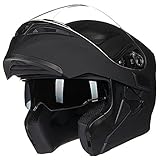
- High Resistance ABS Shell With Micrometrically Adjustable Strap
- Meets or Exceeds FMVSS-218 and DOT Safety Standards
- Helmet Liner / Cheek Pads are Lightweight, Soft and Easily Removable and Washable
- Sleek and Lightweight Design Reduces Wind Noise
- Modular Flip-Up Function Anti-Scratch, Anti-Fog and Wide View Clear Visor
United Kingdom
UK Driver and Vehicle Standards Agency guidance says an unrestricted Category A practical-test motorcycle must have an engine capacity of at least 595cc, power of at least 50kW and weight of at least 175kg. An 800cc motorcycle may meet those test-bike thresholds, but the rider still needs the entitlement that matches the motorcycle being ridden.
Learners need the appropriate provisional licence and compulsory basic training (CBT). A full entitlement requires the relevant theory and practical tests. A licence obtained through a restricted route may impose power limits, so check the category shown on your licence rather than assuming that an 800cc engine is permitted.
Indiana, United States
Indiana uses a different structure. The Indiana Bureau of Motor Vehicles treats a motorcycle separately from a motor-driven cycle and requires a driver’s licence with a motorcycle endorsement. Indiana also states that motorcycle insurance is required. Engine capacity alone does not tell you which credential applies.
Quick wins for a faster PC:
Fix the driver behind crashes, sound loss and screen glitchesFind Drivers →Repair Windows errors before they cause bigger problemsFix Now →Scan for outdated or missing drivers - takes under a minuteDriver Scan →Checks to make elsewhere
- Minimum rider age and whether a learner permit is available.
- Motorcycle endorsement, category or separate licence requirements.
- Engine-power or power-to-weight restrictions for novice riders.
- Required training, theory exams and practical tests.
- Helmet, eye-protection, lighting and passenger rules.
- Insurance, registration and inspection obligations.
Confirm these items with your transport authority before paying a deposit or riding the motorcycle home. Rules can change, and a licence valid for one displacement class may not cover a higher-powered model.
Rank #4

- Unmatched Protection & Durability:Built Tough for Extreme Adventures, Our Helmet Exceeds Expectations by Meeting FMVSS-218 and DOT Safety Standards. Its Robust Construction Safeguards Ensuring Ultimate Security as You Conquer the Toughest Terrains
- Convenient Flip-Flop Mechanism: Easy Switching Between Full-Coverage Helmet and Open Mode, This Modular Motorcycle Helmet Is Perfect for City Riding and Long-Distance Touring
- Stay Cool and Comfortable with Strategically Placed Vents That Ensure Maximum Airflow and Reduce Heat and Moisture Buildup During the Ride
- Comfortable Interior Lining: Enjoy the Cozy Plush Lining That Provides Long-Lasting Comfort Even on Long Rides
- The Modular Design Makes It Suitable for Snowmobiles, Dirt Bikes, Scooters, Bike Riding and More. With Its Innovative Features, It Is Sure to Be an Ideal Choice for Riders Looking for a Stylish, Comfortable and Safe Helmet!
Is an 800cc motorcycle too much for a beginner?
Displacement alone cannot answer that. A calm, well-calibrated 800cc twin with manageable ergonomics may be easier for a confident, trained rider than a smaller but abrupt or poorly fitting motorcycle. However, an 800cc machine can be heavier, taller and more expensive to correct when a beginner makes a mistake.
Signs you may be ready
- You have the local licence or training entitlement required for the specific motorcycle.
- You can start, stop, turn and perform a controlled U-turn without panic.
- You can hold the motorcycle upright while walking it backward and park it on uneven ground.
- You understand clutch friction-zone control, progressive braking and throttle discipline.
- You regularly ride outside slow urban streets and want highway or touring capability.
Reasons to start smaller
- Most journeys are short, congested urban trips where low weight and easy parking matter more than reserve power.
- You are still learning slow-speed balance, emergency braking or gear selection.
- A tall seat leaves you unable to place a secure foot down at stops.
- Your budget is tight and tyres, insurance, fuel and servicing would be difficult to fund.
If you are uncertain, supervised training and a properly fitted smaller motorcycle can build skills faster than relying on electronic modes to disguise poor control. A restriction or learner-legal model may also provide a staged path, subject to your jurisdiction’s rules.
Can an 800cc motorcycle be used for commuting?
Yes, when the particular model suits your route. Suzuki explicitly positions the V-Strom 800 for town use as well as highways and longer travel. A different 800cc motorcycle may have a high seat, aggressive steering or limited storage that makes the same commute tiring.
Do these 3 things before closing this tab:
1Fix the driver behind crashes, sound loss and screen glitches2Repair Windows errors before they cause bigger problems3Scan for outdated or missing drivers - takes under a minuteCommuter-fit checklist
| Feature | Why it matters every day | How to assess it |
|---|---|---|
| Low-speed throttle | Smooth response reduces jolts in queues, junctions and parking manoeuvres. | Ride at walking pace in first gear and make tiny throttle openings. |
| Weight and balance | Determines effort in U-turns, ramps, gravel and a fully loaded parking space. | Move the bike with the engine off and practise a tight turn. |
| Seat height and reach | Confidence at stops is especially important on cambered or slippery surfaces. | Sit in normal riding gear; check both feet and the controls, not just the catalogue figure. |
| Ergonomics | A neutral posture reduces wrist, hip and back fatigue. | Spend enough time seated to test knee bend, bar reach and mirror position. |
| Wind protection | Changes comfort and fatigue on faster roads. | Try the screen at your normal speed and check turbulence around your helmet. |
| Storage and accessories | Daily luggage, rain gear and security equipment need somewhere to go. | Check factory or approved pannier, top-box and rack options. |
| Running costs | Fuel, tyres, servicing, insurance and consumables affect the real budget. | Obtain an insurance quote and service schedule for the exact model and your address. |
Are 800cc motorcycles good for touring?
They can be. The capacity gives useful flexibility for sustained road speeds, hills and carrying a passenger or luggage, while many 800cc models remain lighter and less physically imposing than large touring motorcycles. Touring suitability is primarily a package decision.
Best Value
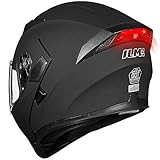
- High Resistance ABS Shell With Micrometrically Adjustable Strap
- Meets or Exceeds FMVSS-218 and DOT Safety Standards
- Helmet Liner / Cheek Pads are Lightweight, Soft and Easily Removable and Washable
- Sleek and Lightweight Design Reduces Wind Noise
- Modular Flip-Up Function Anti-Scratch, Anti-Fog and Wide View Clear Visor
Touring features to prioritise
- Seat and handlebar comfort over several hours, not just a ten-minute showroom impression.
- Wind protection that can be adjusted for your height and riding position.
- Stable handling when panniers, a top box or a passenger are fitted.
- Fuel range appropriate to the distances between stations on your routes.
- Payload capacity that covers rider, passenger, luggage and accessories.
- Dealer and servicing access along the routes you expect to travel.
An adventure-style 800 may suit mixed surfaces and upright comfort, while a roadster can be more agile in town but offer less weather protection. Neither body style is automatically better; match it to your roads and luggage needs.
Ownership factors beyond engine size
Before buying, price the complete ownership package rather than the motorcycle alone. Insurance varies by location, rider history, security arrangements and model. Tyre choice and replacement frequency depend on weight, riding style and road surfaces. Service intervals, valve-check requirements and parts availability affect downtime and cost.
Electronic riding modes, traction control and adjustable throttle maps can make a motorcycle easier to manage, but they do not replace correct training. Learn what each mode changes, whether it can be selected while moving and what happens after the ignition is switched off.
A practical decision process
- Confirm legality. Identify the exact licence category, endorsement, power limits, insurance and registration requirements for your location.
- Describe your routes. Estimate how much of your riding is urban, fast-road, rural, off-pavement, passenger or luggage work.
- Set a physical limit. Compare wet weight, seat height, centre of gravity and handlebar width, then practise moving the motorcycle with the engine off.
- Test the controls. Check clutch feel, first-gear response, braking effort, steering lock and visibility at walking pace.
- Test the relevant speed range. Evaluate smooth roll-on response, overtaking reserve and wind comfort at legal local speeds; do not rely on brochure adjectives.
- Calculate ownership. Get an insurance quote, inspect the service schedule and price tyres, protective gear, luggage and security equipment.
- Reassess the displacement. If you will not use highway reserve, passenger capacity or touring range, a smaller motorcycle may deliver easier handling and lower ongoing costs.
Safety and legal equipment
GOV.UK states that a rider must wear a helmet meeting safety standards when using a motorcycle or moped on the road, and that adequate motor insurance is required for road use. Indiana likewise states that motorcycle insurance is required. Other jurisdictions may add eye protection, daytime lighting, passenger equipment or inspection rules.
Buy a correctly fitting, standards-compliant helmet before planning the first ride. Add protective gloves, abrasion-resistant clothing and boots that cover the ankles, then verify the exact requirements of your local authority. Protective equipment cannot compensate for a licence category, registration or insurance gap.
What the evidence can—and cannot—tell you
The cited manufacturer material establishes how Suzuki and Triumph position their 800cc models for road use; it does not provide independent acceleration, fuel-economy, reliability or insurance-price tests. The licensing examples above cover the UK and Indiana only. Riders elsewhere must verify their own rules with the relevant authority.
Quick Recap
Product prices and availability are accurate as of the date/time indicated and are subject to change. Any price and availability information displayed on Amazon at the time of purchase will apply.




