The Tool Desk
Outbyte PC Repair FREERepair Windows errors before they cause bigger problemsFix Now →Outbyte Driver Updater FREEFix the driver behind crashes, sound loss and screen glitchesFind Drivers →Yes. An EV heat pump can reduce the electricity needed to warm the cabin, which can help preserve driving range in cold weather. It does not prevent winter range loss: cold can also reduce the battery’s usable energy, and the benefit varies with vehicle design, temperature, and driving conditions.
Why EV range falls in cold weather
Winter affects more than cabin comfort. Heating the cabin draws energy from the vehicle, while low temperatures can reduce the battery’s usable energy. The U.S. Department of Energy identifies both as major contributors to cold-weather range loss and notes that results vary with battery thermal-management strategy and HVAC technology.


DOE reported an average 41% decrease in battery-electric vehicle range at 20°F under its 2024 study methodology. That is a study average for cold conditions, not a prediction for every EV or a measurement of heat-pump savings. The report explains that HVAC demand rises as temperatures fall, in part because of battery chemistry and the power needed for heating. U.S. Department of Energy, 2024
How an EV heat pump reduces cabin-heating demand
A resistive heater turns electrical energy into heat. A heat pump uses a compressor and refrigerant circuit to move heat into the cabin, drawing it from outside air and, depending on the vehicle’s design, recovering waste heat from components such as the motor, inverter, charger, or battery.
What’s actually slowing this PC down?
Pick the symptom - the matching free tool is one click away.
#1 Best Overall
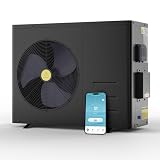
- 【Enjoy More Swim Time, Not Just Summer】 No one wants a pool that feels comfortable for only a few months a year. Designed for pools up to 24000 gallons, this heat pump helps extend your swim season so you can enjoy warmer water beyond the peak of summer.
- 【Faster Heating with Better Energy Efficiency】 You want the water warm faster without sending your energy bill up. With up to 79000 BTU/hr of heating power and an impressive COP of 16.5, this system delivers strong heating performance while helping reduce long-term energy costs.
- 【More Stable Heating When the Weather Turns Cooler】 Many heaters lose efficiency when outdoor temperatures drop. Equipped with an EVI compressor, this unit is built for stronger low-temperature heating performance and starts an automatic defrost cycle every 40 minutes to help maintain stable operation in colder conditions.
- 【Easy Control from the Panel or App, with Quiet Operation】 You should not have to walk over to the unit every time you want to make an adjustment. This model supports both onboard panel and mobile app control, with Heating, Cooling, Auto, and SPA modes. Operating at just 29–45 dB, it also helps keep your backyard more peaceful.
- 【Fits More Pool Setups and Easier to Install】 No one wants a complicated installation process. This unit is compatible with round, oval, rectangular pools, as well as small inground pools, and comes with installation parts for easier setup. Supports 220–240V hardwired installation.
Hyundai and Kia say their system uses heat recovered from vehicle components to help warm the cabin. They report that heat-pump technology first appeared on the first-generation Kia Soul EV in 2014, with later systems expanded to recover heat from more components. Designs differ by manufacturer; a cabin heat pump does not necessarily mean the battery is warmed by a heat pump too. Some configurations pair a cabin heat pump with resistive battery heating or backup heat. Hyundai and Kia
How much range can a heat pump save?
There is no single percentage that applies to every EV. The available figures measure different things, in different vehicles or models, and under different conditions. Read them as evidence that a heat pump can help—not as a guaranteed range increase for a particular car.
Rank #2

- Reliable Heating for a Longer Swim Season: Designed for inground pool owners who want comfortable water beyond peak summer, this 𝟖𝟑,𝟎𝟎𝟎 𝐁𝐓𝐔 electric pool heater features an 𝐚𝐝𝐯𝐚𝐧𝐜𝐞𝐝 𝐄𝐕𝐈 𝐜𝐨𝐦𝐩𝐫𝐞𝐬𝐬𝐨𝐫 for dependable cold-weather performance. It helps warm pool water efficiently in cooler outdoor conditions, making it ideal for early spring, late fall, family swimming, backyard pools, and vacation homes
- 𝐇𝐢𝐠𝐡-𝐄𝐟𝐟𝐢𝐜𝐢𝐞𝐧𝐜𝐲 𝐈𝐧𝐯𝐞𝐫𝐭𝐞𝐫 𝐇𝐞𝐚𝐭 𝐏𝐮𝐦𝐩 with COP up to 15.9: Built with full DC inverter technology, this pool heat pump automatically adjusts compressor speed based on real-time heating demand to maintain a stable water temperature with less energy waste. With a COP of up to 15.9 under optimal conditions, it delivers powerful heating performance while helping homeowners reduce operating costs compared with traditional electric resistance pool heaters
- Heating, Cooling and Smart Auto-Defrost in One Unit: This swimming pool heat pump supports both heating and cooling, with a heating range from 59°F to 104°F and a cooling range from 42.8°F to 77°F. The intelligent auto-defrost system helps prevent frost buildup on the outdoor unit during cold-weather operation, supporting more consistent heat transfer and reliable performance when temperatures drop
- WiFi App Control and Quiet Backyard Operation: Control the pool heater from your phone or the built-in panel. Adjust temperature, switch heating or cooling modes, set timers, schedule operation, or activate quiet mode with ease. The optimized fan and inverter system operate as low as 50 dB, helping keep your backyard, patio, and pool area peaceful while the unit works in the background
- 𝐂𝐞𝐫𝐭𝐢𝐟𝐢𝐞𝐝 𝐒𝐚𝐟𝐞𝐭𝐲, 𝐓𝐢𝐭𝐚𝐧𝐢𝐮𝐦 𝐃𝐮𝐫𝐚𝐛𝐢𝐥𝐢𝐭𝐲 & 1-𝐘𝐄𝐀𝐑 𝐰𝐚𝐫𝐫𝐚𝐧𝐭𝐲: Buy with confidence. This pool heater is cTUVus certified for North American safety standards and built with a corrosion-resistant titanium heat exchanger to withstand chlorine, saltwater, and harsh pool environments. With dependable performance and a 1-𝐲𝐞𝐚𝐫 𝐰𝐚𝐫𝐫𝐚𝐧𝐭𝐲, it’s made to keep your pool comfortable for years to come
| Evidence | What it found | How to interpret it |
|---|---|---|
| SAE simulation, 2021 | About 20–40% higher energy efficiency for the modeled heat-pump cabin-heating configuration than for pure resistive cabin heating in cold conditions. | The simulation used heat-pump cabin heating with resistive battery heating, compared with resistive heating for both cabin and battery. It modeled NEDC and WLTP cycles from −20°C to 40°C. This is modeled heating efficiency, not a universal range gain. SAE International |
| Canadian laboratory comparison, 2025 | A 1–15% advantage in percentage of range retained across ambient conditions and drive cycles. | The researchers compared a 2020 Tesla Model 3 with resistive PTC cabin heat and a 2022 Model 3 with a heat pump. Model year, battery capacity, and drivetrain also differed, so the result does not isolate heating architecture alone. Environment and Climate Change Canada researchers |
| Kona Electric and Niro EV test reported by Hyundai and Kia, 2020 | 90% of driving range retained in the cited −7°C test compared with journeys at 26°C, with HVAC running. | This is a manufacturer release describing a Korea Ministry of Environment study. It compares cold- and warm-weather range for those vehicles; it is not a general heat-pump savings figure. Hyundai and Kia |
The DOE’s 41% cold-weather average provides context for the overall winter penalty, not an isolated heat-pump comparison. Likewise, the SAE simulation, Canadian vehicle test, and manufacturer-reported test should not be combined into one expected saving: their baselines, methods, temperatures, and outcome measures differ.
What happens in extreme cold or after a cold start?
A heat pump can still be useful in very cold weather, but its output and advantage depend on the available heat sources, system design, battery condition, and whether the vehicle has been cold-soaked. In the Canadian Model 3 comparison, the heat-pump car had a higher cabin-heating load during the first cycles at −10°C; across the drive-cycle calculations, the overall results still favored the heat-pump vehicle, though the advantage was smaller in some very-cold cases. The paper also notes that backup PTC heat may improve performance at extremely low temperatures. Those results do not establish a universal temperature at which heat pumps stop helping. Environment and Climate Change Canada researchers
Free tools Windows power users keep installed
One-click scans. No signup required.
Ways to limit avoidable winter energy use
- Precondition while plugged in. Warm the cabin before departure when practical so some of that energy can come from the grid rather than the traction battery.
- Use targeted heat where available. Seat and steering-wheel heaters can provide comfort without relying only on heating the whole cabin.
- Check tire pressure. Keep tires inflated to the vehicle maker’s recommendation.
- Moderate speed in severe cold. Avoid sustained high speeds when temperatures are extreme.
- Plan charging around cold conditions. Allow for the vehicle’s battery and cabin preconditioning behavior when planning stops and charging sessions.
These are practical strategies recommended by AAA; they are not controlled measurements of a specific heat-pump system. AAA
Independent reader supportYour contribution helps us test, update, and keep practical guides available for everyone.What to check when comparing EVs
- Whether a heat pump is standard, optional, or unavailable on the exact trim and in your market.
- Whether the vehicle has resistive backup heat and how it warms the battery.
- Whether quoted range reflects cold, warm, preconditioned, or other test conditions.
- Whether a result comes from a simulation, a controlled laboratory test, or a manufacturer’s report.
- Whether the comparison isolates heating hardware or also involves changes in model year, battery, or drivetrain.
Battery chemistry and battery conditioning remain separate parts of winter performance. A cabin heat pump reduces one potential source of energy use; it cannot remove the effects of cold on the battery itself.
Quick Recap
Rank #4
- Enjoy More Swim Time, Not Just Summer:No one wants a pool that feels comfortable for only a few months a year. Designed for pools up to 16000 gallons, this heat pump helps extend your swim season so you can enjoy warmer water beyond the peak of summer.
- Faster Heating with Better Energy Efficiency:You want the water warm faster without sending your energy bill up. With up to 55000 BTU/hr of heating power and an impressive COP of 15, this system delivers strong heating performance while helping reduce long-term energy costs.
- More Stable Heating When the Weather Turns Cooler:Many heaters lose efficiency when outdoor temperatures drop. Equipped with an EVI compressor, this unit is built for stronger low-temperature heating performance and starts an automatic defrost cycle every 40 minutes to help maintain stable operation in colder conditions.
- Easy Control from the Panel or App, with Quiet Operation:You should not have to walk over to the unit every time you want to make an adjustment. This model supports both onboard panel and mobile app control, with Heating, Cooling, Auto, and SPA modes. Operating at just 29–45 dB, it also helps keep your backyard more peaceful.
- Fits More Pool Setups and Easier to Install:No one wants a complicated installation process. This unit is compatible with round, oval, rectangular pools, as well as small inground pools, and comes with installation parts for easier setup. Supports 220–240V hardwired installation.
Product prices and availability are accurate as of the date/time indicated and are subject to change. Any price and availability information displayed on Amazon at the time of purchase will apply.