Free tools Windows power users keep installed
One-click scans. No signup required.
Yes—during Mark Rober’s March 15, 2025 demonstration, a Tesla Model Y drove through a lightweight foam wall painted to look like an open road. A separate vehicle equipped with LiDAR stopped before reaching the same wall.
The result is striking, but it needs careful interpretation. The video shows that the tested Tesla setup failed to identify this deliberately constructed visual deception early enough to avoid the impact. It does not prove that every Tesla will crash into painted walls, that Tesla vehicles are fully autonomous, or that LiDAR is always safer than cameras.
What happened in Mark Rober’s Tesla wall test?
Mark Rober’s video, “Can You Fool A Self Driving Car?”, was published on March 15, 2025. In it, Rober compared a Tesla Model Y with a separate vehicle equipped with LiDAR supplied by Luminar.
The vehicles were exposed to several staged situations intended to challenge their perception systems. The demonstrations included a child-sized mannequin, fog, rain, bright light, and a final “Wile E. Coyote” setup: a wall painted with a road scene that appeared to continue the roadway ahead.
#1 Best Overall

- Made of zinc alloy with ABS plastic parts
- 5.9 inch x 2.2 inch x 1.8 inch(size)
- The two sides of doors could be opened,front and back covercould be opened too
- You can pull back the car,then it can move forwards with Lights and Sound
- Very suitable as children 4 years and up toys for birthday,Christmas gift, new year. Also it can be a gift for your boyfriend
The wall was not a concrete road barrier. It was a lightweight foam or Styrofoam structure designed to break apart when struck. The painted image made it appear, from the front, as though the vehicle could continue driving along the road.
In the final demonstration, the Tesla drove through the painted wall. The LiDAR-equipped comparison vehicle stopped before it. Rober’s YouTube description identifies the Tesla comparison vehicle, the Luminar-supplied LiDAR vehicle, and a link to uncut footage of the wall impact.
Why could a painted wall fool one system?
The central issue is how different sensors obtain information about the world.
Cameras interpret images
A camera records patterns of light, color, edges, texture, and motion. Software then interprets those images to estimate what is in front of the vehicle: lane markings, vehicles, pedestrians, signs, road boundaries, and potential obstacles.
That approach can be highly capable, but it requires the system to infer three-dimensional information from two-dimensional imagery and other available data. A carefully painted surface can create visual cues associated with a drivable road—lane lines, pavement, and a vanishing point—even though the surface is physically solid.
This does not mean cameras are incapable of seeing walls. Ordinary walls, barriers, vehicles, and other obstacles can be detected by camera-based systems. The point of Rober’s stunt was to construct an unusually deceptive visual scene that challenged the perception software’s interpretation.
Rank #2

- Made of zinc alloy with ABS plastic parts
- 5.9 inch x 2.2 inch x 1.8 inch(size)
- The two sides of doors could be opened,front and back covercould be opened too
- You can pull back the car,then it can move forwards with Lights and Sound
- Very suitable as children 4 years and up toys for birthday,Christmas gift, new year. Also it can be a gift for your boyfriend
LiDAR measures distance directly
LiDAR—short for light detection and ranging—sends laser pulses into the environment and measures the reflected returns. The system can use those measurements to build a three-dimensional representation, commonly called a point cloud, of nearby surfaces.
A painted wall may resemble a road in a camera image, but its surface still returns laser measurements at a particular distance and height. That geometric information can provide an independent indication that the apparent roadway is blocked.
That is the important distinction demonstrated here: LiDAR can add direct depth and shape information rather than relying only on the meaning inferred from an image. The comparison vehicle’s stop is consistent with the advantage of having that additional depth data in this particular setup.
What the video does—and does not—prove
What it does show
- The tested Tesla Model Y crossed a deliberately constructed, road-painted foam wall during the published demonstration.
- The LiDAR-equipped comparison vehicle stopped before the same type of obstacle.
- A carefully designed visual decoy can expose a weakness in a perception system that does not identify the physical obstacle soon enough.
- Independent sensing methods, such as active depth measurement, can provide information that is different from the information in a camera image.
What it does not show
- It does not establish the crash rate of Tesla vehicles in ordinary driving.
- It does not show that all Teslas, all Tesla software versions, or all camera-based systems will drive through painted walls.
- It does not prove that LiDAR is universally superior in every weather, lighting, traffic, or road condition.
- It is not a regulatory safety rating or a statistically representative comparison of production vehicles.
- It does not establish what would happen with every version of Tesla’s software, vehicle hardware, or driver-assistance configuration.
The fairest conclusion is narrow: under the conditions shown, the tested Tesla setup did not recognize the foam wall as an obstacle early enough to prevent impact, while the LiDAR-equipped vehicle did.
This was a demonstration, not a controlled vehicle-safety trial
The experiment was designed for a video, not published as a repeatable regulatory or scientific test protocol. The scenarios, speeds, environmental conditions, vehicle configurations, and timing varied. The LiDAR vehicle was a test vehicle rather than a like-for-like production Model Y comparison.
Those limitations matter because small changes can affect the result. Relevant variables could include the exact software build, sensor calibration, approach speed, road layout, lighting, weather, braking thresholds, and whether a human driver or automated system was controlling the vehicle at the critical moment.
Rank #3
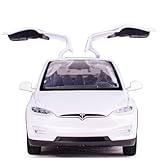
- Made of zinc alloy with ABS plastic parts
- 5.9 inch x 2.2 inch x 1.8 inch(size)
- The two sides of doors could be opened,front and back covercould be opened too
- You can pull back the car,then it can move forwards with Lights and Sound
- Very suitable as children 4 years and up toys for birthday,Christmas gift, new year. Also it can be a gift for your boyfriend
Some Tesla-focused commentary also questioned whether the Tesla was operating with Autopilot rather than Tesla’s newer Full Self-Driving (Supervised) software. It raised questions about whether Autopilot disengaged immediately before impact, based partly on the on-screen driving visualization appearing to disappear.
That interpretation should be treated as a criticism or unresolved question unless the uncut footage and vehicle telemetry are independently analyzed. It does not change the plainly visible result in the published demonstration: the Tesla crossed the wall. But it does affect how confidently viewers can attribute the event to a particular software mode or failure mechanism.
A detailed analysis from Not a Tesla App discusses those questions and the distinction between the software modes. It should be read as commentary on the footage, not as an official reconstruction of the vehicle’s telemetry.
Autopilot is not autonomous driving
The wording around this video is especially important. Tesla Autopilot and Autosteer are driver-assistance features, not permission for the driver to stop monitoring the road.
Windows Errors? Fix Them Before They Spread
Repair common Windows errors and clear accumulated junk for a smoother, more stable PC - no reinstall needed.Free scan · no reinstallOutdated Drivers Are Slowing You Down
One free scan finds every outdated or missing driver and matches the right update for your exact hardware.Free scan · exact hardware matchTesla’s owner documentation says Autosteer requires the driver to remain attentive, keep hands on the steering wheel or yoke, monitor the surroundings and road, and take over immediately when prompted. Tesla also warns that the system can disengage or require immediate manual control in certain situations. The practical implication is straightforward: the driver is expected to detect a failure and intervene before a collision.
That is why calling the vehicle “fully autonomous” would be inaccurate. A Level 2 driver-assistance system can control steering, acceleration, and braking in defined circumstances while the human remains responsible for supervision.
Rank #4
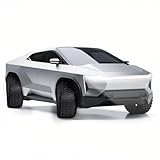
- 1:24 SCALE MODEL: This collectible toy truck measures 9.1" x 3.03" x 2.4" Inches and weighs 18 ounces. Immerse yourself in the toy truck experience with stunning detail in 1/24 scale. These photos capture its realism perfectly, making it a must-have for all toy truck enthusiasts.
- HIGH QUALITY & DURABILITY: Crafted from zinc alloy and ABS plastic, this toy pickup truck boasts exceptional durability. The zinc alloy body ensures authenticity, while ABS plastic components guarantee longevity. Equipped with lights and sounds, simply press the front wheels or open the front door to activate engine sounds and lights.
- COLLECTIBLE GIFTS: Packaged in a beautifully designed color box, it makes for an ideal gift. Whether for play, desk decoration, or collection, this meticulously crafted toy truck is sure to impress. Its high-quality build makes it perfect for kids and collectors alike.
- DIVERSE FUNCTIONS: Enjoy the pull-back function of the rear wheels, allowing the truck to run forward after a short pull. Additionally, trigger sound and light effects by pressing the car body or opening the front door, creating an immersive experience that lasts.
- SERVICES: Rest assured with our comprehensive warranty. Should you encounter any issues with our Toy Model Car Toy Trucks, simply reach out through Amazon's messaging system. We offer a hassle-free refund or replacement within 24 hours.
In December 2023, the U.S. National Highway Traffic Safety Administration described Tesla Autosteer as an SAE Level 2 advanced driver-assistance feature in its recall documentation. The recall involved Tesla Model S, Model X, Model 3, and Model Y vehicles equipped with relevant versions of Autosteer. NHTSA said the prominence and scope of the system’s controls could be insufficient to prevent driver misuse. The agency later opened a recall query to evaluate whether the remedy was adequate. The NHTSA recall document provides the official details.
NHTSA’s completed Autopilot investigation also examined hundreds of reported crashes. The agency identified crash categories including frontal-plane collisions with vehicles or obstacles when an attentive driver would have had time to respond, roadway departures after inadvertent disengagement, and roadway departures on low-traction surfaces. That broader regulatory record helps explain why a staged perception failure attracted attention, but it is not a finding that the Rober video itself was one of those investigated crashes.
The Tool Desk
Outbyte PC Repair FREEClear out junk files and repair common Windows errorsFree Scan →Outbyte Driver Updater FREEFix the driver behind crashes, sound loss and screen glitchesFind Drivers →Why the wall was made of foam
The foam construction was a safety feature of the stunt, not evidence that a foam wall is an ordinary driving hazard. A conventional concrete or masonry barrier could cause severe damage or injury. The lightweight structure was intended to collapse when struck while preserving the visual illusion from the vehicle’s approach.
Coverage from Popular Science describes the wall as a foam structure with a road scene painted across it. The material made it possible to demonstrate the perception failure without staging a high-energy collision with a solid barrier.
Independent reader supportYour contribution helps us test, update, and keep practical guides available for everyone.Does this mean LiDAR is the answer to autonomous-driving safety?
Not by itself. LiDAR can supply useful depth information, but a safe driving system depends on much more than one sensor type. It must detect objects, interpret their relevance, predict movement, plan a path, apply appropriate braking, remain reliable in changing conditions, and communicate its limitations to the human driver.
LiDAR also has engineering trade-offs involving cost, packaging, processing, sensor performance in weather and airborne particles, and system integration. Cameras provide rich visual information, including color, text, traffic lights, and road markings. Radar can contribute range and relative-speed information. Many automated-driving developers use sensor combinations because each technology has different strengths and failure modes.
Quick wins for a faster PC:
Clear out junk files and repair common Windows errorsFree Scan →Scan for outdated or missing drivers - takes under a minuteDriver Scan →Repair Windows errors before they cause bigger problemsFix Now →Best Value

- Brand: Matchbox
- Batteries required: False
- Batteries included: False
The Rober test demonstrates the value of an additional geometric signal in a specific visual-deception scenario. It does not settle the larger debate over whether a production vehicle should use cameras alone, LiDAR, radar, or some combination.
What Tesla drivers should take from the video
- Keep your attention on the road. Autopilot or Autosteer does not transfer responsibility for driving to the car.
- Keep your hands ready to take over. A system can misinterpret an obstacle, fail to brake, disengage, or behave unexpectedly.
- Do not treat the driving visualization as proof that the system understands everything ahead. A displayed object or clear-looking road scene is not a guarantee of correct perception.
- Follow Tesla’s current owner instructions for your vehicle and software. Feature names, availability, warnings, and operating limits can vary by market, model, hardware, and software version.
- Check official recall information when relevant. NHTSA’s recall and investigation materials are more authoritative for regulatory status than a viral video or social-media summary.
Most importantly, the video should be understood as a warning about the limits of driver assistance—not as a reliable way to rank one vehicle’s overall safety against another.
The bottom line on the Tesla painted-wall test
Mark Rober’s March 15, 2025 video captured a Tesla Model Y driving through a road-painted foam wall while a LiDAR-equipped comparison vehicle stopped. The demonstration is a useful illustration of how a visual system can be challenged by a carefully engineered decoy and how direct depth measurements can help in that kind of situation.
But it was a staged demonstration with variable conditions, not a controlled crash-safety study. It cannot prove that Tesla vehicles universally fail in this way, and it cannot prove that LiDAR is always safer than cameras. The practical lesson is less dramatic but more important: Autopilot is Level 2 driver assistance, and the human driver must remain alert and ready to intervene.
Recommended Free Tools
Frequently Asked Questions
Did a Tesla really drive through a wall painted like a road?
Yes. In Mark Rober’s March 15, 2025 video, a Tesla Model Y crossed a lightweight foam wall painted to resemble a continuation of the road. The wall was a staged structure designed to break apart, not a conventional concrete barrier.
Was the Tesla fully autonomous during the test?
No. Tesla Autopilot and Autosteer are driver-assistance features that require continuous driver supervision. The exact software state and whether the system disengaged immediately before impact have been debated, so the footage should not be presented as a test of fully autonomous driving.
Does the test prove LiDAR is safer than cameras?
No. It shows that the LiDAR-equipped comparison vehicle stopped in this particular painted-wall scenario while the tested Tesla did not. It does not provide enough evidence to compare overall safety across all roads, weather, lighting, traffic, vehicles, or software versions.
The Bottom Line
Bottom line: The Tesla’s impact was real, but the conclusion must remain specific. The staged test exposed a failure under one set of conditions; it was not a universal verdict on Tesla, cameras, or LiDAR. Autopilot remains a supervised driver-assistance system, so drivers must stay attentive and ready to take control.
Do these 3 things before closing this tab:
1Repair Windows errors before they cause bigger problems2Scan for outdated or missing drivers - takes under a minute3Clear out junk files and repair common Windows errorsQuick Recap
Product prices and availability are accurate as of the date/time indicated and are subject to change. Any price and availability information displayed on Amazon at the time of purchase will apply.




