PC Slower Than It Used to Be?
A free scan shows the junk files, broken settings and background clutter dragging Windows down - then fixes them in one click.Free scan · Windows 10 & 11Outdated Drivers Are Slowing You Down
One free scan finds every outdated or missing driver and matches the right update for your exact hardware.Free scan · exact hardware matchDaniel Riley was convicted in connection with the February 18, 2023, St. Louis crash that caused injuries resulting in the amputation of both legs of 17-year-old Tennessee volleyball player Janae Edmondson. A jury found Riley guilty on four of five counts on March 7, 2024: felony second-degree assault, armed criminal action, fourth-degree assault involving the driver of another vehicle, and driving without a valid license. The jury acquitted him of a second fourth-degree-assault count involving the other vehicle’s passenger.
Riley was sentenced on April 18, 2024, to 18 years and nine months, plus a $500 fine. The Missouri Court of Appeals affirmed the convictions and sentence on June 10, 2025, rejecting his challenges to the evidence, toxicology disclosure, and the exclusion of evidence about a later traffic-sign change. He was not convicted of DUI.
What the jury decided
The verdict was returned in St. Louis on March 7, 2024, after a trial arising from the downtown crash. The jury did not find Riley guilty on every count. It convicted him on four counts and found him not guilty on one:
| Count | Charge | Verdict |
|---|---|---|
| I | Felony second-degree assault involving Janae Edmondson | Guilty |
| II | Armed criminal action, based on using a vehicle as a dangerous instrument | Guilty |
| III | Fourth-degree assault involving the driver of the Chevrolet Malibu | Guilty |
| IV | Fourth-degree assault involving the Malibu’s passenger | Not guilty |
| V | Driving without a valid license | Guilty |
That distinction matters. Riley was found guilty on four of five counts—not “all charges.” The contemporaneous verdict report and the later appellate opinion both confirm the acquittal on the passenger-assault count.
Quick wins for a faster PC:
Clear out junk files and repair common Windows errorsFree Scan →Fix the driver behind crashes, sound loss and screen glitchesFind Drivers →#1 Best Overall

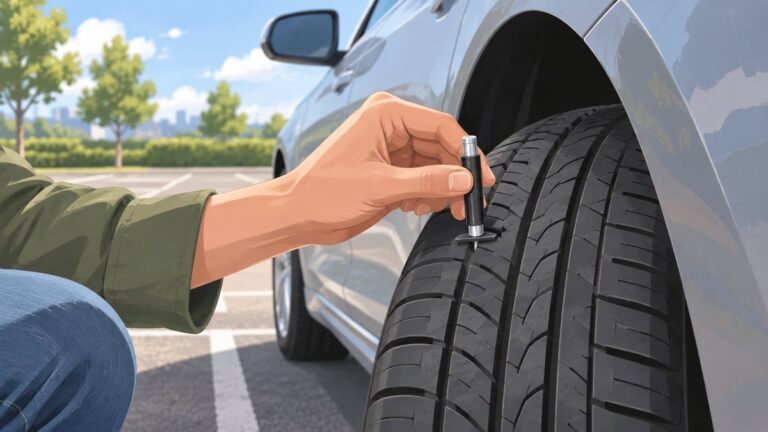
- Suitable for Age 14+ years old
- The package includes knee pad x 2; elbow pad x 2; wrist guard x 2; helmet x 1
- The skateboard helmet is designed with multiple vent, adjustable dail and adjustable strap for proper fit
- Knee elbow pads and wrist guards are made of durable, soft EVA padded material with tough plastic plates
- Appropriate for inline skating; roller skating; skateboarding; scootering; skating and other outdoor sports
Who was involved?
Riley was 21 when the crash occurred and 22 during the trial and sentencing. Edmondson was 17 and lived in Smyrna, Tennessee. She was a high-school volleyball player who had traveled to St. Louis with her parents after participating in a tournament.
On the night of the crash, Edmondson and her parents had eaten dinner and were walking toward their parked vehicle. The collision left her trapped between vehicles. Her injuries ultimately required the amputation of both legs. That wording is more precise than saying both legs were necessarily severed in exactly the same way at the instant of impact.
Edmondson testified at trial about the crash and its aftermath. Her father, James Edmondson, also testified that he used emergency and military training to apply a makeshift tourniquet. Family accounts credited those immediate actions with helping keep her alive until medical help arrived. The significance of that testimony was the emergency response and the severity of the injuries—not graphic details about the scene.
What happened at the St. Louis intersection?
The crash occurred at approximately 8:30 p.m. on February 18, 2023, near the intersection of St. Charles Street and North 11th Street in downtown St. Louis.
The Tool Desk
Outbyte Driver Updater FREEScan for outdated or missing drivers - takes under a minuteDriver Scan →Outbyte PC Repair FREEClear out junk files and repair common Windows errorsFree Scan →Riley was driving a westbound Audi SUV on St. Charles Street. At the time, westbound traffic on St. Charles Street was controlled by a yield sign. Northbound traffic on 11th Street had the right of way. A large building limited the drivers’ views of one another until they were close to the intersection.
According to the appellate court’s account of the trial evidence, Riley entered the intersection and collided with a northbound Chevrolet Malibu. The impact sent the Audi westward and into a parked vehicle. Edmondson was caught between the vehicles.
The defense argued that the Malibu driver and the intersection’s poor visibility contributed substantially to the crash. But the prosecution’s theory was that Riley accelerated toward an obscured intersection, failed to yield, and used the Audi in a way that was capable of causing death or serious injury.
What evidence did prosecutors present?
The state relied on several types of evidence rather than a single speed reading or witness account.
Free tools Windows power users keep installed
One-click scans. No signup required.
Vehicle data and speed
- Data from Riley’s airbag-control module showed the Audi accelerating from approximately 5 mph five seconds before impact to 45 mph at impact.
- An eyewitness estimated that Riley was traveling close to 50 mph as he passed before entering the intersection.
- The state’s accident-reconstruction expert testified that Riley fully depressed the accelerator approximately 89 feet before impact.
- The reconstructionist said Riley braked for only about 1.5 seconds, reducing an estimated speed from 38.69 mph to 38.077 mph.
Those figures come from different sources and reconstruction calculations. They should not be treated as one interchangeable speed measurement. Together, prosecutors used them to argue that Riley was accelerating and did not meaningfully slow before entering the intersection.
The Malibu’s speed and reaction time
The Malibu was also traveling above the posted limit according to the vehicle data. Its airbag module recorded approximately 29 mph five seconds before impact on a street with a 25-mph speed limit. The Malibu driver braked about two seconds before impact, reducing the vehicle’s speed to approximately 27 mph.
Rank #2
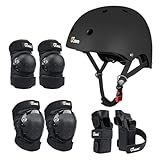
- Suitable for kids 8-14 years old
- The package includes knee pad x 2; elbow pad x 2; wrist guard x 2; helmet x 1
- The skateboard helmet is designed with multiple vent, adjustable dail and adjustable strap for proper fit
- Knee elbow pads and wrist guards are made of durable, soft EVA padded material with tough plastic plates
- Appropriate for inline skating; roller skating; skateboarding; scootering; skating and other outdoor sports
The reconstructionist testified that the Malibu driver had only about 1.1 seconds to see Riley before the collision. That was not enough time, in the expert’s opinion, for her to respond effectively.
The defense maintained that the Malibu driver was speeding and either failed to brake or failed to brake effectively. That was a defense theory, not an uncontested finding. The appellate record specifically describes braking by the Malibu and a speed of approximately 27 mph immediately before impact.
Intersection layout and scene evidence
Witnesses and investigators described the yield-sign configuration and the limited sight distance caused by the building. Police and reconstruction evidence addressed the positions of the Audi, the Malibu, the parked vehicle, and the pedestrian area.
Officers also testified about Riley’s conduct after the crash. Prosecutors characterized him as nonchalant or insufficiently concerned about Edmondson. Those descriptions were witness testimony and should not be presented as an objective psychological diagnosis or as an independent legal element of the charges.
Toxicology evidence
A post-crash blood test detected THC, fentanyl, and codeine in Riley’s system. The state’s toxicologist testified about possible effects associated with those substances, including drowsiness, confusion, dizziness, and reduced awareness.
That evidence does not establish that Riley was legally impaired, and it did not produce a DUI conviction. Riley was not convicted of driving under the influence. The appellate record says the parties disputed the contents and significance of a 52-page toxicology file disclosed shortly before trial. The trial court excluded the late-disclosed material and barred testimony about specific substance levels. The original toxicology reports had been available for months.
The distinction is important: “toxicology detected THC, fentanyl, and codeine” is supported by the record. Saying Riley was high or legally impaired would go beyond what the identified conviction and appellate opinion establish.
Why was a vehicle involved in an armed-criminal-action charge?
The armed-criminal-action count did not mean that Riley used a firearm. In this case, prosecutors argued that the Audi was a dangerous instrument because of the way it was used.
The Missouri Court of Appeals held that the evidence supported the jury’s finding that Riley knowingly used the vehicle in circumstances readily capable of causing death or serious physical injury. The court pointed to the combination of acceleration, speed, the failure to yield, the limited sight distance, pedestrian activity, and the substances detected in Riley’s system.
The appellate court also cautioned that ordinary driving should not routinely be elevated to armed criminal action. It concluded, however, that this case presented enough evidence for the conviction. The legal question was not whether a car is inherently a weapon; it was whether Riley knowingly used it under the circumstances shown at trial as a dangerous instrument capable of causing serious injury.
What’s actually slowing this PC down?
Pick the symptom - the matching free tool is one click away.
Rank #3
- SUPERIOR PROTECTION - Our adult protective gear shell using impact-resistant PP shell, padded with thickened 9mm EVA material for impact buffering, safety protection of the knee elbow and wrist.
- COMFORTABLE - Knee and elbow pads are made of skin-friendly fabric, The back is breathable elastic cloth, offering air permeability and more comfort, does not affect every movement of the wearer.
- ADJUSTABLE SIZE - Multiple adjustable elastic straps fit for various knee girths, size fits most adults. Straps make knee protector extra stable by evenly distributing pressure, to make sure the protective gear do not from displacement when falling and reduce sports injuries.
- VERSATILE USE - Protective gear set great for skateboarding, roller skating, longboarding, cycling, scooters, biking and more. Set includes 2 elbow pads, 2 knee pads, 2 wrist pads and storage bag.
- PROFESSIONAL - Safety cannot be compromised, we focus on the field of protective equipment and are committed to providing the best quality products and services, Contact us anytime with questions.
What was Riley’s defense?
Riley’s defense did not simply deny that a serious crash occurred. It challenged how the crash happened and whether the state proved the mental state required for the armed-criminal-action conviction.
His attorneys argued that:
- the Malibu driver was traveling too fast;
- the Malibu driver failed to brake or failed to brake effectively;
- the collision with the Malibu made the Audi uncontrollable;
- the intersection’s limited visibility and traffic-sign configuration contributed to the crash;
- the state proved, at most, recklessness rather than the required knowing mental state;
- late-disclosed toxicology material deprived Riley of a fair trial; and
- the trial court improperly limited the defense opening statement and excluded relevant evidence.
These arguments appeared in Riley’s post-trial motion and appellate claims. They were not findings that the Malibu driver or the city caused the crash.
What did the appeals court decide?
Riley’s appeal raised three principal issues:
- Whether the evidence proved that he acted knowingly for purposes of armed criminal action, rather than merely recklessly.
- Whether the trial court should have granted a continuance after the late disclosure of additional toxicology-file material.
- Whether the trial court improperly excluded evidence that St. Louis later changed the yield sign at the intersection to a stop sign.
On June 10, 2025, the Missouri Court of Appeals, Eastern District, affirmed the convictions and sentence.
The mental-state challenge
The court held that the combination of evidence—including Riley’s acceleration, speed, failure to yield, the intersection’s traffic and visibility conditions, pedestrian activity, and toxicology evidence—allowed the jury to find that he knowingly used the Audi in circumstances capable of causing death or serious physical injury.
Recommended Free Tools
The court did not hold that every serious traffic crash supports an armed-criminal-action conviction. Instead, it reviewed the particular evidence in this case and found it sufficient to support the jury’s decision.
The toxicology-disclosure challenge
The appellate court rejected Riley’s argument that the late-disclosed material required a new trial or continuance. Because the disputed material was excluded rather than admitted, the court concluded that its exclusion prevented the alleged late disclosure from prejudicing Riley at trial. The court also noted that the original toxicology reports had been available for months.
The later stop-sign evidence
Riley sought to use the fact that St. Louis later changed the intersection’s yield sign to a stop sign. The appellate court said the issue was not adequately preserved and, in any event, Riley had not shown that the later sign change would have altered his conduct on the night of the collision.
The latest public appellate ruling identified for this case is the June 10, 2025, decision affirming the convictions and sentence. That is the appropriate current status—not that every possible avenue of further review has necessarily been exhausted.
Riley’s sentence
On April 18, 2024, Judge Michael W. Noble denied Riley’s motion for a new trial and adopted the jury’s recommended sentence:
| Conviction | Sentence |
|---|---|
| Second-degree assault | 6 years, 3 months |
| Armed criminal action | 11 years, 8 months |
| Fourth-degree assault | 10 months |
| Driving without a valid license | $500 fine |
The listed terms totaled 18 years and nine months. The 10-month fourth-degree-assault term was described as being served in the City Justice Center, while the longer terms were prison sentences. The sentence was imposed for the crash convictions and was not based on a DUI finding.
Rank #4
- All-Around Tough Protection: Our skating protective gear adult and adult knee pads and elbow pads set combine durability and comfort for full protection. Also perfect for kids as skating protective gear kids and kids bike pads for safe adventures
- Rugged Design for Active Youth: The roller skate pads kids and youth knee pads are crafted for high-impact activities. Ideal for young skaters, these knee pads skateboarding provide reliable protection and freedom of movement
- Versatile Gear for Skaters of All Ages: From roller skating pads adult women to kids skateboard pads, this set covers everyone. These kids roller skating pads and skate pads adult ensure robust support during every ride
- Enhanced Safety: Our knee pads girls and skateboarding pads deliver optimal protection. Designed to withstand rigorous activities, they're also perfect as inline skate pads adult for confident skating
- Complete Set for Family Safety: The boys knee pads and elbow pads set is designed for durability, while girls knee pads bike offer tailored comfort. Includes roller skate protective gear adult women to cover the whole family's needs
At sentencing, Judge Noble characterized the verdict as showing that the incident was more than an ordinary accident. That was a description of the circumstances and verdict, not a separate charge or independent legal finding that replaces the jury’s count-by-count decision.
Why was Riley out of jail before the crash?
Riley was out on bond in a pending 2020 armed-robbery case when the crash occurred. He had been placed on house arrest with GPS monitoring and did not have a valid driver’s license.
His pretrial release became a major political and administrative controversy because public reports described numerous bond violations. The figures differ depending on the source: local investigative reporting referred to more than 100 violations, while a Missouri attorney general filing cited 94 violations. The safest general description is that public records and reporting identified dozens of alleged violations, with the exact count disputed.
The attorney general’s amended filing states that the 2020 case was dismissed and refiled on July 18, 2022, because prosecutors were not ready to proceed. On August 10, 2022, a prosecutor agreed to Riley’s release on his own recognizance with house arrest and GPS monitoring. The filing quotes the hearing transcript concerning those conditions.
Former Circuit Attorney Kim Gardner and members of her office said they had asked the court multiple times to revoke Riley’s bond. Local reporting said it could not find a written motion or transcript evidence supporting those claims and identified a hearing at which prosecutors agreed to continued release. The attorney general’s filing made similar allegations concerning the handling of the case.
Those allegations must be kept separate from the criminal trial. The attorney general’s filing was an adversarial legal pleading, not a neutral judicial finding. Bond management involved prosecutors, judges, electronic-monitoring compliance, and court procedures. The jury that convicted Riley decided whether he committed the charged offenses in the February 2023 crash; it did not decide whether the circuit attorney’s office or the court mishandled his earlier bond.
What happened to the earlier armed-robbery case?
St. Louis prosecutors dropped the pending 2020 armed-robbery case against Riley on May 16, 2024, stating that the office elected not to proceed. Riley was already serving the sentence from the Edmondson crash case.
The dismissal of that earlier case did not undo the crash convictions. The original robbery allegations also should not be described as proven criminal conduct because the case was not resolved by a conviction.
Independent reader supportYour contribution helps us test, update, and keep practical guides available for everyone.What happened in the civil case?
Edmondson’s family sued the City of St. Louis and other defendants, alleging that the intersection was negligently designed or maintained. The allegations included the use of a yield sign despite limited visibility. The filed petition named the city, Riley, Elizabeth Smith—the Malibu driver—and additional defendants.
In February 2025, St. Louis agreed to pay $450,000 to settle the family’s claims against the city. According to the family’s lawyer, Missouri’s governmental-damages cap limited the potential recovery to approximately $517,000, and the family accepted less than that amount in part to avoid the cost and delay of a trial and appeals.
Do these 3 things before closing this tab:
1Repair Windows errors before they cause bigger problems2Scan for outdated or missing drivers - takes under a minute3Clear out junk files and repair common Windows errorsBest Value

- Multi-Sport Safety Gear Set: Includes two wrist guards, two elbow pads, and two knee pads—everything kids, teens, and adult riders need for safe fun on skateboards, rollerblades, bikes, longboards, hoverboards, scooters, and more
- Lightweight & Comfortable Design: Contoured knee and elbow pads are crafted with shock-absorbing EVA foam for impact protection and freedom of movement, perfect for active riders on the go
- Impact Protection: High-density, impact-resistant caps are securely fastened with reinforced rivets, delivering reliable protection during falls and collisions
- Durable, Secure & Built to Last: Tough, abrasion-resistant nylon construction provides long-lasting durability. Wrist guards, elbow pads, and knee pads feature top and bottom adjustable straps for a snug, stay-put fit during every ride
- Find Your Perfect Fit: Size determined by wrist guards (measure around the hand at knuckles): 5+ Junior/X-Small fits 15-18cm, 8+ Small/Medium fits 18-20cm, and 14+ Medium/Large fits 20-23cm; elbow and knee pads sized to fit most
A settlement is not a criminal verdict. It does not establish that the city was criminally responsible for the collision or prove every allegation in the civil petition. It resolved the family’s claims against the city for the agreed amount.
How is Janae Edmondson doing?
Later reporting described Edmondson as continuing medical treatment, using prosthetics, attending Middle Tennessee State University, and remaining involved in volleyball. A June 2025 report said she had undergone more than 30 surgeries and that the family’s medical expenses were in the millions.
MTSU volleyball materials list Edmondson as a team manager, providing an institutional record of her continuing connection to the program. Reports have also described her working with or coaching volleyball and using her experience to help others. These recovery developments are separate from Riley’s criminal sentence and the city’s civil settlement.
Key dates
- February 18, 2023: The crash occurs near St. Charles Street and North 11th Street in downtown St. Louis.
- March 7, 2024: A jury finds Riley guilty on four of five counts and acquits him on the passenger-assault count.
- April 18, 2024: Riley is sentenced to 18 years and nine months plus a $500 fine; the judge denies his motion for a new trial.
- May 16, 2024: Prosecutors drop the separate 2020 armed-robbery case.
- February 2025: St. Louis agrees to a $450,000 settlement with the Edmondson family.
- June 10, 2025: The Missouri Court of Appeals affirms Riley’s convictions and sentence.
Records behind this account
The most important legal source is the Missouri Court of Appeals opinion in State v. Riley, which summarizes the trial evidence and resolves the appeal. The sentence details are reported in the St. Louis Circuit Attorney’s sentencing release. The bond controversy is addressed in the Missouri attorney general’s amended petition and contemporaneous local reporting. The civil allegations and settlement are separately documented in the civil petition and settlement reporting.
Quick wins for a faster PC:
Repair Windows errors before they cause bigger problemsFix Now →Fix the driver behind crashes, sound loss and screen glitchesFind Drivers →Frequently Asked Questions
Was Daniel Riley convicted of DUI?
No. Testing detected THC, fentanyl, and codeine, and a toxicologist testified about possible effects, but Riley was not convicted of DUI. His convictions were for second-degree assault, armed criminal action, fourth-degree assault, and driving without a valid license.
Why did a car lead to an armed-criminal-action conviction?
The charge did not involve a firearm. Prosecutors argued, and the Missouri Court of Appeals agreed, that Riley used the Audi as a dangerous instrument because of the speed, acceleration, failure to yield, traffic conditions, pedestrian activity, and other evidence presented at trial.
Did Riley win his appeal?
No. On June 10, 2025, the Missouri Court of Appeals affirmed his convictions and 18-year-nine-month sentence. The court rejected his challenges involving the mental state for armed criminal action, late-disclosed toxicology material, and the later change to the intersection’s traffic sign.
How many counts did the jury decide?
The jury found Riley guilty on four of five counts. It acquitted him of fourth-degree assault involving the Malibu’s passenger.
Did the city admit responsibility for the crash?
The city agreed to a $450,000 civil settlement with the Edmondson family in February 2025. The settlement resolved claims alleging negligent intersection design or maintenance, but it was not a criminal verdict and did not establish every allegation in the lawsuit.
The Bottom Line
Daniel Riley remains convicted under the latest public appellate ruling identified: the Missouri Court of Appeals affirmed his convictions and 18-year-nine-month sentence on June 10, 2025. The jury found him guilty on four of five counts—not all charges—and the case was not a DUI conviction. Janae Edmondson’s civil settlement, ongoing rehabilitation, and the controversy over Riley’s earlier bond are important related developments, but they are legally separate from the criminal verdict.
Quick Recap
Product prices and availability are accurate as of the date/time indicated and are subject to change. Any price and availability information displayed on Amazon at the time of purchase will apply.