The Tool Desk
Outbyte PC Repair FREERepair Windows errors before they cause bigger problemsFix Now →Outbyte Driver Updater FREEFix the driver behind crashes, sound loss and screen glitchesFind Drivers →Yes—but likely through small, low-speed, geofenced autonomous shuttles and circulators before fully driverless versions of ordinary 40- or 60-foot city buses. Public transit may introduce vehicle autonomy to everyday riders sooner than privately owned self-driving cars do. The first experience is more likely to be a short trip between a rail station, hospital, campus, airport, or neighborhood stop than an autonomous car operating anywhere in a metropolitan area.
That distinction matters. A driverless shuttle carrying a modest number of passengers on a mapped route is a real public-service milestone, but it is not yet a replacement for a conventional city bus driver—or proof that autonomous transit is ready for every road, passenger, and weather condition.
The first autonomous bus rides will probably feel ordinary
For most passengers, the introduction of autonomous transit will not look like a futuristic revolution. It may be a short ride in a small electric shuttle, with a transit-agency logo, a normal stop, accessibility equipment, and staff monitoring the service from onboard or remotely.
Jacksonville, Florida, provides one of the clearest examples. The Jacksonville Transportation Authority (JTA) launched its NAVI service on June 30, 2025. JTA describes NAVI as the first permanent autonomous public-transportation service in the United States operating in revenue service. After the first year, JTA reported more than 15,200 passengers and over 61,000 autonomous miles, with no safety incident attributed to the automated-driving system. JTA also reported 989 riders in May 2026 and said NAVI completed more than 80 route detours during its first year.
#1 Best Overall

- for Universal Hobbies for FIAT for Centenario for Concept for New Holland Autonomous Agricultural Tractor Red 1:32 Truck Pre-built Model
- Size in INCHES: Length: 6.24, Width: 3.12
- Material: DIECAST
Those are meaningful operating figures, but they need to be read in context. NAVI is a constrained circulator within JTA’s Ultimate Urban Circulator program, not an unrestricted, high-capacity city bus network. The results show that autonomous vehicles can provide a public transit service in defined conditions. They do not establish that driverless buses are ready for every urban route.
JTA’s first-year release is the source of the ridership, mileage, detour, and safety figures; the safety attribution is the agency’s report rather than an independent nationwide safety comparison.
“Self-driving bus” can mean several different things
Discussion of autonomous buses often collapses several technologies into one phrase:
- Driver assistance: The human operator remains responsible for driving. Collision warnings, automatic emergency braking, lane keeping, and similar systems fall into this category.
- Automated bus functions: A bus may automate precision docking, lane centering, platooning, or depot parking without being capable of completing an entire route without a driver.
- Autonomous shuttle: Usually a smaller vehicle operating at low speed within a restricted route or service area. It may complement a bus network rather than replace a bus.
- Level 4 autonomy: The automated driving system performs the driving within a defined operational design domain—such as a mapped route, approved speed range, service area, and weather envelope.
- Level 5 autonomy: Full automation on all roads and in all conditions. This is not the practical target of current transit deployments.
The Federal Transit Administration’s project portfolio demonstrates why the distinction is important. It includes small shuttles, accessible microtransit, automated 40- and 60-foot buses, precision-docking research, and automated yard operations. A bus that can dock itself accurately is not necessarily a bus that can safely navigate every part of a city without a human operator.
Windows Errors? Fix Them Before They Spread
Repair common Windows errors and clear accumulated junk for a smoother, more stable PC - no reinstall needed.Free scan · no reinstallCrashes, No Sound, or Screen Glitches?
Random freezes, missing sound and display glitches usually trace back to one bad driver. Find and replace yours safely.Free scan · under a minuteWhy public transit may reach autonomy before private cars
Transit fleets have several structural advantages as an autonomy test bed.
Routes are repeatable
A fixed route gives engineers and operators a defined set of roads, intersections, stops, lane markings, and traffic patterns to validate. The vehicle does not need to handle every road in a region on its first day of service.
The service area can be geofenced
An agency can begin with a mapped district, campus, medical center, retirement community, or downtown loop. If conditions fall outside the vehicle’s approved operating domain, the service can stop, restrict its hours, or require human assistance.
Fleet infrastructure is known
Transit operators can survey stops, curb space, charging locations, depots, and maintenance facilities. That is more manageable than supporting millions of privately owned vehicles parked in unpredictable locations.
Free tools Windows power users keep installed
One-click scans. No signup required.
Operations can be centralized
A control center can monitor several vehicles, provide remote assistance, communicate with passengers, and dispatch field staff. That does not make the vehicles independent, but it can make a limited service operationally practical.
Rank #2
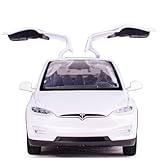
- Made of zinc alloy with ABS plastic parts
- 5.9 inch x 2.2 inch x 1.8 inch(size)
- The two sides of doors could be opened,front and back covercould be opened too
- You can pull back the car,then it can move forwards with Lights and Sound
- Very suitable as children 4 years and up toys for birthday,Christmas gift, new year. Also it can be a gift for your boyfriend
Transit has a public-service purpose
Autonomous shuttles can be deployed to address a specific mobility gap: connecting a rail station to a neighborhood, extending service to a medical district, or providing circulation in a community where a full-size bus would be inefficient. The justification is not simply the convenience of owning a self-driving vehicle.
What is operating and what is still planned?
Jacksonville’s NAVI service
JTA’s initial program uses 14 autonomous vehicles. Beep’s launch announcement described customized electric Ford E-Transit vehicles integrated with Oxa’s automated-driving system, as well as a five-year operations-and-maintenance contract. Beep says it provides planning, deployment, monitoring, fleet operations, and maintenance through a national command center.
These details make NAVI more significant than a short demonstration ride: it is a continuing public revenue service. But the service remains limited in route, speed, capacity, and operating conditions. A vendor’s description of a “fully autonomous public transit system” should not be interpreted as a claim that no human labor is involved.
Beep also said it had managed 38 autonomous-shuttle deployments across nine states. That is a vendor-reported count of managed deployments, not a count of currently active permanent revenue services.
Other U.S. projects
The FTA portfolio shows a broader range of activity:
- Beep and Oxa shuttles serving the Rossmoor senior community in Walnut Creek, California.
- Wheelchair-accessible automated microtransit through Via in Martinez, California.
- Testing of automated electric New Flyer buses on Connecticut’s CTfastrak bus rapid-transit corridor.
- Jacksonville’s 14-vehicle Bay Street Innovation Corridor.
- University of Iowa work focused on rural and transportation-disadvantaged populations.
- A Houston project connecting Texas Southern University and the Third Ward with existing bus and rail services.
- May Mobility vehicles integrated with Arlington, Texas’s on-demand Via service.
- Automated depot and yard operations, along with precision-docking research.
These projects have different maturity levels. Some are completed, some are testing programs, and others are planned or being evaluated. A project appearing on a federal demonstration list does not mean it is already operating as a daily driverless bus service.
HOLON’s Jacksonville plans
HOLON and its partners have announced plans to manufacture the autonomous electric HOLON urban shuttle in the United States and deliver up to 100 vehicles for phased deployment in downtown Jacksonville, with additional U.S. pilots planned from 2026. This is an announced production and deployment plan—not evidence that all 100 vehicles are already carrying passengers. The HOLON announcement describes the partnership and intended deployment.
Do these 3 things before closing this tab:
1Clear out junk files and repair common Windows errors2Fix the driver behind crashes, sound loss and screen glitches3Repair Windows errors before they cause bigger problemsWhere autonomous transit is most likely to appear
The most plausible early applications share three characteristics: limited geography, relatively predictable movement, and a clear reason to use a shuttle instead of a full-size bus.
- Downtown circulators: Short loops with known stops and moderate speeds.
- First-mile and last-mile links: Connections between rail stations, bus hubs, offices, and nearby neighborhoods.
- Medical campuses: Repeated trips between hospitals, parking areas, clinics, and transit stops.
- Retirement communities: Internal circulation and connections for older residents, provided the service has meaningful accessibility and assistance.
- Airports and business campuses: Controlled or semi-controlled environments with repeatable routes.
- Universities: Campus circulators and links to surrounding transit.
- Low-speed planned communities: Places with predictable street layouts and limited traffic complexity.
- Depots and yards: Automated parking, charging movement, and vehicle positioning, where passenger risks are lower.
Rural connectors and on-demand services for older adults or disabled riders are also possible, but they introduce difficult questions about coverage, response times, communications, and accessibility. Bus rapid transit may first see automated docking and lane-assistance functions rather than fully driverless operation.
Rank #3
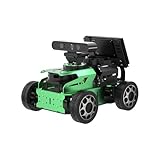
- Empowered by Large Al Model, Human-Robot Interaction Redefined. JetAcker robot car deploys multimodal models with ChatGPT at its core, integrating 3D vision and a 6-microphone array. This synergy enhances its perception, reasoning, and actuation capabilities, enabling advanced embodied AI applications and delivering natural, context-aware human-robot interaction.
- Driven by AI & ROS, powered by Jetson. JetAcker AI robot car is a high-performance educational robot developed for ROS learning scenarios. Equipped with Jetson Nano/Orin Nano controllers and compatible with both ROS1 and ROS2, it integrates deep learning frameworks with TensorRT acceleration, making it ideal for advanced AI applications such as SLAM and vision recognition.
- SLAM Development and Diverse Configuration. JetAcker smart robot car is equipped with a powerful combination of a 3D depth camera and Lidar. It utilizes a wide range of advanced algorithms, including gmapping, hector, karto, cartographer and RRT, enabling precise multi-point navigation, TEB path planning, and dynamic obstacle avoidance. Using 3D vision, it can capture point cloud images of the environment to achieve RTAB 3D mapping navigation.
- Classical Ackermann Steering Mechanism. The Ackermann chassis combines maneuverability and steering precision, facilitating the learning and validation of real-world vehicle steering principles. This design enables realistic simulation of autonomous driving scenarios for enhanced educational experiences.
- Comprehensive Learning Tutorials. Through JetAcker's structured curriculum, master cutting-edge technologies including ROS development, SLAM mapping and navigation, 3D depth vision, OpenCV, YOLOv8, MediaPipe, Large Al model integration, Movelt and Gazebo simulation, and voice interaction.
The least plausible near-term scenario is a driverless bus on every route in a large city, operating through snow, flooding, heavy construction, dense mixed traffic, poorly marked roads, and unpredictable curb activity without human support.
Why a full-size bus is harder than a shuttle
Buses are favorable autonomy test beds in some ways, but they are also unusually demanding vehicles. They are large and heavy, carry many passengers, operate close to pedestrians and cyclists, and must interact with traffic that does not follow a script.
What’s actually slowing this PC down?
Pick the symptom - the matching free tool is one click away.
An autonomous transit vehicle may need to handle a blocked stop, a fallen object, a temporary lane closure, a stalled car, a police direction, an approaching ambulance, a school crossing guard, an unprotected left turn, a railroad crossing, or a passenger who needs urgent help. It must also stop close enough to a curb for safe boarding without striking a cyclist or trapping a wheelchair user.
Weather is another boundary. Snow, ice, flooding, smoke, fog, glare, and poorly visible lane markings can change the operating environment substantially. A Level 4 system is not expected to drive everywhere; it is expected to operate within its defined conditions and reach a safe state when those conditions are exceeded.
Driverless does not mean people-free
The most common misunderstanding is that removing the driver from the seat removes the human workforce. Early autonomous transit services may still require:
- Remote operations staff and remote assistance.
- Onboard safety attendants or customer-service workers.
- Specialized maintenance and cleaning crews.
- Mapping, route-validation, and software-support teams.
- Field-response staff for blocked routes and vehicle faults.
- Emergency-response coordination and first-responder training.
Remote assistance is not automatically the same as remote driving. Depending on the system, a remote operator may provide information, authorize a maneuver, communicate with passengers, or direct field staff while the vehicle remains responsible for executing a safe response. Communications latency, loss of connectivity, system boundaries, and legal responsibilities all matter. NHTSA’s 2026 guidance work specifically identifies remote assistance, emergency responders, safety-management systems, and post-crash behavior as evolving safety topics.
Will autonomous buses actually save money?
Not automatically. A transit agency cannot evaluate autonomy by subtracting a driver’s wage from the cost of a conventional bus. The relevant comparison is the complete lifecycle cost of delivering useful passenger service.
That calculation may include:
- Vehicle purchase or lease costs.
- Sensors, computing hardware, and software support.
- Mapping and route validation.
- Charging infrastructure and depot modifications.
- Remote operations centers.
- Maintenance, cleaning, and cybersecurity.
- Insurance and legal compliance.
- Onboard attendants and customer-service staff.
- Spare vehicles for downtime and maintenance.
- Accessibility equipment and staff training.
- Public education, security, fare enforcement, and emergency planning.
A small autonomous shuttle might be economical on a low-demand circulator, particularly if it can provide longer service hours. But replacing one high-capacity bus with several small vehicles could increase congestion at stops, charging requirements, fleet complexity, and total operating costs.
The central question is not whether the vehicle has a steering wheel. It is whether the agency can provide more useful passenger service per dollar while preserving safety, accessibility, reliability, and coverage.
Rank #4

- Made of zinc alloy with ABS plastic parts
- 5.9 inch x 2.2 inch x 1.8 inch(size)
- The two sides of doors could be opened,front and back covercould be opened too
- You can pull back the car,then it can move forwards with Lights and Sound
- Very suitable as children 4 years and up toys for birthday,Christmas gift, new year. Also it can be a gift for your boyfriend
Autonomy could improve accessibility—or make assistance harder
Autonomous service could benefit older adults and disabled riders through more frequent neighborhood connections, flexible microtransit, and service to places that cannot support a full-size route. It could also make first-mile and last-mile travel easier.
But accessibility is a property of the entire service, not merely the vehicle specification. Agencies must evaluate wheelchair boarding and securement, level boarding or ramps, audio and visual announcements, emergency intercoms, assistance for riders with sensory or cognitive disabilities, and what happens if a ramp is blocked or a passenger needs help.
An unattended vehicle may make boarding problems, fare disputes, lost property, medical emergencies, or conflicts between passengers more difficult to resolve. “Driverless” should never be treated as shorthand for “equally accessible.”
How safety claims should be judged
One successful deployment can establish that a system operated in a particular place and time. It cannot by itself prove that autonomous buses are safer than human-driven buses everywhere.
Meaningful comparisons require matching definitions and exposure. Analysts should examine passenger miles and vehicle miles, not just incident totals, and should determine whether minor events are reported consistently. Route design, speed, traffic, weather, construction, human supervision, and the definition of a system-caused incident all affect the result.
Recommended Free Tools
California’s autonomous-vehicle reporting system includes redactions and corrected reporting errors. That does not make official data useless, but it shows why raw incident counts can be misleading. California’s reporting page documents those limitations.
Independent reader supportYour contribution helps us test, update, and keep practical guides available for everyone.Regulation and accountability are still developing
Autonomous transit sits between several layers of responsibility. Federal agencies address vehicle safety and transit policy; states issue permits and regulate aspects of testing and deployment; local governments and transit agencies select routes, procure services, and manage public accountability; vendors provide vehicles, automated-driving systems, software, and operations.
The FTA’s transit-bus automation policy FAQ, updated April 2, 2026, addresses implications for transit agencies, employees, riders, and the public. NHTSA said in 2026 that it was updating automated-vehicle guidance and working toward performance standards. Its announced A2SCEND consortium has $5 million over three years to help develop automated-vehicle performance standards; it is a standards-development effort, not an already effective national standard.
State permit status also needs careful interpretation. For example, the California DMV’s permit list identifies organizations holding testing permits. A testing permit does not mean that a company is offering public bus service or operating a permanent revenue route.
Quick wins for a faster PC:
Clear out junk files and repair common Windows errorsFree Scan →Fix the driver behind crashes, sound loss and screen glitchesFind Drivers →Best Value

- For Raspberry Pi 5 & ROS2 Robot Car. MentorPi A1 smart AI robot car is powered by Raspberry Pi 5, compatible with ROS2, and programmed in Python, making it an ideal platform for AI robot development.
- High-Performance Hardware. Equipped with Ackerman chassis, closed-loop encoder motors, TOF lidar, depth camera, AI voice interaction box, and other advanced components to ensure optimal performance and efficiency.
- Advanced AI Capabilities. Supports SLAM mapping, path planning, multi-robot coordination, vision recognition, target tracking, and more, covering a wide range of AI applications.
- Autonomous Driving with Deep Learning. Utilizes YOLO model training to enable road sign and traffic light recognition, along with other autonomous driving features, helping users explore and develop autonomous driving technologies.
- Empowered by Large AI Model, Human-Robot Interaction Redefined. MentorPi AI robot car deploys multimodal models with ChatGPT at its core, integrating 3D vision and Al voice interaction box. This synergy enhances its perception, reasoning, and actuation capabilities, enabling advanced embodied AI applications and delivering natural, context-aware human-robot interaction.
What a transit agency should measure
Before expanding an autonomous route, an agency should assess the operating environment, passenger needs, safety procedures, and economics.
Operating environment
- Fixed-route or on-demand operation.
- Speed limits and intersection complexity.
- Pedestrian and bicycle activity.
- Weather conditions and seasonal limits.
- Construction frequency and detour procedures.
- Dedicated lanes, lane markings, signs, curb design, and map quality.
- Whether geofencing creates unacceptable service gaps.
Safety and recovery
- Emergency-vehicle interactions.
- Blocked lanes, fallen objects, stalled vehicles, and aggressive pedestrians.
- School zones, crossing guards, and railroad crossings.
- Remote-assistance response times.
- Communications failures and safe-stop behavior.
- Independent incident review and public reporting.
Transit performance
Technology metrics should be reported alongside ordinary transit measures:
- Passenger trips and passenger miles.
- Vehicle miles and service hours.
- Average wait time and missed or abandoned trips.
- Peak versus off-peak use.
- Cost per passenger trip.
- Accessibility performance.
- Connection quality with buses and rail.
- Comparison with the conventional alternative.
A pilot that drives reliably but carries very few people may be a technology success and a transportation failure. Both facts can be true.
Will buses bring autonomy “home”?
They may, but “home” is broader than a driveway. It can mean:
- A neighborhood: Residents see and use an autonomous vehicle on a predictable local route.
- A public institution: The technology appears at a university, hospital, retirement community, airport, business park, or military base.
- An ordinary civic service: Riders use it without buying a compatible car or paying for a premium subscription.
- A political decision: A local government determines where autonomy is useful and what safeguards apply.
This may be a more important path to public familiarity than robotaxis. Transit introduces automation while retaining a defined route, a fare system, trained personnel, public oversight, and a clear service obligation. People may become accustomed to riding in an automated vehicle without concluding that every private car should drive itself.
A realistic forecast
Now: Limited pilots and revenue services are operating in controlled areas, with small shuttles, attendants, remote support, and carefully bounded operating conditions.
Near term: Expect more downtown circulators, campus routes, medical-district services, retirement-community links, airport connections, and first-mile/last-mile services.
Next stage: Selected fixed-route buses may adopt automated docking, lane assistance, and other functions before agencies attempt broader driverless operation.
Recommended Free Tools
Later: Larger urban routes could expand if agencies demonstrate safety, accessibility, reliability, public trust, and competitive lifecycle costs—not merely autonomous miles.
Not imminent: Universal driverless buses operating on every route, in every weather condition, through dense and chaotic traffic, with no onboard or offboard human support.
Quick Recap
Product prices and availability are accurate as of the date/time indicated and are subject to change. Any price and availability information displayed on Amazon at the time of purchase will apply.




