What’s actually slowing this PC down?
Pick the symptom - the matching free tool is one click away.
Higher compression can increase an engine’s tendency to knock and its need for higher-octane fuel, but compression ratio alone cannot tell you which grade to buy. Engine design, turbocharging or supercharging, calibration, and driving conditions all affect octane demand. For a specific vehicle, follow the octane requirement in its owner’s manual.
What compression ratio and octane measure
Compression ratio is an engine design measurement
Compression ratio describes how much the engine compresses the air-fuel mixture in a cylinder. It is a geometric design ratio, not a measure of the fuel. Higher compression can raise the pressure and temperature of the unburned mixture, making premature autoignition—and therefore knock—more likely.
Octane measures resistance to knock
Octane is a gasoline’s resistance to knock or pinging; it does not measure energy content. As FuelEconomy.gov explains, knock occurs when the air-fuel mixture ignites prematurely. A higher octane rating means greater knock resistance, not automatically more power or energy in every engine.
Does compression ratio determine the octane you need?
No. Higher compression often means an engine needs higher-octane fuel, but there is no universal conversion from a compression ratio to a pump grade. Engines with the same stated ratio can differ in design and calibration, and fuel properties and operating conditions also matter.
#1 Best Overall

- Scope of application: The spark plug tester is universal and suitable for testing and troubleshooting small or large internal/external engines such as engines, trucks, automobiles, lawn mowers, marine engines and motorcycles. It is the preferred product in any personal or professional machinery store or automobile garage.
- About use: Just connect the tester between the spark plug and the spark plug wire, and it takes about 30 seconds for the internal combustion engine to troubleshoot. If the engine can emit spark, the tester bulb reflects the spark and lights up, so as to quickly find the fault point and bad circuit of the spark plug.
- Excellent material selection: It adopts excellent rubber and metal, high-temperature resistant wire and environmental friendly acetate plastic. It works in high and low temperature environment without impact and is durable.
- Product size: 2.28 inch metal interface, 4.44 inch shaft/lamp housing, 6.53 inch sheath/cable; The internal bulb lasts for several years and is replaced by a transparent housing.
- Service: If you have any questions about the product, please contact us in time, and we will provide you with satisfactory solutions.
Forced induction changes the picture
A turbocharger or supercharger forces more air into the cylinder, raising pressure and potentially increasing octane demand. Static compression ratio by itself may not reveal that demand. This is one reason a simple chart matching compression ratios to fuel grades cannot reliably prescribe gasoline for every engine.
Engine controls can hide knock symptoms
Many newer vehicles can adjust spark timing to reduce knock. That can make pinging less audible, but using fuel below the manufacturer’s required octane may still reduce power or fuel economy. Lack of audible knock is not proof that the fuel is suitable.
Rank #2

- 【2-IN-1 Engine Diagnostic & Battery Tester】: Upgraded from ANCEL’s best-selling AD310/AD410 series, the AD410 PRO obd2 scanner not only offers deeper, more accurate engine fault diagnosis but also covers battery health assessment, starter motor testing, and charging system evaluation. Skip buying separate tools—save money and space while eliminating the hassle of switching between different diagnostic scan tool
- 【Silence the Check Engine Light】: Panicked when the check engine light suddenly pops on? This car code reader decodes 42,000+ SAE DTCs in seconds (e.g. “P0300 – Multiple Cylinder Misfire”)—no confusing jargon. Read codes, understand the issue, then clear the light after fixing—so you avoid guesswork and unnecessary shop fees. NOTE: It DOESN'T support ABS, SRS, or Transmission systems
- 【Comprehensive Battery System Test】: Stop guessing why your car struggles to start—is it the battery, starter, or alternator? AD410 PRO goes beyond a voltage-only check by performing battery health, cranking, and charging system tests to pinpoint where the issue is coming from. Prevent unnecessary replacements and costly repeat repairs—know what's wrong and fix it right, without the guesswork
- 【Avoid a Smog Re-Test】: No more panic before emissions tests! The dedicated I/M Readiness mode of this professional obd2 scanner diagnostic tool instantly shows your vehicle’s compliance status (green = ready, yellow = incomplete). It covers core monitoring items (misfire, fuel system, catalyst, etc.) — fix potential issues in advance so you know you’re ready before you go, avoiding wasted time and extra inspection fees
- 【Live Data for Instant Vehicle Insights】: Don’t just read codes—see what your engine is doing in real time with this car scanner. Track 50+ key live readings with visual dashboards and waveform graphs to spot overheating, sensor issues, or fuel/air issues early. Freeze frame replays the exact moment a fault happened (speed/load/temp), so you know what triggered the check engine light—no more guessing
Which octane should you put in your car?
Use the exact owner’s manual for your vehicle’s model, engine, and configuration. Follow the stated minimum if premium is required. If premium is only recommended, the manufacturer’s guidance still matters: the engine may be designed to benefit from it, particularly under some operating conditions. Do not treat “recommended” and “required” as interchangeable.
In the United States, pump labels generally use AKI, or anti-knock index. Many other markets label fuel using RON. The scales use different test conventions: AKI is the average of RON and MON, written as AKI = (RON + MON)/2. RON and MON are measured under different standardized test conditions, so bare numbers from the two scales are not directly interchangeable. The distinction is described in the DOE Co-Optima webinar.
Rank #3

- Gas Engine Use Only, Not for Diesel:The engine compression tester kit is used to test the pressure of petrol engines to help determine cylinder problems, not applicable to crude oil engines
- High-Visibility Fluorescent Dial Gauge: Equipped with triple-scale markings including 0-300 PSI, 0-20 Bar, and 0-21 kg/cm², delivering accurate cylinder pressure readings and ultra-clear visibility even in dim, low-light working environments
- Built-In Quick-Release Safety Valve:Engine compression tester with release valve desgin could offer single-handed operation inflation and deflation
- Dual Spark Plug Testers with Indicator Light:Double spark plug testers could help diagnose engine outboard motor and fuel delivery system problems quickly and easily, and the spark plug works properly with the intermediate indicator light glowing
- Comprehensive 13-Piece Automotive Tool Kit:The 13pcs compression tester kit comes with 10 different connect adapters, widely suitable for most types engine cylinder such as car, ship, truck, lawn mower, ATV, boat and so on
Will premium fuel help if your car does not require it?
Not necessarily. An engine must be designed and calibrated to take advantage of extra knock resistance for higher-octane fuel to deliver an efficiency or performance benefit. The DOE Co-Optima webinar notes that fully realizing the efficiency potential of more knock-resistant fuel requires engine design changes, including increased compression ratio. Simply buying premium for an engine that cannot use the added knock resistance does not guarantee more power or better mileage.
FuelEconomy.gov says higher octane often brings little or no benefit in normal driving when it is not required, and the additional fuel cost typically exceeds any fuel savings. Severe-duty conditions can be an exception for some vehicles, so check the manual’s instructions for heavy loads, towing, or other demanding use rather than assuming premium will help.
Rank #4

- 2-in-1 OBD2 Scanner & Battery Tester – Diagnosis in Under 3 Minutes – Read & clear check engine codes in 1 second, then run a full 12V/24V battery health test in minutes—all in one device. Measures 6 key battery indicators: CCA, SOC, SOH, internal resistance, cranking test & charging system status. Whether it's an engine fault or a dying battery, pinpoint the root cause fast—no mechanic, no guesswork, no wasted repair costs.
- 3 Real-World Use Cases, 1 Tool – Run a pre-road trip safety scan to catch hidden faults before you hit the highway. Test cold-cranking performance before winter to avoid surprise no-starts in freezing temps. Inspect a used car on the spot before buying—check battery health and engine codes in minutes. Large backlit screen + icon-guided results mean zero learning curve, even for first-time users.
- See Your Car's Health Clearly – No Mechanic Jargon – Features a 2.8" HD color screen with built-in DTC code definitions so you understand exactly what's wrong—no Googling required. View live data stream with curve graphs to spot intermittent issues in real time. Supports 13 languages for global users. Far beyond basic code readers that only show fault codes with no explanation—this scan tool shows you the full picture, instantly.
- Full-System Car Diagnostic Tool – Engine, Transmission & More – Goes beyond basic OBD2 scanners to scan all major vehicle systems, including transmission faults, and emissions readiness. Read and clear codes across all 10 OBD2 protocols, with I/M readiness status to check if your car will pass emissions testing. Compatible with all 1996+ OBD2 vehicles—cars, trucks, SUVs, and EU models 2003+. Thousands of verified buyers rely on this tool to handle repairs themselves and cut dealership visits for good.
- Perfect Gift for Any Driver – Worry-Free for 18 Months – Whether it's for a new driver, a road-trip enthusiast, or a DIY car owner, this scanner arrives in premium gift packaging—ready to give, no setup needed. Backed by an 18-month warranty and responsive customer support, so every purchase is risk-free. A gift they'll actually use: one tool that handles both engine diagnostics and battery health, saving hundreds in shop visits for years to come.
How common are premium-fuel recommendations?
DOE and EPA’s 2024 summary of FuelEconomy.gov configuration records found that, for model year 2023, 26.7% of vehicle configurations required premium and 26.3% recommended it without requiring it. These are configuration shares, not sales-weighted shares. The same summary says more than half of light-duty vehicle configurations have recommended or required premium since model year 2018. The figures show why checking the specific engine and configuration matters more than relying on a general rule of thumb.
Quick Recap
Best Value
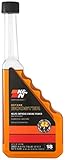
- BOOSTS POWER: Octane boost helps increase performance when added during gas fill up
- CLEANS FUEL INJECTORS: Specially formulated to clean internal fuel system parts and components
- INCREASES OCTANE: Helps your car run better by reducing knocks, pings, and hesitation
- SAFE ON PARTS: Safe for use on catalytic converters and oxygen sensors
- TREATS A FULL TANK: Formulated to treat up to 18 gallons of gasoline
A practical way to compare fuel choices
- Check the manual. Identify whether the manufacturer says premium is required or recommended for your exact engine and vehicle.
- Account for your use. Look for guidance that applies to towing, heavy loads, heat, or other severe operating conditions.
- Consider whether the engine can use the added resistance. Design and calibration determine whether higher octane can support a documented benefit.
- Weigh cost against evidence. Do not assume better mileage or performance; use vehicle-specific manufacturer guidance rather than compression ratio alone.
Product prices and availability are accurate as of the date/time indicated and are subject to change. Any price and availability information displayed on Amazon at the time of purchase will apply.
Recommended Free Tools




