Crashes, No Sound, or Screen Glitches?
Random freezes, missing sound and display glitches usually trace back to one bad driver. Find and replace yours safely.Free scan · under a minuteWindows Errors? Fix Them Before They Spread
Repair common Windows errors and clear accumulated junk for a smoother, more stable PC - no reinstall needed.Free scan · no reinstallVolkswagen problems and repair bills vary sharply by model year, engine, transmission, market and diagnosis. The examples below are documented cases—not a brand-wide failure ranking. Use your 17-character VIN to check recalls and service campaigns before paying for repairs, then compare itemized estimates for the exact failed component.
Why there is no single Volkswagen problem list
A 2011–2014 GTI, a 2004 Passat and a 2017 Golf Alltrack use different engines, cooling systems, transmissions and software. A fault reported for one generation therefore cannot be treated as a defect in every Volkswagen. Production configuration, maintenance history, climate, driving pattern, parts quality and local labor rates also change both failure risk and price.

As an Amazon Associate I earn from qualifying purchases.
Separate four types of work when evaluating a complaint:
Quick wins for a faster PC:
Clear out junk files and repair common Windows errorsFree Scan →Scan for outdated or missing drivers - takes under a minuteDriver Scan →- Scheduled maintenance: work specified by the vehicle’s maintenance schedule, such as fluid or belt service.
- Unscheduled repair: a component has failed or a symptom needs diagnosis.
- Safety recall: Volkswagen identifies a safety defect or noncompliance with a federal motor-vehicle safety standard and provides a remedy for eligible VINs.
- Service campaign: a technical or emissions-related product issue that is not directly a safety or compliance defect.
That distinction matters because a repair that looks like an ordinary paid job may be covered when the VIN is included in a recall or campaign.
#1 Best Overall

- Used Book in Good Condition
Cooling-system and water-pump leaks
What the documented cases show
A Volkswagen dealership communication hosted by the National Highway Traffic Safety Administration describes a coolant-pump leak issue for certain 2011–2014 GTI vehicles. Dealer eligibility is determined by VIN, so the document is evidence for that defined GTI population—not proof that every Volkswagen has the same defect. The communication is available as a PDF from NHTSA.
Cooling-system leaks can involve a water pump, thermostat housing, hoses, seals or related plastic components. A low-coolant warning, visible residue, a sweet smell, overheating or coolant loss should be diagnosed promptly. Continuing to drive an overheating engine can turn a comparatively contained leak into cylinder-head, gasket or engine damage. Do not open a pressurized coolant reservoir while it is hot.
What one owner paid
A Consumer Reports reliability account for a 2017 Golf Alltrack describes an owner-estimated $2,000 coolant-leak repair. The same account reports approximately $800 for an engine timing-cover oil leak, and about $2,800 in combined shop costs. These are one owner’s figures for one vehicle and repair experience, not a typical Volkswagen water-pump price or a current standardized quote. The account is documented at Consumer Reports’ 2017 Golf Alltrack reliability page.
How to evaluate a cooling quote
- Ask the shop to identify the leak’s source with inspection or pressure testing rather than selling a pump solely because the coolant level is low.
- Request the exact part being replaced, associated seals or housings, coolant type and refill procedure.
- Confirm whether the estimate includes belt or accessory removal, bleeding, diagnostic time, taxes and disposal fees.
- Check the VIN for an open recall or service campaign before authorizing payment.
Timing belts, timing chains and oil leaks
Timing-system risk is engine-specific
The 2004 Passat reliability material includes recall information describing a timing-belt failure risk for affected vehicles. It applies to that vehicle and recall context; it does not establish a present-day timing-system failure rate for all Volkswagens. Consumer Reports’ page is at 2004 Volkswagen Passat Reliability.
Rank #2
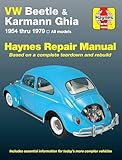
- Step-by-step procedures written from a complete teardown and rebuild, giving you the confidence to tackle repairs at any skill level.
- Over 700+ clear photos and diagrams that simplify complex systems, helping you complete jobs faster and with fewer mistakes.
- Comprehensive troubleshooting and fault-finding guides to quickly diagnose problems and reduce costly downtime.
For any used Volkswagen, first determine whether its exact engine uses a belt or a chain. Then obtain the schedule for that engine, model year and market. Belt replacement is planned maintenance when specified; a broken belt is an unscheduled failure that can cause extensive internal engine damage on interference engines. Chain systems do not eliminate maintenance concerns: worn guides, tensioners or a stretched chain can produce start-up rattle, timing faults or no-start conditions.
Oil leaks can mimic other faults
Oil around the timing cover, valve cover or front of the engine should be traced to its source. A leak may be a gasket, seal, cover or a repair disturbed during other work. The Alltrack owner’s approximately $800 timing-cover estimate illustrates why a specific diagnosis matters; it should not be used as a universal price. Ask whether the quote addresses only an external seep, an active leak reaching the belt or chain, or contamination of other components.
DSG transmission judder
A UK independent workshop’s multi-brand guide lists DSG judder among recurring concerns seen in Volkswagen Group vehicles. The guide covers Volkswagen, Audi, SEAT and Skoda and represents workshop reporting, not a population-level Volkswagen frequency study. It is available at Taunton Automobiles.
Do these 3 things before closing this tab:
1Clear out junk files and repair common Windows errors2Scan for outdated or missing drivers - takes under a minute3Repair Windows errors before they cause bigger problemsJudder may be felt when pulling away, shifting at low speed or reversing. Possible causes include clutch wear, adaptation issues, contaminated fluid, mechatronic faults or an engine problem that feels like a transmission fault. The repair path and cost are therefore different. A proper estimate should state the diagnostic findings, transmission code, fluid specification, adaptation procedure and whether the proposed work is a clutch, mechatronic unit, software update or another component. Do not approve a complete transmission replacement from a symptom description alone.
Rank #3

- Step-by-step procedures written from a complete teardown and rebuild, giving you the confidence to tackle repairs at any skill level.
- Over 700+ clear photos and diagrams that simplify complex systems, helping you complete jobs faster and with fewer mistakes.
- Comprehensive troubleshooting and fault-finding guides to quickly diagnose problems and reduce costly downtime.
Diesel particulate-filter blockage
The same UK workshop guide identifies blocked diesel particulate filters (DPFs) as a recurring workshop concern. A DPF issue depends on the diesel engine, emissions calibration, driving pattern and local fuel and emissions rules; it should not be presented as a fault in every Volkswagen or applied automatically to gasoline models.
Short, low-speed trips can prevent a diesel from completing the conditions needed for regeneration. Warning lights, reduced power or a limp-home mode require a scan and an assessment of soot load, pressure-sensor readings and the cause of the blockage. A forced regeneration is not always appropriate: an overloaded or damaged filter, a failed sensor, an exhaust leak or an engine fault may require different work. Ask the shop to explain why the filter loaded and how it will verify the repair.
How much do Volkswagen repairs cost?
Brand-level estimates
RepairPal reports an estimated average annual Volkswagen repair cost of $676, with an average of 0.5 shop visits per year and an 11% probability that a repair is severe. These figures are RepairPal estimates accessed in 2026, covering Volkswagen vehicles as a group. They are not official Volkswagen statistics, a quote for your car or the expected price of a particular repair. See RepairPal’s Volkswagen repair-cost page for its definitions and methodology.
The Tool Desk
Outbyte PC Repair FREEClear out junk files and repair common Windows errorsFree Scan →Outbyte Driver Updater FREEScan for outdated or missing drivers - takes under a minuteDriver Scan →Documented examples versus a quote
| Evidence | Amount | What it does—and does not—tell you |
|---|---|---|
| RepairPal Volkswagen estimate, accessed 2026 | $676 average annual repair cost | Brand-level estimate; not a named vehicle or single repair price. |
| RepairPal estimate, accessed 2026 | 0.5 visits per year | Average reported by RepairPal; not a service interval or guarantee. |
| RepairPal estimate, accessed 2026 | 11% severe-repair probability | RepairPal’s estimate and definition; not a prediction for your VIN. |
| 2017 Golf Alltrack owner report | About $2,000 coolant leak | One owner’s approximate cost, not a controlled sample or current price guide. |
| 2017 Golf Alltrack owner report | About $800 timing-cover oil leak | One owner’s approximate cost for that job and vehicle. |
| 2017 Golf Alltrack owner report | About $2,800 combined shop costs | Combined anecdotal total; not a standard repair package. |
No reliable, comparable current price range for every Volkswagen fault and market was established. A quote depends on diagnosis, access time, parts, labor rate, taxes, fluids and warranty. Treat any universal “water-pump cost” or fault-by-fault table without those qualifications skeptically.
Rank #4

- Used Book in Good Condition
Check recalls and service campaigns before paying
Use the 17-character VIN
Volkswagen’s US lookup covers applicable notices from the last 15 years and requires the vehicle identification number. Vehicle similarity is not enough: two cars with the same badge can have different engines, production dates or campaign eligibility. Check the VIN at Volkswagen’s Recalls and Service Campaign Lookup, then ask an authorized dealer to confirm the remedy and coverage.
Volkswagen defines the categories this way: “Recalls address defects relating to motor vehicle safety and non-compliances with Federal Motor Vehicle Safety Standards.” It also states, “Service campaigns address product technical issues not directly related to safety or compliance and also can be emissions-related in scope.” A recall repair is distinct from a normal customer-paid repair. Volkswagen says affected recalls should be completed without delay.
If your car is outside the United States
The cited lookup is for US vehicles. Other countries use separate databases, legal definitions and dealer procedures. Use the system for the country where the vehicle is registered, and provide the local VIN or registration information it requests.
Maintenance that reduces avoidable failures
Volkswagen’s US Help Center gives general guidance of maintenance every 10,000 miles or every year, whichever comes first. The manufacturer phrases it as: “Ensure that your vehicle is always at its best, with maintenance service every 10,000 miles, or every year, whichever comes first.” Confirm the precise schedule for your model, engine, transmission and market through the VW Help Center.
Best Value
Do not classify scheduled service as evidence of a defect. Conversely, do not postpone a warning symptom because the next scheduled interval is months away. Keep invoices showing oil specification, coolant, transmission fluid, belt or chain work and software updates. A complete history helps a technician distinguish an overdue service from a new failure and helps a buyer verify what remains due.
Independent reader supportYour contribution helps us test, update, and keep practical guides available for everyone.How to compare two Volkswagen repair estimates
- Write down the vehicle specification: model year, body style, engine code or displacement, transmission, drivetrain and market. Include mileage and warning lights.
- Get a diagnosis: request test results, fault codes where relevant, photographs or leak-test findings. A symptom-only parts list is not a diagnosis.
- Demand an itemized scope: parts, brand or quality level, quantities, labor hours and rate, diagnostic charges, fluids, shop supplies, taxes and any related work should be visible.
- Ask what is optional: separate failed components from preventive add-ons, deferred maintenance and “while-accessible” recommendations.
- Compare warranties: record the duration, mileage limit, parts coverage and labor coverage. Ask who handles a warranty claim if a supplied part fails.
- Verify campaigns: run the VIN through the official lookup and ask whether any open notice changes the paid scope.
- Check specialist experience: a shop familiar with the exact Volkswagen system may diagnose DSG, diesel-emissions or cooling faults more efficiently than a general facility.
- Get the final diagnosis in writing: if the shop changes the scope after disassembly, require approval before additional work.
These steps are especially important when estimates differ widely. A lower total may omit coolant, programming, adaptation, one-time fasteners or warranty coverage; a higher total may include unrelated maintenance. Compare like-for-like scopes before choosing.
A practical diagnostic workflow for common symptoms
Coolant loss or overheating
- Stop safely if the temperature warning appears, steam is visible or the engine overheats.
- After the engine is cold, check the level and look for residue, but do not remove a hot pressurized cap.
- Have the system pressure-tested and the leak source documented.
- Check the VIN for a campaign or recall, particularly on vehicles within a defined GTI production range.
- Approve replacement only after the estimate identifies the failed pump, housing, hose, seal or other component.
Timing noise or uncertain belt history
- Identify the engine code and whether it uses a belt or chain.
- Obtain the exact market schedule and inspect service records for date, mileage and parts used.
- Investigate rattling, timing faults or a no-start condition before continuing to drive.
- Ask for a written scope that distinguishes scheduled replacement from damage repair.
DSG judder or harsh shifting
- Record when the symptom occurs: cold start, take-off, reverse, uphill or a particular gear.
- Request a scan, road test and transmission-fluid assessment.
- Ask whether adaptation, software, clutch, mechatronic or engine-related causes were ruled in or out.
- Compare estimates that include the same programming, fluid and warranty work.
Diesel emissions warning
- Record warning lights, power loss and recent trip pattern.
- Have soot load, differential pressure, sensors and related engine faults measured.
- Do not authorize forced regeneration until the shop confirms it is safe and addresses the cause.
- Verify local emissions requirements and any applicable campaign before paying.
When a repair is urgent
- Stop driving and arrange assistance: overheating, a flashing critical warning, loss of braking, fuel smell, smoke, severe transmission engagement problems or a timing failure/no-start condition.
- Book diagnosis promptly: persistent coolant loss, oil dripping onto a belt or exhaust, repeated DPF or emissions warnings, or worsening DSG judder.
- Monitor and schedule: a minor, stable seep with no warning light may allow a short trip to a shop, but only after a technician confirms it is safe.
Roadside symptoms do not identify the failed part. A warning light can be caused by a sensor, wiring, software or a mechanical component, so fault-code retrieval is a starting point rather than proof that the coded part must be replaced.
Buying a used Volkswagen with fewer surprises
- Run the VIN through the official recall and campaign lookup before purchase.
- Match the engine and transmission to the correct maintenance schedule; do not rely on the badge alone.
- Request cold-start and road-test observations for coolant temperature, shifting, timing noise and warning lights.
- Inspect service records for belt or chain work, cooling-system repairs, DSG service and diesel-emissions work where applicable.
- Budget for an independent pre-purchase inspection that includes a scan and leak check.
- Price unresolved work using two written, model-specific estimates rather than a generic internet average.
A model-specific repair manual can help an owner understand the prescribed schedule and component names, but choose one that matches the exact year, engine and market. It is not a substitute for a VIN check, factory campaign information or a professional diagnosis.
Bottom line
Volkswagen ownership costs cannot be summarized by one universal fault list. Cooling leaks, timing-system concerns, DSG judder and diesel-filter blockage are documented in particular vehicles or workshop populations, while the available brand-level estimate is $676 per year from RepairPal—not a promise for your car. Identify the exact specification, diagnose the failed component, check the VIN for coverage and compare itemized local quotes with a written warranty before authorizing work.
Quick Recap
Product prices and availability are accurate as of the date/time indicated and are subject to change. Any price and availability information displayed on Amazon at the time of purchase will apply.




