Recommended Free Tools
A high-mileage four-cylinder engine is not automatically worn out, but oil use, misfires, timing noise, coolant loss and overheating become more likely as seals, rings, valves and timing components age. The same symptom can come from a simple leak or spark fault, or from internal damage that requires an engine rebuild. Diagnose from the outside in: check fluids and leaks, read scan data, test ignition and fuel systems, and confirm mechanical condition with compression, leak-down, cooling-system or timing tests before approving major work.
There is no universal mileage number that defines “high mileage.” Failure patterns depend on the engine code, model year, service history, oil and coolant maintenance, operating climate and driving pattern. Use the vehicle’s service information for test conditions, oil viscosity and repair limits rather than applying a generic mileage rule.
As an Amazon Associate I earn from qualifying purchases.
What “high mileage” means for a four-cylinder engine
Mileage is only a warning to inspect more carefully, not a diagnosis. Two engines with the same odometer reading can have very different conditions if one received regular oil changes and reached operating temperature frequently while the other suffered neglected leaks, repeated short cold trips or overheating. Manufacturer service bulletins and manuals can also identify problems that affect only a particular engine family.
Quick wins for a faster PC:
Scan for outdated or missing drivers - takes under a minuteDriver Scan →Clear out junk files and repair common Windows errorsFree Scan →Symptoms overlap. Oil consumption can come from an external gasket leak, worn piston rings or valve-stem seals. A rough idle can be caused by a spark plug, injector, vacuum problem, low compression or an incorrectly timed camshaft. Coolant loss may be a hose leak, radiator problem or head-gasket failure. Because of that overlap, replacing the most visible part first often wastes money.
#1 Best Overall
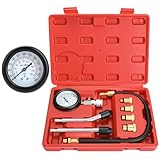
- Checking Compression On Petrol Engine Quickly And Accurately
- Easy Pressure Release Button On Side Of Tester
- 3" Gauge Features Dual Color Scale for easy reading. Pressure Range: 0-300psi, 0-20bar
- Kits Includes 2 Rubber Cones Ends for quick check. (no need to thread into head)
- Includes 17.7" extension hose with 4 sizes (10mm, 12mm, 14mm, 18mm) selectable adapters, suitable for petrol engines on motorcycles, cars, trucks, ATVs and more
Safety triage: when to stop driving
Some symptoms justify shutting the engine off immediately rather than driving to a shop.
- Overheating with steam or a hot metallic odor: pull over, switch the engine off and arrange a tow. The Federal Trade Commission warns that continued driving could cause severe engine damage.
- Flashing check-engine light or severe shaking: a heavy misfire can damage the catalytic converter and leave the vehicle unable to accelerate safely.
- Low oil-pressure warning, deep knocking or rapidly falling oil level: stop the engine and have oil pressure and internal bearing condition checked.
- Coolant visibly spraying or an empty reservoir: do not open a hot cooling system. Let it cool and tow the vehicle if the leak cannot be corrected safely.
A steady warning light with normal temperature and driveability still needs prompt diagnosis, but it is a different risk level from an overheating or severe-misfire event.
The diagnostic order that prevents unnecessary teardown
Start with inexpensive, reversible checks. Internal repair should follow evidence, not suspicion.
Rank #2

- FOR GASOLINE ENGINES ONLY: Designed for cars, trucks, ATVs, and small engines - please note this kit is not suitable for diesel or crude oil engines
- HIGH-VISIBILITY FLUORESCENT GAUGE: Features a triple-scale reading from 0-300 PSI, 0-20 Bar, and 0-21 kg/cm² for precise measurements and clear visibility in low-light conditions
- COMPREHENSIVE 13-PIECE KIT: Comes with five durable metal adapters (M10-M18), two spark plug testers, extension hose, and a protective case for a complete diagnostic solution
- QUICK-RELEASE SAFETY VALVE: Allows for safe and easy one-handed pressure release after testing to prevent accidental bursts
- PROFESSIONAL DIAGNOSTIC ACCURACY: Delivers reliable peak pressure readings to accurately assess engine health, identify worn piston rings, and detect valve issues
- Record the symptom. Note when it occurs (cold start, warm idle, acceleration, hill climbing or after sitting), how quickly oil or coolant levels change, and whether any warning light flashes.
- Check levels and inspect for external leaks. With the engine cold, verify oil and coolant levels. Look around the valve cover, timing-cover area, oil pan, filter, drain plug, hoses, radiator and water-pump area for fresh residue. A clean engine may need dye or a pressure test to reveal a small leak.
- Scan for diagnostic trouble codes and freeze-frame data. Record every code before clearing it. Misfire-cylinder codes, fuel-trim information and cam/crank correlation data can direct the next test, but a code identifies a system or condition, not automatically a failed part.
- Perform a visual and electrical inspection. Check battery voltage, grounds, wiring, intake hoses, connectors and obvious vacuum leaks. Inspect spark plugs and ignition coils for damage, oil contamination or unusual wear.
- Test spark and fuel delivery. Confirm that the affected cylinder has a usable spark and that fuel delivery is within the engine maker’s specification. Swapping a suspect coil or injector to another cylinder can show whether the fault follows the component, provided the service procedure allows it.
- Measure mechanical condition when indicated. Use a compression test, leak-down test, cooling-system pressure or combustion-gas test, and timing inspection as appropriate. Follow the exact engine-specific temperature, throttle, battery-voltage and testing instructions.
- Approve teardown only after the evidence identifies its purpose. A cylinder head, timing cover or complete engine should come off to repair a confirmed defect, not merely because the vehicle has high mileage.
Oil consumption and oil leaks
How to tell external loss from internal burning
The FTC lists excessive oil use—more than one quart between changes—as an engine-trouble symptom. That figure is a consumer warning sign, not a universal failure limit; some applications publish their own consumption test. For example, a Pontiac service-manual diagnostic page for a 2009 application cites 1.9 L (2 qt) in 3,200 km (2,000 mi). Treat that as an application-specific threshold, not a rule for every four-cylinder.
An external leak usually leaves wetness or oil residue on the engine, undertray or ground. Common leak points include seals and gaskets. Internal consumption can occur when piston rings no longer control oil on the cylinder walls or when valve guides and valve-stem seals allow oil into the combustion chamber. Blue exhaust smoke after a long idle or on deceleration can support an internal-consumption diagnosis, but smoke alone does not identify the failed component.
Low-cost checks first
- Park on a level surface, let the engine sit as specified in the owner’s manual, and record the oil level.
- Inspect for external seepage before adding parts or additives. Repairing a leaking gasket or seal can solve the loss without opening the engine.
- Confirm that the oil being used has the exact viscosity and specification required by the engine maker. Incorrect viscosity can also contribute to brief start-up noise.
- Track oil added, distance traveled and operating conditions. A measured trend is more useful than a single low dipstick reading.
- If no external leak explains the loss, inspect spark plugs and perform compression or leak-down testing to evaluate rings, valves and head-gasket sealing.
Repairs that match the cause
- Leak at a seal or gasket: replace the failed seal or gasket, clean the area and verify that crankcase ventilation is functioning as specified.
- Worn valve guides or valve-stem seals: repair or replace the affected valve-train parts. Hyundai troubleshooting guidance directs technicians to inspect cylinder compression when worn rings are suspected and to repair or replace worn valves, guides or seals as required.
- Worn piston rings or cylinder damage: an overhaul with measured cylinder and ring work, or a replacement engine, may be required. An additive cannot restore worn ring tension, damaged cylinder walls or failed seals.
- Deposit-related oil-control-ring sticking: follow the exact model bulletin and cleaning or repair procedure. A Honda bulletin for 2008–2011 Accord four-cylinder engines attributes a specific high-consumption condition to deposits on oil-control rings after repeated cold operation and hard acceleration. That example shows why a model-specific bulletin is more reliable than a generic additive claim.
Misfire, rough idle, hard starting and loss of power
The FTC identifies difficulty starting, a check-engine light, rough idle or stalling, poor acceleration and poor fuel economy as engine symptoms. On a high-mileage four-cylinder, likely causes range from ignition and fueling faults to mechanical timing or compression loss.
Rank #3
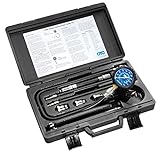
- OTC's Deluxe Compression Tester Kit offers a complete package for compression testing on gasoline engines and comes with commonly used standard and specialty adapters
- Kit includes the deep well connector used on recessed plug well style heads and the new Ford Triton engine adapter using 16 mm thread plugs
- Adapters work on both flat and tapered seat plugs; corrosion resistant nickel plated finish protects metal components
- Easy to read 2-1/2 inch gauge features a chrome bezel and rugged protective outer boot; Dual scale gauge reads 0-300 psi and 0-2100 kPa
- Extra long 25 inch flex hose gauge assembly with quick coupler allows easy viewing out of cluttered engine compartments
Common causes and what separates them
| Observed condition | Possible causes | Useful confirmation |
|---|---|---|
| One-cylinder misfire that follows a coil or plug | Faulty ignition component | Move the suspect component as permitted and see whether the misfire code follows it |
| Misfire with fuel-trim or injector evidence | Fuel-delivery fault, injector problem or intake leak | Fuel-pressure, injector and vacuum-leak checks against the engine specification |
| Misfire with low compression on one cylinder | Burned or carboned valve, worn ring, head-gasket leak or cylinder damage | Compression comparison followed by leak-down or cylinder-head inspection |
| Several cylinders affected with cam/crank correlation codes | Stretched or misaligned timing chain, damaged sprocket or tensioner | Timing inspection and the manufacturer’s correlation procedure |
| Rough idle, poor acceleration and oil use together | Mechanical wear, valve-train fault or timing issue | Scan data plus compression, leak-down and timing tests |
Step-by-step misfire diagnosis
- Read and save codes and freeze-frame data. Note whether the light is steady or flashing.
- Inspect the air-intake path, vacuum hoses, wiring, connectors and grounds.
- Check spark plugs and ignition components. Oil-fouled or unusually clean plugs can provide clues, but replace parts only when testing supports the diagnosis.
- Verify fuel delivery and injector operation.
- Compare compression among cylinders if the fault persists, if a cylinder contributes little power, or if ignition and fuel tests pass.
- Use a leak-down test or inspect valve timing when compression is low or cylinders vary substantially. The service manual’s limits and test conditions control the interpretation.
A sensor or plug replacement may fix a high-mileage misfire, but a stuck or carboned valve, worn cam lobe, stretched timing chain, worn rings or head-gasket damage requires mechanical repair.
Do these 3 things before closing this tab:
1Repair Windows errors before they cause bigger problems2Fix the driver behind crashes, sound loss and screen glitches3Clear out junk files and repair common Windows errorsTiming-chain and valve-train noise
What can make noise at the top of the engine
A stretched or misaligned timing chain, damaged sprocket teeth, a worn tensioner, worn camshaft or damaged valve-lifter parts can produce upper-engine noise and a misfire. Oil level and viscosity also matter: the engine maker’s specified oil is required for the tensioner and valve-train to operate as designed, and incorrect viscosity is listed in service guidance as a cause of brief start-up noise.
How to distinguish a brief rattle from a timing failure
Record whether the noise occurs only for a moment after a cold start, continues when warm, follows engine speed, or is accompanied by a check-engine light and loss of power. Do not assume every cold-start rattle proves chain failure. Compare the symptom with the exact engine’s service information and inspect cam/crank correlation before authorizing parts.
Rank #4

- 🔧【COMPLETE 14-PIECE COMPRESSION TESTER KIT】This professional compression tester kit includes: 1 pressure gauge (0-300 PSI), 2 spark plug testers, 1 straight rod, 1 bent rod, 1 extension hose, 5 metal adapters (M10x1, M12x1.25, M14x1.25, M16x1.5, M18x1.5), 4 rubber O-rings, and 1 plastic storage case. Designed for gasoline engines only—NOT for diesel.
- 🔬【HIGH-VISIBILITY FLUORESCENT GAUGE – DAY & NIGHT READABLE】Features a large 2.5" Ø63mm dial with triple-scale readings: 0-300 PSI, 0-20 Bar, and 0-21 kg/cm². The fluorescent dial finish ensures clear visibility in both bright workshop lighting and low-light conditions. With a built-in Schrader valve inside the gauge for stable, reliable peak pressure readings—no extra adapter needed.
- ⚙️【QUICK & EASY TEST PROCEDURE – 5 COMPRESSION STROKES】Save time and money on mechanic visits. Simply: (1) Run engine to normal operating temperature, then remove all spark plugs and disable the ignition system; (2) Open the throttle to wide open position; (3) Select correct adapter and hand-tighten into spark plug hole; (4) Crank the engine for at least 5 compression strokes until the gauge needle stops rising; (5) Press the quick-release safety valve to reset before testing the next cylinder. Use the 10% deviation rule to identify engine issues. Complete diagnosis in minutes.
- 🔍【DIAGNOSTIC ACCURACY – 10% DEVIATION RULE】Use the 10% deviation rule for accurate engine health assessment: compare readings across all cylinders—a deviation of more than 10% between the highest and lowest readings indicates potential engine problems. The built-in Schrader valve ensures stable, reliable peak pressure readings every time. Includes 2 spark plug testers for quick ignition system troubleshooting—simply connect between spark plug and plug wire, start engine, and observe the spark to detect defective cables or connections.
- 📦【DURABLE METAL ADAPTERS & STORAGE CASE】Built with high-quality metal adapters and durable hose for workshop-grade reliability. Quick-release safety valve allows safe one-handed pressure release after each test. Includes 4 rubber O-rings for secure sealing. All components neatly organized in a protective carrying case for easy storage and portability. Ideal for professional mechanics and DIY enthusiasts.
Repair scope
If inspection confirms a stretched chain, damaged sprocket, failed tensioner or worn cam/valve-lifter component, replace the affected parts according to the engine’s procedure. Timing work generally requires correct alignment marks, torque values and often related guides or tensioners; a chain alone may not address the root cause. After repair, verify timing and clear codes only after confirming that the mechanical fault is corrected.
Independent reader supportYour contribution helps us test, update, and keep practical guides available for everyone.Coolant loss, head-gasket failure and overheating
Separate a leak from internal coolant entry
Begin with the engine cold. Check the reservoir and radiator level if the vehicle’s procedure permits, inspect hoses, clamps, radiator, thermostat housing, water-pump area and heater-circuit plumbing, and look for dried coolant residue. A pressure test can reveal an external leak that is not visible while the engine is running.
Free tools Windows power users keep installed
One-click scans. No signup required.
Coolant consumption combined with a misfire can indicate a failed head gasket or damage to coolant passages in the cylinder head or block. Oil that looks milky, persistent bubbles in the cooling system, an unusually clean spark plug or exhaust vapor after warm-up can be clues, but none is conclusive alone. Use the vehicle-specific pressure, combustion-gas or compression tests specified by the service manual.
Best Value

- Application: Suitable for testing various petrol engines, including motorcycles, automobiles, and most engine cylinder (excluding vehicles such as trucks, pickup trucks). However, due to its operating range of 0-300 PSI, it is not suitable for most diesel engines or engines with six or more cylinders engine, please confirm whether the engine has fewer than 6 cylinders. Note: Decrease the risk of petrol injection by releasing pressure before disconnecting
- Dual Color Scale Gauge: The engine compression tester kit equipped with a 3-inch dual scale gauge, this engine compression tester can read 0-300 psi and 0-20 Bar. the dual color scale makes pressure readings easy to identify and provides fast, accurate measurements for precise evaluations;please repeat the measurement at least twice to ensure data accuracy
- Reliable and Stable: Our compression tester is made of premium quality materials and specially treated to make sure longer service life and endurance, making it a reliable tool in your automotive toolbox
- Complete Set: The petrol pressure tester kit includes 1*double scale gauge, 2*rubber tapers (straight rubber taper end fittings and curved rubber taper end fittings) 4*brass fittings (M10, M12, M14, M18) and 14 inches long flexible extension hose to meet your practical needs
- Easy to Carry: This compression tester comes with a portable storage box to keep your compression test kit organized and unstuck. The hard-shell box ensures a secure storage and portability so you can stay on top of your compression testing needs
What to do when it overheats
- Move safely off the road and switch the engine off if the temperature warning appears or the gauge enters the hot zone.
- If steam or a hot metallic odor is present, do not continue driving; arrange a tow.
- Do not remove a radiator or expansion-tank cap while hot.
- After the engine is fully cool, look for an empty reservoir, burst hose, belt or obvious leak. Do not treat adding coolant as a repair if the level drops again.
- Have the cooling system, combustion sealing and engine oil checked before returning the vehicle to service.
Driving while overheated can turn a hose or thermostat repair into cylinder-head distortion, head-gasket failure or complete engine damage. That is why overheating risk deserves priority over convenience.
Low compression and bottom-end wear
What low compression means
Insufficient compression reduces power and can cause hard starting, rough running and misfire. Worn rings, leaking valves, a failed head gasket or cylinder damage can all lower a reading. A single low cylinder and uniformly low readings point to different possibilities, so compare all cylinders under the engine maker’s specified conditions.
Compression-test procedure
- Confirm the battery is strong enough to maintain cranking speed and follow the service manual’s safety instructions for fuel and ignition disablement.
- Bring the engine to the specified temperature unless the manual calls for a cold test.
- Remove the spark plugs, install a quality compression tester in the specified cylinder and crank for the prescribed number of revolutions with the throttle position required by the procedure.
- Record each cylinder rather than relying on a single peak number.
- Repeat an abnormally low cylinder with the manual’s recommended confirmation test. A wet test may help distinguish ring sealing from valve leakage, but only use it when appropriate for the engine.
An automotive compression-tester kit is the directly relevant tool for this first confirmation. It does not replace a leak-down gauge, cooling-system tester or professional diagnosis when results are ambiguous.
When to use leak-down and oil-pressure tests
A leak-down test routes regulated air into the cylinder and helps identify whether leakage is heard at the intake, exhaust, crankcase or cooling system. Persistent low compression, knocking or low oil pressure can justify professional teardown or a replacement-engine analysis. Do not infer bearing failure from noise alone; measure oil pressure using the engine’s specified method.
Repair the engine or replace the car?
There is no universal dollar threshold in the available service guidance. Make the decision after obtaining a verified diagnosis and written estimates, then compare the repair with the vehicle’s overall condition and replacement value.
| Decision factor | Questions to answer | What it favors |
|---|---|---|
| Cause certainty | Are the findings based on scan data, compression, leak-down, cooling-system or timing tests rather than symptoms alone? | Repair when the failed component and scope are defined; pause when the diagnosis is speculative |
| Repair scope | Is it an external gasket, hose, plug or sensor, or does it require a head, valve-train, ring, timing-chain or complete-engine job? | Smaller repairs are easier to justify; major work needs a broader vehicle inspection |
| Risk of continued driving | Is there overheating, a flashing warning light, low oil pressure or knocking? | Tow and repair immediately rather than accumulating damage |
| Vehicle condition | Are the transmission, body, suspension, brakes and electrical systems reliable? | A sound vehicle can justify an engine repair; multiple major defects favor replacement |
| Economics | How does the verified estimate compare with the vehicle’s condition and replacement value? | Use actual local estimates; service sources do not establish a universal cost cutoff |
When an engine repair is usually defensible
- The fault is confirmed and limited to a leak, ignition component, sensor, hose, thermostat or other serviceable part.
- The vehicle has a strong maintenance history and no other major systems are near failure.
- A head, timing or bottom-end repair comes with a clear parts list, labor scope and warranty terms.
- You have compared a rebuild and a replacement engine using the same quality and warranty assumptions.
When replacing the vehicle deserves serious consideration
- Compression, leak-down, oil-pressure and inspection results indicate extensive bottom-end or cylinder-head damage.
- The engine problem is combined with an unreliable transmission, severe corrosion, unsafe structure or several other high-cost defects.
- The repair estimate is uncertain because additional damage may be discovered after teardown, and the vehicle’s condition does not justify that risk.
Ask the shop to document test readings, identify the failed parts and separate required work from optional maintenance. That documentation lets you compare repair, rebuild and vehicle-replacement choices without guessing.
Quick Recap
Preventing repeat problems after repair
- Use the exact oil viscosity and specification listed for the engine and correct leaks promptly.
- Follow the model-specific service schedule for oil, coolant, filters, spark plugs and timing components.
- Investigate a new warning light, oil-use increase, coolant loss or unusual noise before it becomes an overheating or low-compression event.
- Keep records of oil added, coolant added, diagnostic codes, compression readings and repairs. Trend information helps distinguish a gradual wear problem from a sudden failure.
- Remember that service intervals and failure patterns vary by engine code, model year, maintenance history and region; a generic internet interval cannot override the manufacturer’s instructions.
Product prices and availability are accurate as of the date/time indicated and are subject to change. Any price and availability information displayed on Amazon at the time of purchase will apply.
The Tool Desk
Outbyte PC Repair FREERepair Windows errors before they cause bigger problemsFix Now →Outbyte Driver Updater FREEFix the driver behind crashes, sound loss and screen glitchesFind Drivers →



