Quick wins for a faster PC:
Fix the driver behind crashes, sound loss and screen glitchesFind Drivers →Clear out junk files and repair common Windows errorsFree Scan →Western automakers’ exposure to China is not just a question of how many Chinese-built electric vehicles enter their markets. It runs through the battery supply chain: materials processing, battery components, cells, production equipment and technology. China accounted for more than 80% of global battery output in 2025, according to the International Energy Agency (IEA), but that figure measures production output—not installed battery deployment or factory nameplate capacity. A disruption at a concentrated link could therefore affect factories far beyond China, while tariffs or new assembly plants alone cannot quickly replace missing suppliers.
Where China’s position in the battery chain is concentrated
An EV battery is the end product of a chain that includes critical-material processing, components such as anode and cathode materials, cells, and the machinery and technologies used to make them. The IEA’s figures show that China’s importance extends across production and markets, but the measures describe different things and should not be conflated.
| Measure | What the IEA reported | What it tells you |
|---|---|---|
| Battery output | China accounted for over 80% of global battery output in 2025 (IEA, Global EV Outlook 2026). | China’s share of batteries produced—not its share of factory capacity or batteries installed in vehicles. |
| Battery supply-chain production capacity | China held around 80% of lithium-ion battery supply-chain production capacity and 97% of anode-material capacity in the IEA’s 2024 capacity assessment, reported in 2026. | Nameplate capacity is a measure of potential production, not proof that factories are running at that level. |
| EV battery deployment | Global deployment reached 1.2 TWh in 2025. China accounted for 60%, the EU almost 15%, and the United States 10% (IEA, 2026). | Deployment is battery capacity installed in vehicles, not battery production. |
The IEA also reports that more than 55% of EV batteries deployed globally in 2025 were lithium iron phosphate (LFP), a chemistry whose deployment remains heavily concentrated in China. Its 2026 outlook says average battery prices fell 8% in 2025, attributing the decline to manufacturing efficiency, technology and chemistry changes, competition, and relatively low mineral prices; lithium and cobalt prices rose during the year.
China’s role is not limited to batteries installed in vehicles sold at home. The IEA estimated the value of China’s EV exports at USD 50 billion in 2025. That is a trade-value estimate, separate from battery-output and deployment statistics.
#1 Best Overall

- WORKS WITH EVERY NON-TESLA EV: Standard J1772 connector plugs straight into Ford, Chevrolet, Hyundai, Kia, Nissan, BMW, Volkswagen, Audi, Rivian, Lucid and every other EV or plug-in hybrid sold with a J1772 port - no adapter needed. Tesla drivers can charge too, using the J1772 adapter that comes with the car.
- PLUG IN, NO HARDWIRING: Level 2 charger delivers up to 40A to fully charge most EVs overnight. Plugs into a 240V, 4-prong NEMA 14-50 outlet (the RV/range type - NOT a dryer outlet) on a dedicated 50A circuit. The extra-long 25 ft cable easily reaches across a garage or driveway. Before ordering, check your car's port type and that you have the right outlet.
- CONTROL & SAVE FROM YOUR PHONE: A stronger built-in antenna keeps the charger online even in a garage or basement. Use the free app to start/stop charging, set speed (6-40A), get reminders, and track energy use and cost. Schedule off-peak overnight charging to cut your electric bill. Requires 2.4 GHz WiFi.
- SAFETY-CERTIFIED & WEATHERPROOF: Independently tested and certified (UL, ETL, FCC, Energy Star). A fully sealed IP66 / NEMA 4 housing stands up to rain, snow, heat and dust indoors or out, and internal steel shielding protects the electronics for years of reliable use.
- GLOW-IN-THE-DARK HOLSTER: The included high-visibility holster glows in the dark so you can find and dock the plug easily at night. Holds the connector securely when not in use.
Why a weak link can affect factories outside China
Concentration matters because a battery pack depends on multiple stages and inputs. A cell factory in Europe or North America still needs components, materials, equipment and technology. Adding cell-assembly capacity does not automatically provide alternative sources for every upstream input.
The IEA’s Energy Technology Perspectives 2026 puts the problem succinctly: “A supply chain is only as secure as its weakest link.” Its analysis finds that, for some battery-chain steps, non-China suppliers could cover less than one-quarter of demand outside China under the assumptions used. This is why aggregate capacity figures can conceal specific shortages: ample capacity at one stage does not compensate for a shortfall in a critical material or component.
The potential consequences are large, but the often-cited disruption number is a scenario, not a record of actual losses. The IEA estimates that one month without Chinese battery supply-chain exports could reduce electric-car factory output outside China by USD 17 billion, with EU facilities accounting for more than half of the modeled losses. The estimate illustrates exposure to an interruption; it does not predict that such a halt will occur or establish what any particular automaker would lose.
Export controls add uncertainty beyond vehicle tariffs
Trade measures aimed at finished cars do not address every point of supply-chain exposure. In its 2026 outlook, the IEA describes China’s October 2025 export-control announcement as covering cathode active materials and precursors, anode materials, LFP components and advanced chemistries under development. The IEA says restrictions on machinery and technologies could also hinder other countries’ efforts to diversify.
Rank #2

- This is an AJC Brand Replacement for a EV Rider Transport 12V 12Ah Mobility Scooter Battery
- Voltage: 12V (12 Volts)
- Capacity: 12Ah
- Terminals: F2
- Number of Batteries Required for a Full Replacement: 2
The IEA reported that the October 2025 announcement was subsequently paused for one year. Separately, the European Commission’s 2025 communication characterized Chinese controls on materials including graphite and rare earths, as well as certain final products and processing equipment, as creating supply risks. The Commission said the October measures included extraterritorial controls and that their suspension offered temporary, partial relief; it also described administrative blockages and shipping delays from other measures still in effect at the time. These are accounts of policy conditions in 2025, not confirmation of the status of each measure today.
The IEA also describes trade and industrial-policy responses as redirecting Chinese EV exports toward new markets: emerging economies made up nearly 40% of those exports in its assessment, up from less than 5% in 2020. In the IEA’s Stated Policies Scenario, Chinese exports grow almost sixfold by 2035, the EU remains a key source of absolute growth, and North America stays virtually closed to Chinese imports. These are scenario results, not certainties or a forecast of any one country’s import policy.
Why building alternatives takes more than announcing factories
New production can reduce dependence, but a proposed plant is not the same as reliable, competitive output. The IEA says battery production costs in Europe and the United States remain as much as 50% higher than in China before public support. It identifies efficiency, automation and lower material and component costs as important contributors to the cost gap.
Start-up performance matters as much as planned capacity. The IEA says new manufacturers commonly have a higher share of output that is unfit for sale during start-up, and that average yields above 90% are needed to compete in today’s battery market. A factory may therefore be built but still take time to produce saleable batteries consistently and at competitive cost.
Rank #3
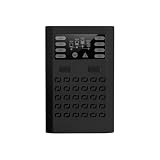
- Up to 60W charging power, suitable for 2-6S batteries for RC car,FPV,drone,aircraft models
- Compact,small,and easy to carry,5A charging current,better for outdoor using.
- Compatible with common PD with fast charging protocols: BC1.2, Divider 3,QC2.0, PD3.0, SDP, CDP.
- Multi protection: overvoltage, undervoltage,overcurrent,short circuit.
- Compare to the same type, it supports 6S while others can supports 4S only.
Making alternative suppliers viable also requires stable policy, durable demand, international cooperation and large-scale investment, according to the IEA. Automakers and suppliers need customers for the output and dependable access to feedstock, while manufacturers need time to improve yields and production efficiency. A tariff can alter the cost or availability of imports, and local-content rules can encourage investment; neither creates skilled production, operating suppliers or missing upstream inputs on its own.
Independent reader supportYour contribution helps us test, update, and keep practical guides available for everyone.How to judge whether diversification is real
When comparing a new plant, policy or sourcing agreement, look beyond headline investment totals and announcements. The useful questions are:
- Which stage is changing? A cell plant does not necessarily diversify material processing, components, machinery or technology.
- What is operating? Separate actual production from announced nameplate capacity, and ask whether the facility is producing saleable output.
- What assumptions make it competitive? Compare costs before and after public support, and consider whether efficiency, automation and component supply can narrow the gap.
- Is there reliable demand and feedstock? Capacity is harder to sustain without customers and dependable inputs.
- How quickly can production ramp? Consider start-up yields and the time needed to reach consistent, competitive output.
- What risks remain? Check exposure to export controls, transport delays and bottlenecks in specific materials or components.
This stage-by-stage view matters because the IEA finds that non-China capacity may be adequate in some downstream steps even as vulnerabilities persist elsewhere. Diversification is strongest when it adds dependable operating supply at the links most exposed to interruption, rather than simply increasing a headline capacity total.
Recycling helps resilience later, not as an immediate substitute
Battery recycling can eventually recover critical minerals and support sustainability, but the IEA says it currently contributes little to total mineral needs beyond processing manufacturing scrap. Many batteries placed in EVs and storage since 2020 remain in service; the IEA describes an approximately 15-year lag before comparable end-of-life volumes become available. In addition, China hosts over 85% of global battery recycling capacity, according to the IEA. Recycling is a longer-term resilience source, not a near-term replacement for mined and refined inputs.
Quick Recap
Product prices and availability are accurate as of the date/time indicated and are subject to change. Any price and availability information displayed on Amazon at the time of purchase will apply.




