PC Slower Than It Used to Be?
A free scan shows the junk files, broken settings and background clutter dragging Windows down - then fixes them in one click.Free scan · Windows 10 & 11Outdated Drivers Are Slowing You Down
One free scan finds every outdated or missing driver and matches the right update for your exact hardware.Free scan · exact hardware matchThe Chevrolet 10-speed transmission does not have one single, universal failure pattern. GM has used several related longitudinal 10-speed families—including the 10L60, 10L80, 10L90, and 10L1000—in different cars, pickups, heavy-duty trucks, and SUVs. The most commonly documented complaints are harsh or delayed shifts, shuddering or surging, overheating, and—in some vehicles—loss of shifting caused by transmission control-valve problems.
The correct repair depends on the vehicle’s year, model, engine, transmission RPO code, build date, diagnostic trouble codes, and test results. A harsh shift does not automatically mean the entire transmission needs replacement, and a fluid change is not a universal cure. The most important first steps are checking the VIN for recalls or special coverage, preserving the transmission codes, and obtaining an application-specific diagnosis.
Which Chevrolet 10-speed transmission does your vehicle have?
“Chevrolet 10-speed” is a useful description, but it is not a complete diagnosis. GM documentation covers multiple transmission families and RPO applications, including the 10L60, 10L80, 10L90, and 10L1000. They are used in different combinations of Chevrolet cars, light-duty pickups, heavy-duty pickups, and SUVs.
GM identifies applications with transmission RPO codes such as MHS, MHT, MQB, MQC, MQE, MYC, MGM, MGU, and MYD. Two Chevrolet vehicles with the same number of gears can therefore have different hardware, software, cooling systems, and applicable service information.
The Tool Desk
Outbyte PC Repair FREERepair Windows errors before they cause bigger problemsFix Now →Outbyte Driver Updater FREEScan for outdated or missing drivers - takes under a minuteDriver Scan →#1 Best Overall

- For use in 95% of vehicles including most CVTs in operation with US registered light duty applications
- High performance conditioning agents prolong seal elasticity to prevent leaks
- Improved durability & transmission life with anti-wear technology to avoid costly repairs
- Enhanced high & low temp performance supports transmission fluid in all weather situations
- Full synthetic formula with advanced additives protects against transmission breakdown better than conventional fluids
Before comparing your symptoms with an online diagnosis, record the vehicle’s:
- Model year and exact model
- Engine and drivetrain
- Transmission RPO code, if available
- Current mileage
- Build date, if available
- Conditions when the problem occurs: cold, hot, accelerating, decelerating, towing, or shifting between Park, Reverse, Neutral, and Drive
The problems below are documented in GM technical information and safety records. Those documents establish recognized symptoms and failure modes, but they do not show that every Chevrolet 10-speed has the same defect or that every vehicle will develop one of these problems.
1. Harsh, delayed, missed, or abnormal shifting
Shift-quality complaints are among the broadest documented problem categories. Owners may describe the transmission as:
- Shifting hard or abruptly
- Hesitating before engaging Drive or Reverse
- Up- or downshifting later than expected
- Missing a shift or failing to shift normally
- Surging during a shift
- Making a clunk, bang, or unusual noise
- Vibrating during a low-speed shift
GM bulletin 22-NA-182 lists harsh shifting, shudder, surging, stalling, overheating, and above-normal transmission-fluid temperature among reported conditions on specified 10L80, 10L90, and 10L1000 applications. Earlier GM documentation for certain 10L80 and 10L90 vehicles also directs technicians to investigate late, early, missed, or absent shifts, vibration, noise, leaks, contaminated fluid, and diagnostic trouble codes before approving a transmission replacement.
Do these 3 things before closing this tab:
1Repair Windows errors before they cause bigger problems2Scan for outdated or missing drivers - takes under a minute3Clear out junk files and repair common Windows errorsThat diagnostic approach matters. A harsh shift can result from a control-valve or pressure problem, a calibration or adaptive-learning issue, a cooling problem, low or contaminated fluid, or internal clutch damage. The symptom alone cannot identify which one is present.
What to do
Do not authorize a complete transmission replacement based only on a road-test impression. Ask the shop to document the operating conditions, scan the relevant modules, check fluid level and condition using the correct procedure, and identify the applicable GM bulletin or service procedure for that exact vehicle.
2. Shudder, surge, or vibration during coast-down
A shudder may feel like a rapid vibration, a brief rumble-strip sensation, or a repeated surge through the drivetrain. It may occur during light acceleration, low-speed operation, or while coasting toward a stop.
One GM preliminary information bulletin covers certain 2021 Chevrolet Silverado 1500 trucks equipped with the 5.3-liter L84 engine and 10L80 transmission. It describes a repeatable shudder-like sensation while coasting to a stop at approximately 15–13 mph. In that bulletin, GM said the cause was still under investigation and instructed technicians not to replace parts solely for that condition at that time.
GM bulletin 22-NA-182 also lists shudder and surging among possible complaints. However, a shudder does not automatically prove torque-converter failure. It can overlap with shift-control, pressure, cooling, software, or internal mechanical problems. It can also be affected by the conditions under which the vehicle is driven.
Useful details to record
- Exact speed when the vibration begins and ends
- Whether the vehicle is accelerating or coasting
- Engine temperature and transmission temperature, if displayed
- Whether the symptom changes when the transmission is manually held in a gear
- Whether it occurs only after the vehicle is fully warm
- Whether any warning light, message, or stored code appears
These details make the symptom reproducible. A smooth five-minute drive does not rule out an intermittent, heat-related, or coast-down-specific condition.
Rank #2

- Genuine Honda Transmission
- Honda DW-1 Automatic Transmission Fluid, 1 quart, Pack of 4
- Its wide viscosity range provides outstanding protection
- Package Weight : 7.58 pounds
3. Overheating and above-normal transmission-fluid temperature
High transmission temperature can be a problem in itself and can also change shift quality. GM identifies twisted or misshaped transmission cooler lines as one possible cause of harsh shifting, shudder, surging, stalling, overheating, and high fluid temperature on affected applications.
A cooler line that is restricted, deformed, or incorrectly routed may prevent adequate fluid flow through the cooler. GM’s bulletin directs technicians to inspect the lines, correct or replace a deformed line when necessary, and verify fluid level. If the cooler line is not the cause, GM identifies the thermal bypass valve as another possible source of overheating.
Recommended Free Tools
This is an important distinction: an overheating complaint does not automatically mean that the internal transmission has failed. A cooling-system restriction or bypass-valve problem may require a very different repair from a valve-body or clutch repair.
Warning signs that deserve prompt attention
- A transmission-temperature warning or repeated high-temperature message
- Fluid leaking from the transmission or cooler lines
- Burning odor or visibly contaminated fluid
- Progressively harsher shifts as the vehicle warms up
- Reduced performance, stalling, or failure to engage a gear
Continuing to tow or drive aggressively while the transmission is overheating can increase the chance of additional damage. Have the cooling circuit and fluid level checked before assuming that a flush or replacement transmission is needed.
4. Loss of shifting, default operation, and DTC P0747
One of the more clearly identified 10-speed failure patterns involves the transmission control valve and the diagnostic trouble code P0747.
GM bulletin 24-NA-088 describes vehicles in which the transmission may enter default operation and stop shifting after P0747 sets. In most cases described by the bulletin, the cause is a failed transmission control valve body, and the transmission may default to fifth gear. The specified repair may be control-valve or valve-body replacement rather than replacement of the complete transmission.
What’s actually slowing this PC down?
Pick the symptom - the matching free tool is one click away.
GM Special Coverage N242454441, issued in December 2024, describes gradual pressure loss caused by a worn transmission control valve. Listed effects include harsh shifting, a service-engine-soon message, reduced engine performance, and P0747. For eligible vehicles, GM states that the condition is covered for 15 years or 150,000 miles, whichever occurs first, from the original in-service date. Repairs are performed at no charge when the vehicle meets the coverage requirements.
Coverage is not automatic for every Chevrolet with a 10-speed or every vehicle that displays P0747. Eligibility must be confirmed using the VIN and GM’s vehicle-history system. A code is evidence that a system detected a condition; it is not, by itself, permission to install a particular part.
How P0747 changes the diagnostic conversation
If the vehicle has P0747, default-mode operation, or a no-shift condition:
- Do not clear the code before it is documented.
- Ask for a complete scan of the relevant transmission and vehicle modules.
- Have the shop check the VIN for Special Coverage N242454441 and other applicable bulletins.
- Confirm whether the vehicle’s production date and transmission application match the bulletin.
- Do not assume that a valve-body replacement is correct until other applicable failure modes have been ruled out.
A basic code reader may not access every GM transmission module. If you are checking whether a fault is stored before visiting a shop, an OBD-II scanner for transmission codes can be useful, but consumer equipment may show less information than professional GM-capable diagnostic equipment. Scanning is a way to preserve evidence and guide the diagnosis—not a substitute for the diagnosis itself.
5. A defined 2022 SUV recall involving possible rear-wheel lock-up
The most serious safety issue in the supplied records concerns a defined group of 2022 Chevrolet Tahoe and Suburban SUVs, along with mechanically related GMC and Cadillac SUVs. NHTSA recall 26V085 covers certain vehicles equipped with a 10-speed transmission and electronic transmission range select.
Rank #3

- The exact original equipment manufacturer fluid that your vehicle came with; use where nissan cvt ns-3 fluids are required in nissan, infiniti, and other make vehicles
- Unique formulation of high quality friction modifiers and additives ensures stable, precise operation
- Offers superior low temperature fluidity for smoother shifting and maintains proper pressure in hot weather
- Offers superior low temperature fluidity for smoother shifting and maintains proper pressure in hot weather
NHTSA’s recall acknowledgment states that the transmission control valve may fail and lock the rear wheels. GM’s defect report says the affected transmissions were built during a defined 2022 production window and may contain internal hardware that increases control-valve wear. The recall population is listed as 43,732 vehicles across the listed makes and models. The production scope is narrower than the entire 2022 model year.
GM’s remedy includes transmission-control software intended to monitor valve performance and detect excess wear, along with additional repair steps specified for affected vehicles. The precise remedy and eligibility must be confirmed by VIN.
Do not infer recall eligibility from the model year alone. Use the VIN-based NHTSA recall lookup and Chevrolet’s recall tool. If your vehicle is included, the recall repair is performed without charge. Because the stated failure can involve rear-wheel lock-up, treat an applicable recall or related warning as a safety issue rather than an ordinary shift-quality complaint. Ask the dealer for operating guidance before continuing normal use.
6. Internal clutch-piston or clutch-pack damage in a specific build window
GM bulletin PIP5974A describes a different failure mode on certain vehicles built from October 1, 2023, through April 22, 2024. The bulletin applies when P0746 or P0747 resets during a short test drive or when the transmission slips in Drive.
For the specific build window and diagnostic conditions described, GM instructs technicians not to replace the valve body because the concern is not related to that component. Instead, the transmission must be disassembled and specified clutch-piston and clutch-pack components replaced.
This is why a trouble code cannot be treated as a parts-ordering shortcut. P0747 appears in more than one documented GM failure mode. One vehicle may need control-valve work under a special-coverage condition; another may require internal clutch-related repair under PIP5974A; and a third may have a different cause altogether. Production details, symptoms, and inspection findings determine the correct path.
What a proper diagnosis should include
For a Chevrolet 10-speed with repeatable symptoms, use this sequence rather than beginning with a generic flush or complete transmission replacement.
Quick wins for a faster PC:
Clear out junk files and repair common Windows errorsFree Scan →Scan for outdated or missing drivers - takes under a minuteDriver Scan →Repair Windows errors before they cause bigger problemsFix Now →Step 1: Identify the exact application
Write down the year, model, engine, drivetrain, mileage, transmission RPO code, and build date. Note whether the vehicle is a Silverado, Tahoe, Suburban, or another Chevrolet model, because the applicable transmission family and GM documentation may differ.
Step 2: Record the symptom precisely
Describe the shift or vibration by speed, gear, temperature, throttle position, and direction of travel. Distinguish between:
- A harsh shift during acceleration
- A shudder while coasting to a stop
- A delay engaging Drive or Reverse
- A flare or slip during a gear change
- A complete loss of shifting
- A high-temperature warning
“The transmission shifts badly” is much less useful than “After 20 minutes of driving, it shudders while coasting from 15 mph to 13 mph.”
Rank #4
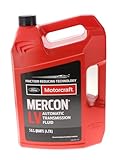
- Motorcraft Transmission Fluid - XT105Q3LV
- Item Package Dimension: 12.009L x 8.49W x 4.489H inches
- Item Package Weight - 9.23 Pounds
- Item Package Quantity - 1
- Product Type - AUTO ACCESSORY
Step 3: Scan before clearing anything
Scan all relevant modules and preserve the diagnostic trouble codes. Earlier GM 10-speed replacement procedures specifically warned technicians not to clear codes before engineering review. Clearing a code can remove useful evidence about when and how the problem occurred.
Step 4: Check recalls and special coverage by VIN
Use both the NHTSA recall lookup and Chevrolet/GM’s VIN-based vehicle-history resources. Check for the 2022 SUV recall described above and Special Coverage N242454441. A model-year search is not enough because eligibility can depend on VIN, build date, engine, transmission, and equipment.
Step 5: Inspect cooling and fluid-related causes
For high temperature, overheating, shudder, or harsh-shift complaints, the technician should inspect cooler-line shape and routing, evaluate the thermal bypass valve where appropriate, and verify fluid level using the correct vehicle-specific procedure.
Step 6: Match the code and build date to the correct bulletin
For P0747 or default-mode symptoms, compare the vehicle with 24-NA-088, N242454441, and PIP5974A as applicable. The presence of P0747 alone does not distinguish valve-body wear from the internal clutch-related condition in the specified later build window.
Step 7: Use a qualified repair facility
GM’s bulletins are written for professional technicians and should not be treated as DIY internal-transmission repair instructions. Valve-body work, software procedures, pressure diagnosis, clutch inspection, and transmission disassembly require application-specific equipment and procedures. For serious symptoms, ask for a GM-certified transmission diagnosis before authorizing parts or a replacement unit.
Free tools Windows power users keep installed
One-click scans. No signup required.
Is a transmission flush the answer?
Not automatically. A fluid service may be appropriate when the vehicle’s maintenance schedule or a technician’s diagnosis calls for it, but the documented problems above have different potential remedies:
| Condition | Possible documented direction |
|---|---|
| Deformed or restricted cooler line | Inspect, correct, or replace the line and verify fluid level |
| Thermal bypass-valve problem | Evaluate and repair the thermal-management component |
| Control-valve wear or failure | Software monitoring, valve-body work, or other VIN-specific repair |
| Specified 2023–2024 build-window internal fault | Transmission disassembly and replacement of specified clutch-piston and clutch-pack parts |
| Calibration or adaptive concern | Use the applicable GM diagnostic and programming procedure |
Do not use a fluid product as a general-purpose cure for a shudder, P0747, overheating, or loss of shifting. The fluid specification and service method must match the exact transmission. A fluid listed for one GM application may not be correct for another, and adding the wrong fluid or incorrect amount can create new problems.
When does the transmission actually need replacement?
A complete replacement may be justified when diagnosis confirms extensive internal damage, but GM’s documentation specifically shows several situations in which replacement should not be the first assumption:
- A cooler-line restriction or deformation can mimic or contribute to shift and temperature problems.
- A thermal bypass-valve issue can cause overheating without proving that the transmission’s internal gearsets have failed.
- A failed control valve or valve body may be repairable without replacing the entire transmission.
- Some eligible P0747 vehicles may qualify for no-charge special-coverage repairs.
- The PIP5974A build-window condition requires specified internal parts, not the valve-body replacement used for a different P0747 failure mode.
Before approving a replacement, request the stored codes, the test results, the identified failure mode, and the reason the proposed repair is appropriate for that exact RPO and build date.
Buying a used Chevrolet with a 10-speed
A Chevrolet 10-speed should not be rejected solely because it has ten gears. A careful inspection is more useful than a blanket rule about the transmission family.
Best Value

- For use in 95% of vehicles including most CVTs in operation with US registered light duty applications
- High performance conditioning agents prolong seal elasticity to prevent leaks
- Improved durability & transmission life with anti-wear technology to avoid costly repairs
- Enhanced high & low temp performance supports transmission fluid in all weather situations
- Full synthetic formula with advanced additives protects against transmission breakdown better than conventional fluids
Before buying
- Request maintenance and repair records, especially transmission-related invoices.
- Run a VIN-based recall and special-coverage check.
- Ask whether the vehicle has ever displayed P0747, entered default mode, overheated, or received valve-body or internal transmission work.
- Scan for current and historical transmission codes with equipment capable of accessing the relevant modules.
- Check for leaks, damaged cooler lines, warning messages, and evidence of contaminated fluid.
During the road test
Drive the vehicle from cold and, if possible, after it reaches normal operating temperature. Include:
- Several gentle takeoffs
- Stop-and-go traffic
- Low-speed coast-down to a stop
- Moderate acceleration through several gears
- Highway cruising
- Engagement of Reverse and Drive after a brief pause
Listen and feel for harsh engagement, delayed shifts, a flare between gears, repeated shuddering, surging, unusual noise, and temperature-related changes. One smooth test drive cannot rule out an intermittent or heat-dependent condition, so a pre-purchase inspection by a qualified Chevrolet or transmission specialist is worthwhile.
Quick symptom guide
| What you notice | What it may point toward | Best next step |
|---|---|---|
| Hard or delayed shifts | Control, calibration, cooling, fluid, or internal clutch issue | Scan, document conditions, inspect fluid and cooling system |
| Shudder near 15–13 mph while coasting | A documented condition on certain 2021 Silverado 1500 L84/10L80 applications; cause is not automatically torque-converter failure | Reproduce the symptom and check application-specific GM information |
| High transmission temperature | Cooler-line restriction, thermal bypass-valve issue, low fluid, or internal problem | Inspect cooler lines and thermal management before condemning the transmission |
| P0747 with default mode or fifth gear | Possible control-valve or valve-body problem | Check 24-NA-088 and VIN-based Special Coverage N242454441 |
| P0746 or P0747 with slipping in Drive on a specified 2023–2024 build | Possible internal clutch-piston or clutch-pack condition | Have the shop compare the vehicle with PIP5974A before replacing the valve body |
| Possible rear-wheel lock-up on an affected 2022 SUV | Recall-related transmission control-valve failure | Check the VIN immediately through NHTSA and Chevrolet recall tools |
Frequently Asked Questions
Are all Chevrolet 10-speed transmissions the same?
No. GM has used multiple longitudinal 10-speed families, including the 10L60, 10L80, 10L90, and 10L1000, in different applications. The transmission RPO code, engine, model, build date, and software calibration can change the likely cause and repair.
Does P0747 mean my Chevrolet transmission needs a new valve body?
Not necessarily. GM bulletin 24-NA-088 describes a control-valve or valve-body failure in many cases, and Special Coverage N242454441 may apply to eligible vehicles. However, GM bulletin PIP5974A identifies a different internal clutch-related condition for certain vehicles built from October 1, 2023, through April 22, 2024. The code must be evaluated with the vehicle’s symptoms and build information.
Will changing the transmission fluid fix a Chevrolet 10-speed shudder?
There is no universal fluid-change cure. Shudder can have control, cooling, calibration, or internal causes. Use only the fluid and service procedure specified for the exact transmission, and diagnose the cause before authorizing a flush.
How do I know whether my Chevrolet 10-speed is covered by a recall or special coverage?
Check the VIN through NHTSA’s recall lookup and Chevrolet/GM’s vehicle-history or recall tool. Model year alone is insufficient. Eligibility can depend on VIN, production date, engine, transmission, and equipment.
Should I buy a Chevrolet with a 10-speed transmission?
The presence of a 10-speed alone is not a reason to reject the vehicle. Request service records, scan the transmission modules, verify recall and special-coverage status, and perform a road test when cold and warm that includes low-speed coast-down, stop-and-go driving, moderate acceleration, and highway cruising.
The Bottom Line
Chevrolet 10-speed transmission problems are best understood as a group of application-specific conditions, not one universal defect. The broadest documented complaint cluster is harsh shifting, shudder or surge, and overheating. The clearest recurring mechanical pattern involves control-valve wear, pressure loss, and P0747, while the most serious safety concern is the defined 2022 SUV recall involving possible rear-wheel lock-up.
Check the VIN for recalls and Special Coverage N242454441, preserve all diagnostic codes, inspect cooling-system components when temperatures are high, and obtain a GM-capable diagnosis before approving a flush, valve-body repair, or complete transmission replacement.
Quick Recap
Product prices and availability are accurate as of the date/time indicated and are subject to change. Any price and availability information displayed on Amazon at the time of purchase will apply.




