Red or flashing warning lights—especially when paired with smoke, steam, unusual noise, loss of power, weak brakes, difficult steering, or unsafe handling—mean you should slow down, stop somewhere safe, and arrange help. Yellow or amber lights usually call for prompt investigation, while green and blue lights generally show that a feature is operating. That color system is only a first filter, however: the exact meaning depends on your vehicle’s year, make, model, market, engine, and whether it is gasoline-powered, hybrid, or electric.
Use this guide to triage a warning, then verify the symbol and the required procedure in your vehicle owner’s manual. A dashboard light identifies a monitored condition or system fault; it usually does not identify one exact failed part. Stored diagnostic codes, a physical inspection, and the vehicle’s symptoms are often needed for a reliable diagnosis.
What to do first when a dashboard warning appears
- Identify the symbol. Note its shape, color, and whether it is steady or flashing.
- Read the instrument-cluster message. A text message may provide a more specific instruction than the icon alone.
- Check how the car behaves. Pay attention to braking, steering, engine temperature, power, tire pressure, unusual sounds, smoke, steam, and burning or fuel odors.
- Decide whether continuing is safe. Oil-pressure, overheating, serious brake, charging, steering, airbag, and flashing check-engine warnings deserve a particularly cautious response.
- Follow the vehicle-specific procedure. The owner’s manual may specify whether to stop immediately, check a fluid, inflate a tire, or arrange service.
- Do not simply clear the light. Resetting a warning can make the lamp disappear without correcting the underlying fault.
If the car is unsafe to control, is losing power, is overheating, has reduced braking, or cannot be driven without risking further damage, activate the hazard flashers when appropriate and arrange roadside assistance or a tow. Move away from traffic if it is safe to do so. Do not open a hot radiator or coolant-system cap.
Dashboard warning-light colors: a useful first filter
| Color or behavior | What it usually indicates | Typical response |
|---|---|---|
| Red | An urgent condition, such as a brake-system problem, low oil pressure, overheating, or an open door | Read the message and stop as soon as safely possible when the condition could affect control or damage the vehicle. The manual takes priority. |
| Yellow or amber | A caution, fault, or service condition | Investigate promptly. Some amber warnings permit careful driving, while others require immediate service. |
| Green or blue | A feature or operating status, such as headlights, high beams, turn signals, or an activated driving mode | Usually normal, but confirm the symbol if it is unfamiliar or accompanied by an alert. |
| Flashing | Often a more urgent condition than a steady lamp | Reduce load and speed, read the message, and stop if the vehicle is running abnormally or the manual directs you to stop. |
These are general conventions, not universal rules. Federal Motor Vehicle Safety Standard No. 101 establishes colors for regulated telltales in the United States, but manufacturers also use vehicle-specific indicators and messages. The same general symbol can have different wording, colors, or severity depending on the vehicle and market. Never assume that every red lamp means the same thing—or that every yellow lamp is safe to ignore.
#1 Best Overall
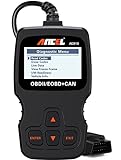
- CEL Doctor: The ANCEL AD310 is one of the best-selling OBD II scanners on the market and is recommended by Scotty Kilmer, a YouTuber and auto mechanic. It can easily determine the cause of the check engine light coming on. After repairing the vehicle's problems, it can quickly read and clear diagnostic trouble codes of emission system, read live data & hard memory data, view freeze frame, I/M monitor readiness and collect vehicle information
- Sturdy and Compact: Equipped with a 2.5 foot cable made of very thick, flexible insulation. It is important to have a sturdy scanner as it can easily fall to the ground when working in a car. The AD310 OBD2 scanner is a well-constructed mechanic tool with a sleek design. It weighs 12 ounces and measures 8.9 x 6.9 x 1.4 inches. Thanks to its compact design and light weight, transporting the device is not a problem. The buttons are clearly labelled and the screen is large and displays results clearly
- Accurate Fast and Easy to Use: The AD310 scanner can help you or your mechanic understand if your car is in good condition, provides exceptionally accurate and fast results, reads and clears engine trouble emission codes in seconds after you fixed the problem. This device will let you know immediately and fix the problem right away without any car knowledge. No need for batteries or a charger, get power directly from the OBDII Data Link Connector in your vehicle
- OBDII Protocols and Car Compatibility: Many cheap scan tools do not really support all OBD2 protocols. AD310 scanner as it can support all OBDII protocols such as KWP2000, J1850 VPW, ISO9141, J1850 PWM and CAN. This device also has extensive vehicle compatibility with 1996 US-based, 2000 EU-based and Asian cars, light trucks, SUVs, as well as newer OBD2 and CAN vehicles both domestic and foreign. Pls confirm with our customer service whether it is compatible with your vehicle before purchasing
- Home Necessity and Worthy to Own: This is an excellent code reader to travel or home with as it weighs less and it is compact in design. You can easily slide it in your backpack as you head to the garage, or put it on the dashboard, this will be a great fit for you. The AD310 is not only portable, but also accurate and fast in performance. Moreover, it covers various car brands and is suitable for people who just need a code reader to check their car
Common car dashboard warning lights and what to do
Check-engine light or malfunction indicator lamp
The familiar engine-shaped light is commonly called the check-engine light or malfunction indicator lamp. A steady light means the engine, emissions, or propulsion-control system has detected a fault. The vehicle may still feel normal, but it should be serviced as soon as practical.
A loose or incorrectly fitted fuel cap is one possible cause, but the lamp alone does not prove that the fuel cap—or any other particular part—is defective. Other causes can involve sensors, fuel delivery, ignition, emissions equipment, or propulsion controls. If the light appeared after refueling, check that the cap is properly installed if your vehicle uses one, then follow the manual. Do not treat that check as a confirmed diagnosis.
A flashing check-engine light is substantially more urgent. A severe misfire is a common explanation, and continued driving can damage the catalytic converter or other components. If the engine is shaking, losing power, smoking, making unusual noises, or operating abnormally, stop and arrange professional service rather than driving to a repair shop.
Oil-pressure warning light
The red oil-can symbol generally warns about engine oil pressure, not simply a scheduled oil change. If it illuminates while driving, pull over safely and shut the engine off. Check the oil level only after parking safely and following the vehicle’s procedure.
The Tool Desk
Outbyte Driver Updater FREEFix the driver behind crashes, sound loss and screen glitchesFind Drivers →Outbyte PC Repair FREEClear out junk files and repair common Windows errorsFree Scan →If the level is low, add the correct oil only as specified by the manual, and look for signs of a leak. Adding oil is not a complete repair: the warning may be caused by a leak, oil-pump problem, blocked passage, sensor fault, or internal engine issue. If the oil level is normal, the warning remains on, or the engine is making tapping or knocking noises, do not continue driving. Low oil pressure can cause serious engine damage quickly.
Engine-temperature or coolant-temperature warning
A thermometer over waves, a high-temperature gauge, or a high-temperature message indicates that the engine—or, in some vehicles, a hybrid propulsion system—may be overheating. Steam, a burning smell, visible coolant, or a rising temperature gauge strengthens the case for stopping immediately.
Turn off the engine as soon as it is safe and follow the vehicle’s instructions. Do not remove a radiator cap or pressurized coolant-reservoir cap while the system is hot; hot coolant and steam can cause severe burns. After the vehicle has cooled, consult the manual before checking the coolant. A low level may result from a leak, while the underlying fault could involve the thermostat, water pump, cooling fan, or another component. Driving while overheated can cause major engine damage, so a tow is often safer than attempting to reach a repair facility.
Battery or charging-system warning
A battery-shaped symbol that stays on while driving usually indicates a charging-system problem, not merely a battery that is due for routine replacement. Possible causes include the alternator, 12-volt battery, wiring, drive belt, or another electrical-system fault. Electrified vehicles may display a related warning for their applicable low-voltage or high-voltage charging systems.
Outdated Drivers Are Slowing You Down
One free scan finds every outdated or missing driver and matches the right update for your exact hardware.Free scan · exact hardware matchWindows Errors? Fix Them Before They Spread
Repair common Windows errors and clear accumulated junk for a smoother, more stable PC - no reinstall needed.Free scan · no reinstallRank #2

- Multi-Functions - Practical Multi-Functions OBD2 code reader features built-in OBD2 DTC lookup library, which help you to determine the cause of the engine light, read code, erase code, view freeze frame, I/M ready, vehicle information, data flow, real-time curve, get vehicle speed information, calculate load value, engine coolant temperature, get engine speed.
- Wide Capability - Supports 9 protocols compatible with most 1996 US-Based, 2000 EU-Based and Asian cars, and newer OBD II & CAN domestic or import vehicles. Supports 6 languages - English,German, Dutch, Spanish, French, Italian.
- 2.8" LCD Display - Designed with a clear display 2.8" Large LCD screen - white backlight and contrast adjustment. No need any battery or charger, OBD reader gets the power directly from your vehicle through the OBDII Data Link Connector.
- Compact Design - Car diagnostic scanner is equipped with a 2.5 feet long cable and made of a very thick flexible insulator.There are 6 buttons on OBD2 Scanner:scroll up/down,enter/exit and buttons that quick query VIN vehicle number& the DTC fault code.
- ABS / Airbag codes NOT Supported - It is able to read and clear check engine information which is part of OBDII system, but it cannot work with non-OBDII systems, including ABS / Airbag / Oil Service Light, etc.
Turn off unnecessary electrical loads and find a safe place to stop if the vehicle begins losing power, the temperature rises, or steering or braking assistance changes. A car may continue only until its stored electrical energy is exhausted. Do not assume that the warning will resolve itself after a restart, and do not treat a jump-start as a repair for an alternator or charging-system fault.
Brake-system warning light
A red circle with an exclamation mark, the word BRAKE, or a related brake symbol can mean that the parking brake is applied, the brake-fluid level is low, or the braking system has detected a malfunction. The exact meaning varies by vehicle.
First make sure the parking brake is completely released, if applicable. If the warning remains, or if the brake pedal feels soft or sinks, stopping distance increases, the vehicle pulls to one side, braking feels different, or another brake or ABS light appears, stop driving and seek immediate inspection. A brake warning is a control and safety issue, not a routine service reminder.
ABS warning light
The ABS symbol indicates a problem with the anti-lock braking system or a related brake-control system. On some vehicles, conventional braking may remain available when only the ABS light is illuminated, but the anti-lock function may not work. That behavior is not guaranteed across all vehicles.
Free tools Windows power users keep installed
One-click scans. No signup required.
Check the manual and arrange inspection promptly. If the red brake warning also comes on, or if braking feels abnormal, treat the combination as more serious and stop as soon as it is safe. Do not assume that normal braking is always retained after an ABS fault; the vehicle’s brake architecture and failure behavior determine what remains available.
Tire-pressure monitoring system or TPMS light
The horseshoe-shaped tire symbol with an exclamation mark means that one or more tires may be significantly underinflated. In the United States, passenger cars, light trucks, and vans from model year 2008 onward are required to have a tire-pressure monitoring system. Depending on the vehicle, TPMS may use tire-mounted pressure sensors or indirect wheel-speed information.
Check all four tires—and the spare if the vehicle monitors it—with a reliable digital tire pressure gauge. Inflate the tires to the cold pressure shown on the driver’s-door-jamb label or in the owner’s manual, not the maximum pressure printed on the tire sidewall. Check the tires when cold whenever possible, because driving heats the air and changes the reading.
A steady TPMS light commonly indicates low pressure. If the lamp flashes for roughly a minute and then remains illuminated, it may indicate a TPMS malfunction rather than simple underinflation. The exact flash pattern is vehicle-specific.
Quick wins for a faster PC:
Clear out junk files and repair common Windows errorsFree Scan →Scan for outdated or missing drivers - takes under a minuteDriver Scan →TPMS does not replace a visual inspection. A puncture, damaged valve, bulge, exposed cord, blowout, or tire that is losing pressure rapidly requires immediate attention. Do not keep driving on a visibly damaged or rapidly deflating tire. Arrange a professional tire inspection or tire repair when the cause is not obvious.
Rank #3
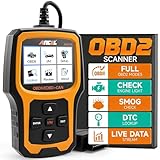
- Understand Your Check Engine Light – The ANCEL AD410 OBD2 scanner helps everyday drivers quickly read and clear engine-related fault codes, view code definitions, and understand why the check engine light is on before visiting a repair shop. With 42,000+ built-in DTC lookups, this car code reader helps reduce guesswork and makes basic vehicle diagnostics easier for beginners and DIY users
- Full OBD2 Diagnostics Made Simple – More than a basic engine code reader, this OBD2 scanner diagnostic tool supports key OBDII functions including reading/clearing codes, live data, freeze frame, I/M readiness, O2 sensor test, EVAP test, vehicle information, and MIL status. It helps you check your car’s condition, verify repairs after the issue is fixed, and communicate with mechanics more confidently
- Live Date & Real-time Vehicle Insights – View real-time engine data such as RPM, coolant temperature, fuel trim, oxygen sensor readings, and other available OBD2 parameters directly on the screen. These live data readings help you better understand how your vehicle is running, spot abnormal patterns, and make more informed repair decisions instead of relying only on a warning light
- Smog Check Readiness At A Glance – Use the I/M readiness function before a smog check or emissions inspection to see whether your vehicle’s monitors are ready. This OBD2 code scanner helps you confirm if recent repairs have brought the system back to a ready state, reducing the chance of failed inspections, retests, wasted trips, and unnecessary inspection fees
- Works With Most OBD2 Vehicles – Compatible with most 1996 and newer U.S.-based OBD2 cars, SUVs, and light trucks, as well as many 2000 and newer EU/Asian OBD2 vehicles. Supports major OBDII protocols including CAN, ISO9141, KWP2000, J1850 VPW, and J1850 PWM. This automotive diagnostic scanner is designed for wide vehicle coverage; please check compatibility with your vehicle before purchase
Airbag or SRS warning light
The airbag or SRS symbol indicates a possible fault in the supplemental restraint system. If the lamp does not behave as expected during startup or remains illuminated, an airbag, pretensioner, sensor, or related restraint function may not be available in a crash.
Have the system inspected promptly. Do not disconnect airbag wiring, probe connectors, or attempt a casual repair. SRS components can contain pyrotechnic devices, and the manufacturer’s service instructions should control any diagnosis or repair.
Traction-control, stability-control, and slip indicators
A car with squiggly lines can mean several different things:
- A blinking symbol may show that traction or electronic stability control is actively intervening because the wheels are slipping.
- A steady symbol may indicate that the system has detected a fault.
- A symbol marked OFF, or an accompanying OFF message, may mean that traction or stability control has been switched off or disabled.
Reduce speed for the road conditions and avoid abrupt steering or acceleration. If the lamp remains on unexpectedly, consult the manual and arrange inspection, especially when it appears with ABS, brake, or steering warnings. A traction or stability system cannot overcome excessive speed or poor road conditions, even when it is functioning normally.
Electric-power-steering warning
A steering-wheel symbol with an exclamation mark can indicate an electric-power-steering fault. The vehicle may remain steerable, but steering effort can increase substantially or become inconsistent.
If steering becomes difficult, unpredictable, or unsafe, stop as soon as possible and arrange assistance. Do not assume a restart has permanently corrected the problem. A warning that disappears may still represent an intermittent fault that needs diagnosis.
Seat-belt warning
A person-shaped symbol with a belt, often accompanied by a chime, normally means that a driver or passenger is not buckled. Correct the condition before moving. Make sure occupants are seated properly and that every belt is latched.
If the warning remains after everyone is buckled, check for an object on a passenger seat that could trigger the occupancy sensor. If the lamp or chime still does not behave normally, the buckle, latch, occupancy sensor, or related wiring may need service.
Rank #4
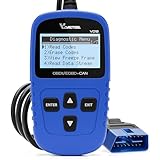
- 【A MUST-HAVE SCANNER TOOL FOR DIYERS】 - VDIAGTOOL VD10 car code reader is an incredibly useful, handheld obd2 scanner for each car owner or hobbyist, even for those with little to no experience when it comes to vehicle mechanics! Similar to a fixd car diagnostic tool, using this car diagnostic scanner is extremely easy. All you have to do is attach it to your car OBDII port and you can diagnose car problems in seconds! Read Codes (DTCs); Clear Codes; Live Data; View Freeze Frame; I/M Readiness; Vehicle Information.
- 【KEEP ENGINE IN GOOD STATUS】 - VDIAGTOOL check engine code reader brings a fast access to scan, read the car fault code, show its definition on the screen instantly, troubleshooting to find the root causes of problems, erase the engine fault code and turn off the MIL (Malfunction Indicator Light). Similar to a fixd car diagnostic tool, this car code reader helps ensure your engine stays in top condition.
- 【READ/CLEAR CODES & DTC LOOKUP】- No search online & saving your time, this vehicle car code reader retrieves generic (P0, P2, P3, and U0), manufacturer specific (P1, P3, and U1) codes, pending codes and displays DTC definitions based on the built-in database(more than 3000 codes) on the TFT screen, find out the root causes and clear the codes after fixed.
- 【ENHANCED OBD2 SCANNER WITH LIVE DATA & RETRIEVE FREEZE FRAME】 - This diagnostic scan tool for accurate diagnosis enables you to retrieve data from vehicle sensors, such as Engine RPM, Intake air temperature, Short/Long term fuel, Misfire data and etc. The freeze frame is stored in the PCM together with the diagnostic trouble code (DTC) related to the fault. Comparable to a fixd car diagnostic tool, the VD10 car code reader car scanner can be a valuable & practical diagnostic aid and also greatly help when diagnosing intermittent problems.
- 【I/M READINESS for THE S-nn-0-g CHECK】- OBDII vehicle may not pass the annual inspection unless the required monitors since reset are complete. So you should at least read the readiness monitors and make sure they are ready. This car obd2 scanner diagnostic tool is equipped with I/M readiness function to check the operations of the e-m-issi0n system on OBD2 compliant vehicles, run I/M monitor readiness test, checking if the pass vehicle s-m-0-g inspection.
Door, hood, or liftgate-open warning
An open-door symbol indicates that a door, hood, trunk, or liftgate may not be fully latched. Check every opening before driving, including the one that may not be obvious from the driver’s seat. An unsecured hood or liftgate can create a serious visibility or handling hazard.
If the warning remains after all doors and panels are closed, a latch or position sensor may be faulty. Do not ignore it simply because the vehicle appears to be moving normally.
Low-fuel warning
A fuel-pump symbol usually means that the fuel level is low and refueling is needed. The displayed remaining range is not a guaranteed reserve measurement. It varies with vehicle design, traffic, weather, terrain, driving style, and recent fuel economy.
Do these 3 things before closing this tab:
1Fix the driver behind crashes, sound loss and screen glitches2Clear out junk files and repair common Windows errors3Scan for outdated or missing drivers - takes under a minuteRefuel promptly rather than treating the warning as permission to drive until the tank is empty. Running out of fuel can leave you stranded and may be particularly risky in heavy traffic, extreme temperatures, or remote areas.
Washer-fluid, lighting, and maintenance indicators
Washer-fluid, exterior-light, low-beam, high-beam, turn-signal, cruise-control, and driving-mode indicators generally report a feature’s status or a fluid/service need rather than an immediate emergency. Their colors and exact symbols vary.
A maintenance reminder is not the same as a red oil-pressure warning. A maintenance reminder concerns scheduled service, while an oil-pressure warning may indicate a dangerous loss of lubrication. Likewise, a headlight indicator showing that high beams are active is different from an exterior-light fault. Use the manual and the vehicle’s maintenance schedule to distinguish normal status indicators from fault warnings.
Independent reader supportYour contribution helps us test, update, and keep practical guides available for everyone.Hybrid and electric-vehicle warning lights
Hybrid and electric vehicles add warnings for high-voltage systems, propulsion-system faults, battery temperature, charging, regenerative braking, and drive-system status. A READY or drive-system indicator also has a vehicle-specific meaning and should not be interpreted like a conventional engine warning.
What’s actually slowing this PC down?
Pick the symptom - the matching free tool is one click away.
Some electrified vehicles may use a check-engine or malfunction indicator for charging or propulsion-related faults. A battery icon can refer to more than one battery or electrical system, depending on the vehicle. Hybrid-system, high-temperature, charging, brake, and high-voltage warnings should be interpreted using the manual for that exact model.
Best Value

- 【Diagnose Check Engine Light in Seconds – No Mechanic Needed】The FOXWELL NT301 OBD2 scanner instantly reads & clears engine fault codes (DTCs) with one click. Simply plug into the 16-pin DLC port, turn ignition on, and get accurate results within seconds—No prior car knowledge required. Save hundreds on dealership fees by knowing exactly what’s wrong before you visit a shop. The #1 choice car scanner for DIYers and car owners who want to take control of their vehicle’s health
- 【Clear & Reset CEL with Confidence】Unlike cheap code readers that just erase codes temporarily, NT301 works like all professional vehicle code readers: It clears the check engine light only after you’ve fixed the underlying issue. If the problem isn’t fully repaired, the fault code will reappear. So you’ll never get a false pass. Use the foxwell scanner to verify your repair work and drive with peace of mind
- 【Sm-og Check Helper – Know Your Pass/Fail Status Before the Test】With dedicated one-click I/M readiness hotkeys and a simple Red-Yellow-Green LED indicator, you’ll instantly know if your vehicle is ready for annual testing. Built-in speaker provides clear audio feedback. No guesswork—just confidence before you head to the test center. One less thing to worry about when inspection day comes
- 【Advanced OBDII Modes – O- 2 Sensor & EVAP Testing】NT301 go beyond basic code reading with enhanced OBD2 modes. Run an EVAP system check to assess fuel tank condition, and use the O- 2 sensor test to optimize air-fuel ratio, boosting fuel economy, cutting em- issions, and saving you money at the pump. The code reader for cars and trucks is like having a mini em-issions lab in your glove box
- 【Live Data Graphing – Spot Engine Issues in Real Time】View and log live sensor data in easy-to-read graphs with this OBD2 scanner diagnostic tool. Monitor ox- ygen sensors, fuel trims, coolant temperature, RPM, and more to spot suspicious values instantly. This obd scanner gives you professional-grade insight without the pro price tag—a feature you won’t find on basic $20 car code readers
Do not touch orange high-voltage cables, open battery compartments, or attempt an improvised repair. For a high-voltage, charging, or propulsion warning, follow the manufacturer’s roadside instructions and arrange qualified service. If the vehicle has lost propulsion, is smoking, is overheating, or cannot be safely controlled, stop and request a tow.
When an OBD-II scan tool helps—and when it does not
An OBD-II scan tool can retrieve diagnostic trouble codes from compatible vehicles and may help identify the system that triggered a check-engine light. For a steady check-engine light with no severe symptoms, an OBD2 scanner can be a useful information and triage tool before speaking with a repair shop.
A code is not a verdict that a particular part must be replaced. It may identify a monitored circuit, operating condition, or system, while the actual cause could be a wiring problem, vacuum leak, sensor issue, software condition, or another fault. A scan tool also does not replace a physical inspection or testing.
Basic code readers may not access every manufacturer-specific module. Depending on the vehicle, they may not retrieve codes from the airbag, ABS, hybrid-battery, advanced driver-assistance, or other body and chassis systems. A scanner should never be used as permission to continue driving with a red warning, a flashing check-engine light, abnormal engine operation, weak brakes, overheating, or unsafe steering.
What not to do when a warning light appears
- Do not open a hot cooling system. Pressurized steam and coolant can cause severe burns.
- Do not keep driving because the vehicle still starts. An oil-pressure or charging warning can precede serious damage or a breakdown.
- Do not assume a warning identifies one failed part. Confirm the cause with codes, testing, inspection, and symptoms.
- Do not erase the warning before recording information. Clearing codes can remove useful diagnostic data and does not repair the fault.
- Do not disconnect airbag or high-voltage wiring. These systems require vehicle-specific service procedures.
- Do not rely on TPMS alone. Look at the tire and measure pressure; a sensor may not detect every dangerous condition immediately.
- Do not assume a restart fixes an intermittent fault. A light that disappears may return and should be investigated when it concerns safety or drivability.
A practical decision guide
Stop and arrange help now when:
- A red oil-pressure, overheating, brake, charging, or steering warning appears and remains on.
- The check-engine light flashes, particularly when the engine shakes, loses power, smokes, or runs abnormally.
- Braking is weak, the pedal feels soft, stopping distance increases, or the vehicle pulls while braking.
- Steering becomes difficult or unpredictable.
- The vehicle is steaming, smoking, leaking fluid, producing a burning odor, or making severe mechanical noise.
- A tire is visibly damaged, rapidly losing pressure, or has suffered a blowout.
- A hybrid or EV displays a high-voltage, propulsion, charging, or high-temperature warning that the manual treats as urgent.
Investigate promptly and drive only if the vehicle is clearly safe when:
- A steady yellow check-engine light appears without unusual symptoms.
- The TPMS lamp is steady and the tires appear intact, allowing you to check and correct pressure immediately.
- An ABS, airbag, stability-control, or electric-power-steering warning remains on but the manual permits limited driving and the vehicle behaves normally.
- A charging warning appears but the vehicle has not yet lost power; switch off unnecessary loads and arrange service rather than planning a long trip.
Usually normal, but confirm if unfamiliar:
- Green turn-signal or cruise-control indicators.
- Blue high-beam or other feature-status indicators.
- Washer-fluid or scheduled-maintenance reminders.
- A traction or stability symbol that blinks briefly while the system responds to wheel slip.
The words in the instrument cluster and the procedures in the manual take priority over this general guide. When seeking help, provide the exact symbol, color, steady or flashing behavior, vehicle year, make, model, powertrain, accompanying message, and symptoms.
Frequently Asked Questions
Can I drive with a yellow or amber warning light on?
Sometimes, but not automatically. Yellow or amber generally means caution or service is needed, yet some amber warnings concern brakes, steering, propulsion, or another system that may make continued driving unsafe. Check the message and owner’s manual, and stop if the vehicle behaves abnormally.
What does a flashing check-engine light mean?
It often indicates a severe misfire that can damage the catalytic converter or other components. Avoid further driving, especially if the engine is shaking, losing power, smoking, or making unusual noises. Stop safely and arrange professional service.
Recommended Free Tools
Can I turn off a dashboard warning light myself?
You may be able to clear some codes with a scan tool, but clearing a light does not correct the fault and can erase useful diagnostic information. Record the code and symptoms first, and do not reset a serious warning to keep driving.
Why is my TPMS light flashing instead of staying on?
On many vehicles, a TPMS light that flashes for about a minute and then remains on indicates a TPMS malfunction rather than only low tire pressure. Check the tire pressures and inspect the tires, then consult the vehicle manual or arrange service.
Do all cars use the same dashboard warning symbols?
No. Symbols, colors, wording, severity, and procedures vary by year, make, model, market, and powertrain. Common symbols provide a starting point, but the vehicle-specific owner’s manual is the final reference.
The Bottom Line
The safest rule is simple: red or flashing plus abnormal behavior means stop and get help; yellow or steady means investigate promptly; green and blue usually mean a feature is active. Verify the exact symbol in the manual for your vehicle. When the warning concerns brakes, steering, overheating, oil pressure, charging, airbags, high-voltage systems, or a flashing check-engine light, err on the side of stopping and arranging professional assistance.
Quick Recap
Product prices and availability are accurate as of the date/time indicated and are subject to change. Any price and availability information displayed on Amazon at the time of purchase will apply.




