CATL is not confirmed to be mass-producing all-solid-state EV batteries in 2027. The company’s publicly reported target is small-batch or small-volume production around 2027. Broad, million-vehicle-scale commercialization is a separate milestone that recent reporting places around or after 2030.
CATL has not confirmed mass production of an all-solid-state EV battery in 2027. The company’s publicly reported target is more limited: small-volume or small-batch production around 2027. That could mean pilot-line output, customer samples, validation vehicles, or a small number of premium applications—not a battery available across China’s mainstream electric-vehicle market.
A more accurate reading of the schedule is that CATL could begin limited solid-state production in 2027, while stable, repeatable, million-vehicle-scale commercialization is unlikely before around 2030, according to more recent comments attributed to chairman Robin Zeng. No CATL vehicle model, automaker customer, pack specification, range figure, factory, warranty, or consumer purchase date has been publicly established for a 2027 all-solid-state battery in the sources reviewed.
What CATL actually said about 2027
CATL’s first widely reported timetable for its all-solid-state battery program came from chief scientist Wu Kai at the China International Battery Fair in Shanghai on April 28–29, 2024. Wu described the technology as level 4 on CATL’s nine-level development scale and said the company was aiming for small-volume production by 2027.
The Tool Desk
Outbyte PC Repair FREERepair Windows errors before they cause bigger problemsFix Now →Outbyte Driver Updater FREEScan for outdated or missing drivers - takes under a minuteDriver Scan →#1 Best Overall
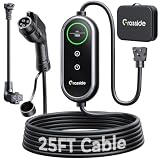
- Universal J1772 Compatibility: Designed with a standard J1772 connector, this J1772 charger works with most J1772 electric vehicles and PHEVs, including BMW, Mercedes-Benz, Hyundai, Kia, Nissan, Rivian, Ford, Chevy, Volkswagen, Toyota and more. Note: Tesla vehicles require a J1772 to Tesla adapter (not included)
- Flexible Outlet Compatibility: This portable EV charger comes with a NEMA 6-20 plug and a NEMA 5-15/5-20 to 6-20 adapter. Supports Level 1 (8–12A) and Level 2 (16A). Max 12A (1.44kW) on 120V NEMA 5-15/5-20 outlets, and full 16A (3.84kW) with a 240V NEMA 6-20 outlet. One charger is designed to cover home, garage, and travel charging needs with reliable performance
- Adjustable Smart Charging Control: Customize charging safely with adjustable current settings (8A/10A/12A/16A) to match different circuits. The 0–12 hour delay timer helps schedule overnight charging during lower electricity rates. Integrated LCD display shows real-time voltage, current, power, and charging status for clear monitoring without apps. Note: Press 'A' or 'T' for 3s to set and confirm.
- Home Charging & Travel Backup: For daily home use while remaining fully portable for travel. This level 1 ev charger includes a durable 25FT ev charging cord, providing flexible reach for garage or driveway charging. Charge overnight to take advantage of lower utility rates—potentially saving up to $500 annually on electricity costs. The included carrying case makes storage easy and keeps a dependable backup charger available in your trunk for road trips or visiting friends
- Engineered For Safety & Durability: Built for dependable daily use, this electric car charger features an IP65 waterproof rating for all weather operation. Equipped with a UL-listed cable, fully rubberized connector, and advanced protection against overcurrent, overheating, and electrical faults. Designed to ensure safe, stable, and long-term charging performance in demanding environments
Those details matter. “Small-volume production” is not the same as a conventional mass-production launch. It can describe an early manufacturing line used to produce enough cells for engineering validation, reliability testing, selected customer programs, or limited vehicle deployment. It does not establish that CATL will be able to make millions of cells at competitive cost and consistent automotive quality in that year.
| Phrase | What it could mean | What it does not prove |
|---|---|---|
| Small-volume or small-batch production | Pilot-line cells, samples, qualification units, demonstrations, or limited vehicle use | Broad availability or mass-market EV supply |
| Mass production | High-volume output with stable yield, repeatable quality, controlled costs, and reliable supply | That a technology has merely reached a pilot line |
| Mass adoption | Large numbers of vehicles using the technology in ordinary commercial service | That a manufacturer has produced a limited first batch |
Therefore, the 2027 statement supports a claim about a meaningful manufacturing milestone. It does not support the stronger headline claim that CATL will mass-produce solid-state batteries for the broad EV market that year.
The 2026 update makes the timeline more cautious
In reports published on June 25, 2026, Caixin said Robin Zeng still considered CATL’s solid-state technology to be at level 4 on the company’s nine-point scale and far from mass production. CnEVPost reported that CATL viewed large-scale commercialization as a threshold of roughly one million vehicles and that this level was unlikely to be achieved before 2030.
This does not necessarily cancel the earlier 2027 objective. The two positions can be reconciled if they refer to different stages of development:
- Around 2027: CATL may produce a small batch for pilot manufacturing, validation, demonstrations, or carefully selected vehicles.
- Late 2020s: The company would still need to improve yield, durability, production speed, cost, supply-chain reliability, and vehicle integration.
- Around or after 2030: Million-vehicle-scale commercialization could become possible if those engineering and manufacturing hurdles are solved.
The key distinction is between a production line that can make some cells and a mature industrial system that can make large quantities of identical cells, year after year, at a price automakers and consumers will accept. Industry analysts have repeatedly warned that pilot output alone does not demonstrate reliable vehicle deployment at commercial yield.
What kind of battery is CATL developing?
CATL is pursuing all-solid-state battery technology, with sulfide-based solid electrolytes frequently associated with the company’s development path in public reporting and industry research. However, CATL has not publicly disclosed a final commercial product name, confirmed production plant, vehicle application, customer launch schedule, pack capacity, charging curve, warranty, or official range specification for a 2027 all-solid-state EV battery.
Sulfide chemistry is also not a confirmed final specification. It is safer to describe sulfide-based materials as part of the reported development direction rather than as the guaranteed chemistry of CATL’s eventual commercial product.
All-solid-state, semi-solid, condensed, and conventional batteries are not interchangeable terms
An all-solid-state battery replaces the liquid electrolyte used in a conventional lithium-ion cell with a solid electrolyte. In principle, that design could enable higher energy density and may reduce some safety risks associated with flammable liquid electrolytes.
A semi-solid battery retains some liquid or gel component. It may offer a path to higher energy density while using manufacturing processes that are less demanding than those required for a genuinely all-solid cell.
Condensed batteries are another category and should not automatically be labeled all-solid-state. The name can refer to a high-energy-density lithium battery architecture rather than a cell in which the liquid electrolyte has been entirely eliminated.
Rank #2

- Complete Package Contents: Power plug 1; Cable 1; Control box 1 (equipped with an LCD color display, current switch button, and time-setting buttons). The charging gun interface adopts a universal 5-hole US standard design. A US standard plug adapter will also be provided for compatibility with Level 1 household power outlets
- Advanced Portable Charger Features: The Charger is engineered for modern new energy vehicles, such as all-electric, extended-range, and hybrid models, and is compatible with the National Standard 5pin AC charging interface. It automatically stops charging once the battery is full and offers flexible charging options including scheduled start and customizable duration limits. Built in safety mechanisms protect against overvoltage, overheating, and overload, while an intuitive display shows real-time metrics like current, voltage, power, and temperature. Suitable for both home and commercial use, the charger can be permanently installed or carried on the go for flexible charging convenience
- Simple Operation Instructions: To begin normal charging, first ensure the electrical outlet and wiring are functioning properly, then connect the charger to the power supply. Modify the charging current or make time reservation as needed, then connect the vehicle for charging
- Customizable Charging Settings: Initial Interface - Press and hold 3 seconds to enter TIME settings menu - Click once to add 2 hours, 8 hours maximum; Press and hold Initial Interface Set Delayed Time touch key 3 seconds to enter Current settings menu, Click once to select charging current, Long press 3 seconds to confirm
- Safety Guidelines and Specifications: The charging current of the Toptoo charger must not exceed the rated current of your power outlet. Before use, ensure the power outlet is not worn out or of poor quality. Do not use damaged or counterfeit outlets, as they may overheat and pose safety risks. Toptoo is not responsible for accidents caused by improper charging setups including non-compliant wiring or electrical standards
This distinction is especially important because CATL’s April 2026 technology-day materials highlighted mass-produced lithium-ion, condensed, hybrid, and sodium-ion products, including the Naxtra sodium-ion battery. Those official materials did not announce a named, mass-produced all-solid-state EV battery entering production in 2027.
CATL is therefore commercializing several other chemistries while continuing to develop solid-state technology. A statement that CATL is mass-producing sodium-ion or condensed batteries cannot be used as evidence that its all-solid-state battery program has reached mass production.
Why all-solid-state batteries are difficult to mass-produce
The hardest part is not demonstrating impressive performance in a laboratory cell. It is turning that performance into a safe, durable, affordable product that can be manufactured consistently at automotive volumes.
1. Solid-to-solid interfaces
Liquid electrolytes can fill microscopic gaps between electrode particles. Solid materials do not flow in the same way. Maintaining intimate, low-resistance contact between the cathode, electrolyte, and anode is difficult, particularly as the cell expands and contracts during charging and discharging.
Small interface defects can increase resistance, reduce usable power, accelerate degradation, or create localized failure. The challenge becomes more severe when a cell must operate across a wide temperature range for many years.
2. Dendrite formation
Solid electrolytes are often discussed as a way to enable lithium-metal anodes, but a solid electrolyte does not automatically eliminate dendrites. Lithium can still form unwanted structures or exploit cracks, pores, weak interfaces, and other defects. Preventing those pathways while maintaining fast charging and long life remains an active engineering problem.
3. Mechanical pressure and stability
Some solid-state designs require carefully controlled pressure to preserve contact between layers. A laboratory cell can be tested under conditions that are difficult to reproduce in a vehicle pack. Engineers must maintain mechanical stability through thousands of charge cycles, vibration, impacts, temperature changes, and the natural swelling and shrinking of electrode materials.
4. Moisture-sensitive materials
Many solid-electrolyte materials, particularly sulfide systems, require strict moisture control during processing. That affects factory design, handling, storage, equipment, worker safety, and cost. A process that works in a controlled development environment must be adapted to high-throughput production without introducing contamination or excessive expense.
5. Yield and defect control
Automotive battery manufacturing depends on extremely consistent cells. A small defect rate can become a major economic problem when a vehicle contains hundreds or thousands of cells. Solid-state manufacturers must control layer thickness, alignment, interfaces, pressure, contamination, and electrical performance at production speed.
A pilot line can produce technically functional cells while still having a yield too low for profitable mass production. That is why “cells have been made” and “the technology is ready for millions of vehicles” are very different claims.
What’s actually slowing this PC down?
Pick the symptom - the matching free tool is one click away.
Rank #3

- 【Reliable Safety with PBE & LRC Tech】Powered by ELEGRP's exclusive PBE technology, this level 2 EV charger provides reliable protection against surges, leakage, and overloads—trusted by over 300 million households since 2000. The J1772 charger features advanced LRC tech for better conductivity, cooler operation, and stable charging speed
- 【Dual Charging Model】Charging speed depends on your outlet type. Use the NEMA 6-20 plug for Level 2 240V fast charging at up to 3.84kWh (11-14 miles/hr). For slower Level 1 charging 120V, use the included 5-15 adapter, offering 1.44kWh (4-5 miles/hr)
- 【Max 25FT Reach &and IP67 Weatherproof Reliability】 Our 25FT portable cable offers the maximum length allowed by NEC safety standards for garage, wall, or outdoor use. This electric car charger is IP67 waterproof and built for cold weather, from -21°F to 121°F, including heavy rain, or snow
- 【U.S.-Based Expert Support & and 2-Year Warranty】Get real help from our U.S.-based support team, available Mon–Sat (5 AM–3 PM PT) for fast, professional assistance. Every ELEGRP charger is backed by a 2-year replacement warranty, so you can charge your vehicle with confidence
- 【Universal J1772 Compatibility】Compatible with all SAE J1772 certified EVs, BEVs, and PHEVs. For Tesla owners: a J1772-to-NACS adapter (sold separately) may be required. Please verify your car compatibility before purchase and contact our support team with any questions
6. Cycle life, fast charging, and real-world validation
High energy density is only one part of an EV battery specification. Automakers also need predictable cycle life, rapid charging, low-temperature performance, crash safety, storage stability, warranty durability, and consistent behavior across a large production population.
The International Energy Agency has said that solid-state battery advantages still need to be demonstrated at scale in real-world applications. Reviews published in Nature and related research identify interfacial stability, manufacturing scalability, production safety, and recycling as major practical barriers.
7. Cost and recycling
Even if a solid-state cell performs well, it must compete with lithium-ion batteries that benefit from decades of factory learning, established supply chains, and large production volumes. New materials, specialized equipment, lower early yields, and additional quality-control steps could make early solid-state cells expensive.
Recycling processes also need to be developed for the materials and cell structures ultimately used in commercial products. That is not a reason to dismiss the technology, but it is another reason why a pilot launch does not equal a finished mass-market ecosystem.
Quick wins for a faster PC:
Clear out junk files and repair common Windows errorsFree Scan →Scan for outdated or missing drivers - takes under a minuteDriver Scan →Repair Windows errors before they cause bigger problemsFix Now →China gives CATL an advantage—but not a free pass
CATL is operating inside the world’s largest and most integrated EV battery ecosystem. The International Energy Agency reported that China accounted for about 70% of global electric-car production and more than 80% of battery-cell production in 2025. That concentration gives Chinese companies advantages in materials sourcing, manufacturing equipment, process engineering, supplier coordination, and vehicle integration.
Those advantages make a Chinese small-batch solid-state launch more plausible than an immediate global rollout. CATL can draw on established factories, engineering teams, automotive partners, and a dense supplier base while it develops the new cell architecture.
But the same ecosystem also raises the bar. Solid-state batteries must compete not with an outdated lithium-ion technology, but with rapidly improving LFP, NMC, sodium-ion, condensed, and semi-solid products. If a solid-state cell is harder to manufacture and significantly more expensive, automakers may use it first where its advantages justify the premium rather than across every vehicle segment.
Independent reader supportYour contribution helps us test, update, and keep practical guides available for everyone.Could a CATL solid-state battery appear in a vehicle in 2027?
It is possible, but there is no verified public evidence establishing a specific CATL vehicle launch in 2027. The most supportable scenario is limited deployment in a premium, demonstration, or strategically important model. That is an inference from CATL’s small-batch language, the reported level-4 maturity status, and the known manufacturing constraints; it is not a confirmed CATL product plan.
PC Slower Than It Used to Be?
A free scan shows the junk files, broken settings and background clutter dragging Windows down - then fixes them in one click.Free scan · Windows 10 & 11Crashes, No Sound, or Screen Glitches?
Random freezes, missing sound and display glitches usually trace back to one bad driver. Find and replace yours safely.Free scan · under a minuteThere is currently no verified CATL vehicle model, automaker customer, public pack capacity, official range rating, charging specification, warranty, or consumer purchase date for an all-solid-state CATL battery. Claims that CATL has confirmed a 1,200-mile or 2,000-kilometre battery should not be treated as official specifications.
Consumers should also avoid assuming that a vehicle described as having a “solid-state” battery is all-solid-state. Some announcements use the term for semi-solid or other high-energy-density designs. The cell’s electrolyte composition, production status, vehicle model, and certification details matter more than the marketing label.
Rank #4
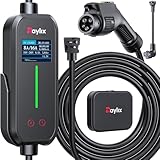
- [2026 INTELLIGENT CHARGING UPGRADE — PRECISION CONTROL MEETS SMART SCHEDULING] After surveying 100K+ U.S. EV owners, the Raylix R&D team found that nearly all drivers recognized the necessity of adjustable current and scheduled charging. Our upgraded J1772 charger features 4-level adjustable current (8A/10A/12A/16A) and a 1–12 hour smart delay timer. Whether you're charging overnight or during off-peak hours, enjoy smarter energy use, lower costs, and total convenience—on your schedule.
- [ONE CHARGER, ALL J1772 EVs/PHEVs READY!] Compatible with all SAE J1772 electric vehicles and plug-in hybrids—whether it’s Ford, GM, Nissan, Audi, BMW, Kia, Hyundai, Honda, Chevy, or more. Perfect for home or on-the-road charging, our 16A Level 1 & 2 charger ensures your EV is always powered and ready for any journey.
- [CHARGE 4× FASTER — NO MORE WAITING] In a rush? Our 16A Level 1 & 2 charger delivers charging speeds up to 4× faster than standard 8A Charger Level 1. Whether it's an early commute, a spontaneous trip, or last-minute errands, your EV will be ready when you are.
- [LEVEL 1 & 2 PORTABLE CHARGER — CHARGE ANYWHERE, ANYTIME] Designed for maximum flexibility, Raylix Level 1 & 2 EV charger features both 5-15 and 6-20 plug compatibility. Whether you're charging in your garage, at a friend's house, or at a roadside motel. NEMA 6-20 plug for Level 2 ev charging (240V, 16A, 3.68kW, 9-12 miles/hr) and a NEMA 5-15 adapter for Level 1 ev charging (120V, 12A, 1.44kW, 3-5 miles/hr) NOTE: In compliance with North American electrical safety standards, the charger automatically limits current to 12A when using a 5-15 outlet—protecting both your vehicle and your home’s electrical system.
- [AT-A-GLANCE CHARGING COMMAND: TOTAL CONTROL, INSTANTLY] While most ev chargers solutions confine vital data to in-car screens, the Raylix tesla charger breaks free with its enhanced TFT color display. This Raylix-exclusive feature delivers crystal-clear, real-time updates—voltage, current, power load, AND critical charging temperature—directly on the unit. Just one glance gives you complete charging insight. It’s not just information; it's the empowering peace of mind and satisfying control that transforms every charge into a masterfully managed experience.
CATL is not the only company targeting 2027–2028
Toyota has separately announced a goal of commercializing all-solid-state batteries in 2027–2028, followed by full-scale mass production. That timetable shows why 2027–2028 is an important target window across the industry, but it is not evidence that CATL has completed its own product launch.
Across the sector, companies are trying to reach an early commercial milestone while still solving the same underlying issues: production yield, cost, durability, interfaces, safety, and supply-chain scale. A first limited application and a broadly affordable EV battery are likely to be separated by several development stages.
Do these 3 things before closing this tab:
1Fix the driver behind crashes, sound loss and screen glitches2Repair Windows errors before they cause bigger problems3Scan for outdated or missing drivers - takes under a minuteCATL solid-state battery timeline
| Date | Development | How to interpret it |
|---|---|---|
| April 2024 | Chief scientist Wu Kai described CATL’s technology as level 4 on a nine-level scale and targeted small-volume production by 2027. | An early production target, not a confirmed mass-market launch. |
| April 2026 | CATL’s technology-day materials highlighted mass-produced lithium-ion, condensed, hybrid, and sodium-ion products. | CATL is commercializing other chemistries; no named mass-produced all-solid-state EV battery was announced in those materials. |
| June 2026 | Reports attributed to chairman Robin Zeng kept the solid-state program at level 4 and placed million-vehicle-scale commercialization no earlier than around 2030. | A more cautious distinction between small batches and industrial-scale production. |
| Around 2027 | Potential small-batch or pilot production. | Could support samples, testing, demonstrations, or limited premium applications. |
| Around or after 2030 | Possible large-scale commercialization if technical and manufacturing barriers are overcome. | A target or expectation, not a guaranteed launch date. |
What to watch for before calling it mass production
A credible confirmation of CATL’s mass-production status would need more than a statement that a prototype or pilot cell exists. Look for several independent details:
- A named commercial cell or battery product with a published technical specification.
- A confirmed automaker and vehicle program, rather than an unnamed customer.
- A production plant, line capacity, start date, and evidence that the line is producing automotive-qualified cells.
- Independent information about yield, durability, safety validation, and warranty requirements.
- Clear wording distinguishing all-solid-state cells from semi-solid, condensed, hybrid, or conventional lithium-ion products.
- A real vehicle launch or delivery schedule that consumers can verify.
- Evidence that production is more than a demonstration batch and can support a meaningful number of vehicles.
Until those details appear, “CATL targets small-batch solid-state production around 2027” is defensible. “CATL will mass-produce solid-state EV batteries in 2027” is too strong.
Sources and terminology
The timeline above reflects CATL statements reported from the 2024 China International Battery Fair, June 2026 reporting by Caixin and CnEVPost, CATL’s April 2026 technology-day materials, International Energy Agency analysis, peer-reviewed Nature reviews, and Toyota’s separate commercialization target. The 2027 and 2030 dates are targets or reported expectations, not guaranteed delivery dates.
Frequently Asked Questions
Will CATL mass-produce solid-state EV batteries in 2027?
No. CATL’s reported 2027 objective is small-volume or small-batch production. That could cover pilot cells, customer samples, validation vehicles, or limited premium applications. More recent reporting says million-vehicle-scale commercialization is unlikely before around 2030.
Recommended Free Tools
Has CATL confirmed a 1,200-mile solid-state battery?
No official CATL source reviewed confirms a 1,200-mile or 2,000-kilometre all-solid-state battery. CATL has not publicly released a confirmed 2027 pack capacity, range rating, charging curve, vehicle model, or customer launch schedule.
Is CATL’s condensed or semi-solid battery the same as an all-solid-state battery?
No. Semi-solid batteries retain some liquid or gel electrolyte, while all-solid-state batteries replace the liquid electrolyte with a solid electrolyte. Condensed and hybrid batteries are also distinct categories and should not automatically be described as all-solid-state.
Can consumers buy a CATL solid-state EV in 2027?
That has not been established. A limited premium or demonstration vehicle is a plausible inference from CATL’s small-batch target, but no verified CATL vehicle model, automaker customer, warranty, or consumer purchase date has been announced for a 2027 all-solid-state battery.
The Bottom Line
Bottom line: CATL’s 2027 solid-state battery milestone should be understood as a possible small-batch or pilot-production start, not confirmed mass production for mainstream EVs. CATL’s reported million-vehicle commercialization threshold is unlikely before around 2030, and no specific 2027 vehicle, customer, pack specification, or consumer purchase date has been verified.
Free tools Windows power users keep installed
One-click scans. No signup required.
Quick Recap
Product prices and availability are accurate as of the date/time indicated and are subject to change. Any price and availability information displayed on Amazon at the time of purchase will apply.




