Recommended Free Tools
If your car is using about a quart of oil every week, check the level correctly, keep it within the range specified for your vehicle, and arrange an inspection. The rate alone cannot show whether oil is leaking or being burned inside the engine—and without mileage, vehicle details, or a reliable measurement, it cannot be converted into a meaningful per-mile rate.
What can make a car lose a quart of oil a week?
Oil loss generally has two broad explanations: oil is escaping through an external leak, or the engine is consuming it internally. The amount and timing you describe do not identify which is happening.
External leaks
Oil may escape from areas such as the oil filter, oil pan, cooler line, filler cap, or drain plug. A spot beneath the parked car can be a clue, but a leak may not leave an obvious puddle. AAA Club Alliance outlines these possible sources in its guide to potential causes of oil loss.
Internal oil consumption
Oil can also be burned in the engine. Possible contributors include worn piston rings, valve-stem seals or guides, a problem in the PCV system, or a head-gasket issue. These are possibilities to investigate, not a diagnosis of your car. AAA lists falling oil level, bluish exhaust smoke, and a burning-oil smell as possible clues, but none alone confirms the cause: AAA’s guide to signs of burning oil.
The Tool Desk
Outbyte Driver Updater FREEScan for outdated or missing drivers - takes under a minuteDriver Scan →Outbyte PC Repair FREERepair Windows errors before they cause bigger problemsFix Now →#1 Best Overall
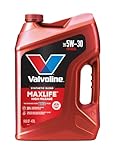
- Formulated for engines with 75,000 miles or more, Valvoline MaxLife High Mileage synthetic blend is formulated with seal conditioners to help prevent oil leaks and reduce oil consumption
- Delivers 20% better wear protection and 15% better sludge defense than industry standards to help prevent engine breakdown
- Extra detergents safeguard against friction, corrosion and deposits to keep high-mileage engines clean
- Advanced friction-fighting additives help maximize performance and improve fuel efficiency
- Provides performance benefits for high mileage, new and re-built engines alike
What to do now
- Check the owner’s manual first. The procedure differs by vehicle; some cars use electronic oil monitoring rather than a conventional dipstick. Follow the manual for checking the level, including any instructions about engine temperature and how long to wait.
- Measure on level ground. If your vehicle has a dipstick, use the manual’s procedure and read the level against its marked operating range.
- Top up carefully if needed. Use oil with the viscosity and specification required by the owner’s manual. Add a small amount, wait as directed, then recheck. Adding too much oil can be harmful. Consumer Reports explains these steps in its oil-checking guide, updated October 1, 2026.
- Track the loss and arrange service. Note the date, odometer reading, oil level, and amount added. Describe any puddle, smoke, or burning smell to a qualified technician, including when and where you notice it.
If oil is repeatedly needed, check the level more often while you arrange service. Keeping the level in the vehicle’s specified operating range is important, but topping up does not repair the source of recurring loss.
Independent reader supportYour contribution helps us test, update, and keep practical guides available for everyone.What to ask the technician
Ask for an inspection to determine whether oil is leaking externally or being consumed internally, and request a written estimate based on the findings before deciding on repairs. The repair depends on the source and the particular engine; the weekly rate by itself does not justify replacing a specific part.
Rank #2

- Designed for vehicles with 75,000 miles or more, Valvoline MaxLife Full Synthetic High Mileage Motor Oil helps maximize engine life and performance for the many miles still ahead
- Formulated with seal conditioners to help prevent oil leaks, reduce oil consumption, and improve fuel economy
- Delivers 50% stronger wear protection than industry standards for superior defense against friction and wear
- Provides 20% stronger sludge defense than industry standards to protect against harmful buildup and deposits
- Offers 2.5X better heat protection than industry standards to safeguard engines in extreme conditions
Eligibility for a recall, service campaign, or warranty repair also cannot be established from the information here. Those checks depend on details such as the vehicle’s year, make, model, engine, mileage, and location. An example in AAA Club Alliance’s article concerns a reader’s 2007 Camry using a quart every 500 to 750 miles; that is one reader’s situation, not a universal normal-use limit for other cars.
Quick Recap
Rank #4

- 6X better wear protection on critical engine parts than industry standards**
- 1.3X better sludge protection than industry standards*
- 3X Stronger against viscosity breakdown than leading full synthetic^
- Protection for 10,000 miles between oil changes
- Meets or exceeds the following specifications: API SP/SN PLUS/SN | ILSAC GF-6 | GM dexos1 Gen 3 | Meets Ford WSS-M2C947-B1 | Meets Ford WSS-M2C962-A1 |
Rank #3
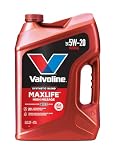
- Formulated for engines with 75,000 miles or more, Valvoline MaxLife High Mileage synthetic blend is formulated with seal conditioners to help prevent oil leaks and reduce oil consumption
- Delivers 20% better wear protection and 15% better sludge defense than industry standards to help prevent engine breakdown
- Extra detergents safeguard against friction, corrosion and deposits to keep high-mileage engines clean
- Advanced friction-fighting additives help maximize performance and improve fuel efficiency
- Provides performance benefits for high mileage, new and re-built engines alike
Product prices and availability are accurate as of the date/time indicated and are subject to change. Any price and availability information displayed on Amazon at the time of purchase will apply.