Do these 3 things before closing this tab:
1Fix the driver behind crashes, sound loss and screen glitches2Clear out junk files and repair common Windows errors3Scan for outdated or missing drivers - takes under a minuteNo—don’t add household rubbing alcohol to your fuel tank as an injector cleaner or engine decarbonizer. The vehicle guidance and service material reviewed here recommend detergent gasoline or vehicle-specific cleaning products instead; they do not establish rubbing alcohol as a safe or effective substitute. Check the owner’s manual for your exact vehicle, engine, and market before using any fuel additive.
Why rubbing alcohol is not a supported substitute
“Rubbing alcohol” can refer to different consumer formulations, and the question does not identify a vehicle, engine, model year, or country. The sources reviewed do not test household rubbing alcohol in every formulation or engine. They also do not endorse it for injector cleaning or decarbonizing. That is enough reason not to treat it as an approved fuel-system cleaner.
Manufacturers’ instructions are vehicle-specific. For example, Hyundai’s 2027 owner guidance says: “To prevent damage to your vehicle’s engine and fuel system, NEVER add any fuel system cleaning agents or other additives to the fuel tank other than HYUNDAI fuel additives.” That warning applies to the vehicles covered by that manual; it is not a universal rule for every make. Read the owner’s manual for your vehicle and follow its instructions rather than assuming a household chemical is compatible.
Injector cleaning and decarbonizing are different jobs
Fuel-injector deposits, intake-valve deposits, and other carbon deposits are not interchangeable problems. An in-tank additive is not established as a remedy for every deposit location or engine condition. For example, Mazda’s manual describes a genuine deposit cleaner for certain SKYACTIV petrol engines in specified countries and markets. It also advises consulting an authorized dealer if related problems persist. That procedure should not be generalized to other vehicles.
#1 Best Overall

- DESIGNED TO EXCEED EXPECTATIONS: Red Line complete SI-1 fuel system cleaner is a premium fuel additive, providing an effective fuel treatment solution to clean and prevent corrosion in fuel systems.
- PERFORM AND PROTECT: Fuel additive cleans injectors, carburetors, valve and combustion chamber deposits with a powerful, concentrated blend of high-temp and low-temp detergents
- EFFICIENT FUEL BURN: A gas treatment that enhances gasoline stability, while reducing the build up of gum and varnish formation, leading to smoother operation and increased power output.
- EASY TO USE: Use one bottle of Redline Fuel System Cleaner per tank for most effective treatment, additive cleans nearly 100% efficiency in one treatment
- ENAHNCED ENGINE EFFCIENCY: Experience improved fuel economy and engine performance with Red Line 60103 SI-1 Complete Fuel System Cleaner, as it effectively removes deposits, for enhanced exhaust system function
A GM service bulletin hosted by NHTSA discusses detergent gasoline and fuel-system cleaning in the context of deposits and symptoms. It does not identify rubbing alcohol as a decarbonizer. The right treatment depends on the affected part and the vehicle’s service guidance, not just on a broad label such as “carbon buildup.”
What to use instead
For routine prevention
Hyundai’s 2026 gasoline-engine owner guidance recommends good-quality gasoline treated with detergent additives to help prevent deposits. A GM bulletin likewise says regular TOP TIER detergent gasoline, as recommended in the owner manual, helps prevent intake-valve and fuel-injector deposits. These are preventive recommendations, not promises that fuel will remove every existing deposit or fix a mechanical fault.
Rank #2
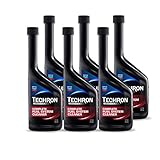
- For best performance, follow the manufacturer's recommendations in your vehicle owner’s manual.
- Cleans, restores, protects the entire fuel system (fuel injectors, carburetors, intake valves and combustion chambers)
- Restores: lost power, acceleration, lost fuel economy, and operation of the fuel gauge sensor
- Reduces: rough idle, engine surge, hesitation, and spark plus fouling
- Improves: cold start performance, and fuel stability for up to one year
For a specified symptom or cleaning procedure
Some manuals allow a particular detergent-based fuel additive in specified circumstances, such as starting problems or rough running. The applicable product, conditions, and instructions vary. Use only an additive the exact vehicle’s manual or service procedure permits, and follow its label directions. Do not infer a universal dose or brand from guidance for another model.
For an unresolved running problem
If poor idle, acceleration trouble, or another symptom continues, seek vehicle-specific diagnosis instead of escalating to an unapproved chemical treatment. A cleaner may be relevant to a particular deposit problem, but the cited guidance does not establish that an additive will cure a mechanical fault.
Rank #3

- DESIGNED TO EXCEED EXPECTATIONS: Red Line complete SI-1 fuel system cleaner treatment for cleaning and preventing corrosion in fuel systems
- PERFORM AND PROTECT: Fuel additive cleans injectors, carburetors, valve and combustion chamber deposits with a powerful, concentrated blend of high-temp and low-temp detergents
- EFFICIENT FUEL BURN: Gas treatment that enhances gasoline stability, while reducing the build up of gum and varnish formation
- EASY TO USE: Use one bottle per tank for most effective treatment, additive cleans nearly 100% efficiency in one treatment
- 15 Ounce (2 Pack)
How to choose a fuel-system cleaner safely
- Identify the vehicle precisely. Check the manual for your model year, engine, fuel type, and market.
- Check whether an additive is allowed. Follow the manual’s permitted product or service procedure; if it says not to use other additives, do not substitute rubbing alcohol or an unrelated cleaner.
- Match the product to the intended job. Confirm that the product is intended for the relevant fuel and deposit location. A fuel-injector cleaner is not automatically an intake-valve or combustion-chamber decarbonizer.
- Follow the product label and vehicle instructions. Do not improvise a dose or combine treatments.
- Get diagnosis if symptoms persist. Follow the manufacturer’s service guidance or consult a qualified repair professional.
The EPA gasoline additive registry lists categories such as fuel injector cleaners and fuel system cleaners. Registry inclusion shows that these product categories exist; it does not prove that a particular product suits every vehicle or removes every type of deposit. The sources reviewed do not provide a head-to-head cleaner test or establish a universally appropriate brand.
Quick Recap
Rank #4

- Specially formulated to remove carbon deposits from engines with over 75,000 miles
- Cleans fuel injectors, intake valves, and ports to restore performance and fuel economy
- Prevents future carbon build-up and reduces emissions
- Oxygen sensor safe and safe for use in turbocharged and supercharged vehicles
- Will not void OEM/manufacturer's warranty
What the available guidance does—and does not—establish
- It does not endorse household rubbing alcohol for injector cleaning or engine decarbonizing.
- It supports detergent-treated gasoline and specified fuel additives for prevention or particular vehicle-specific conditions.
- It shows that procedures differ by vehicle, engine, and market; one manufacturer’s cleaner or warning should not be applied universally.
- It does not provide an effectiveness percentage for rubbing alcohol, or evidence that any additive will fix every running problem.
Product prices and availability are accurate as of the date/time indicated and are subject to change. Any price and availability information displayed on Amazon at the time of purchase will apply.




