Recommended Free Tools
Yes—if your vehicle has a warranty in the United States, you can generally use an independent mechanic for maintenance and repairs without automatically voidinging the warranty. A dealer cannot reject coverage merely because another shop changed the oil, replaced a brake component, or performed other service. The Federal Trade Commission (FTC) bases this protection on the Magnuson-Moss Warranty Act and its interpretation of the law’s anti-tying provision.
That protection has an important boundary: the warrantor may deny a claim for damage it can connect to improper work or to an aftermarket part that caused the failure. That is different from canceling the entire warranty. The rules below apply to a factory warranty on a vehicle sold in the U.S.; other countries, contracts, and separately purchased service plans can use different terms.

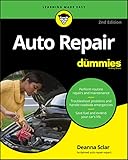
As an Amazon Associate I earn from qualifying purchases.
What the U.S. warranty rule actually protects
The Magnuson-Moss Warranty Act generally prevents a vehicle manufacturer or dealer from conditioning warranty coverage on your use of a particular repair business or branded replacement part for non-warranty maintenance. In its 2015 final interpretation, the FTC said a warrantor may not require consumers to use only authorized service or authorized parts to keep a warranty valid.
What’s actually slowing this PC down?
Pick the symptom - the matching free tool is one click away.
In practical terms, you can choose a qualified independent shop for scheduled maintenance, diagnosis, and many repairs. You can also supply a part that meets the vehicle’s needs, unless a specific exception applies. The FTC’s consumer guidance, “Auto Warranties and Auto Service Contracts,” frames the question as whether you must use the dealer for repairs and maintenance; its answer is generally no.
#1 Best Overall

- Detailed repair and maintenance coverage trusted by professional technicians and DIYers for decades.
- Clear step-by-step instructions supported by wiring diagrams, diagnostic charts, and technical illustrations.
- Covers routine maintenance through advanced repairs, making it the go-to resource for keeping your vehicle running reliably.
The rule does not promise that every repair performed by an independent shop will be paid under the factory warranty. It protects your ability to choose who performs non-warranty work while preserving the manufacturer’s right to evaluate what caused a particular failure.
What “voiding the warranty” usually gets wrong
A warranty is a set of promises covering specified defects for a stated period or mileage, subject to exclusions and claim procedures. Using an independent mechanic does not give the manufacturer a blanket reason to erase those promises. If a shop’s unrelated work is correct and a covered component later fails, the warrantor still has to assess that failure under the written warranty.
A dispute can be narrower than the phrase “voided warranty” suggests. The manufacturer might deny one engine claim because it attributes the damage to an incorrectly installed belt, while other covered systems remain eligible for warranty service. Ask which component and which failure the denial concerns.
Quick wins for a faster PC:
Scan for outdated or missing drivers - takes under a minuteDriver Scan →Clear out junk files and repair common Windows errorsFree Scan →When a manufacturer can deny coverage for related damage
The central limit is causation. The FTC says a warrantor must be able to show that the independent shop’s improper work, or an aftermarket part, caused the repair that is being denied. The fact that an independent business touched the vehicle is not enough by itself.
Rank #2

- Step-by-step procedures written from a complete teardown and rebuild, giving you the confidence to tackle repairs at any skill level.
- Over 700+ clear photos and diagrams that simplify complex systems, helping you complete jobs faster and with fewer mistakes.
- Comprehensive troubleshooting and fault-finding guides to quickly diagnose problems and reduce costly downtime.
Example: an incorrectly replaced belt
The FTC uses a belt replacement as an illustration. Suppose a shop installs a belt incorrectly and the engine is subsequently damaged. The manufacturer may investigate whether the installation caused the engine failure. If it can establish that connection, it may deny the engine-damage claim. Coverage for unrelated parts of the car remains in effect.
If the engine failure instead resulted from a manufacturing defect, and the belt work did not cause it, the dealer cannot simply point to the independent shop and end the analysis. Keep the invoice and installation details so the timing and work performed can be evaluated.
Aftermarket parts are not an automatic disqualifier
The FTC’s 2011 auto-warranty guidance says an aftermarket part, by itself, does not justify denying warranty coverage. The warrantor must show that the part caused the need for the repair. This does not make every modification risk-free: a component that creates a specific failure can affect coverage for that failure, even though unrelated warranty protections continue.
Crashes, No Sound, or Screen Glitches?
Random freezes, missing sound and display glitches usually trace back to one bad driver. Find and replace yours safely.Free scan · under a minuteWindows Errors? Fix Them Before They Spread
Repair common Windows errors and clear accumulated junk for a smoother, more stable PC - no reinstall needed.Free scan · no reinstallFor example, an aftermarket component in a fuel, electrical, cooling, or engine system could become relevant if the claimed defect is directly linked to that component. The manufacturer should identify the technical connection rather than relying on a general statement that non-original parts were used.
Rank #3

- Step-by-step procedures written from a complete teardown and rebuild, giving you the confidence to tackle repairs at any skill level.
- Over 700+ clear photos and diagrams that simplify complex systems, helping you complete jobs faster and with fewer mistakes.
- Comprehensive troubleshooting and fault-finding guides to quickly diagnose problems and reduce costly downtime.
Follow the vehicle’s maintenance schedule
The FTC advises owners to use the maintenance schedule for the exact make, model, and model year. The owner’s manual is the best starting point for routine service intervals and required specifications. Some vehicles have separate schedules for normal and severe use; use the category that matches your driving conditions and the manual’s definitions.
Following the schedule matters for two reasons. It helps prevent avoidable failures, and it gives you evidence that required maintenance was performed. A dealer may ask for proof when reviewing a claim, but the FTC materials do not prescribe one mandatory record format or require that every service be done at a dealership.
Records to retain
- Invoices or receipts showing the service date and vehicle mileage.
- A description of the work performed, including inspection findings and measurements when provided.
- Part numbers, brands, specifications, and quantities for oil, filters, belts, fluids, and other installed components.
- The shop’s name, address, and contact information.
- Written estimates, approvals, and notes about symptoms or warning lights.
- Proof of any maintenance you performed yourself, such as dated receipts for parts and a contemporaneous service log.
These documents are practical evidence, not a substitute for the warranty booklet. Read that booklet for covered components, exclusions, time and mileage limits, claim procedures, and any maintenance or part supplied free under the warranty.
How to choose and work with an independent shop
The law gives you a choice of provider; it does not certify every shop. Select a business that can document the work and follow the vehicle manufacturer’s specifications for the task.
Rank #4
| What to compare | Questions to ask | Why it matters for a warranty claim |
|---|---|---|
| Qualifications for the job | Does the shop regularly service your vehicle type and have the equipment or training the repair requires? | Competent diagnosis and installation reduce the chance that a shop error causes a later failure. |
| Written estimate | Will the shop list the diagnosis, parts, labor, taxes, and any work requiring approval? | A clear scope distinguishes authorized work from unrelated recommendations. |
| Parts and specifications | Which part number and specification will be installed, and will the invoice identify it? | Specific records help the manufacturer evaluate whether a part could have caused the claimed damage. |
| Documentation | Will you receive an itemized invoice with mileage, date, and technician notes? | Those details show when maintenance occurred and what was actually done. |
| Shop workmanship policy | What warranty does the shop provide on its own labor or parts, and what exclusions apply? | A shop’s workmanship policy is separate from the vehicle manufacturer’s warranty and may be the remedy for an installation error. |
| Convenience and follow-up | Can the shop provide written findings and make the vehicle available for an independent inspection if needed? | Prompt, complete information can shorten a coverage dispute. |
Do not ask a shop to skip a scheduled service, use an unspecified fluid, or install a part that does not meet the vehicle’s required specification merely to reduce the invoice. The warranty rule protects provider choice; it does not turn incorrect maintenance into covered work.
What to do if a warranty claim is denied
A denial should identify the coverage decision and its basis. If the explanation is only that “an independent shop worked on the car,” ask for a more specific response tied to the warranty terms and the alleged failure.
- Request the decision in writing. Ask the dealer or manufacturer to state which warranty provision applies, which component is excluded, and whether the denial rests on alleged improper work or a part causing the damage.
- Ask for the causal explanation. The FTC’s guidance distinguishes a permissible denial for damage caused by improper work from an impermissible blanket denial. Request the evidence or technical reasoning connecting the work to the failure.
- Gather the service file. Assemble the independent shop’s invoices, estimates, part information, mileage, maintenance history, photographs, diagnostic codes, and any correspondence.
- Compare the decision with the warranty booklet. Check the covered component, exclusion, time and mileage limits, required claim procedure, and any free service or part involved.
- Give the shop an opportunity to respond. If the manufacturer alleges an installation error, ask the shop to review the diagnosis and its own workmanship policy. Keep the discussion and any inspection findings in writing.
- Escalate through the manufacturer’s process. Follow the customer-care, regional representative, arbitration, or other dispute procedure stated in the warranty documents. Keep copies of every submission and response.
A denial over related damage is not the same as a finding that every future claim is excluded. Keep maintaining the vehicle and preserve records while the specific dispute is reviewed.
Factory warranty versus a separately purchased service contract
The FTC distinguishes a warranty included with a vehicle from a separately purchased auto service contract, often marketed as an “extended warranty.” A service contract is a separate agreement with its own covered parts, exclusions, maintenance conditions, authorization rules, deductibles, and claims process.
Best Value
| Question | Factory warranty included with the vehicle | Separately purchased service contract |
|---|---|---|
| What creates the obligation? | The vehicle warranty issued with the sale or by the manufacturer. | A separate contract purchased from a provider. |
| Do the same dealer-choice rules answer every question? | The FTC’s Magnuson-Moss interpretation generally bars requiring authorized service or branded parts for non-warranty maintenance. | Do not assume the factory-warranty explanation resolves every contract requirement; read the written service contract and applicable state and federal rules. |
| What should you check? | Coverage, exclusions, duration, mileage limits, claim steps, and free warranty-supplied services or parts. | Covered components, authorization before repairs, deductibles, maintenance clauses, cancellation terms, and the contract’s dispute process. |
Calling a service contract an “extended warranty” does not make it the same legal instrument as the original factory warranty. If a separately purchased plan is involved, use the contract’s definitions and procedures when evaluating a denial.
Exceptions and situations that need closer reading
Free service or parts supplied under the warranty
The FTC’s 2015 final interpretation identifies an exception where service or parts are supplied without charge under the warranty. A manufacturer can set conditions for that free warranty-provided service or part. This is different from ordinary, non-warranty maintenance that you pay for yourself.
An FTC waiver
The same interpretation recognizes an FTC waiver as another stated exception. Because a waiver depends on its specific terms, do not assume a general dealer statement is enough; ask for the written warranty language and the basis for the requirement.
Different countries and contracts
The explanation in this article is U.S.-specific. Warranty statutes, dealer requirements, and service-contract rules can differ elsewhere. A vehicle imported, leased, or serviced under a contract governed by another jurisdiction may require separate legal analysis.
What the FTC’s MINI enforcement action shows
In a 2015 announcement concerning BMW of North America’s MINI Division, the FTC described an enforcement matter involving messages that told owners maintenance and repairs should be performed by MINI dealers and that records were required for warranty claims. The agency’s action illustrates why a manufacturer cannot present dealer-only service as a general condition of keeping warranty coverage.
The matter is an enforcement illustration, not a guarantee that every later dispute has the same facts or outcome. Your claim still turns on the vehicle’s written warranty, the work performed, and whether the warrantor can connect improper work or a part to the particular failure.
Quick Recap
Practical decision checklist
- Confirm that you are dealing with a U.S. factory warranty, not only a separately purchased service contract.
- Open the owner’s manual and warranty booklet for the exact make, model, and year.
- Choose an independent shop that can perform the required procedure and document parts and specifications.
- Keep dated, mileage-specific invoices and all diagnostic or inspection notes.
- When a claim is denied, obtain the reason in writing and look for a stated causal connection to the shop’s work or an installed part.
- Challenge a blanket “dealer-only” explanation by pointing to the written warranty terms and the FTC’s dealer-choice guidance.
- Use the manufacturer’s escalation or dispute process and retain a complete record.
Product prices and availability are accurate as of the date/time indicated and are subject to change. Any price and availability information displayed on Amazon at the time of purchase will apply.
Do these 3 things before closing this tab:
1Repair Windows errors before they cause bigger problems2Scan for outdated or missing drivers - takes under a minute3Clear out junk files and repair common Windows errors



