Do these 3 things before closing this tab:
1Clear out junk files and repair common Windows errors2Fix the driver behind crashes, sound loss and screen glitches3Repair Windows errors before they cause bigger problemsThere is no single tire deflection or inflation pressure that reliably maximizes crop yield. Set agricultural tire pressure for the specific tire, the load it carries, the operating speed and whether the machine is in the field or on the road. The correct setting comes from the tire manufacturer’s load-inflation table—not a universal PSI target.
Lower pressure within the tire’s approved operating range can increase the footprint and reduce some near-surface soil stresses. But that does not guarantee a yield gain, and pressure cannot cancel the deeper compaction risk of a heavy axle load.
What tire deflection means—and why it is not a pressure target
Deflection is the amount a tire flexes under load. Inflation pressure affects that flex and the size and shape of the tire’s contact patch, but the appropriate deflection depends on the tire’s construction, size, load and speed. A pressure that is suitable for one tire or tractor may be unsafe or unsuitable for another.
Use the tire’s load-inflation guidance to find a pressure that supports the actual load at the expected speed. Oklahoma State University Extension likewise advises selecting pressure for the tire’s load and considering axle load, number of tires and tire size; its guidance directs operators to load-inflation tables: Oklahoma State University Extension’s tractor tire guidance.
Recommended Free Tools
#1 Best Overall

- Versatile Application: Designed for air/water filled tractor tires, this gauge is versatile and reliable for various agricultural needs, effectively handling pressures ranging from 5 to 50 psi for optimal tire maintenance.
- Deflator Valve Button: The deflator valve button on back of head allows for precise pressure adjustments, enhancing the accuracy of readings and ensuring your tractor tires are always at the correct psi level.
- Easy-to-Read Indicator: Equipped with an easy to read slide indicator (5 –50 psi), this gauge provides accurate measurements, making it simple to monitor your tractor's tire pressure and maintain optimal performance.
- Compact Design: This tractor tire pressure gauge features a compact size with metal clip to securely store in pocket, ensuring convenience on the go. Its robust construction guarantees durability, ideal for air/water filled tractor tires.
- 50 PSI Maximum: With a max psi = 50, this tractor tire pressure gauge ensures reliable performance for different tractor models, offering a balance of safety and efficiency in managing your tires' pressure.
How to choose field pressure
- Identify the tire. Record its manufacturer, size and construction, and locate the current load-inflation table for that exact tire.
- Determine the load. Use the load carried by each tire for the particular implement and operating configuration, rather than relying on the tractor’s overall weight alone.
- Match load and speed to the table. Follow its specified speed assumptions and pressure range. If the configuration or load is unusual, ask a tire or equipment dealer to interpret the table.
- Check pressure with a suitable gauge. Measure regularly and use the table’s applicable guidance for field or road operation. Pressure requirements may differ between those uses.
- Protect vulnerable soil as well as the tire. Reduce unnecessary passes and, when operations allow, avoid driving on wet, weak soils. Pressure adjustment does not remove the effects of heavy axle loads.
Penn State Extension notes that proper inflation supports equipment performance and helps avoid compaction. It warns that overinflation can contribute to poor traction, excessive compaction, rapid wear, higher fuel use and reduced operator comfort. Underinflation can damage sidewalls, worsen ride quality, allow the bead to unseat and accelerate wear. Keep pressure within the tire’s appropriate range and check it regularly: Penn State Extension’s agricultural tire-pressure guidance.
Why pressure alone cannot prevent compaction
Tire-soil contact pressure matters, particularly for stress near the surface, but total axle load also affects how deeply compaction can extend. University of Minnesota Extension explains that both axle load and tire-soil contact pressure influence subsoil compaction. Adding tires can spread a load among more contact patches, but a heavy total load can still pose a subsoil risk: University of Minnesota Extension’s soil-compaction guidance.
Rank #2

- Accurate, Dependable Readings: Factory‑calibrated to ±1 PSI, so you can confidently match your vehicle’s recommended PSI (check the door jamb sticker). Ideal for monthly checks and road trips — consistent results every time, cold or warm.
- Bright Backlit Display & Nozzle Light: The illuminated nozzle helps you find the valve stem in the dark, while the backlit LCD makes readings crystal clear in dim garages or at night. No more squinting or holding a flashlight.
- 4 Measurement Units, One Button: Quickly switch among PSI, Bar, Kgf/cm², and KPA with a single press. No complex settings — just press and cycle to your preferred unit. Perfect for drivers who need multiple scales.
- Broad Compatibility for Everyday Vehicles: 0–150 PSI covers cars, SUVs, motorcycles, and spare tires (often 60 PSI). Fits standard Schrader valves; just press on for a reading.
- Auto‑Off to Extend Battery Life: The gauge automatically powers down after 30 seconds of inactivity, so the included 2*AAA batteries last longer. Always ready for your monthly checks without surprise dead batteries.
Soil moisture and strength matter too. Traffic on wet, vulnerable soil can cause compaction even when pressure has been managed. And compaction does not translate into the same yield loss in every field or season: Minnesota Extension says yield effects are greatest when crops are stressed, such as during drought or an excessively wet growing season.
Independent reader supportYour contribution helps us test, update, and keep practical guides available for everyone.What studies say about lower pressure and yield
Illinois maize and soybean field study
A 2024 Illinois field study compared high-flexion tires at low pressure with standard-pressure treatments across deep tillage, shallow tillage and no-till systems. It reported lower penetrometer resistance in three tillage systems in the maize field in 2017 and 2018, and in the soybean field in 2018. Penetrometer resistance is a soil measurement; those findings do not establish that low pressure consistently increases harvested yield. Read the 2024 Illinois study.
What’s actually slowing this PC down?
Pick the symptom - the matching free tool is one click away.
Rank #3

- PROCESS LEVEL ACCURACY: This heavy duty tire pressure gauge is calibrated manually to ANSI B40.1 Grade A (±1% of span)
- PRESSURE RANGE 0-75 PSI: ETENWOLF’s tire gauge can measure pressure of pickup, motorcycle, truck, bike, SUV, RV or ATV
- EASY TO READ IN THE DARKNESS: The large glow dial helps you clearly read the pressure at night or in low light
- EASY TO USE: 360 degree swivel chuck allows you to measure and take a reading from a tire valve at any angle
- ACCURACY IN EXTREME WEATHER: PSI gauge works normally even in extreme cold or hot weather
Iowa soil-stress study
A USDA Agricultural Research Service record describes a 2023 study of increased-flexion tires on loam at the Iowa State University farm. Researchers compared pressure configurations and measured soil stress at depths of 150 mm and 300 mm. The record concerns compaction stress; it does not establish a universal yield response or a pressure setting for other equipment and soils. USDA ARS study record.
Other evidence on pressure and contact stress
A 2008 Journal of Terramechanics experiment tested five agricultural implement tires at two wheel loads on sandy soil at one soil strength. Inflation pressure helped describe measured peak stress and modeled maximum stress, while tire size affected contact area. The authors noted that more soil strengths needed study, which limits how broadly the results can be applied. Read the 2008 experiment.
Rank #4

- HIGH ACCURACY: Every ETENWOLF's pencil tire gauge is calibrated to ANSI B40.1 Grade B, it is accurate to 2% of span in the middle 50% of range and 3% of span in the lower and upper 25% of range. Each ETENWOLF pencil tire pressure gauge is manually calibrated and has its unique calibration number printed on the pencil
- WIDER RANGE: ETENWOLF's tire gauge offers 2 pressure ranges: 10-50PSI, 20-120PSI for all types of vehicles
- ALL METAL: ETENWOLF tire gauges are made of all solid metal, zinc alloy head and stainless steel body, they are durable and can be used for many years unless you lose them
- DEFLATION: You can also use ETENWOLF's tire gauge to deflate tires when the tire pressure is overinflated
- 16 CAPS IN 2 CASES: ETENWOLF even offers 16 valve stem caps, so you won't worry about losing tire caps anymore
An Iowa State University Extension page reports a historical four-year continuous-corn experiment on alluvial soils in southeastern Iowa: equipment exerting a maximum surface pressure of 6 psi yielded nine bushels per acre more than equipment exerting 16 psi. That comparison is specific to the experiment and does not isolate tire pressure as the sole cause or predict a result for another field. Iowa State University Extension’s soil-compaction discussion.
Quick Recap
Best Value
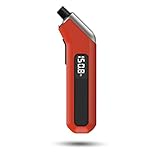
- PROCESS LEVEL ACCURACY: Each ETENWOLF’s digital tire pressure gauge is calibrated manually to ANSI B40.7 Grade 2A(plus-minus 1 PSI).Presta valve adapter not included, if used for bicycles, it must be purchased separately
- ACCURACY IN EXTREME PRESSURE RANGE: Whether tire pressure is below 12 PSI or above 140 PSI, ETENWOLF’s digital tire gauge is accurate as well
- ACCURACY IN EXTREME WEATHER: Built-in AI chip with thermal compensation inside, ETENWOLF’s tire gauge works normally even in extreme cold or hot weather(-4°F-130°F/-20°C-54°C)
- PRESSURE RANGE 3-200 PSI : ETENWOLF’s digital tire pressure gauge can measure pressure of all types of vehicles
- REPLACEABLE AAA BATTERIES: Batteries are easy to replace and helps to extend the tire pressure gauge’s life span, with LED light to illuminate dark areas for easy tire pressure reading
How to evaluate a pressure change on your farm
- Compare the same crop, soil, moisture conditions and management practices as closely as possible.
- Track tire setup, load, pressure, speed, traffic and tillage so the comparison is meaningful.
- Separate soil measurements—such as penetrometer resistance or soil stress—from harvested yield. A change in a soil indicator is not itself proof of a yield increase.
- Use manufacturer guidance for each operating condition; do not lower pressure beyond the tire’s approved range to pursue a larger footprint.
Product prices and availability are accurate as of the date/time indicated and are subject to change. Any price and availability information displayed on Amazon at the time of purchase will apply.




