Do these 3 things before closing this tab:
1Scan for outdated or missing drivers - takes under a minute2Repair Windows errors before they cause bigger problems3Fix the driver behind crashes, sound loss and screen glitchesBugatti’s Tourbillon does have a genuinely new V16 engine, but the headline needs two important qualifications. The car was unveiled on June 20, 2024, as a 250-unit hypercar powered by an 8.3-liter naturally aspirated V16 and three electric motors. However, as of August 10, 2026, Bugatti had not publicly confirmed that customer-car series production had begun. The company was still describing the Tourbillon as undergoing intensive testing and preparing for production.
The “84 years” figure applies to the gap between Cadillac’s final V16 production cars in 1940 and Bugatti’s 2024 reveal. It is not a timeless current figure, and it overlooks the limited-production Cizeta V16T, which reached customers in the 1990s. The most accurate description is that the Tourbillon is intended to become the first modern major-automaker series-production car with a naturally aspirated V16 in decades—assuming production proceeds as planned.
The short answer: a real V16, but not yet a confirmed production V16
Bugatti did not simply enlarge or redesign the W16 used by the Veyron, Chiron and Mistral. The Tourbillon introduces an entirely new engine: a naturally aspirated 8.3-liter V16 developed and manufactured with Cosworth. The engine is rated at 1,000 hp and 900 Nm, while the complete hybrid powertrain produces a claimed 1,800 hp.
Bugatti announced a planned run of 250 Tourbillon cars, with a starting price of €3.8 million net and customer deliveries originally targeted for 2026. The company began testing prototypes in 2024, opened its new La Manufacture facility in July 2026 and continued to describe the car as approaching production. But a completed engine, a road-going prototype, a customer configuration session or a new factory is not proof that series production has started.
The Tool Desk
Outbyte Driver Updater FREEScan for outdated or missing drivers - takes under a minuteDriver Scan →Outbyte PC Repair FREERepair Windows errors before they cause bigger problemsFix Now →#1 Best Overall

- Pullback Action: Experience realistic racing with the pullback action feature.
- Opening Doors: Explore the intricate interior details with the opening door feature.
- 1:38 Scale: Enjoy a detailed 1:38 scale die-cast model (approx. 5 inches long).
- Authentic Design: Modeled after the iconic 1967 Ford Shelby Mustang GT500.
- Display Piece: A must-have collectible for car enthusiasts and model collectors.
Motor1 reported on July 17, 2026 that Tourbillon production had not yet begun, while Bugatti’s own June and July updates described testing and the facility as preparation for the Tourbillon era. On the evidence publicly available by August 10, 2026, the car remains in the testing and pre-production phase.
What Bugatti actually introduced
The Tourbillon marks a major technical break from the Volkswagen Group-era Bugatti powertrain program. It is the first major Bugatti production model in more than 20 years not to use the company’s W16 architecture.
| Tourbillon | Veyron, Chiron and Mistral |
|---|---|
| V16 | W16 |
| Naturally aspirated | Quad-turbocharged |
| 8.35 liters, rounded by Bugatti to 8.3 liters | 8.0 liters |
| 9,000-rpm maximum engine speed | Lower-revving turbocharged design |
| Hybrid powertrain with three electric motors | Road-car W16 powertrain without hybrid assistance |
| New eight-speed dual-clutch transmission and new chassis | Evolution of the earlier W16-era platform and drivetrain |
Bugatti’s Tourbillon announcement describes the V16 as a clean-sheet engine intended to preserve the response, sound and high-rev character of a naturally aspirated combustion engine. Cosworth says Bugatti approached it in 2021 to design and manufacture the engine, so describing it simply as a “Bugatti-built” engine misses an important part of the program.
Tourbillon V16 specifications
Bugatti rounds the displacement to 8.3 liters in its consumer-facing material. Cosworth gives the more precise figure as 8.35 liters. Those numbers are not contradictory; one is rounded and the other is more exact.
| Specification | Stated figure |
|---|---|
| Configuration | Naturally aspirated V16 |
| Displacement | 8.3 liters according to Bugatti; 8.35 liters according to Cosworth |
| Maximum engine output | 1,000 hp |
| Maximum engine speed | 9,000 rpm |
| Maximum engine torque | 900 Nm |
| Bank angle | 90 degrees |
| Crankshaft | Cross-plane, machined from a single billet |
| Crankshaft length | 900 mm |
| Engine length | Just under one meter |
| Engine mass | 252 kg |
| Lubrication | Dry sump |
| Connecting rods | Titanium |
| Intake plenum | Carbon fiber |
The power figures above are manufacturer specifications. Bugatti’s English-language material uses “hp,” while other reports may use bhp or PS. Those units should not be mixed as if they represent separate independent measurements. In particular, the engine’s stated 1,000 hp should not be confused with the hybrid system’s 1,800-hp combined output.
Cosworth’s technical description gives the engine a 90-degree bank angle, a cross-plane crankshaft and a 900-mm crank. It also identifies the dry-sump lubrication system, titanium connecting rods and carbon-fiber intake plenum. At just under a meter long and 252 kg, the engine is physically substantial even before the battery, electric motors, inverters and additional cooling hardware are included.
Why choose a V16 instead of keeping the W16?
The V16 is not automatically more powerful than the W16 simply because it has the same cylinder count arranged differently. Bugatti chose it for a different character and a different role in the overall powertrain.
A naturally aspirated engine does not use exhaust-driven turbochargers to force additional air into the cylinders. That removes turbo lag and allows the engine to build power progressively with engine speed. The trade-off is that it does not have the large low-rpm torque multiplication associated with a heavily boosted engine. Bugatti addresses that compromise with electric motors that can deliver torque immediately.
Quick wins for a faster PC:
Repair Windows errors before they cause bigger problemsFix Now →Fix the driver behind crashes, sound loss and screen glitchesFind Drivers →Bugatti says the V16 was selected to preserve the immediacy, sound and high-revving feel of a naturally aspirated engine while the hybrid system supplies instant torque. That is a manufacturer’s design rationale, not an independently measured conclusion, but it explains why the Tourbillon is not merely a lower-boost version of the Chiron.
The V16 also forms part of the car’s identity. Sixteen cylinders provide the mechanical continuity Bugatti wants after the end of the W16, while the electric motors provide performance and traction that a naturally aspirated engine alone would struggle to deliver in a modern hypercar.
Rank #2

- Highly detailed 1:24 scale diecast model kit of 1929 Ford Model A
- Comes with everything needed for assembly including screwdriver
- Features opening parts, rolling wheels and pre-painted metal body
- Easy to assemble, creates fully functional rolling replica model car
- Fun and educational STEM activity for kids to build realistic miniature vehicle
How the hybrid system produces 1,800 hp
The Tourbillon’s headline output belongs to the complete hybrid system, not the V16 by itself.
- Combustion engine: 1,000 hp and 900 Nm.
- Electric motors: three motors contributing a stated 800 hp.
- Motor layout: two motors on the front axle and one at the rear.
- Battery: 25 kWh, oil-cooled and operating at 800 volts.
- Driveline function: electric all-wheel drive and torque vectoring.
- Claimed electric range: more than 60 km, or approximately 37 miles.
The front electric motors allow Bugatti to create an electrically driven front axle without a mechanical connection from the V16 to the front wheels. They can also vary torque between the front wheels, helping provide torque-vectoring functions. The rear motor works with the engine-driven rear axle to fill in torque delivery and support acceleration.
Recommended Free Tools
Bugatti quotes a 0–100 km/h time of 2.0 seconds and a top speed of 445 km/h, or 276 mph. Those remain manufacturer claims until independent testing of production-specification cars is available. The same applies to the stated electric range, which may depend on final homologation and the applicable test procedure.
This layout gives the Tourbillon several advantages: naturally aspirated throttle response, electric torque at low speeds, all-wheel drive and the possibility of short-distance electric driving. It also brings significant complexity. The vehicle must package and cool a large V16, three motors, a high-voltage battery, inverters and the rest of the hybrid system. The hybrid hardware adds weight and introduces additional systems that will eventually require servicing in an extremely low-volume car.
V16 versus W16: what changed?
The names describe different cylinder-bank arrangements.
- A V16 has two banks of cylinders arranged in a conventional V.
- A W16 uses four banks of cylinders in Bugatti’s earlier compact W arrangement.
Both engines have 16 cylinders, but cylinder count is where the similarity largely ends. The Veyron, Chiron and Mistral used an 8.0-liter quad-turbocharged W16. The Tourbillon uses an 8.35-liter naturally aspirated V16 with a 9,000-rpm limit and hybrid assistance.
Bugatti’s W16 history describes that engine as the final member of its type. The W16’s production run ended with the Mistral, after which Bugatti moved to the new V16 program. Calling the Tourbillon’s engine a “new W16” is therefore technically wrong, even though both engines have 16 cylinders and occupy the same general hypercar category.
What does “series production” mean?
Most disagreement about the headline is really a disagreement about the definition of production.
Mass production
Mass production generally implies manufacture at meaningful volume by a large automaker. Under that definition, Cosworth’s statement that a V16 engine had not been mass-produced in the automotive industry since the 1930s is broadly defensible. A 250-car Tourbillon run is extremely small by ordinary automotive standards.
Series production
Series production can mean a planned run of multiple customer cars rather than a prototype, one-off or concept. Under that definition, the Tourbillon should qualify if Bugatti begins building the announced 250 examples.
Free tools Windows power users keep installed
One-click scans. No signup required.
Rank #3

- Doors Open
- Pullback Action
- Die Cast Metal Body
- PULL BACK ACTION WITH FREE ROLLING WHEELS
Any customer-deliverable production car
This is the broadest definition. It includes the Cizeta V16T, a genuine customer-facing V16 supercar program that began in the 1990s. If any limited run counts, the Tourbillon cannot honestly be called the first customer car with a V16 since Cadillac’s 1940 endpoint.
Modern OEM production
A narrower and more useful interpretation is a V16 produced by a modern major automaker as part of a planned series-production road-car program. Under that definition, the Tourbillon is a historically significant revival and could become the first such car in decades. The qualification is essential: production must actually begin.
Cosworth itself uses the narrower wording “mass produced in the automotive industry since the 1930s.” That is not the same claim as saying no V16 road car was built for customers after the 1930s.
The production V16 cars that came before Bugatti
| Car | Period | Production status | Why it matters |
|---|---|---|---|
| Cadillac V-16 | 1930–1940 | Limited-production model from a major automaker | Generally recognized as the first production V16 passenger car |
| Marmon Sixteen | Early 1930s, commonly dated 1931–1934 | Low-volume luxury production | Another genuine early production V16 road car |
| Cizeta V16T | 1991–1995 regular production, with later cars | Limited-production specialist supercar | The key exception to “no V16 cars since the 1930s” |
| Cadillac Sixteen | 2003 | Concept only | Must not be counted as a production V16 |
| Bugatti Tourbillon | Unveiled 2024; production planned for 2026 | 250-car series announced; production not publicly confirmed as started by August 10, 2026 | Potential modern OEM V16 revival |
Cadillac V-16: 1930 to 1940
Cadillac introduced what is generally recognized as the first production V16 passenger car at the 1930 New York Auto Show. The initial engine displaced 7.4 liters. Cadillac later introduced a redesigned 7.1-liter V16 in 1938 for a small number of luxury models. The V16 line ended in 1940.
That 1940 endpoint is the source of the historical gap used in the “84 years” headline. It is a reasonable reference point for an article published in 2024, when Bugatti unveiled the Tourbillon. It is not a current figure in 2026: 1940 to 2026 is roughly 86 years, depending on whether the calculation uses calendar dates, model years or the end of production.
Cadillac’s historical milestones are summarized in its 120-year history document. The National Park Service also documents the V16’s luxury-car context.
Marmon Sixteen: the other Depression-era V16
Marmon followed Cadillac with the Sixteen, an ultra-luxury car powered by an approximately 8.0-liter V16. Reference sources generally place its production between 1931 and 1934, although exact production totals should be treated cautiously. It reinforces the point that the original V16 era was not limited to a single Cadillac model.
Cizeta V16T: the 1990s exception
The Cizeta V16T is the most important qualification to Bugatti’s historical claim. Production began in 1991, and the regular production effort continued until 1995. The company later claimed it could build one-off cars, and additional examples are believed to have been completed.
What’s actually slowing this PC down?
Pick the symptom - the matching free tool is one click away.
The exact total is disputed. Road & Track reports 13 cars between 1991 and 2003, while other references give lower totals. Top Gear describes the regular production period and later one-off possibility. The precise number does not change the central point: customer cars were built.
Cizeta was a tiny specialist operation, not a high-volume automaker. That makes it fair to exclude the V16T from a discussion of mass production or major-OEM production. It does not make it accurate to erase the car from a literal history of customer-deliverable V16 road cars.
Rank #4
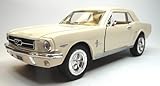
- Authentic 1:36 Scale: Meticulously crafted 1964 1/2 Ford Mustang model car with impressive 5-inch length.
- Realistic Details: Die-cast metal body with opening doors and eye-catching blue finish.
- Interactive Play: Engaging pull-back action for thrilling motion across smooth surfaces.
- Collectible Quality: Ideal for model car enthusiasts and collectors seeking miniature automotive replicas.
- Brand: KiNSMART, a trusted name in die-cast vehicle models and toys.
The 2003 Cadillac Sixteen was only a concept
Cadillac’s Sixteen concept generated renewed interest in V16 engines in 2003. It used a claimed 13.6-liter V16 producing 1,000 hp and 1,000 lb-ft of torque. But General Motors confirms that the car never entered production. It must not be counted as a production V16.
What about Bugatti’s earlier 16-cylinder engines?
Bugatti’s history includes other 16-cylinder projects, including the U-16 aircraft engine and the Type 45 and related automobile projects. Those engines should not be casually grouped with the Tourbillon’s modern V16.
In particular, the Type 45’s U16 arrangement used two parallel eight-cylinder banks. That is not the same architecture as a conventional two-bank V16. Nor were these historical engines series-production V16 passenger-car engines in the modern sense.
The precise claim, therefore, is not that the Tourbillon is Bugatti’s first engine ever to involve 16 cylinders. It is Bugatti’s first modern V16 road-car engine intended for a new series-production hypercar.
How far along is the Tourbillon program?
- 2021: Bugatti and Cosworth began the new-engine project.
- 2023: The first complete V16 test engine reached Cosworth’s dynamometer. Bugatti says it initially used a four-cylinder mule rather than a single-cylinder test mule.
- February 2024: Bugatti teased the new V16.
- June 20, 2024: Bugatti publicly unveiled the Tourbillon.
- 2024: Bugatti began road testing prototypes and announced planned customer deliveries for 2026.
- 2025: Customer configuration sessions began. Reports said all 250 production slots had been allocated, but allocated slots are not the same thing as completed or delivered cars.
- June 2026: Bugatti said the Tourbillon was undergoing intensive testing and preparing to enter production.
- July 2–3, 2026: Bugatti inaugurated La Manufacture, the future home of Tourbillon production.
- July 17, 2026: Motor1 reported that production had not started and that Bugatti was still tooling the new facility.
The development timeline shows that the Tourbillon is a serious, advanced production program rather than a static concept. It also shows why the wording matters. Development maturity and production intent are not the same as a customer car having completed the series-production line.
La Manufacture and the planned production process
Bugatti’s new La Manufacture facility is approximately 3,245 square meters. It measures about 135 meters long, 25 meters wide and 8.7 meters high, with planned capacity of up to 200 vehicles per year.
The facility is intended to support pre-assembly, quality checks, inspections, rework, polishing and painting. Final exterior and interior assembly will remain associated with Bugatti’s existing Molsheim Atelier. The facility is important evidence of a real production plan, but its opening does not by itself establish that Tourbillon series production had begun.
For a 250-car run, a planned capacity of 200 vehicles per year indicates a low-volume operation rather than mass production. That is exactly why the definitions matter: the Tourbillon can reasonably be called a planned series-production hypercar while still being nowhere near mass production in the conventional automotive sense.
Independent reader supportYour contribution helps us test, update, and keep practical guides available for everyone.What makes the V16 genuinely new?
The word “new” is justified in several distinct ways:
- It is not a carryover of the Veyron, Chiron or Mistral W16.
- It uses naturally aspirated induction rather than four turbochargers.
- It has a 90-degree V layout and cross-plane crankshaft.
- It was designed around a nearly one-meter-long engine package.
- Cosworth was involved in both design and manufacture.
- It is integrated into a hybrid powertrain rather than operating as a stand-alone combustion system.
- It is paired with a new eight-speed dual-clutch transmission and new chassis.
That does not mean the V16 is superior in every measurable category to the W16. The older engine’s turbocharging produced enormous torque, while the Tourbillon uses electric motors to provide the immediate response that a naturally aspirated engine cannot supply on its own. The two engines represent different solutions to the same hypercar problem.
Outdated Drivers Are Slowing You Down
One free scan finds every outdated or missing driver and matches the right update for your exact hardware.Free scan · exact hardware matchPC Slower Than It Used to Be?
A free scan shows the junk files, broken settings and background clutter dragging Windows down - then fixes them in one click.Free scan · Windows 10 & 11Best Value

- Opening parts and rolling wheels
- Easy assembly, pre-painted metal body
- When finished the vehicles are fully functional
- Rolling diecast replica
- Skill level: intermediate
The advantages and compromises of Bugatti’s approach
Why it makes sense
- Character: A 9,000-rpm naturally aspirated V16 offers a very different sound and power-delivery profile from a turbocharged engine.
- Immediate response: Electric motors can fill in low-speed torque without requiring turbochargers.
- Traction: Two front motors enable electric all-wheel drive.
- Control: Separate motors can support torque vectoring.
- Continuity: The 16-cylinder layout preserves a recognizable Bugatti mechanical signature after the W16’s retirement.
- Electric driving: The 25-kWh battery gives Bugatti a claimed electric range of more than 60 km.
What it costs
- Packaging: A nearly one-meter-long V16 is difficult to fit into a low, aerodynamic hypercar.
- Mass: The engine alone weighs 252 kg, before adding hybrid hardware.
- Complexity: The battery, three motors, inverters, high-voltage wiring and cooling systems create more components and service requirements.
- Output confusion: The 1,800-hp figure is system output, not V16 output.
- Limited data: With only 250 cars planned, independent durability, efficiency and reliability information is likely to remain scarce.
- Unverified performance: The acceleration, top-speed and electric-range figures are currently manufacturer claims.
What the headline should say
Several popular formulations are too broad:
- “The first production V16 since the 1930s” ignores Cizeta.
- “The first series-production V16” is incomplete unless series production is defined to exclude tiny specialist runs.
- “In 84 years” is tied to the 2024 reveal and is stale as a current 2026 description.
- “The 1,800-hp V16” incorrectly attributes the entire hybrid-system output to the engine.
- “Bugatti built the engine alone” omits Cosworth’s design and manufacturing role.
- “The Cadillac Sixteen was an earlier production V16” confuses a 2003 concept with a customer car.
A defensible version would be:
Bugatti’s Tourbillon is intended to become the first modern major-automaker series-production car with a naturally aspirated V16 in decades, but production had not been publicly confirmed as started by August 10, 2026. Cizeta built a small number of V16T customer cars in the 1990s.
Bottom line
Bugatti has created one of the most ambitious modern combustion engines: a 1,000-hp, 9,000-rpm, naturally aspirated 8.35-liter V16 designed with Cosworth and combined with 800 hp of electric assistance. The Tourbillon is a genuine new V16 program, not a disguised continuation of the Chiron’s W16.
But the historical headline needs precision. Cadillac’s V16 ended in 1940, making the “84 years” calculation valid only for Bugatti’s 2024 unveiling. Cizeta then built limited-production V16T supercars in the 1990s, so the Tourbillon is not literally the first customer V16 since the 1930s. And as of August 10, 2026, it was still approaching series production rather than being publicly confirmed as already in production.
Frequently Asked Questions
Is the Bugatti Tourbillon V16 already in production?
Not according to the public evidence available as of August 10, 2026. Bugatti said the car was undergoing intensive testing and preparing to enter production, while its new La Manufacture facility was described as the future home of Tourbillon production. Motor1 reported on July 17, 2026, that production had not started.
What’s actually slowing this PC down?
Pick the symptom - the matching free tool is one click away.
Is the Tourbillon engine a W16?
No. The Tourbillon uses a conventional two-bank V16. The Veyron, Chiron and Mistral used a four-bank W16. Both engines have 16 cylinders, but their layouts, induction systems and hybrid status are different.
Was Cizeta’s V16T really a production car?
Yes, in the limited-production specialist-car sense. Cizeta began building V16T customer cars in 1991 and continued its regular production effort until 1995, with later examples also reported. Its tiny scale is why it may be excluded from mass-production comparisons, but it cannot be omitted from a literal history of customer V16 road cars.
How much power does the Tourbillon’s V16 make by itself?
Bugatti rates the naturally aspirated engine at 1,000 hp and 900 Nm. The complete hybrid system is rated at a claimed 1,800 hp, with the three electric motors contributing the remaining stated 800 hp.
Why does Bugatti call the Tourbillon V16 the first in decades?
Bugatti and Cosworth are referring to a modern major-automaker or mass-production context rather than every specialist car ever built. Cadillac’s V16 ended in 1940, but the Cizeta V16T was produced in small numbers during the 1990s.
The Bottom Line
Bugatti’s Tourbillon is a real, all-new naturally aspirated V16 hypercar—but the “first series-production V16 in 84 years” headline is too broad. The 84-year figure belongs to the 1940-to-2024 reveal gap, Cizeta built limited-production V16 cars in the 1990s, and Tourbillon series production had not been publicly confirmed as started by August 10, 2026. The precise claim is that it could become the first modern major-automaker series-production car with a naturally aspirated V16 in decades.
Quick Recap
Product prices and availability are accurate as of the date/time indicated and are subject to change. Any price and availability information displayed on Amazon at the time of purchase will apply.