Free tools Windows power users keep installed
One-click scans. No signup required.
The best daily-riding motorcycle is not a universal model. It is the one that fits your body, matches your route and carrying needs, has the safety equipment sold in your market, and remains affordable to maintain. A commuter that feels efficient may save time and effort in traffic even when its fuel economy is not documented.
Use the process below to compare motorcycles without relying on a generic “best bike” list. Sit on each candidate, verify its exact model year and trim, and price the full ownership package before buying.
As an Amazon Associate I earn from qualifying purchases.
Define what “efficient” means for your commute
Efficiency has at least three meanings in everyday riding:
Windows Errors? Fix Them Before They Spread
Repair common Windows errors and clear accumulated junk for a smoother, more stable PC - no reinstall needed.Free scan · no reinstallCrashes, No Sound, or Screen Glitches?
Random freezes, missing sound and display glitches usually trace back to one bad driver. Find and replace yours safely.Free scan · under a minute- Fuel efficiency: how much fuel the motorcycle uses. Comparable, local figures were not established for the motorcycles discussed here, so do not assume one model’s advertised result will match your traffic, speed, load, or weather.
- Time efficiency: how easily the bike filters through congestion, starts from lights, parks, and turns around in a tight space where permitted and safe.
- Effort efficiency: how little strain the riding position, clutch, heat, vibration, steering effort, and luggage arrangement create over a week of use.
Decide which of these matters most before comparing engine sizes. A motorcycle that is economical on paper can be a poor daily tool if it leaves you uncomfortable, cannot carry your work equipment, or is too powerful for your experience and route.
#1 Best Overall
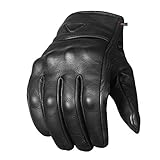
- TOP-QUALITY ANILINE GOAT LEATHER: Jackets4bikes premium motorcycle gloves are crafted from genuine aniline goat leather, known for its exceptional durability, flexibility, and comfortable feel. This high-grade leather resists everyday wear and tear, offering long-lasting performance and comfort. Designed to withstand the rigors of the road, our motorcycle gloves deliver a perfect blend of strength and style for serious riders.
- TOUCHSCREEN COMPATIBLE: Our leather motorcycle gloves feature touchscreen-compatible material on the index finger and thumb, allowing you to easily use smartphones, GPS devices, and other touchscreens without removing your gloves. Perfect for staying connected on the go.
- KNUCKLE PROTECTION & GRIP CONTROL: Designed with the rider's safety and performance in mind, our motorcycle gloves offer built-in knuckle and finger protection to shield your hands from impact and road hazards. The reinforced padded palm enhances grip, reduces vibration fatigue, and defends against abrasion. Whether you're on a long ride or navigating tough terrain, these gloves deliver the protection, comfort, and control you need for a safer, smoother experience.
- IDEAL FOR ALL POWERSPORTS ACTIVITIES: Jackets4bikes leather motorcycle gloves for men are expertly designed to meet the demands of all powersports enthusiasts. Whether you're riding a motorcycle, cruiser, street bike, racing on the track, hitting off-road trails, or riding an ATV, these gloves deliver the protection, comfort, and durability you need. With strategically placed padding and reinforced areas, they offer reliable performance for a wide range of outdoor and high-speed activities.
- FIND YOUR PERFECT FIT: Proper sizing is vital for comfort and safety. These gloves use men’s tailoring, so women should typically go one size down (e.g., a Women’s M should order a Men’s S). Measure the widest part of your palm (excluding thumb): Men's/Unisex S (Women’s M): 7–8", M (Women’s L): 8–9", L (Women’s XL): 9–10", XL (Women’s XXL): 10–11", and XXL: 11–12". Don’t assume your size—measure for the best grip!
Match the motorcycle to the route and daily tasks
Stop-start city traffic
Frequent lights and queues make low-speed balance, predictable throttle response, manageable clutch effort, and easy foot placement more important than top speed. Practice the exact slow maneuvers you will use on the commute before judging a motorcycle from a brief showroom sit.
Faster roads and longer distances
If the route includes sustained high-speed travel, assess the motorcycle’s stability, wind protection, engine reserve, and vibration at the speeds legal in your jurisdiction. A small, light motorcycle may be easy to park yet feel busy or tiring on a fast road. Conversely, a larger motorcycle can add weight, purchase cost, and service expense that provide little benefit on a short urban trip.
Parking and storage
Measure the place where you will park, including door widths, ramps, turning space, and security points. Then list what must travel with you: a helmet, rain layer, laptop, groceries, tools, or a passenger’s belongings. A motorcycle with no built-in luggage may still work with a top case, panniers, or a backpack, but those additions change cost, weight distribution, and the space required to park.
What’s actually slowing this PC down?
Pick the symptom - the matching free tool is one click away.
Passengers
Take a passenger only when the motorcycle is approved and equipped for it, and check the passenger seat, foot-peg position, grab points, and permitted load. Passenger use can change which engine size, suspension adjustment, and luggage solution are sensible. Do not select a model solely for occasional passenger trips if the added size makes your daily solo riding awkward.
Rank #2

- Stylish and Functional Design The Commuter Leather Jacket elevates the classic leather jacket by incorporating a stylish flair and practical features. With multiple pockets for convenience, including dedicated conceal carry and armor pockets, this jacket not only looks great but also enhances your riding experience, making it a must-have for any motorcycle enthusiast.
- Comfort and Versatility Designed with an action back for added comfort while riding, the Commuter Jacket ensures you can move freely. It also includes an insulated zip-out thermal liner, making it adaptable for varying temperatures. Whether you're facing a chilly morning or warmer afternoon, this jacket has you covered for any ride.
- Premium Quality Materials Crafted from 1.2-1.3mm vintage naked cowhide leather, this jacket offers durability and a luxurious feel. The high-quality leather not only enhances its aesthetic appeal but also ensures longevity and resilience against wear and tear, making it a worthwhile investment for any leather jacket aficionado.
- Thoughtful Pocket Configuration Featuring a well-thought-out pocket arrangement, the Commuter Jacket includes two vented chest pockets, two zippered slash pockets, and two conceal carry pockets with tapered holsters. This allows for easy access and secure storage of essentials, so you can ride with confidence and convenience.
- Adjustable Fit and Functional Details The jacket runs half a size larger for a comfortable fit and includes adjustable side belts to customize the fit further. Additional features such as padded shoulder and forearm details, zippered sleeves with gussets, and YKK zippers enhance its functionality, ensuring you get the best performance on every ride.
Check rider fit before you compare specifications
Seat height is only one dimension of fit. Honda’s buyer guide recommends thinking about how your body relates to the machine; quoting author Lee Parks, it describes ergonomics as “how man relates to his machine.” Use that idea as a practical test, not as a promise that a particular geometry suits everyone.
At the showroom or dealer
- Wear the footwear and riding clothing you normally use.
- With the motorcycle upright and your hands on the bars, check whether you can reach the ground confidently enough for your stops. You do not necessarily need both feet flat, but you must be able to control the motorcycle without stretching or tipping.
- Reach every control without shifting your shoulders. Check the front-brake lever, clutch or automatic controls, switches, mirrors, and rear-brake pedal.
- Keep your arms slightly bent at the grips rather than locked straight.
- Rest your knees comfortably against the tank or frame and place your feet firmly on the pegs.
- Turn the bars fully in both directions and check that your knees, wrists, and cables are not forced into an uncomfortable position.
- Ask for a supervised slow ride if one is available. Test starts, stops, U-turns, a moderate-braking stop, and a short period at the speed you expect to ride.
These checks come from Honda’s fit guidance, but they are screening questions rather than a guarantee. A motorcycle that feels fine for five minutes may expose pressure points after an hour, so evaluate the route and duration you actually ride.
Choose manageable performance, not a number on a badge
Engine displacement is a useful comparison point, not a complete measure of suitability. Honda advises new riders to consider lower displacement and to establish basic riding skills before choosing a motorcycle. Training, throttle control, braking technique, and the motorcycle’s weight all affect how manageable it feels.
Use a candidate’s power and mass in relation to your route. Extra performance can help on fast roads or with a passenger, but it can also increase purchase price, insurance, tire cost, fuel use, and the consequences of mistakes. A smaller motorcycle may be easier in dense traffic, while a larger one may reduce strain on long, faster journeys. The correct choice depends on your actual use and experience.
Rank #3

- Maximum Visibility for Riders, Stay safe with hi viz reflective panels designed to make you stand out on the road, day or night — ideal for motorcycle and bike commuters.
- Lightweight, Built for Motion, Ergonomic and featherlight for long rides or daily commutes. Designed to reduce strain and enhance comfort while on two wheels.
- Helmet Holder Included, Carry your helmet hands-free with the built-in external net — perfect for motorcycle, scooter, or biking gear on the go.
- Laptop & Gear Storage, Spacious interior fits a laptop, tools, or daily essentials. Organize your ride with multiple compartments and 2 water pockets on the side
- Commuter 35L Ready Design, Ventilated back padding, adjustable straps, and weather-resistant materials make this your go-to bag for cycling, sport, or city commuting.
Honda Rebel examples: a way to compare trade-offs
Honda’s January 6, 2026 Rebel comparison illustrates how motorcycles in one family can target different jobs. The specifications and use descriptions below are manufacturer information, not independent testing, fuel-economy measurements, or reliability findings.
| Model | Published specification | Equipment or positioning stated by Honda | Questions for a daily rider |
|---|---|---|---|
| Rebel 300 | 286cc; 27.2-inch seat | E-Clutch; Honda describes it as an urban-commuter choice | Is its performance and carrying capacity enough for your fastest roads and passenger use? |
| Rebel 500 | 471cc; 27.2-inch seat | ABS and slipper clutch; Honda describes it for all-week commuting plus weekend riding | Does the added capability justify its purchase, insurance, and service costs for your route? |
| Rebel 1100 | 1084cc; 27.9-inch seat | DCT available | Will the larger engine and weight help your use, or make parking and low-speed handling harder? |
| Rebel 1100T | Based on the 1100 platform | Fairing and hard saddlebags | Do the touring features solve a real storage or wind-protection need on every week of riding? |
Confirm the exact year, trim, and local specification before treating any of these features as included. A model name can cover variants with different safety equipment or equipment packages.
Verify ABS on the exact motorcycle you will buy
Anti-lock braking systems detect impending wheel lock and adjust brake pressure to help the rider retain control during hard braking. The Insurance Institute for Highway Safety says ABS does not affect normal braking and is noticed mainly in an emergency. Availability is not universal, so inspect the specification for your market rather than assuming every motorcycle with the same name has it.
Quick wins for a faster PC:
Scan for outdated or missing drivers - takes under a minuteDriver Scan →Clear out junk files and repair common Windows errorsFree Scan →Fix the driver behind crashes, sound loss and screen glitchesFind Drivers →IIHS reported that 71% of 2025 motorcycle models sold in the United States had standard ABS and another 11% offered it as an option. That page was updated in August 2026, and the statistic refers specifically to 2025 U.S. models; it should not be generalized to another country, model year, or trim.
Rank #4
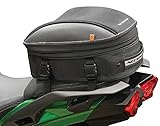
- LIFETIME WARRANTY: All Nelson-Rigg products are made to the highest standards of quality and finish. Our products are warrantied to be free from defects in materials and workmanship
- SUPER FABRIC: Made from our exclusive and industry leading UltraMax fabric that offers maximum sun protection to help prevent fading and breakdown from the natural elements
- SIMPLE INSTALLATION: Easily and securely mounts to most tail sections and seats with 4 adjustable quick release straps, Semi-rigid walls maintain shape
- KEY FEATURES: Bag has reflective piping, a flush mount reflective handle, lined interior, and maintains its shape even while empty
- PERFECT SIZE: The Commuter Sport can easily hold a day’s worth of gear with inner self-fastening straps to better secure contents
Ask the seller to identify the ABS-equipped variant, check the manufacturer’s local page, and verify the vehicle identification number or build sheet when possible. If ABS is optional, compare the complete price and availability rather than treating it as a minor accessory.
Calculate ownership cost beyond the purchase price
A low sticker price does not prove that a motorcycle is cheap to own. Build a first-year and recurring budget using local quotations for the exact motorcycle.
| Cost area | What to include | What to verify before purchase |
|---|---|---|
| Purchase | Motorcycle, registration, taxes, delivery, and required accessories | Exact model year, trim, included equipment, and written out-the-door price |
| Protection | Helmet, jacket, gloves, trousers, boots, and weather gear | Fit, certification required in your jurisdiction, replacement schedule, and seasonal needs |
| Running costs | Fuel, tires, chain or belt service where applicable, brake components, and fluids | Local prices and the owner’s manual service schedule |
| Insurance | Mandatory cover and optional protection | Quote the exact rider, address, motorcycle, usage, deductible, and security arrangements |
| Maintenance | Scheduled servicing, inspections, consumables, and unexpected repairs | Dealer or independent-shop labor rates, parts access, and appointment lead times |
| Used-bike risk | Deferred maintenance, worn tires, damaged parts, and missing records | Service invoices, title or registration history, cold start, inspection, and an independent mechanical check |
Honda notes that used motorcycles can hide maintenance costs and have histories that are difficult to verify. A new motorcycle bought through a dealer includes warranty coverage according to Honda’s buyer guidance, but confirm the terms, duration, exclusions, and the dealer responsible for warranty work in your market.
Use a maintenance routine that prevents avoidable failures
Before every ride, Honda’s guide calls for a basic inspection. Use the owner’s manual for the correct tire pressures, fluid levels, adjustment limits, and inspection intervals; do not substitute a generic pressure number.
Best Value
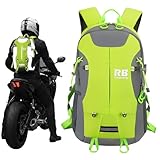
- Maximum Visibility for Riders, Stay safe with hi viz reflective panels designed to make you stand out on the road, day or night — ideal for motorcycle and bike commuters.
- Lightweight, Built for Motion, Ergonomic and featherlight for long rides or daily commutes. Designed to reduce strain and enhance comfort while on two wheels.
- Helmet Holder Included, Carry your helmet hands-free with the built-in external net — perfect for motorcycle, scooter, or biking gear on the go.
- Laptop & Gear Storage, Spacious interior fits a laptop, tools, or daily essentials. Organize your ride with multiple compartments and 2 water pockets on the side
- Commuter 35L Ready Design, Ventilated back padding, adjustable straps, and weather-resistant materials make this your go-to bag for cycling, sport, or city commuting.
- Tires: Check pressure with a suitable gauge and look for cuts, embedded objects, uneven wear, or damage. A tire-pressure gauge is a useful dedicated item for this check.
- Controls: Operate the throttle, clutch or transmission controls, front and rear brakes, and steering to confirm normal movement.
- Lights: Check the headlight, tail light, brake light, indicators, and any warning lamps while the ignition is on.
- Fluids: Inspect oil, fuel, and coolant where the motorcycle uses them, following the manual’s sight-level and leak checks.
- Drive system: On a chain-driven motorcycle, inspect chain condition and tension as specified by the manual. Belt- and shaft-driven motorcycles have different inspection requirements.
- Brakes: Check lever and pedal feel, visible pad or disc condition, and any fluid leak or warning indication.
Do not ride if a control, tire, brake, or fluid condition is unsafe. Arrange repair first and record recurring issues so a small defect does not become a daily reliability problem.
Compare candidates with the same decision checklist
Put each motorcycle through the same questions instead of allowing a striking specification or low introductory price to dominate the decision.
| Comparison axis | Questions to answer | Evidence to collect |
|---|---|---|
| Fit and control reach | Can you stop, steer, and operate every control without strain? | Seated checks, supervised ride, and feedback after the full route |
| Route suitability | Does it remain composed and comfortable in traffic, on faster roads, and while parking? | Test ride matching your road mix and typical duration |
| Budget and service burden | Can you afford insurance, gear, scheduled work, tires, fuel, and repairs? | Local quotes for the exact year and trim |
| Passenger and storage | Can it carry the people and items you actually transport? | Load limits, seat and peg comfort, luggage dimensions, and mounting cost |
| Safety equipment | Does this exact variant include ABS and the equipment required in your market? | Manufacturer specification, dealer paperwork, and VIN or build-sheet confirmation |
| Parts and service access | Can routine work be completed without excessive travel or waiting? | Nearby qualified shops, parts availability, and quoted labor times |
A practical buying sequence
- Write down your route, weekly distance, fastest road, parking location, passenger frequency, and storage requirement.
- Set a total ownership budget, including gear, insurance, fuel, maintenance, and a repair reserve.
- Shortlist motorcycles that fit your experience and route; do not begin with displacement alone.
- Check each motorcycle in person using the fit and control-reach steps.
- Ride the strongest candidates in conditions resembling your commute, including slow turns and firm braking where safe.
- Verify ABS, luggage, transmission, warranty, service intervals, and market-specific equipment for the exact trim.
- For a used motorcycle, inspect records and arrange an independent mechanical inspection before paying.
- Compare written ownership quotes, then choose the motorcycle you can control comfortably and maintain consistently.
Mistakes that make a “good commuter” a bad purchase
- Choosing by seat height alone: Reach to the controls, bar position, peg relationship, and stop confidence matter just as much.
- Assuming the model name guarantees ABS: Year, trim, and country can change the equipment.
- Using advertised fuel economy as a promise: Traffic, speed, temperature, load, maintenance, and riding style change results; no like-for-like local dataset is established here.
- Ignoring the return trip: A motorcycle comfortable for a short morning ride may become tiring after a full day, rain, or a passenger.
- Buying a neglected used bike to save money: Missing history, old tires, worn chains, and deferred fluids can erase the initial saving.
- Skipping training: Build basic riding and emergency-braking skills before adding passengers, luggage, or faster roads. Honda recommends an official course, with the Motorcycle Safety Foundation as one example.
The right daily motorcycle is the one that passes your fit test, route test, safety check, and full-cost calculation. Use manufacturer specifications as a starting point, then verify the exact local motorcycle and make the decision around your own commute rather than a universal ranking.
Quick Recap
Product prices and availability are accurate as of the date/time indicated and are subject to change. Any price and availability information displayed on Amazon at the time of purchase will apply.




