If you want the Kawasaki Ninja 1000SX formula—full fairing, four-cylinder power and real touring ability—the 2026 Suzuki GSX-S1000GT+ is the closest direct alternative in the available specifications. The 2025 Yamaha Tracer 9 GT is a better direction if you want a lighter-feeling, more upright middleweight sport-tourer with semi-active suspension. The 2026 Suzuki GSX-S1000GX+ suits riders who need more suspension travel and an adventure-crossover riding position, while Kawasaki shoppers buying new should compare the current 2026 Ninja 1100SX before looking only at used 1000SX examples.
There is no specification-sheet winner for long-distance comfort. Seat shape, knee angle, reach, wind turbulence and passenger space are personal, and luggage or a tall screen can change the experience substantially. Use the shortlist below to identify the right type of motorcycle, then test ride with the rider, passenger and load you actually expect to carry.
As an Amazon Associate I earn from qualifying purchases.
The four alternatives at a glance
| Motorcycle | Best fit | Published figures and equipment | What separates it from the Ninja 1000SX format |
|---|---|---|---|
| Suzuki GSX-S1000GT+ | Riders wanting the closest fully faired, four-cylinder sport-tourer substitute | 999 cc; 19.0 L (5.0 US gal.) tank; 810 mm (31.9 in.) seat; 226 kg (498 lb.) curb weight excluding mounted side cases. Suzuki lists a 12-month, unlimited-mileage limited warranty for the US-market 2026 model. | Like-for-like sport-touring layout, with a taller touring windscreen, heated hand grips and clip-on tank bags listed among genuine accessories. |
| Yamaha Tracer 9 GT | Riders who prefer an upright stance and a smaller three-cylinder engine | 2025 European specification: 890 cc; 87.5 kW (119 PS); 93 Nm; Yamaha-published fuel consumption of 5 L/100 km; semi-active electronic suspension, unified braking with Vehicle Hold Control and Matrix LED headlights. | More upright, middleweight touring character rather than a low, fully faired inline-four sport-tourer. Exact equipment varies by market and model year. |
| Suzuki GSX-S1000GX+ | Riders covering broken pavement or wanting a taller crossover stance | Suzuki describes upright ergonomics, integrated luggage options, longer suspension travel, increased ground clearance, Suzuki Advanced Electronic Suspension and Suzuki Road Adaptive Stabilization. | Adventure-crossover proportions and suspension priorities; it is not a direct Ninja-shaped replacement. |
| Kawasaki Ninja 1100SX | Buyers who want the same Kawasaki sport-tourer lineage in a new motorcycle | 1,099 cm³ inline-four; 11.5 kgf·m torque. Kawasaki says longer fifth and sixth gears lower engine speed on expressways and electronic cruise control reduces right-hand strain. An accessory clean-mount pannier system is available. | It is the current continuation of the Ninja 1000SX concept, not an alternative from another design family. |
Figures in the table are manufacturer-published claims for the named market and model year, not independent acceleration, range or comfort tests. Suzuki’s 226 kg figure excludes mounted side cases, so a ready-to-tour motorcycle will weigh more once luggage, fuel and accessories are installed.
Recommended Free Tools
What matters on a long-distance sport-tourer
Long-distance suitability is a combination of several systems rather than engine size alone. Assess these in order because a weakness in one can overwhelm the advantages of another.
#1 Best Overall
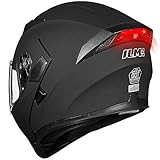
- High Resistance ABS Shell With Micrometrically Adjustable Strap
- Meets or Exceeds FMVSS-218 and DOT Safety Standards
- Helmet Liner / Cheek Pads are Lightweight, Soft and Easily Removable and Washable
- Sleek and Lightweight Design Reduces Wind Noise
- Modular Flip-Up Function Anti-Scratch, Anti-Fog and Wide View Clear Visor
Rider triangle and body fit
Handlebar reach, seat-to-peg distance and the amount of weight carried through your wrists determine whether a motorcycle remains comfortable after several hours. An upright cockpit can relieve the lower back but expose more of the torso to wind. A lower, forward-leaning posture can reduce wind load behind a fairing yet create pressure at the wrists or knees for some riders.
Seat height is only one part of fit. The 810 mm (31.9 in.) published seat height of the GSX-S1000GT+ gives a useful reference, but seat width, suspension sag, boot sole thickness and the rider’s inseam determine how easily both feet reach the ground. A taller motorcycle can still feel manageable if its seat narrows near the tank; a lower motorcycle can feel awkward if the seat spreads the legs.
Wind protection and turbulence
A fairing that looks large in a showroom may direct turbulent air at your helmet. During a test ride, check the screen at several heights, ride behind and beside traffic, and listen for buffeting with your normal helmet. The GSX-S1000GT+ has a taller touring windscreen in Suzuki’s genuine-accessory list, so include the standard and touring-screen configurations in your comparison. Do not assume that a taller screen is automatically quieter: the cleanest airflow depends on rider height, helmet and screen angle.
Seat, passenger and luggage
A solo test ride can hide the limitations that appear with a passenger and loaded cases. Sit in both positions, check the passenger’s knee bend and grab points, and verify that your intended cases do not interfere with passenger legs. Ask whether panniers are standard, optional or supplied only in a particular market. The GSX-S1000GT+ specifications quoted above exclude mounted side cases; Kawasaki documents an accessory clean-mount pannier system for the Ninja 1100SX, while Suzuki describes integrated luggage options for the GX+.
Engine character and gearing
Four-cylinder engines provide the familiar smooth, strong acceleration associated with the Ninja 1000SX concept, but displacement does not by itself determine touring comfort. What matters on a long motorway day is how much vibration, noise and throttle movement are required at your cruising speed. Kawasaki specifically says the Ninja 1100SX’s longer fifth and sixth gears reduce engine speed on expressways. Yamaha’s Tracer 9 GT uses an 890 cc three-cylinder engine and publishes 87.5 kW (119 PS) and 93 Nm; those figures indicate a different engine character, not an automatic disadvantage for touring.
Suspension and road surface
Fully faired sport-tourers generally prioritize pavement handling and aerodynamic stability. If your routes include patched asphalt, expansion joints or occasional gravel approaches, suspension range and ground clearance become more important. Yamaha highlights semi-active electronic suspension on the Tracer 9 GT, while Suzuki positions the GX+ with longer travel, increased ground clearance, Suzuki Advanced Electronic Suspension and Suzuki Road Adaptive Stabilization. Those features address a different use case from the GT+’s direct sport-tourer layout.
Suzuki GSX-S1000GT+: the closest direct substitute
The GSX-S1000GT+ is the most natural first test ride when the appeal of the Ninja 1000SX is its combination of a full fairing, an inline-four engine and touring hardware without moving to an adventure-bike silhouette. Suzuki’s 2026 US specifications list a 999 cc engine, a 19.0 L (5.0 US gal.) fuel tank, an 810 mm (31.9 in.) seat and a 226 kg (498 lb.) curb weight before mounted side cases.
What’s actually slowing this PC down?
Pick the symptom - the matching free tool is one click away.
Rank #2

- Meets ECE 22.06 Rotational Energy Management requirements using LS2 AREM technology
- Kinetic Polymer Alloy (KPA) shell offers better energy managing flexibility
- Quick release chin strap
- Built-in drop-down sun shield with Pinlock-ready shield (Pinlock sold separately)
- DOT approved. Meets the FMVSS 218 Standard
Why it belongs at the top of the shortlist
- Comparable mission: It is designed as a fully faired, four-cylinder sport-tourer rather than an upright crossover.
- Useful fuel capacity: The published 19.0 L tank gives touring planners a clear starting point for range calculations, although actual range depends on speed, load, temperature and riding style.
- Manageable reference height: The 810 mm seat figure is neither a guarantee of easy footing nor a barrier; evaluate the seat’s shape and suspension sag in person.
- Touring accessories: Suzuki lists a taller touring windscreen, heated hand grips and clip-on tank bags among genuine accessories.
- US warranty: Suzuki documents a 12-month, unlimited-mileage limited warranty for the US-market 2026 model. Warranty terms in other countries may differ.
What to verify before ordering
Confirm whether the motorcycle at your local dealer includes the luggage you need or whether a package is being added separately. The published curb weight excludes mounted side cases, and a taller screen or heated grips may alter both cost and electrical load. Check that the clip-on tank bag clears your bars at full steering lock and does not interfere with the fuel cap or a tank bag harness you already own.
The available specifications do not establish that the GSX-S1000GT+ is more comfortable than a Ninja 1000SX for every rider. Use its direct layout as a reason to test it first, not as a substitute for evaluating wind pressure, seat firmness and reach.
Yamaha Tracer 9 GT: the upright middleweight option
The Tracer 9 GT changes the brief rather than copying the Ninja. Yamaha’s 2025 European specification uses an 890 cc three-cylinder engine with published maximum output of 87.5 kW (119 PS) and torque of 93 Nm. Yamaha lists fuel consumption of 5 L/100 km for the cited market and version and describes the motorcycle as suitable for touring with a passenger and luggage.
Reasons to choose the Tracer format
- More upright posture: The riding position is aimed at riders who want a taller, less sport-bike-like stance.
- Semi-active suspension: Yamaha highlights electronically controlled suspension that can adjust to changing conditions, a feature worth considering if your routes combine smooth highways and uneven secondary roads.
- Touring-oriented electronics: The cited page highlights unified braking with Vehicle Hold Control and Matrix LED headlighting.
- Middleweight balance: Its 890 cc engine and three-cylinder layout offer a different blend of response and running character from a large inline-four. Published power and torque are not a prediction of comfort or fuel range.
Important market qualification
The figures and equipment above come from Yamaha Motor Europe’s 2025 page. Availability, screen design, luggage contents, rider aids and even model naming can vary by country and model year. Obtain the specification sheet for the exact motorcycle offered in your market before comparing prices or assuming an item is standard.
Free tools Windows power users keep installed
One-click scans. No signup required.
Choose the Tracer 9 GT when your priorities start with an upright cockpit, electronically managed suspension and passenger-friendly touring intent. If the defining requirement is the low, fully faired feel of a four-cylinder sport-tourer, its different posture should be treated as a deliberate change rather than a one-for-one replacement.
Suzuki GSX-S1000GX+: a crossover for rougher routes
The GSX-S1000GX+ occupies the space between sport touring and adventure riding. Suzuki’s 2026 brochure describes upright ergonomics, integrated luggage options, longer suspension travel, increased ground clearance, Suzuki Advanced Electronic Suspension and Suzuki Road Adaptive Stabilization.
When the GX+ makes more sense
- You regularly encounter broken pavement, deep expansion joints or roads where additional suspension travel is useful.
- You prefer a taller, more upright stance and easier movement around the cockpit.
- You want touring luggage integrated into a crossover package rather than adding adventure accessories to a low sport-tourer.
- You value electronic suspension management and a stability system aimed at changing road surfaces.
Trade-offs versus a faired sport-tourer
The GX+ is not the choice for someone who wants the Ninja 1000SX silhouette and posture preserved exactly. More travel and ground clearance generally come with a taller-feeling chassis, and a crossover’s wind exposure and seat shape may differ substantially from a fully faired sport-tourer. Suzuki’s brochure establishes the equipment direction but does not provide, in the cited material, a single comparable seat height, curb weight, fuel capacity or engine-output figure for the GX+. Use the exact local specification when those numbers affect your decision.
Rank #3
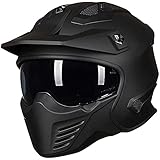
- Meets or Exceeds FMVSS-218 and DOT Safety Standards
- Detachable Lens, Sun Shield and Chin Guard, Easy to Replace
- Ventilation System with Multiple Vents, Breathable and Keep Cool
- Quick Release Buckle Allows Riders to Quickly Take Helmet On and Off
- 3/4 Open Face Motorcycle Helmet Fits Men and Women. Ideal for ATV, MTB, Dirt Bike, Street Bike, Cruiser, Scooter, Moped, Electric Dirt Bike and Other Outdoor Sports
Kawasaki Ninja 1100SX: the new-bike continuity choice
If you are shopping for a new Kawasaki, the Ninja 1100SX deserves a place beside used Ninja 1000SX listings. Kawasaki’s 2026 European page identifies a 1,099 cm³ inline-four producing 11.5 kgf·m of torque. Kawasaki also says the model uses longer fifth and sixth gears for lower-rpm expressway cruising and electronic cruise control to reduce right-hand strain on long rides.
Why it may be the simplest decision
The 1100SX continues the same broad sport-touring idea, so a rider who likes the Ninja’s fairing, engine layout and relaxed riding position does not have to change categories. Kawasaki lists an accessory clean-mount pannier system, which matters if you want luggage that appears integrated rather than hung from a universal rack.
Questions for a dealer
- Which model year and regional specification is actually in stock?
- Are the panniers, inner bags, heated equipment and touring screen included or optional?
- What seat and screen options are approved for your market?
- How does the warranty, service interval and parts supply compare with the used 1000SX you are considering?
The cited Kawasaki material gives displacement, torque, gearing intent and cruise-control information, but it does not provide a directly comparable curb weight, tank capacity or seat height here. Do not fill those gaps with figures from another year or country.
How the alternatives differ in real touring priorities
| Priority | Most relevant choice | Why | Check before purchase |
|---|---|---|---|
| Keep a full-fairing, four-cylinder sport-touring feel | Suzuki GSX-S1000GT+ or Kawasaki Ninja 1100SX | Both retain the core inline-four sport-tourer concept; the Kawasaki is the current continuation of the Ninja line. | Screen turbulence, wrist load, seat comfort and whether luggage is standard. |
| Relaxed expressway cruising in the Kawasaki family | Ninja 1100SX | Kawasaki states that longer fifth and sixth gears lower expressway engine speed and that cruise control reduces right-hand effort. | Actual rpm at your normal speed, cruise-control operation and regional equipment. |
| Upright posture with electronically managed suspension | Yamaha Tracer 9 GT | The cited European specification highlights semi-active suspension and a touring-oriented three-cylinder platform. | Exact local model year, screen height, luggage package and seat reach. |
| Rough pavement and more ground clearance | Suzuki GSX-S1000GX+ | Suzuki describes longer travel, increased clearance, upright ergonomics and adaptive electronic systems. | Seat height, loaded suspension sag, wind exposure and passenger footing. |
| Published fuel capacity and a US warranty reference | GSX-S1000GT+ | Suzuki lists a 19.0 L tank and a 12-month unlimited-mileage limited warranty for the US-market 2026 model. | Whether the warranty applies in your country and how accessories affect delivered price and weight. |
Choose by rider and route
Choose the GSX-S1000GT+ if the Ninja’s category is the point
Start with the GT+ if you want a fully faired four-cylinder motorcycle, a substantial fuel tank and conventional sport-tourer proportions. It is the shortest conceptual move from the Ninja 1000SX. Plan for the added mass of side cases and decide whether the touring windscreen and heated grips belong in the initial budget.
Choose the Tracer 9 GT if posture matters more than cylinder count
The Tracer is the better match for a rider whose discomfort comes from a low or forward stance and who values semi-active suspension. Its European figures should not be transferred automatically to another market, so obtain a local equipment list before making a final comparison.
Choose the GX+ if roads are worse than the motorcycle’s styling suggests
Use the GX+ shortlist when road damage, suspension movement and a taller cockpit are routine parts of your trips. It sacrifices the direct visual and ergonomic similarity of the Ninja in exchange for crossover capability.
Choose the 1100SX if you want a new Kawasaki without changing mission
The 1100SX is the logical first stop for a buyer who prefers Kawasaki continuity, wants the latest model-year equipment and values the manufacturer’s stated lower-rpm gearing and cruise-control features.
Rank #4

- 【High Safety Factor】JQF Gear full face motorcycle helmets WS-607 meet or exceed DOT FMVSS 218 standard. Lightweight ABS shell ard multi-density EPS material of our motorcycle helmets are durable and high safety factor. Quick release chin strap for easy use
- 【Ventilation & Heat Dissipation】The full face helmet has multiple vents to provide optimal ventilation and heat dissipation, suitable for any riding environment, summer or winter
- 【About Visor】We have two visors combinations available. 1. Helmet with clear visor(Gray Ash/ Flat black B/ Flat black W/ Gloss White/ Thor/ Cube). 2. Helmet with clear and black visor(Gray Ash B/ Flat black BB/ Flat black WB/ Gloss White B/ Thor B/ Cube B)
- 【Adult Size Racing Helmets】Our motorbike helmets include Adult S/ M/ L/ XL/ XXL 5 sizes. Please measure your head circumference and choose the right size according to the size chart
- 【Removeable Design】The lining is removable, washable and replaceable for comfort and breathability. If you have any problem about JQF Gear helmets for adults, please feel free to contact us, we will provide help and solve in 24 hours
A test-ride procedure that reveals touring problems
- Set the motorcycle up as delivered. Adjust levers, mirrors and the screen before judging the riding position. Ask the dealer to set suspension sag for your body weight if that service is available.
- Measure static fit. Sit in your normal boots, place your feet on the pegs and check knee angle, hip rotation, bar reach and whether your wrists carry weight when your hands are relaxed.
- Check low-speed control. Perform slow turns and stops with the bars near full lock. A motorcycle that feels comfortable at 70 mph but awkward in parking lots can become tiring on a touring trip.
- Ride at highway speed. Evaluate helmet pressure, shoulder fatigue, screen buffeting and mirror stability. Test behind and away from traffic because airflow changes.
- Use the controls repeatedly. Operate indicators, cruise control where fitted, heated grips where fitted and the suspension or riding-mode controls without taking your attention from the road.
- Brake with a passenger if possible. A second rider changes steering effort, stopping distance and rear-suspension behavior. Confirm that the passenger can mount, dismount and hold on comfortably.
- Repeat with representative luggage. Bring the jacket, top box or tank bag you use and ask the dealer to demonstrate case clearance. Check that your knees, bars and fuel access remain unobstructed.
- Ride long enough to expose pressure points. Ten minutes can reveal reach problems; a sustained ride is needed to expose seat pressure, numbness and wind fatigue. If a full ride is unavailable, do not treat a showroom sit as proof of long-distance comfort.
Luggage and accessories: avoid expensive mismatches
Decide whether you need side cases, a top case, a tank bag or soft luggage before choosing a motorcycle. A case system can change width, passenger access, aerodynamic behavior and the weight distribution that the suspension must control.
Tank bags
Suzuki lists clip-on tank bags as genuine GSX-S1000GT+ accessories. Verify the exact mounting ring and model-year compatibility before buying, and check that the bag does not block the ignition, steering movement or your view of the instruments. A tank bag should hold items you need while stopped, not become a substitute for properly balanced side luggage.
The Tool Desk
Outbyte Driver Updater FREEFix the driver behind crashes, sound loss and screen glitchesFind Drivers →Outbyte PC Repair FREEClear out junk files and repair common Windows errorsFree Scan →Panniers
Kawasaki documents an accessory clean-mount pannier system for the Ninja 1100SX, and Suzuki describes integrated luggage options for the GX+. Ask for the actual internal volume, maximum load, waterproofing method and keying arrangement. The available specifications do not state a universal capacity figure for these systems, so use the manufacturer’s local luggage sheet rather than assuming one case size fits another model.
Heated equipment and screens
The GSX-S1000GT+ accessory list includes heated hand grips and a taller touring windscreen. These are comfort upgrades, but they are also fit variables. Test grip heat with your gloves, inspect switch placement and check whether the taller screen creates turbulence at your helmet height.
Ownership checks that are easy to overlook
Model year and market
Equipment names, standard luggage, lighting, suspension software and warranty terms can change by country and model year. The Tracer 9 GT figures cited here are European 2025 data; the GSX-S1000GT+ warranty statement is for the US-market 2026 model; the Ninja 1100SX information is from Kawasaki’s 2026 European page. Match every comparison with the motorcycle’s vehicle identification number, local brochure and written dealer quotation.
Service access
A technically excellent motorcycle is a poor touring choice if authorized service is difficult to reach along your routes. Map the dealer network near home and on the trips you actually take, confirm parts lead times for touring accessories and ask how electronic-suspension or stability-system diagnostics are handled.
Do these 3 things before closing this tab:
1Clear out junk files and repair common Windows errors2Scan for outdated or missing drivers - takes under a minute3Repair Windows errors before they cause bigger problemsLoaded weight
Use curb weight only as a starting point. Fuel, cases, mounting hardware, tools, rain gear and a passenger can add a meaningful amount. The GSX-S1000GT+ figure of 226 kg excludes mounted side cases, so compare motorcycles in an equivalent ready-to-travel configuration rather than comparing an unloaded base motorcycle with a fully equipped touring build.
Quick Recap
Common mistakes when replacing a Ninja 1000SX
- Choosing by engine displacement alone: A larger number does not guarantee a more comfortable seat, quieter airflow or better passenger accommodation.
- Assuming “touring” means the same posture: The Tracer 9 GT and GSX-S1000GX+ are more upright directions, while the GSX-S1000GT+ and Ninja 1100SX stay closer to a faired sport-tourer.
- Ignoring screen height: Helmet turbulence can dominate a long day even when the seat and bars feel right in a parking lot.
- Comparing wet and dry configurations: A published curb weight that excludes side cases is not equivalent to a ready-to-tour motorcycle.
- Transferring specifications across borders: The cited Tracer figures are European, the GT+ warranty is US-market, and Kawasaki’s 1100SX information is European. Confirm local equipment and terms.
- Buying luggage after the motorcycle: Case width, passenger legroom and mounting compatibility should be checked before you commit.
- Treating manufacturer language as independent testing: Published power, fuel-consumption, gearing and feature claims are useful specifications, not guarantees of real-world range, comfort or performance.
Final buying sequence
- Decide whether you want to preserve the Ninja’s fully faired inline-four character or deliberately move to an upright crossover or middleweight.
- Shortlist the GSX-S1000GT+, Tracer 9 GT, GSX-S1000GX+ and Ninja 1100SX according to that decision.
- Obtain the exact local model-year specification, accessory list, warranty and price for each candidate.
- Test ride at highway speed with your normal helmet and clothing; add the passenger and representative luggage whenever possible.
- Choose the motorcycle that leaves the fewest unresolved fit, wind and luggage problems, not the one with the most impressive specification headline.
Product prices and availability are accurate as of the date/time indicated and are subject to change. Any price and availability information displayed on Amazon at the time of purchase will apply.




