Recommended Free Tools
There is no single best home EV charger. The right wallbox depends first on your country, electrical supply, vehicle connector and the car’s maximum AC charging rate. For most UK homes, a reliable 7kW or 7.4kW smart Type 2 wallbox is sufficient for overnight charging. For most North American homes, a certified 40A–48A Level 2 charger is the practical sweet spot if the vehicle and electrical panel support it.
Our leading choices are the Tesla Wall Connector for a North American NACS vehicle, the Tesla Universal Wall Connector for a mixed NACS/J1772 household, the Emporia Pro for whole-home load management, and the ChargePoint Home Flex for flexible current settings. In the UK, the Zaptec Go UK 7kW, Wallbox Pulsar Max and EO Mini Pro 3 cover the most useful combinations of compactness, smart charging and solar or load-management support.
Information and product specifications were checked against the supplied manufacturer and government sources on 9 August 2026. Prices, availability, software features, grant rules and model variants can change.
Quick picks
| Buyer | Recommended charger | Why it fits | Important limitation |
|---|---|---|---|
| North American NACS owner wanting a simple permanent charger | Tesla Wall Connector | Up to 11.5kW at 48A, a 24-foot cable, adjustable installation current, app scheduling and a 48-month residential warranty. | Hardwired and natively intended for NACS vehicles; J1772 cars need another solution or a suitable adapter. |
| North American household with NACS and J1772 vehicles | Tesla Universal Wall Connector | Integrated J1772 adapter, NACS compatibility, 24-foot cable, Wi-Fi and up to 11.5kW at 48A. | Hardwired, bulkier than the standard Wall Connector, and bidirectional features depend on the vehicle and installation. |
| Home with limited panel capacity or a strong energy-monitoring requirement | Emporia Pro | Includes a Vue 3 whole-home monitor and PowerSmart load management to adjust EV charging around household demand. | Installation is more involved because monitoring hardware must be fitted in the electrical panel. |
| North American buyer wanting adjustable output and plug-in flexibility | ChargePoint Home Flex | J1772 and NACS versions, adjustable 16A–50A output, up to 12kW, app control, and hardwired or plug-in installation options. | Plug-in versions have lower current limits than the maximum hardwired configuration. |
| North American value buyer | Emporia Classic | Up to 48A hardwired or 40A through a NEMA 14-50 installation, a 25-foot cable, NEMA 4 enclosure and a three-year warranty. | The bundled whole-home load-management capability belongs to the Pro, not the Classic. |
| UK buyer wanting a compact 7kW smart charger | Zaptec Go UK 7kW | 7.4kW maximum on 32A single-phase, Wi-Fi, 4G and Bluetooth, RFID, integrated energy metering and a five-year product guarantee. | Do not confuse the UK 7kW version with European 22kW variants or newer products. |
| UK buyer planning solar charging or load management | Wallbox Pulsar Max | Available in 7.4kW, 11kW and 22kW versions, with adjustable current, app scheduling and energy-management compatibility. | 22kW requires three-phase supply and a car that accepts 22kW AC; some energy features require additional hardware. |
| UK buyer prioritising a small enclosure | EO Mini Pro 3 | Socketed or tethered Type 2 versions, 7.2kW single-phase output and up to 22kW in a suitable three-phase installation. | The 22kW figure is not available to an ordinary UK single-phase home. |
| PHEV owner or low-mileage driver | The vehicle’s included portable EVSE | Level 1 charging may replenish the energy used each day without the cost of a wallbox. | Charging is slow and depends on having a safe, suitable household outlet. |
These are evidence-based category recommendations, not claims that CarCody has independently tested every model. Manufacturer specifications, installation requirements and third-party evidence are identified separately below.
Quick wins for a faster PC:
Clear out junk files and repair common Windows errorsFree Scan →Scan for outdated or missing drivers - takes under a minuteDriver Scan →Repair Windows errors before they cause bigger problemsFix Now →#1 Best Overall

- 【Reliable Safety with PBE & LRC Tech】Powered by ELEGRP's exclusive PBE technology, this level 2 EV charger provides reliable protection against surges, leakage, and overloads—trusted by over 300 million households since 2000. The J1772 charger features advanced LRC tech for better conductivity, cooler operation, and stable charging speed
- 【Dual Charging Model】Charging speed depends on your outlet type. Use the NEMA 6-20 plug for Level 2 240V fast charging at up to 3.84kWh (11-14 miles/hr). For slower Level 1 charging 120V, use the included 5-15 adapter, offering 1.44kWh (4-5 miles/hr)
- 【Max 25FT Reach &and IP67 Weatherproof Reliability】 Our 25FT portable cable offers the maximum length allowed by NEC safety standards for garage, wall, or outdoor use. This electric car charger is IP67 waterproof and built for cold weather, from -21°F to 121°F, including heavy rain, or snow
- 【U.S.-Based Expert Support & and 2-Year Warranty】Get real help from our U.S.-based support team, available Mon–Sat (5 AM–3 PM PT) for fast, professional assistance. Every ELEGRP charger is backed by a 2-year replacement warranty, so you can charge your vehicle with confidence
- 【Universal J1772 Compatibility】Compatible with all SAE J1772 certified EVs, BEVs, and PHEVs. For Tesla owners: a J1772-to-NACS adapter (sold separately) may be required. Please verify your car compatibility before purchase and contact our support team with any questions
What to check before buying
- Which electrical system do you have? North American Level 2 equipment normally uses 208/240V AC. UK domestic installations are generally 230V single-phase, while 11kW or 22kW charging normally requires three-phase supply.
- Which connector does the car use? NACS/J3400 and J1772 are the important North American AC standards. Type 2 is the normal connector for modern UK and European AC charging.
- What is the car’s maximum AC charging rate? A 22kW wallbox cannot make a vehicle with a 7.4kW or 11kW onboard charger accept more AC power.
- Can the property support the continuous load? A spare breaker position does not prove that the service, panel, conductors and protective devices have enough capacity.
- Which features will actually save money or solve a problem? Scheduling may be enough for one household; solar surplus charging, dynamic load management, power sharing and access control are more specialised requirements.
Get the installer to assess the complete installation before choosing the maximum output. The most powerful charger is often not the best-value charger if it requires a service upgrade or will be throttled by the vehicle.
What is a home EV charger?
In consumer language, home EV charger, wallbox and EV charger usually mean the same thing: a dedicated charging unit mounted to a wall or post. Technically, the equipment is an EVSE, or electric-vehicle supply equipment. It safely provides AC power, communicates with the car, controls current and includes protective functions. The main AC-to-DC charging hardware is normally inside the vehicle as its onboard charger.
Most domestic wallboxes are AC Level 2 units, not DC fast chargers. The wallbox, the home wiring and the vehicle’s onboard charger all impose limits. The delivered charging power is therefore approximately the lowest of:
- the wallbox’s configured maximum current;
- the circuit and household electrical capacity;
- the vehicle’s onboard AC charging limit; and
- temporary limits caused by battery temperature, state of charge, voltage or protective derating.
This is why a charger advertised at 11.5kW or 22kW does not guarantee that every connected car will charge at that rate.
Do these 3 things before closing this tab:
1Repair Windows errors before they cause bigger problems2Scan for outdated or missing drivers - takes under a minute3Clear out junk files and repair common Windows errorsLevel 1 versus Level 2: do you need a wallbox?
Not every EV owner needs a wallbox. The useful question is how much energy the car uses each day and how long it is parked at home.
| Charging type | North American supply | Typical use | Approximate range added |
|---|---|---|---|
| Level 1 | 120V AC | PHEVs, low-mileage drivers, emergency charging or overnight top-ups | About 2–5 miles per hour |
| Level 2 | 208/240V AC | Normal home charging for most battery-electric vehicles | About 10–30 miles per hour, depending on the car and power |
Those ranges are broad estimates from the U.S. Department of Energy. The U.S. Department of Transportation gives a general Level 2 estimate of roughly four to ten hours to charge a BEV to 80%, but battery size, starting state of charge, temperature and the vehicle’s charging limit make that unsuitable as a promise for a particular car.
A useful calculation is:
Required charging time ≈ daily energy used ÷ usable charging power.
For example, a car using 13kWh per day and receiving 7.2kW from the wall needs approximately 1.8 hours before charging losses and any tapering near a full battery. That is an illustration, not a universal charging time. If the car is parked for ten hours every night, even a modest Level 2 output may be more than enough. A PHEV or low-mileage driver may find Level 1 adequate, while a high-mileage BEV owner, a car parked only briefly at home or a two-EV household will benefit more from Level 2.
Outdated Drivers Are Slowing You Down
One free scan finds every outdated or missing driver and matches the right update for your exact hardware.Free scan · exact hardware matchWindows Errors? Fix Them Before They Spread
Repair common Windows errors and clear accumulated junk for a smoother, more stable PC - no reinstall needed.Free scan · no reinstallConnector standards: North America versus the UK and Europe
North America: NACS/J3400 and J1772
J1772 remains common for AC charging on many non-Tesla vehicles. NACS, standardised as SAE J3400, is used by Tesla and is increasingly appearing on other North American vehicles.
A J1772-to-NACS adapter can allow an NACS-equipped vehicle to use a J1772 AC wallbox, but an AC Level 2 adapter is not the same thing as a DC fast-charging adapter. Check the adapter’s current and voltage rating, listing and inclusion in the charger or vehicle package. Do not assume that an adapter rated for one application is appropriate for another.
For a mixed NACS/J1772 household, an integrated universal connector can be convenient. The Tesla Universal Wall Connector combines a NACS cable with an integrated J1772 adapter. Alternatively, choose the connector that matches the current car and keep a properly rated adapter for the other vehicle.
UK and Europe: Type 2
Type 2 is the normal AC connector for modern UK and European EVs. Before ordering, verify the vehicle inlet rather than relying only on a marketplace listing. Type 1 can still matter for some older vehicles.
The Tool Desk
Outbyte Driver Updater FREEScan for outdated or missing drivers - takes under a minuteDriver Scan →Outbyte PC Repair FREERepair Windows errors before they cause bigger problemsFix Now →A tethered wallbox permanently stores its charging cable on the unit. It is convenient because the cable is always available, but it remains exposed and can make the installation look less tidy. An untethered or socketed wallbox has a Type 2 outlet; you carry or store the separate cable. This looks cleaner and makes cable replacement or sharing easier.
How much power does your home need?
| Output | Approximate electrical calculation | Typical implication |
|---|---|---|
| 16A at 240V | 3.8kW | Useful where panel capacity is limited. |
| 32A at 240V | 7.7kW | Common North American overnight Level 2 output. |
| 40A at 240V | 9.6kW | Common plug-in maximum. |
| 48A at 240V | 11.5kW | Typically requires a 60A circuit for continuous operation. |
| 50A at 240V | 12kW | Requires the breaker and circuit specified by the manufacturer and local code. |
| 32A at 230V single-phase | 7.4kW | Typical UK domestic maximum. |
| 32A three-phase at 400V | About 22kW | Requires three-phase supply and a vehicle with a compatible onboard AC charger. |
These are nominal calculations; voltage varies and the final installation must follow the product instructions and local electrical rules. In North America, a 48A EVSE generally needs a 60A dedicated circuit, while a 40A EVSE generally needs a 50A circuit because EV charging is treated as a continuous load. In the UK, the installer must assess the supply, protective devices, cable route and applicable wiring requirements.
More kW is not automatically better. If the car accepts only 7.4kW AC, a 22kW wallbox adds no charging speed. If the vehicle is normally parked overnight, a 32A or 7kW installation may recover the required energy comfortably. A higher-output unit makes more sense where the vehicle supports it, parking time is short, two vehicles share the supply or a future installation plan justifies it.
Best home EV chargers in North America
Best for a single NACS vehicle: Tesla Wall Connector
The Tesla Wall Connector is a strong straightforward choice for a North American home with a compatible NACS vehicle. Tesla specifies up to 11.5kW at 48A, adjustable current, a 24-foot cable, app-based scheduling and a 48-month residential warranty.
It is a hardwired product, so it suits a permanent garage or outdoor installation better than a renter who may want to take the charger when moving. Its native connector is not J1772. A household expecting to add a J1772 vehicle should consider the Universal model or another charger before committing.
Best for a mixed NACS/J1772 household: Tesla Universal Wall Connector
The Tesla Universal Wall Connector combines NACS compatibility with an integrated J1772 adapter, a 24-foot cable, Wi-Fi and up to 11.5kW at 48A. Tesla lists a four-year residential warranty. The product page listed a $600 price in the supplied research, but hardware prices are retailer- and date-dependent and should be checked at purchase.
This is the more convenient Tesla choice when two cars use different North American AC connectors. It is hardwired and physically thicker than the standard Wall Connector. Tesla’s bidirectional Powershare capabilities are dependent on the vehicle, electrical configuration and supported equipment; the existence of the connector does not by itself provide vehicle-to-home backup.
Rank #2

- Charge with Confidence: ChargePoint builds reliable, flexible EV charging stations for home, business, and fleets. Get 24/7 support and access to hundreds of thousands of North American charging locations.
- Charge Smart: With the user-friendly ChargePoint Mobile App, you can control your electric car charger, manage reminders, connect to smart home devices, find stations, get data and charging info, and access the latest features. Note: WiFi is needed for certain functionalities and troubleshooting steps if connectivity issues arise.
- Vast Network: Wherever you go, ChargePoint’s network includes 274k+ stations across North America and Europe and 565k+ roaming partner stations.
- Safe & Durable: Rely on this UL-certified EV charger for safe home charging. It can be installed indoors or outdoors by an electrician and includes a cold-resistant cable.
- Fast & Powerful: This EV charger charges 9× faster than a 120V outlet, delivering up to 45 mi/hr., dependent upon your vehicle. It features a J1772 connector for all non-Tesla EVs and requires a 20A or 80A circuit. For Tesla EVs, this will require an adapter.
Best for panel capacity and whole-home energy management: Emporia Pro
The Emporia Pro offers up to 48A when hardwired, with either NACS or J1772 connector options, a 25-foot cable and a bundled Vue 3 energy monitor. Its PowerSmart load-management system can adjust charging around the home’s demand, which may be useful when a full-power EV circuit would otherwise trigger a panel or service upgrade.
The trade-off is installation complexity. The monitor must be installed in the electrical panel, and the electrician needs to plan the communications and current-measurement setup. It is a better fit for a household that will use energy data or dynamic load management than for someone who only wants to plug in every night.
Best for flexible current settings: ChargePoint Home Flex
The ChargePoint Home Flex is available in J1772 and NACS versions. ChargePoint specifies configurable output from 16A to 50A, up to 12kW, a 23-foot cable and both plug-in and hardwired installation options.
It suits buyers who want to match the charger to the available circuit or change the current setting after an installation change. Confirm the exact circuit requirement for the chosen current. Each Home Flex installation requires its own dedicated circuit according to ChargePoint’s installation guidance; two units cannot simply share one ordinary circuit without an appropriate engineered power-management arrangement.
Best value: Emporia Classic
The Emporia Classic is a simpler alternative to the Pro. It can deliver up to 48A when hardwired or 40A through a NEMA 14-50 installation, and includes a 25-foot cable and NEMA 4 enclosure. Emporia lists J1772 and NACS versions, ENERGY STAR and UL claims, and a three-year warranty.
What’s actually slowing this PC down?
Pick the symptom - the matching free tool is one click away.
Choose it when the priority is a relatively high-power smart charger without the Pro’s bundled whole-home load-management hardware. Do not buy the Classic expecting the Pro’s panel-monitoring functionality.
Other North American options worth checking
- Grizzl-E Ultimate 48: manufacturer information describes the 48A model as hardwire-only with adjustable current settings. It is aimed more at rugged, straightforward hardware than an elaborate app ecosystem. Verify the exact connector, certification and current model before purchase.
- Wallbox Pulsar Plus NA: the North American datasheet lists a 48A/11.5kW model, app connectivity and energy-management options. Do not confuse its specifications with the UK Pulsar Max range.
Best home EV chargers in the UK and Europe
Best compact UK 7kW smart charger: Zaptec Go UK 7kW
The Zaptec Go UK 7kW is a compact, app-controlled Type 2 wallbox. Its UK documentation specifies a maximum of 7.4kW on 32A single-phase, with Wi-Fi, 4G and Bluetooth connectivity, RFID, an integrated energy meter and a five-year product guarantee.
It is a sensible match for a typical UK home that wants smart scheduling without paying for a three-phase 22kW installation. Be careful with comparison pages that describe other European Zaptec variants: the UK 7kW model should not be presented as a 22kW domestic charger.
Best for solar and energy-management expansion: Wallbox Pulsar Max
The Wallbox Pulsar Max is available in 7.4kW, 11kW and 22kW variants, with adjustable current from 6A to the unit’s rated maximum. The UK datasheet lists Type 2 charging, Wi-Fi and Bluetooth, app control, IP55 weather protection, IK10 impact protection, and integrated 6mA DC leakage protection. Wallbox also describes solar-energy-management compatibility and UK smart-charge compliance.
Free tools Windows power users keep installed
One-click scans. No signup required.
Solar functions may require additional energy-management hardware or a meter, and a daylight schedule is not the same as charging only from surplus solar. Confirm the exact accessory, phase configuration and feature availability before installation.
Best for a very small enclosure: EO Mini Pro 3
The EO Mini Pro 3 is offered in socketed and tethered Type 2 forms. EO specifies 7.2kW single-phase output and up to 22kW in a suitable three-phase configuration, with built-in open-PEN protection for single-phase installations.
Its small size makes it attractive where the wallbox must be discreet. The 22kW headline figure requires three-phase supply and a vehicle that supports 22kW AC; it is not the normal output of a UK single-phase home.
Other UK products to compare
- Pod Point Solo 3: commonly available in tethered or untethered Type 2 versions with up to 7kW and over-the-air updates. Verify the current model, tariff integration, warranty and installation package rather than relying on an older retailer listing.
- Hypervolt Home 3: marketed with 7kW Type 1 and Type 2 variants, app control, smart-home integration and automated load management. Confirm connector availability and the precise current model.
- Andersen Quartz or Quartz Vision: a premium, design-led Type 2 option with concealed tethered cable and, on some versions, a screen. Published comparison information has contained contradictory speed specifications, so check the manufacturer’s current datasheet before treating it as a 7kW or 22kW product.
Hardwired versus plug-in
| Installation | Advantages | Disadvantages | Best suited to |
|---|---|---|---|
| Hardwired | Cleaner permanent installation, usually the highest available output, no high-current receptacle to loosen or wear, and a good fit for outdoor mounting. | Requires an electrician to disconnect or move; less convenient for renters; some models are hardwire-only. | Homeowners, long-term installations and higher-current charging. |
| Plug-in | Potentially easier to replace or relocate; useful where a correctly installed 240V receptacle already exists; may suit renters. | Output may be capped below the hardwired version; receptacle quality becomes critical; the plug, outlet and cable can be exposed to damage. | Suitable existing circuits, temporary arrangements and carefully assessed rental properties. |
Plug-in is not automatically unsafe, and hardwired is not automatically necessary. The decisive issues are the equipment listing, local code, outlet condition, current setting, environmental exposure and the electrician’s assessment. A generic residential NEMA 14-50 outlet should not automatically be assumed suitable for nightly continuous EV charging. Outdoor plug-in installations may require upstream GFCI protection and a weather-protected, correctly rated receptacle.
Electrical installation requirements
North America
- Use a dedicated branch circuit for Level 2 charging.
- A 240V installation normally uses a two-pole breaker.
- Have a qualified electrician perform a load calculation. An empty breaker slot does not prove that the service has spare capacity.
- Size the circuit for continuous operation. As general examples, a 48A EVSE commonly requires a 60A circuit and a 40A EVSE commonly requires a 50A circuit, subject to local code and the manufacturer’s instructions.
- For plug-in equipment, use an appropriately rated receptacle installed for the expected continuous load. Receptacle quality, torque and heat are important.
- Check local requirements for GFCI protection, disconnects, permits and inspection, especially outdoors.
- Where capacity is limited, consider a lower current, dynamic load management, a smart load centre, power sharing, Level 1 charging or a service upgrade.
ENERGY STAR’s electrical-readiness guidance notes that some EV installations require new load centres, long conduit runs, service upgrades or even transformer work, while load-management equipment may avoid some upgrades.
United Kingdom
- Use a qualified installer working to applicable wiring regulations.
- Confirm whether the property has single-phase or three-phase supply before considering 11kW or 22kW.
- Ask how the installation handles open-PEN or PME risks, particularly for relevant outdoor installations.
- Check whether the installer must notify the distribution network operator.
- Plan the cable route, trenching, driveway access, wall position and protection from vehicle impact.
- For flats and rented homes, obtain permission from the landlord, freeholder, leaseholder, residents’ association or management company as applicable.
- Check that the selected model meets the current Great Britain smart-charge requirements.
The Electric Vehicles (Smart Charge Points) Regulations 2021 cover private domestic and workplace chargepoints sold in Great Britain. They include requirements relating to smart functionality, demand response, supplier interoperability and security.
Smart charging: useful feature or marketing label?
A smart wallbox can be valuable, but smart does not mean that every product offers the same capability. Assess each function separately:
- Scheduled charging: starts during a chosen overnight period.
- Time-of-use integration: responds to a utility tariff or electricity price.
- Solar surplus charging: measures generation and adjusts EV power to use excess solar.
- Dynamic load management: reduces charging when the rest of the home is drawing heavily.
- Reporting: shows energy, sessions and estimated cost.
- Access control: uses an account, RFID or another method to prevent unauthorised charging.
- Power sharing: allocates one electrical supply between multiple chargers.
- OCPP or data export: may improve interoperability, but support varies by model and software version.
Before buying, ask:
- Does scheduled charging work locally, or only through the cloud?
- What happens if Wi-Fi or the manufacturer’s servers fail?
- Can the vehicle and wallbox both schedule charging, creating a conflict?
- Does solar charging require a CT clamp, separate meter, gateway or subscription?
- Is dynamic load management included or an optional accessory?
- Can the charger deliver a basic charge without the app?
- How are firmware updates delivered, and can they interrupt a charging session?
- What data is collected, retained or exportable?
For a driver who plugs in overnight and has a simple tariff, an uncomplicated charger can be more dependable than a cloud-heavy model. For a solar owner, a household with a constrained panel or a two-EV home, the extra hardware and software may be worth paying for.
Solar charging is not just daylight scheduling
There are three different claims commonly described as solar compatibility:
Rank #3

- WORKS WITH EVERY NON-TESLA EV: Standard J1772 connector plugs straight into Ford, Chevrolet, Hyundai, Kia, Nissan, BMW, Volkswagen, Audi, Rivian, Lucid and every other EV or plug-in hybrid sold with a J1772 port - no adapter needed. Tesla drivers can charge too, using the J1772 adapter that comes with the car.
- PLUG IN, NO HARDWIRING: Level 2 charger delivers up to 40A to fully charge most EVs overnight. Plugs into a 240V, 4-prong NEMA 14-50 outlet (the RV/range type - NOT a dryer outlet) on a dedicated 50A circuit. The extra-long 25 ft cable easily reaches across a garage or driveway. Before ordering, check your car's port type and that you have the right outlet.
- CONTROL & SAVE FROM YOUR PHONE: A stronger built-in antenna keeps the charger online even in a garage or basement. Use the free app to start/stop charging, set speed (6-40A), get reminders, and track energy use and cost. Schedule off-peak overnight charging to cut your electric bill. Requires 2.4 GHz WiFi.
- SAFETY-CERTIFIED & WEATHERPROOF: Independently tested and certified (UL, ETL, FCC, Energy Star). A fully sealed IP66 / NEMA 4 housing stands up to rain, snow, heat and dust indoors or out, and internal steel shielding protects the electronics for years of reliable use.
- GLOW-IN-THE-DARK HOLSTER: The included high-visibility holster glows in the dark so you can find and dock the plug easily at night. Holds the connector securely when not in use.
- Solar-aware charging: the charger measures surplus generation and varies charging to avoid importing electricity.
- Solar-compatible installation: the charger can operate alongside a separate home-energy-management system.
- Timer charging: the car is simply scheduled to charge during daylight, whether or not solar energy is actually available.
Solar, a home battery and the EV may compete for the same surplus. Ask whether the chosen system can prioritise them as you expect, whether it works with single-phase or three-phase charging, and whether it needs an additional meter or CT clamp. Wallbox describes Eco-Smart solar-energy management, while Zaptec describes solar integration through its wider home-charging ecosystem. Exact features depend on the model, market and installation.
Two-EV households
Two cars do not necessarily require two full-power circuits, but they do require a deliberate load plan. Options include:
- Two independent chargers and circuits: simplest to understand, but potentially the most expensive and demanding on the panel.
- Two chargers with power sharing: the system divides the available supply between vehicles. Tesla says its Wall Connector power-sharing system can coordinate multiple Wall Connectors; its J1772 manual describes networks of up to six units.
- One charger and alternating vehicles: cheapest, but inconvenient if both cars need energy at the same time.
- One charger now with pre-wiring for a second: a useful compromise during a renovation or first installation.
- A dual-port charger: viable where an appropriate, supported product and installation are available.
Power sharing is not the same as two cars receiving their maximum rate simultaneously. If two vehicles are charging on a single shared circuit, each may receive less power, particularly when the home is also using electricity.
Outdoor, cold-weather and hot-weather considerations
A wallbox can be outdoor-rated while its plug, receptacle, cable route or installation is not. Check:
- IP enclosure rating and impact rating;
- cable flexibility in cold weather;
- UV resistance and drainage;
- snow and ice accumulation around the connector;
- protection from vehicle impact;
- weatherproof disconnect, GFCI or RCD arrangements required by the installation;
- automatic temperature-based derating.
In extreme heat, the charger or vehicle may reduce current to protect its electronics and battery. That is normally protective behaviour rather than evidence of a defect. In cold conditions, the cable may become stiff and the vehicle may use energy to warm the battery before accepting full power.
Independent testing is more useful when it includes cold starts, hot operation, outdoor exposure, automatic restart and cable handling rather than only a short indoor charging demonstration. The State of Charge ChargerRater reviews and InsideEVs coverage are useful examples of broader physical testing.
Safety, certification and support
In North America, look for a safety listing from UL or another recognised testing laboratory for the exact model, not merely a brand-level statement. ENERGY STAR says certified EVSE must be listed by a Nationally Recognized Testing Laboratory and meet applicable efficiency and connected-functionality criteria.
Also verify:
- overcurrent protection and ground-fault or personnel-protection functions;
- the installation manual and required breaker or receptacle;
- the connector’s current rating;
- warranty duration and what labour or shipping it covers;
- manufacturer support in your country;
- availability of replacement cables, adapters and mounting parts.
Do not treat an ETL-pending claim, an online marketplace seller’s statement, a high review score or a CE mark as equivalent to the appropriate North American listing. In the UK and Europe, confirm the relevant conformity, installation and smart-charge requirements for the market.
Safety also depends on installation. A certified wallbox connected to an incorrectly sized circuit, loose receptacle or unsuitable outdoor cable route is not a safe installation.
Independent reader supportYour contribution helps us test, update, and keep practical guides available for everyone.Cost: separate the hardware from the installation
Compare four costs separately:
- Hardware: the wallbox, cable, connector or adapter.
- Electrical installation: labour, breaker, cable, conduit, isolator and commissioning.
- Complications: trenching, long cable runs, outdoor works, panel or service upgrades, new load centres and load-management hardware.
- Ongoing costs: electricity, subscriptions, replacement parts and potential app or network charges.
Do not treat a retailer-linked price in the T3 comparison as a current market price. The matching T3 page is titled Best home EV chargers 2025, says it was updated on 28 October 2025, and contains a section headed recommendations for 2026. Its prices and availability are dynamic, and its page contains specification inconsistencies. Use the manufacturer page for the exact model and obtain an installation quote before comparing total cost.
United States incentives
The federal 30C Alternative Fuel Vehicle Refueling Property Credit covered qualifying residential equipment at 30% of cost up to $1,000, subject to location and other requirements. Current IRS guidance says the credit applies to property placed in service through 30 June 2026. As of 9 August 2026, do not assume a new installation qualifies. Check the IRS rules, eligible-location requirements and your tax adviser.
Utility rebates and managed-charging tariffs are local. Check the utility’s current programme by ZIP code and confirm that the exact charger model, installation date and control method qualify.
United Kingdom incentives
As of 2026, GOV.UK lists routes for eligible renters, flat owners, landlords, households with on-street parking and other categories. The government announced changes effective 1 April 2026, including a final-year extension and grants of up to £500 for some eligible installations. See the approved installer information, the 2026 grant announcement and the renter and flat-owner eligibility rules. Grant rates, approved installers and eligible model lists can change.
Special situations
Rented home
A plug-in unit may be easier to relocate, but permission, circuit ownership and outlet quality still matter. Agree in writing who pays for installation, who owns the charger, who removes it and who repairs wall or driveway damage when you move.
Flat or apartment
Obtain permission from the landlord, freeholder, HOA, management company or residents’ association as appropriate. Confirm whether the parking bay is allocated, whether the cable crosses shared or public space, how electricity is metered and how costs are reimbursed. A shared power-management system or a dedicated building charging scheme may be more practical than an individual connection.
Free tools Windows power users keep installed
One-click scans. No signup required.
No spare panel capacity
Possible solutions include reducing the charger’s current, dynamic load management, a smart load centre, power sharing, Level 1 charging, workplace or public charging, or a panel/service upgrade. Ask the electrician to compare the cost of each option rather than assuming an upgrade is unavoidable.
Long cable run or no garage
Installation cost may be dominated by trenching, conduit, driveway work or the distance from the service panel. A weather-rated wallbox closer to the parking space can be more convenient, but it must be protected from impact and installed with appropriate drainage and isolation.
How to judge a charger rather than simply choosing the highest kW
A useful review scorecard is:
| Criterion | Suggested weighting | What to examine |
|---|---|---|
| Vehicle compatibility | 20% | Connector, adapter support and vehicle AC limit. |
| Electrical and installation flexibility | 15% | Hardwired or plug-in options, adjustable current and circuit requirements. |
| Safety and certification | 15% | Exact-model listing, protection functions and installation instructions. |
| Reliability and independent testing | 15% | Restart behaviour, heat, cold, cable quality and fault handling. |
| Smart functions and offline behaviour | 10% | Scheduling, tariff, solar, load management and cloud dependency. |
| Cable and connector ergonomics | 10% | Length, stiffness, holster, strain relief and storage. |
| Warranty and support | 10% | Coverage, service responsiveness and replacement parts. |
| Price and installed value | 5% | Total installed cost, rebates and ongoing subscriptions. |
This avoids ranking products only by maximum power. A lower-output wallbox with dependable scheduling, a better cable, stronger support and easier installation can be the better purchase.
Rank #4
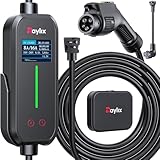
- [2026 INTELLIGENT CHARGING UPGRADE — PRECISION CONTROL MEETS SMART SCHEDULING] After surveying 100K+ U.S. EV owners, the Raylix R&D team found that nearly all drivers recognized the necessity of adjustable current and scheduled charging. Our upgraded J1772 charger features 4-level adjustable current (8A/10A/12A/16A) and a 1–12 hour smart delay timer. Whether you're charging overnight or during off-peak hours, enjoy smarter energy use, lower costs, and total convenience—on your schedule.
- [ONE CHARGER, ALL J1772 EVs/PHEVs READY!] Compatible with all SAE J1772 electric vehicles and plug-in hybrids—whether it’s Ford, GM, Nissan, Audi, BMW, Kia, Hyundai, Honda, Chevy, or more. Perfect for home or on-the-road charging, our 16A Level 1 & 2 charger ensures your EV is always powered and ready for any journey.
- [CHARGE 4× FASTER — NO MORE WAITING] In a rush? Our 16A Level 1 & 2 charger delivers charging speeds up to 4× faster than standard 8A Charger Level 1. Whether it's an early commute, a spontaneous trip, or last-minute errands, your EV will be ready when you are.
- [LEVEL 1 & 2 PORTABLE CHARGER — CHARGE ANYWHERE, ANYTIME] Designed for maximum flexibility, Raylix Level 1 & 2 EV charger features both 5-15 and 6-20 plug compatibility. Whether you're charging in your garage, at a friend's house, or at a roadside motel. NEMA 6-20 plug for Level 2 ev charging (240V, 16A, 3.68kW, 9-12 miles/hr) and a NEMA 5-15 adapter for Level 1 ev charging (120V, 12A, 1.44kW, 3-5 miles/hr) NOTE: In compliance with North American electrical safety standards, the charger automatically limits current to 12A when using a 5-15 outlet—protecting both your vehicle and your home’s electrical system.
- [AT-A-GLANCE CHARGING COMMAND: TOTAL CONTROL, INSTANTLY] While most ev chargers solutions confine vital data to in-car screens, the Raylix tesla charger breaks free with its enhanced TFT color display. This Raylix-exclusive feature delivers crystal-clear, real-time updates—voltage, current, power load, AND critical charging temperature—directly on the unit. Just one glance gives you complete charging insight. It’s not just information; it's the empowering peace of mind and satisfying control that transforms every charge into a masterfully managed experience.
As additional context, the J.D. Power 2025 U.S. EVX Home Charging Study ranked Tesla first for permanently mounted Level 2 satisfaction, followed by Emporia and Wallbox, with ChargePoint below those brands in that particular study. That is owner-satisfaction evidence, not proof of laboratory reliability or a guarantee for every model. Independent physical testing from State of Charge and other outlets should be separated from manufacturer specifications and editorial judgement.
Do these 3 things before closing this tab:
1Scan for outdated or missing drivers - takes under a minute2Clear out junk files and repair common Windows errors3Fix the driver behind crashes, sound loss and screen glitchesCommon problems and what to do
The charger is rated for 11.5kW but the car charges more slowly
- The vehicle’s onboard AC charger may be limited to 7.2kW or 11kW.
- The charger may have been configured to a lower current.
- A plug-in version may be limited to 32A or 40A.
- Voltage may be below nominal.
- The battery may be cold or nearly full, causing tapering.
- The car or charger may be following a schedule or current limit.
- Solar or load-management software may be intentionally reducing power.
- Heat may be causing protective derating.
Charging stops overnight
- Check the vehicle’s charge schedule and battery limit.
- Check the charger for a fault, loss-of-connection or temperature indication.
- Confirm that the cable is fully seated at both ends.
- Check whether the breaker, GFCI or RCD has tripped.
- Inspect for heat, water ingress or damaged connectors without touching damaged electrical parts.
- Temporarily disable vehicle and charger schedules for a short, supervised test.
- Power-cycle only according to the manufacturer’s instructions.
- If the fault returns, stop repeatedly resetting the breaker and contact the installer or manufacturer.
The app or Wi-Fi fails
First determine whether the charger can still start a basic session by plugging in, using a local button or using RFID. Check whether schedules are stored locally or in the cloud, whether firmware updates can interrupt charging, and whether the charger offers OCPP or data export. Cloud dependence is a purchasing issue, not merely a troubleshooting issue.
Buying checklist
- Identify the vehicle’s AC connector and maximum onboard AC rate.
- Check the charger’s exact model and regional variant.
- Choose tethered or socketed based on convenience and cable storage.
- Choose hardwired or plug-in only after checking the circuit, outlet and local code.
- Have a qualified electrician calculate the continuous load.
- Confirm single-phase or three-phase supply before considering 11kW or 22kW.
- Verify certification or conformity for the actual model, not just the brand.
- Check outdoor, temperature and cable-storage requirements.
- Decide whether you need scheduling, tariff integration, solar surplus charging, load management or two-EV power sharing.
- Find out which smart features are included and which need meters, CT clamps, gateways or subscriptions.
- Ask what happens when Wi-Fi or cloud services fail.
- Price the charger, installation, trenching, panel work and ongoing costs separately.
- Check current utility rebates, UK grants or tax rules before placing the order.
- For a rental, flat or shared parking space, obtain every required permission first.
Our verdict
For most UK households, buy a well-supported 7kW or 7.4kW Type 2 wallbox and spend more attention on installation quality, cable convenience and tariff or solar compatibility than on a 22kW headline number. The Zaptec Go UK 7kW is a compact smart choice, the EO Mini Pro 3 is attractive where size matters, and the Wallbox Pulsar Max is the more flexible option for energy-management expansion.
For North American households, a certified 40A–48A Level 2 charger is usually the sensible target. Choose the Tesla Wall Connector for a straightforward NACS installation, the Tesla Universal Wall Connector for mixed NACS and J1772 vehicles, the Emporia Pro where panel capacity and whole-home load management matter, and the ChargePoint Home Flex where adjustable current and installation flexibility are priorities. The Emporia Classic is a strong value-oriented alternative.
Before buying any of them, confirm the car’s onboard AC limit and obtain an installation assessment. That is what prevents the most expensive mistake: paying for a faster wallbox that the vehicle or the house cannot use.
What’s actually slowing this PC down?
Pick the symptom - the matching free tool is one click away.
Frequently Asked Questions
Do I need a home wallbox for an EV?
Not necessarily. A portable Level 1 EVSE may be enough for a PHEV or low-mileage driver whose car is parked overnight. A dedicated Level 2 wallbox is more useful when you drive more miles, need faster recovery, have limited parking time or operate two EVs.
Is 7kW enough for home charging?
For most UK single-phase homes, 7kW or 7.4kW is enough for overnight charging. Whether it is enough depends on daily energy use and parking time, not simply battery size. A car using 13kWh per day would need roughly 1.8 hours at 7.2kW before losses and tapering.
Is a 22kW home charger worth it?
Usually only when the property has three-phase supply and the vehicle has a 22kW onboard AC charger, or when a specific two-EV or rapid-turnaround use case justifies it. A 22kW wallbox does not make a 7.4kW or 11kW vehicle charge faster.
Can a Tesla Wall Connector charge another EV?
In North America, the standard Tesla Wall Connector is intended for NACS vehicles. A J1772 vehicle may need a suitable AC adapter. The Tesla Universal Wall Connector includes an integrated J1772 adapter, making it more suitable for a mixed NACS/J1772 household. Confirm the adapter’s rating and regional compatibility.
Quick wins for a faster PC:
Clear out junk files and repair common Windows errorsFree Scan →Fix the driver behind crashes, sound loss and screen glitchesFind Drivers →Is hardwired safer than plug-in?
Neither format is automatically safer. Hardwired installation removes a high-current receptacle and is often preferable for permanent or outdoor installations. A plug-in charger can also be safe when the receptacle, circuit, protection and installation are correctly rated for continuous EV charging.
Can I install an EV charger outdoors?
Yes, if the charger and complete electrical installation are suitable. Check enclosure and impact ratings, drainage, UV exposure, cable protection, snow or ice accumulation, GFCI or RCD requirements, open-PEN protection where relevant, and protection from vehicle impact.
Can I use solar panels to charge my EV?
Some chargers can measure surplus solar and adjust charging, but solar compatibility is not the same as a daylight timer. You may need a CT clamp, meter, gateway or energy-management system, and the EV may compete with a home battery for available power. Verify what is included for the exact model.
Do I need a panel upgrade for a Level 2 charger?
Not always. An electrician may be able to reduce the current, use dynamic load management, install a smart load centre or share power between two chargers. A service or panel upgrade may still be needed for a high-current installation, and an available breaker slot alone does not prove sufficient capacity.
Windows Errors? Fix Them Before They Spread
Repair common Windows errors and clear accumulated junk for a smoother, more stable PC - no reinstall needed.Free scan · no reinstallOutdated Drivers Are Slowing You Down
One free scan finds every outdated or missing driver and matches the right update for your exact hardware.Free scan · exact hardware matchWhat happens if the charger’s Wi-Fi goes down?
It depends on the model. Some continue basic charging and retain schedules locally; others rely more heavily on the cloud. Check whether plug-and-charge, a local control, RFID or vehicle scheduling works without internet before buying.
Are home EV charger incentives still available?
Rules depend on location and date. In the United States, current IRS guidance limits the federal 30C credit to qualifying property placed in service through 30 June 2026, subject to additional requirements. In the UK, grant routes and rates vary by property type and eligibility, with changes announced for 2026. Check the current IRS or GOV.UK information before ordering.
Can I install a home EV charger myself?
Do not assume so. A Level 2 wallbox normally requires dedicated high-current wiring, protective devices, load calculations and possibly permits or notification. Use a qualified electrician or approved installer who understands the charger’s instructions and local requirements.
The Bottom Line
Buy for the car and the electrical installation, not the box’s biggest number. A 7kW UK wallbox is enough for most overnight charging, while a 40A–48A North American Level 2 unit is the usual practical range. Match the connector, verify the vehicle’s onboard AC limit, have the supply assessed, and pay extra only for smart, solar or load-management features that solve a real problem.
Quick Recap
Product prices and availability are accurate as of the date/time indicated and are subject to change. Any price and availability information displayed on Amazon at the time of purchase will apply.