Recommended Free Tools
If you want a Wrangler-like trail SUV, compare the Ford Bronco and Toyota 4Runner first. If your priority is a roomy two-row daily driver with standard all-wheel drive and 5,000-pound towing, look at the Honda Passport. If you want the lowest starting price and mostly moderate trails, the Subaru Outback is the sensible alternative. “The best alternative to waiting for a new Jeep” depends on which Jeep you had in mind, your terrain, seating needs, budget, and what is actually in stock nearby.
Start by defining which Jeep you are replacing
“A new Jeep” can mean a Wrangler, Grand Cherokee, Cherokee, Compass, or another model. Those vehicles serve different purposes, so substituting one SUV without identifying the use case can produce the wrong result.
| # | Preview | Product | Price | |
|---|---|---|---|---|
| 1 |
|
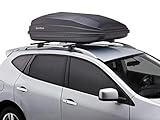
SportRack Vista XL Rear Opening Cargo Box,Black | $399.99 | Buy on Amazon |
| 2 |

|
Thule Pulse 2 L Roof Mounted Box, 16 Cubic Ft, Dual-Side Opening | $749.95 | Buy on Amazon |
| 3 |

|
Thule Force 3 XL US | $929.95 | Buy on Amazon |
As an Amazon Associate I earn from qualifying purchases.
- Wrangler-style driving: You need serious trail equipment, available four-wheel drive, durable underbody hardware, and a body designed for rough terrain. Begin with the Ford Bronco and Toyota 4Runner.
- Family transportation with outdoor capability: You may value quiet road manners, cargo room, towing, and all-wheel drive more than rock-crawling hardware. The Honda Passport is the closest fit in this shortlist.
- Lower purchase price and occasional trail use: The Subaru Outback starts substantially below the other vehicles discussed here and is aimed at daily driving with moderate off-pavement ability.
- More than five seats: The 4Runner is the only model in this group whose manufacturer lists seating for up to seven, and that capacity depends on configuration.
Prices below are U.S.-market starting figures reported for 2026 models. They are launch or listed MSRPs, not guaranteed transaction prices, and generally exclude destination charges, taxes, registration, dealer fees, options, and regional incentives.
Free tools Windows power users keep installed
One-click scans. No signup required.
Quick comparison of the four alternatives
| Model | Best fit | Published 2026 starting price | Drivetrain and powertrain facts | Utility facts |
|---|---|---|---|---|
| Toyota 4Runner | Rugged SUV use, available three-row seating, hybrid power | $42,270 listed by Toyota | Available i-FORCE MAX hybrid; up to 326 hp and 465 lb-ft; 2WD, part-time 4WD, and full-time 4WD are offered across the line | Estimated up to 23 mpg combined; seating for up to seven, configuration dependent |
| Ford Bronco | Closest Wrangler-style substitute for buyers prioritizing trail hardware and open-air design | Not stated in the cited comparison; verify the current Ford MSRP by trim | Trim-specific equipment is decisive; do not assume every Bronco has the same axles, gearing, tires, or four-wheel-drive system | Confirm local trim, package, roof, door, and tow configuration before comparing |
| Honda Passport | Roomy two-row family SUV with standard AWD and towing | $46,445 reported by Edmunds via AP News | 3.5-liter V6, 10-speed automatic, and i-VTM4 AWD | 5,000-pound standard towing capacity reported by Edmunds; substantial passenger and cargo room |
| Subaru Outback | Price-conscious daily driver for moderate trails | $36,445 reported by Edmunds via AP News | All-wheel-drive availability and equipment vary by trim; it is not equivalent to a low-range 4WD system | Independent coverage characterizes its capability as suitable for moderately challenging off-road situations |
See Toyota’s current specifications on the 2026 Toyota 4Runner product page, Honda’s equipment information in the 2026 Passport Info Center, and the AP News article containing Edmunds’ pricing and capability reporting at “The top 5 midsize SUVs tested and ranked by Edmunds.”
#1 Best Overall
- 18 cubic foot (510 L) internal cargo capacity
- Made from durable UV-resistant ABS material
- Rear opening for easy access away from traffic
- Tool-free mounting hardware for easy installation and removal
- Includes key and lock to secure contents in the box, and the box to your rack
Toyota 4Runner: the broadest all-around Jeep alternative
Why it belongs on your first test-drive list
The 2026 4Runner is the most versatile choice here if you want a genuinely rugged SUV but are not sure whether you need a two-door, open-air vehicle. Toyota lists multiple drivetrain layouts, an available hybrid powertrain, and seating for as many as seven. That gives it a wider range of family and cargo configurations than a traditional two-row trail SUV.
Toyota’s U.S. page lists a $42,270 starting price for the 2026 model. The available i-FORCE MAX hybrid is rated at up to 326 horsepower and 465 lb-ft of torque, with an estimated maximum of 23 mpg combined. Those are model-line maximums: the most powerful hybrid, the highest fuel-economy estimate, a particular seating layout, and a specific four-wheel-drive arrangement are not necessarily available together on every trim.
Drivetrain choices require trim-level checking
The 4Runner line includes 2WD, part-time 4WD, and full-time 4WD configurations. That matters because a rear-drive or part-time system used on dry pavement is a different proposition from a full-time system, and neither should be confused with the capability of a particular trim’s low-range gearing, differential hardware, suspension, tires, or ground clearance.
When comparing a 4Runner with a Wrangler or Bronco, write down the exact trim and equipment rather than comparing model names. Check whether the vehicle has the transfer-case range you need, the tires suited to your terrain, recovery points, and the payload and towing ratings shown on its door label and window sticker.
Who should choose it
- Choose the 4Runner if you need an SUV that can cover daily commuting, family trips, and serious trail use in one vehicle.
- Choose it if occasional third-row seating is more valuable than a removable roof or doors.
- Consider the hybrid if torque delivery and fuel use matter, but price the exact hybrid trim rather than assuming the $42,270 entry price includes it.
The 4Runner is not automatically the best answer for every buyer. Its advantages depend on the trim’s actual hardware, the amount of highway driving you do, and whether you need two rows or three.
Ford Bronco: the closest Wrangler-style substitute
Why it is the natural comparison
The Ford Bronco is the clearest alternative when your idea of a Jeep is a vehicle built around trail driving, removable body panels, and a more upright, purpose-built feel. A current Jeep Canada comparison page places the Bronco Badlands alongside the Wrangler Rubicon and Toyota 4Runner, confirming that these models are being presented as direct competitors: the comparison page.
Do not shop by the Bronco name alone
Bronco capability changes substantially with trim and package. A base Bronco and a Badlands configured for difficult trails may differ in four-wheel-drive system, axle hardware, locking differentials, suspension, tires, approach and departure geometry, and available trail controls. Doors, roof panels, wheelbase, and engine selection also affect how the vehicle fits your use.
What’s actually slowing this PC down?
Pick the symptom - the matching free tool is one click away.
The cited comparison page contains inconsistent 4Runner model-year labeling and a data error, and it does not establish a complete, reliable set of Bronco specifications or current U.S. pricing. Verify every Bronco number on Ford’s current page and the vehicle’s window sticker before publishing a buying decision or signing a purchase order.
Rank #2
- A simple, durable roof box built for commuting, day trips, and weekend escapes
- 450 litres of cargo space and a 75 kg load capacity for luggage, gear, skis and snowboards. Secure, tool-free system with a torque indicator that clicks when safely attached. Confirms closure for added peace of mind. Access your gear easily from either side of the vehicle
- Streamlined shape designed to suit a wide variety of modern vehicles
- Made from hardwearing ASA-ABS plastic that resists sun, scratches, and weather
- Full trunk access with minimal risk of contact with the cargo box, thanks to its forward position on the vehicle roof
Who should choose it
- Choose the Bronco if removable roof or doors and a Wrangler-like trail experience are central to your decision.
- Choose the exact trim that supplies your required axle, tire, gearing, clearance, and recovery equipment instead of assuming an appearance package adds trail capability.
- Compare wheelbase and body style if you spend time on narrow trails or need rear-seat access; those choices affect maneuverability and interior practicality.
The Bronco is the most direct substitute for a Wrangler conceptually, but the right Bronco is a particular configuration, not simply any Bronco on a dealer lot.
Honda Passport: the two-row family and towing choice
What the 2026 Passport provides
Honda’s 2026 Passport information center identifies a 3.5-liter V6, a 10-speed automatic transmission, and i-VTM4 all-wheel drive. Edmunds reporting carried by AP News lists standard AWD, a 5,000-pound standard towing capacity, substantial passenger and cargo room, and a $46,445 starting price for the 2026 model.
This is a different answer to the Jeep question than a Bronco or a 4Runner. The Passport is aimed at buyers who need confident traction in rain, snow, gravel, and unpaved access roads, plus a useful two-row cabin and towing ability, but who do not intend to build the vehicle around technical rock-crawling.
Do these 3 things before closing this tab:
1Clear out junk files and repair common Windows errors2Scan for outdated or missing drivers - takes under a minute3Repair Windows errors before they cause bigger problemsWhere its AWD fits—and where it does not
Standard AWD does not mean low-range 4WD. AWD is useful for distributing torque on changing road surfaces; a dedicated four-wheel-drive system with low range and trail-specific hardware is designed for different obstacles and speeds. If your trips include deep ruts, ledges, extended wheel lift, or recovery situations, compare the Passport with a properly equipped 4Runner or Bronco rather than treating the drivetrains as interchangeable.
Who should choose it
- Choose the Passport if two rows, family comfort, cargo space, and towing are more important than removable body panels or specialized trail hardware.
- Choose it if you want AWD as standard equipment and do not want to sort through many drivetrain configurations.
- Check the trailer’s loaded weight, tongue weight, braking equipment, and the Passport’s exact rating before towing; a 5,000-pound maximum is not a promise that every trailer at that weight is appropriate in every condition.
Subaru Outback: the lower-entry, moderate-trail option
Why the price changes the decision
Edmunds reporting in AP News puts the redesigned 2026 Outback’s starting price at $36,445, $5,825 below the listed 4Runner entry price and $10,000 below the reported Passport starting price. Those are not like-for-like trims, and destination charges or dealer pricing can change the gap, but the difference is large enough to affect financing, insurance, and the amount available for equipment.
What “off-road capable” means here
The same coverage describes the 2026 Outback as able to handle moderately challenging off-road situations. That makes it a practical choice for forest roads, gravel, snow, muddy access roads, and campsites when daily comfort and price matter more than extreme obstacles.
Do not equate the Outback’s AWD and ground clearance with a low-range 4WD system. Before leaving pavement, confirm the trim’s tires, drive modes, clearance, recovery points, and the limits in the owner’s manual. A vehicle that is comfortable on a rough access road may not be appropriate for a trail requiring large breakover angles, locking differentials, or winch-assisted recovery.
Who should choose it
- Choose the Outback if most miles are on pavement and your outdoor use is moderate rather than technical.
- Choose it if the lower starting price leaves room for winter tires, a roof system, camping equipment, or a larger emergency fund.
- Choose another model if your primary goal is repeated, difficult trail driving or a Wrangler-like open-air experience.
How the alternatives compare on the decisions that matter
Terrain and four-wheel-drive hardware
For Wrangler-style trails, start with the Bronco and 4Runner, then compare the exact trims. The Passport and Outback are better viewed as road-oriented AWD vehicles that can support outdoor access, with the Outback positioned for moderate off-pavement use. AWD, part-time 4WD, and full-time 4WD are not interchangeable labels; inspect transfer-case range, differentials, tires, clearance, and recovery equipment.
Rank #3
- Offers durability and maintains a sleek appearance, designed to handle daily use and the demands of active lifestyles
- A quick, secure, and intuitive mounting system that indicates when the cargo box is safely attached with a simple click
- Provides easy access to your cargo from both sides of the vehicle, enhancing convenience and efficiency
- Extensively tested for road safety and durability in the Thule Test Center, ensuring top-notch quality and reliability
- SlideLock system with separate locking and opening functions, automatically locks the lid in place and indicates when the box is closed securely
Ride comfort and daily use
Use your commute, passenger mix, and road conditions to decide how much trail specialization you can tolerate. A rugged SUV may deliver the hardware you want but impose compromises in noise, ride, entry height, or fuel use. The Passport and Outback deserve attention when most of your driving is paved and the trail portion is occasional.
Passenger and cargo space
The 4Runner is the only model in this shortlist with manufacturer-listed seating for up to seven, subject to configuration. The Passport is explicitly a two-row vehicle with substantial passenger and cargo room. The Bronco’s usable space depends on body style, wheelbase, doors, roof, and rear-seat configuration. The Outback’s wagon-like layout favors everyday cargo and outdoor gear, but you should measure your child seats, dog crate, bikes, or sleeping platform in the actual trim.
Towing
The Passport has a reported standard 5,000-pound towing capacity. No complete, trim-by-trim towing table is provided for the Bronco, 4Runner, or Outback, so do not fill those gaps with a model-line assumption. Use the manufacturer’s current tow rating for the exact engine, drivetrain, body, and package, and account for payload and tongue weight.
Price and ownership budget
The Outback has the lowest reported starting price at $36,445. The 4Runner starts at $42,270 on Toyota’s U.S. page, while the Passport starts at $46,445 in Edmunds reporting. Bronco pricing is not established by the cited material. Compare destination charges, mandatory equipment, dealer-installed accessories, financing, insurance, fuel, tires, and recovery gear—not just the advertised base number.
Availability
Model-year specifications and inventory are volatile. A listed MSRP does not guarantee that a dealer has the trim, color, drivetrain, or seat configuration you want. Search several dealers, request a window sticker, and confirm the VIN’s equipment before treating a vehicle as an alternative to waiting.
A practical process for choosing and buying now
- Name the Jeep use case. Write down whether you mean Wrangler-level trail ability, a Grand Cherokee-style family SUV, towing, a third row, or simply a comfortable AWD vehicle.
- Set non-negotiables. Include seat count, maximum budget, tow weight, cargo dimensions, roof or door requirements, fuel-powertrain preference, and the most difficult terrain you will actually drive.
- Shortlist by mission. Use Bronco and 4Runner for rugged use, Passport for two-row AWD utility and towing, and Outback for lower-cost daily driving with moderate trail access.
- Choose a specific trim before comparing prices. Record drivetrain, engine, axle and differential equipment, tires, clearance, tow package, roof and door configuration, and seats.
- Verify primary-source specifications. Check the Toyota 4Runner page and Honda Passport Info Center. For Bronco and Outback details not established here, use the current manufacturer pages and the window sticker.
- Inspect the actual vehicle. Test-fit child seats and cargo, operate the roof or doors if applicable, check approach to the driver’s seat, and examine tow wiring, recovery points, and underbody clearance.
- Get an out-the-door quote. Ask for MSRP, destination, dealer fees, accessories, taxes, registration, financing rate, and trade-in treatment in writing.
- Confirm availability and timing. Have the dealer verify that the VIN, model year, trim, drivetrain, and equipment match your written requirements before placing a deposit.
Common mistakes when replacing a Jeep with another SUV
- Comparing badges instead of hardware: “AWD,” “4WD,” and “off-road” can describe very different systems. Read the equipment list.
- Assuming the highest published number applies to every trim: The 4Runner’s up-to-326-hp, 465-lb-ft hybrid output and up-to-23-mpg estimate are model-line maximums, not universal specifications.
- Treating launch MSRP as a final price: Destination, options, dealer fees, taxes, and market conditions change the amount you pay.
- Buying capability you will not use: A trail-focused vehicle can add cost and compromise daily comfort. If your hardest trip is a maintained gravel road, the Outback or Passport may be the more rational purchase.
- Ignoring configuration-dependent seating: Verify whether the 4Runner on the lot actually has the third row and cargo arrangement you need.
- Using a comparison page as the only specification source: The cited Jeep Canada page contains inconsistent 4Runner model-year labeling and a data error. Use it only as evidence that the Bronco and 4Runner are considered competitors, then verify current numbers elsewhere.
Which one should you buy instead of waiting?
Buy the Ford Bronco when the Wrangler-like experience—open-air configuration and serious trail focus—is the reason you were considering a Jeep in the first place. Buy the Toyota 4Runner when you want rugged ability plus a broader family-SUV role, available hybrid power, and up to seven seats in the appropriate configuration. Buy the Honda Passport when two-row space, standard AWD, and a reported 5,000-pound standard tow rating matter more than technical off-road equipment. Buy the Subaru Outback when the lowest reported starting price and comfortable daily use outweigh the need for dedicated trail hardware.
Before committing, compare the exact trims and inspect local stock. The right alternative is the vehicle that meets your hardest real requirement without charging you every day for capability you will never use.
Outdated Drivers Are Slowing You Down
One free scan finds every outdated or missing driver and matches the right update for your exact hardware.Free scan · exact hardware matchPC Slower Than It Used to Be?
A free scan shows the junk files, broken settings and background clutter dragging Windows down - then fixes them in one click.Free scan · Windows 10 & 11Quick Recap
Product prices and availability are accurate as of the date/time indicated and are subject to change. Any price and availability information displayed on Amazon at the time of purchase will apply.




