Crashes, No Sound, or Screen Glitches?
Random freezes, missing sound and display glitches usually trace back to one bad driver. Find and replace yours safely.Free scan · under a minuteWindows Errors? Fix Them Before They Spread
Repair common Windows errors and clear accumulated junk for a smoother, more stable PC - no reinstall needed.Free scan · no reinstallBentley and Rolls-Royce began as separate British car companies, became corporate siblings after Rolls-Royce acquired Bentley in 1931, and spent most of the twentieth century sharing engineering resources and the Crewe factory. They separated in the late 1990s when Volkswagen bought Bentley and the Crewe automotive operation, while BMW obtained the Rolls-Royce automotive name and logo rights from the separate aerospace company Rolls-Royce plc.
That is the key to the apparent contradiction: Volkswagen acquired the car business that had been producing both marques, but BMW secured the Rolls-Royce name. From 2003 onward, Bentley was rebuilt under Volkswagen at Crewe and Rolls-Royce Motor Cars was relaunched under BMW at Goodwood.
The short version: one corporate family, not one identical brand
Bentley and Rolls-Royce did not start as one company, and they did not become a single badge in 1931. Their relationship changed in stages:
- 1904–1919: Rolls-Royce and Bentley emerged independently, with different founders and different reputations.
- 1931: Rolls-Royce acquired Bentley’s assets after Bentley Motors ran into financial trouble.
- 1933–1998: Bentley operated within the Rolls-Royce organization. The marques often shared engineering foundations, factories and production resources, while retaining different identities.
- July 3, 1998: Volkswagen acquired Bentley, the Crewe plant and the operating automotive business. BMW separately acquired the Rolls-Royce automotive brand and naming rights from Rolls-Royce plc.
- January 1, 2003: BMW-owned Rolls-Royce Motor Cars began production at Goodwood. Bentley remained at Crewe under Volkswagen ownership.
So “Bentley and Rolls-Royce became one” is accurate only as a description of common ownership and an intertwined manufacturing system. “They parted ways” refers to the later split in ownership, brand rights, factories and product strategy.
Free tools Windows power users keep installed
One-click scans. No signup required.
#1 Best Overall

- Pullback Action: Experience realistic racing with the pullback action feature.
- Opening Doors: Explore the intricate interior details with the opening door feature.
- 1:38 Scale: Enjoy a detailed 1:38 scale die-cast model (approx. 5 inches long).
- Authentic Design: Modeled after the iconic 1967 Ford Shelby Mustang GT500.
- Display Piece: A must-have collectible for car enthusiasts and model collectors.
Two founders, two automotive philosophies
Rolls-Royce: engineering refinement and formal luxury
Charles Stewart Rolls and Henry Royce first met in Manchester on May 4, 1904. Their partnership brought together two complementary strengths. Royce was an engineer who had built his own automobile, while Rolls was an aristocratic motor-car dealer and motoring pioneer with commercial reach.
Their company was formally incorporated as Rolls-Royce Limited on March 15, 1906. From the beginning, the marque became associated with engineering refinement, quietness, reliability and formal luxury. That identity was not merely a later marketing invention; it grew from the company’s early emphasis on technically polished, prestigious cars.
Bentley: speed, endurance and the Bentley Boys
W.O. Bentley founded Bentley Motors in 1919. His company built large, durable performance cars and developed a sporting reputation that contrasted with Rolls-Royce’s more formal image.
Bentley’s racing success was central to that identity. A Bentley Speed Six won the 24 Hours of Le Mans in 1929 and 1930, helping create the mythology of the Bentley Boys: wealthy, highly competitive drivers associated with fast Bentley road cars and endurance racing.
Quick wins for a faster PC:
Fix the driver behind crashes, sound loss and screen glitchesFind Drivers →Repair Windows errors before they cause bigger problemsFix Now →The distinction was therefore clear in broad terms. Rolls-Royce represented refined luxury and effortless progress; Bentley represented sporting performance and driver involvement. They were both prestigious British marques, but they appealed to different versions of the luxury-car customer.
Why Rolls-Royce acquired Bentley in 1931
Bentley’s racing reputation did not prevent serious financial problems. The Great Depression made it difficult for the independent company to sustain its business, and Rolls-Royce acquired Bentley’s assets in 1931.
The acquisition created Bentley Motors (1931) Ltd. It ended Bentley’s independence, but it did not eliminate the name or its sporting associations. Instead, Rolls-Royce retained Bentley as a complementary marque—a more sporting expression within a larger luxury-car organization.
That distinction matters. Bentley was not simply renamed Rolls-Royce, and Rolls-Royce did not become a Bentley subsidiary in the modern sense. Both names continued to appear on cars, with separate badges, model names, styling treatments and marketing identities.
The Tool Desk
Outbyte Driver Updater FREEScan for outdated or missing drivers - takes under a minuteDriver Scan →Outbyte PC Repair FREEClear out junk files and repair common Windows errorsFree Scan →The Derby Bentley marked the beginning of the shared era
The first Bentley produced after the acquisition was the 31⁄2 Litre, built at Rolls-Royce’s Derby factory from 1933. It is commonly known as the “Derby Bentley.”
Bentley describes the 31⁄2 Litre as having no parts in common with the pre-acquisition Bentleys. That makes the model an important dividing line between the cars created by W.O. Bentley’s independent company and the Bentley generation developed under Rolls-Royce control.
The Derby Bentley preserved a degree of sporting character, but it belonged to a very different industrial and engineering structure. From this point forward, the two marques were increasingly connected by shared corporate resources and common technical thinking.
How Bentley and Rolls-Royce shared Crewe
After World War II, production moved to the Pym’s Lane facility in Crewe. For decades, Crewe became the principal manufacturing center for both Rolls-Royce and Bentley cars.
This is the period that creates much of the confusion surrounding the brands. Many postwar Rolls-Royce and Bentley models were mechanically related or developed from common engineering foundations. The companies could share manufacturing equipment, components and production expertise while still presenting two different products to customers.
In broad terms, Bentley was usually the sportier, more driver-focused interpretation of the organization’s cars. A Bentley might receive different styling, suspension tuning, trim, bodywork or engine calibration from its Rolls-Royce counterpart. Customer positioning also mattered: Rolls-Royce emphasized serenity, chauffeur-oriented luxury and formal presence, while Bentley leaned toward performance and owner driving.
That is why the phrase “the same car with a different badge” is sometimes directionally useful for the shared Crewe decades but is not literally correct for every model. The cars often shared a family resemblance and substantial engineering resources, yet specification and character could differ considerably.
Rank #2

- 1.Product dimension: 6.29 * 2.5 * 3 inches, Package weight: 0.48 pounds,Suitable for playing
- 2. High-Quality Materials and Strong Pull Back: Diecast automobile model, zinc alloy, plastic parts, rubber tires, detailed interior and exterior decoration. Install a strong pull-back device,Place the car on the ground, hold down the car body and pull it back, the model car will drive forward
- 3. Function: Side doors, hood and tailgate can be opened movably; Then press the two wheels of the front vehicle or open the front door to trigger the sound of engine and lamp
- 4. Best Gifts Toys: This 1 / 32 toy car is very suitable for children. The paint is fine and feels good. It's very heavy to carry. It is also very suitable for car model lovers as decoration
- 5. Accessories and collections: This product is very suitable for static accessories and can be used as an accessory next to a computer. For those who are passionate about collecting model car models, this is a great art collection.
The shared history also extended beyond mass-produced saloons. Coachbuilt bodies, specialist trim and bespoke work formed part of the broader Crewe-era story. The common factory did not make every car identical; it provided a shared industrial home in which two related marques could be developed and manufactured.
Readers who want to explore that period in greater depth may find a Rolls-Royce and Bentley history book, particularly Rolls-Royce and Bentley – Sixty Years at Crewe, useful for tracing the shared factory, model development and ownership changes. A broader alternative is Rolls-Royce & Bentley: The History of the Cars, which is better suited to readers looking for a model-by-model account rather than concentrating mainly on the corporate split.
The 1997–1998 sale created the ownership puzzle
By October 1997, Vickers—the parent of the Rolls-Royce car business—had put the underfunded luxury-car operation up for sale. Volkswagen and BMW competed for the business, but the outcome was more complicated than a normal takeover.
On July 3, 1998, Volkswagen acquired the automotive operation, the Bentley brand and the Crewe factory. Volkswagen also received the right to use the Rolls-Royce brand name temporarily, through the end of 2002.
However, the Rolls-Royce automotive name and logo were controlled separately by Rolls-Royce plc, the aerospace and engineering company. BMW acquired those relevant brand and naming rights from Rolls-Royce plc in July 1998.
Recommended Free Tools
This is why the popular statement “Volkswagen bought Rolls-Royce” is misleading. Volkswagen bought the operating car business that included Bentley and the Crewe manufacturing operation. It did not obtain permanent control of the Rolls-Royce automotive name. BMW lost the auction for the operating business but secured the intellectual property that allowed it to create a new Rolls-Royce Motor Cars company.
The three different entities people often confuse
| Entity | Role in the story |
|---|---|
| Rolls-Royce Limited | The original car company founded by Charles Rolls and Henry Royce in 1906. |
| Rolls-Royce plc | A separate aerospace and engineering company that controlled the relevant Rolls-Royce automotive name and logo rights during the 1998 sale. |
| Rolls-Royce Motor Cars | The modern BMW-owned luxury-car company, established with production at Goodwood from 2003. |
Rolls-Royce plc and Rolls-Royce Motor Cars are not the same legal entity or the same business. The shared name reflects historical trademark and corporate connections, not a continuing single company covering aerospace and automobiles.
What happened during the 1998–2002 transition?
The separation did not happen overnight. During the transition, the Crewe operation continued producing cars carrying both Bentley and Rolls-Royce branding. Volkswagen increasingly focused its long-term plans on Bentley, while BMW prepared a new Rolls-Royce company, factory and product range.
The Bentley Arnage, introduced in 1998, illustrates the complicated handover period. It was launched while the companies’ engineering and supply relationships were changing. Contemporary accounts of the split describe an overlap in which BMW-supplied components and Volkswagen’s plans for Bentley were both part of the technical background.
It is important not to confuse the Arnage’s launch date with the later process of giving Bentley a more independent technical direction. The model arrived in the transition era, while the brands’ engineering identities and ownership structures were still being untangled.
Volkswagen could use the Rolls-Royce name only for the agreed temporary period. That arrangement ended after 2002, forcing the historical Crewe operation and the modern Rolls-Royce marque onto separate paths.
January 1, 2003: the operational split becomes real
At 00:01 on January 1, 2003, the first Phantom VII was handed over at Goodwood. That event marked the beginning of modern BMW-owned Rolls-Royce Motor Cars production.
BMW established Rolls-Royce production at Goodwood in West Sussex rather than continuing the marque’s production at Crewe. Rolls-Royce Motor Cars became a wholly owned BMW Group subsidiary, with a new factory, a new product lineage and a strategy built around ultra-luxury and bespoke craftsmanship.
Meanwhile, Bentley remained at Crewe under Volkswagen ownership. Bentley’s modern revival became visible with the 2003 Continental GT, a high-performance grand tourer equipped with all-wheel drive and a twin-turbocharged W12. The Continental GT gave Bentley a distinctly modern commercial and technical direction: luxurious, fast and suitable for long-distance driving, but more overtly performance-focused than a traditional Rolls-Royce.
The split therefore involved more than moving two badges to different factories. It created two separate business strategies:
- Bentley under Volkswagen: a luxury-performance marque centered on grand touring, high output and driver appeal, with Crewe as its home.
- Rolls-Royce under BMW: a bespoke super-luxury marque focused on craftsmanship, personalization, refinement and formal presence, with Goodwood as its home.
Bentley and Rolls-Royce today: related history, separate companies
| Bentley | Rolls-Royce Motor Cars | |
|---|---|---|
| Current owner | Volkswagen AG | BMW Group |
| Primary British production base | Crewe, England | Goodwood, West Sussex, England |
| Historical emphasis | Performance, endurance racing, the Bentley Boys and sporting luxury | Engineering refinement, quietness, formal luxury and bespoke craftsmanship |
| Modern direction | High-performance grand tourers and luxury cars, including the Continental GT family | Ultra-luxury and highly bespoke vehicles, beginning with the Phantom VII generation in 2003 |
They are no longer sister marques under the same automotive owner. Bentley is part of Volkswagen’s luxury-performance portfolio, while Rolls-Royce Motor Cars is a BMW Group company. Their products, factories and technical development programs are separate in the modern era.
Rank #3
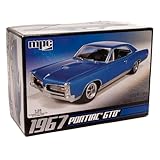
- V8 POWER: The model features a 400 cubic inch V8 engine, reflecting the muscle and power that defined the GTO's reputation.
- DETAILED SUSPENSION & EXHAUST: The kit incorporates separate rear suspension and exhaust detailing, adding to the realism of the model.
- BUCKET SEATS & CONSOLE: The model's interior features bucket seats and a floor shifter with a console, capturing the iconic look and feel of the GTO.
- OPTIONAL SUPERCHARGER: For those seeking more power, the kit offers an optional supercharger, allowing you to customize your model.
- CLEAR & COMPREHENSIVE INSTRUCTIONS: The included instructions are clear and user-friendly, making the kit accessible to modelers of different skill levels, from beginners to experienced hobbyists.
Yet the historical connection remains real. Pre-2003 Rolls-Royce and Bentley cars are closely tied to the Crewe organization, and the earlier history of both marques is often studied together. Rolls-Royce Motor Cars itself treats the history of pre-2003 cars as part of the Bentley organization’s historical domain.
Are older Bentleys and Rolls-Royces the same cars?
Not always—and the answer depends heavily on the year.
- Before 1931: Bentley was an independent company with its own engineering and racing identity.
- From 1933 onward: Bentley cars were produced under Rolls-Royce control. The Derby Bentley began a new era and was not mechanically descended from the pre-acquisition cars in the simple sense suggested by the badge.
- Postwar Crewe decades: many Rolls-Royce and Bentley models shared engineering and production resources, but differed in bodywork, suspension tuning, trim, styling and positioning.
- 1998–2002: the transition period involved overlapping ownership and engineering arrangements, so the exact model, model year and specification matter.
- From 2003: Bentley and Rolls-Royce Motor Cars followed separate corporate, factory and product paths.
For collectors, historians or buyers researching a specific car, the badge alone is not enough. A pre-2003 Bentley or Rolls-Royce needs to be understood in the context of its model generation, production location, engine and engineering relationship to other Crewe products.
Why the 1998 deal matters so much
The sale is significant because it separated things that had been joined for decades:
- The operating business: Volkswagen obtained the automotive manufacturing operation and Crewe.
- The Bentley marque: Bentley stayed with the business Volkswagen had purchased.
- The Rolls-Royce name and logo rights: BMW obtained the rights separately from Rolls-Royce plc.
- The factories: Bentley continued at Crewe, while Rolls-Royce production moved to the newly established Goodwood operation.
- The product philosophies: Bentley pursued high-performance luxury and grand touring; Rolls-Royce rebuilt itself around bespoke super-luxury.
In other words, the split was partly a manufacturing transaction and partly an intellectual-property transaction. The company that owned the factory did not permanently own the name that had been used there.
What’s actually slowing this PC down?
Pick the symptom - the matching free tool is one click away.
Bottom line: how two became one, then separated
Bentley and Rolls-Royce began with different founders and different identities. Rolls-Royce was built around refined engineering and luxury, while W.O. Bentley’s company earned its reputation through speed, endurance and racing. Rolls-Royce acquired Bentley’s assets in 1931, bringing the marques into one corporate family without erasing Bentley’s name.
For more than six decades, the two brands shared the Crewe organization and often shared engineering and manufacturing resources. That made them closely related, but not universally identical.
The late-1990s breakup was unusual because Volkswagen bought the automotive operation and Bentley while BMW separately secured the Rolls-Royce automotive name and logo rights. By January 1, 2003, Bentley was the Volkswagen-owned marque at Crewe and Rolls-Royce Motor Cars was the BMW-owned marque at Goodwood.
They became one through ownership and shared production—but parted ways when the operating business, brand rights and future product strategies were divided between Volkswagen and BMW.
Do these 3 things before closing this tab:
1Fix the driver behind crashes, sound loss and screen glitches2Clear out junk files and repair common Windows errors3Scan for outdated or missing drivers - takes under a minuteFrequently Asked Questions
Does Bentley belong to Rolls-Royce today?
No. Bentley is owned by Volkswagen AG and is based at Crewe. Rolls-Royce Motor Cars is a separate BMW Group company based at Goodwood. Rolls-Royce did own Bentley from 1931 until the late-1990s sale, which is the source of much of the confusion.
Did BMW buy Rolls-Royce from Volkswagen in 1998?
Not exactly. Volkswagen bought the automotive operation, Bentley and the Crewe factory from Vickers on July 3, 1998. BMW separately acquired the Rolls-Royce automotive name and logo rights from Rolls-Royce plc. Volkswagen could use the Rolls-Royce name temporarily, through the end of 2002.
Are Bentley and Rolls-Royce cars mechanically identical?
No. Many cars from the shared Crewe era used related engineering and manufacturing resources, but differences in styling, bodywork, suspension, trim, tuning and positioning could be substantial. The relationship varies by model and period.
When did modern Rolls-Royce production move to Goodwood?
BMW-owned Rolls-Royce Motor Cars began production at Goodwood on January 1, 2003. The first Phantom VII was handed over at 00:01 that day.
The Bottom Line
Bentley and Rolls-Royce were separate companies, joined under Rolls-Royce ownership in 1931, and often shared Crewe-era engineering and production. In 1998, Volkswagen took Bentley and Crewe while BMW obtained the Rolls-Royce automotive name and logo rights. Since 2003, Bentley has been Volkswagen-owned at Crewe and Rolls-Royce Motor Cars has been BMW-owned at Goodwood.
Quick Recap
Product prices and availability are accurate as of the date/time indicated and are subject to change. Any price and availability information displayed on Amazon at the time of purchase will apply.




