AWD and FWD solve different traction problems. Front-wheel drive (FWD) sends engine torque to the front tires, while all-wheel drive (AWD) can distribute torque between all four wheels. That difference matters most when accelerating on snow, gravel, steep driveways, or wet roads—not when braking.
For many drivers, a well-equipped FWD car with four good winter tires is the more sensible choice. AWD earns its extra cost when low-traction starts and untreated roads are a regular part of life.
| # | Preview | Product | Price | |
|---|---|---|---|---|
| 1 |
|
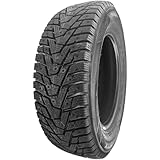
HANKOOK Winter ipike X W429 185/65R15 88T | $84.07 | Buy on Amazon |
| 2 |
|
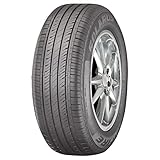
Starfire Solarus AS All-Season 225/65R17 102H Tire | $83.06 | Buy on Amazon |
| 3 |

|
4 x Fullway HP108 205/55R16 91V SL All Season Performance Tires | $254.93 | Buy on Amazon |
| 4 |

|
Armstrong Ski-Trac PC 205/55R16 91H SL Winter (Studless) Tire | $69.93 | Buy on Amazon |
AWD vs. FWD at a glance
| Factor | FWD | AWD |
|---|---|---|
| Driven wheels | Front wheels only | Torque can be sent to all four wheels |
| Snowy acceleration | Usually adequate with proper tires | Usually better at reducing wheelspin |
| Braking | Depends on tires, brakes, road, and weight | No inherent braking advantage |
| Fuel economy | Often better because the drivetrain is lighter and simpler | Often lower, though the exact EPA ratings vary by model |
| Purchase and service cost | Typically lower | Typically higher because of added hardware |
| Best fit | Normal paved-road use and moderate winter conditions | Frequent snow, steep slippery roads, or loose surfaces |
These are broad tendencies, not guarantees. AWD systems range from part-time clutch-based setups to sophisticated systems that vary torque between axles or individual wheels. Compare the exact vehicle, trim, tires, and owner’s manual rather than relying only on the badge.
How FWD works
In a typical FWD vehicle, the engine, transmission, and differential are packaged together at the front of the car. The front axle both propels and steers the vehicle. That layout is compact and leaves more room for the passenger compartment without requiring a driveshaft running to the rear axle.
#1 Best Overall
- Hankook Winter i Pike RS2 W429 is a Premium Touring studded winter tyre with directional tread pattern, designed for Passenger cars.
- Three Peak Mountain Snowflake certified
- Can be pinned with TSMI #11 studs, where permitted, for extra traction in severe ice and snow
- Wide block in the center of the tread provides improved snow and ice traction
- Built with a new rubber compound that boosts strength and durability for a longer tread life
The engine and transmission also place more weight over the driven wheels. That can help a FWD car gain traction when starting on a slippery road. Modern traction control, ABS, and stability control make FWD suitable for ordinary commuting and many winter climates.
FWD advantages
- Lower weight: Fewer drivetrain components commonly mean a lighter vehicle.
- Better packaging: The powertrain can be contained at the front, often increasing cabin and cargo flexibility.
- Potentially better fuel economy: A lighter, simpler layout generally has less drivetrain loss. Check the EPA rating for the specific model.
- Lower cost: FWD versions often have a lower purchase price and fewer AWD-specific components to repair.
- Predictable everyday behavior: A properly maintained FWD car with appropriate tires is capable on wet roads and many snow-covered streets.
FWD disadvantages
The front tires have several jobs at once: they steer, accelerate, and handle a significant portion of the braking work. That can increase front-tire wear and leave less traction available when the driver accelerates while turning.
At the limit, FWD cars generally understeer. If the front tires lose grip, the car tends to travel wider than the intended cornering line. Easing off the accelerator and slowing down is more effective than adding more steering.
Powerful FWD cars can also experience torque steer, where unequal torque at the front wheels tugs the steering wheel or pulls the car to one side during hard acceleration. Electronic controls and modern suspension designs have reduced the problem, but they have not made it impossible.
Recommended Free Tools
How AWD works
AWD systems use additional hardware—such as a driveshaft, rear differential, electronically controlled clutch, or electric motor—to send some engine torque to the rear wheels when needed. Some systems operate mostly as FWD until slip is detected; others continuously vary the balance between the axles.
Rank #2
- 50,000 mile warranty
- All-Season Touring Tire
- Ideal for consumers looking for plenty of miles, good traction and fuel economy
- M+S Rated (mud and snow)
- Manufactured by Cooper Tire & Rubber Company
That variation is important. An AWD crossover designed for paved roads is not automatically equivalent to a truck or SUV with selectable four-wheel drive, low-range gearing, high ground clearance, and underbody protection. AWD can improve traction without providing serious off-road capability.
AWD advantages
- Stronger low-traction acceleration: Splitting torque among four tires can reduce wheelspin when pulling away on snow, slush, gravel, or wet pavement.
- Better ability to keep moving: AWD may continue transferring torque to wheels that still have grip when traction varies across the road.
- Useful on hills: Frequent starts on steep, snowy, or untreated roads are a good reason to consider AWD.
- More confidence on loose surfaces: Gravel roads, muddy access roads, and uneven surfaces can be easier to negotiate, provided the vehicle has suitable tires and enough ground clearance.
AWD is most valuable when you need to get moving. It does not make an unsafe speed safe, and it cannot overcome a lack of tire grip.
AWD disadvantages
- More weight and complexity: Extra differentials, clutches, motors, driveshafts, and control systems add mass and mechanical complexity.
- Potentially lower fuel economy: Compare the EPA city, highway, and combined ratings for the FWD and AWD versions of the same model.
- Higher purchase price: AWD commonly costs more than an otherwise similar FWD trim.
- More components to service: Required fluid changes and inspection intervals vary. Use the maintenance schedule in the owner’s manual; the AWD label does not tell you what service is required.
- False confidence: AWD can make acceleration feel easy in conditions where braking and cornering remain hazardous.
AWD does not help a vehicle stop faster
Both AWD and FWD vehicles use all four tires when braking. AWD can reduce wheelspin during acceleration, but it does not give the tires extra friction when you press the brake pedal. Stopping distance still depends on tire compound, tread, pressure, road surface, vehicle speed, brakes, and weight.
The same limitation applies in a corner. AWD may help the vehicle accelerate out of a slippery turn, but it cannot make a tire turn, brake, and transmit power beyond the grip available at the road surface. A heavier AWD vehicle can even require more traction to stop or change direction.
Tires matter more than the drivetrain in winter
Winter tires improve acceleration, braking, and cornering on snow and ice for both drivetrains. NHTSA notes that winter tires are more effective than all-season tires in deep snow, while Tire Rack testing demonstrated how substantial the difference can be.
Rank #3
- Product Overview: The Fullway HP108 are 205/55R16 91V SL-Standard Load, 4 Ply Rated Performance Tires Manufactured For Passengers
- Driving Conditions: All Season Traction, UTQG 380AA
- Styling and Construction: Four Black Sidewall, Radial Construction, 16 Inch Tires
- Load Index and Speed Rating: Load Index 91 Supports up to 1356 lbs Per Tire and Speed Rating V Certified to 149 mph
- Additional Note: Tires Only - Rims/Wheels Not Included
In one controlled test using a 2012 Honda Civic with FWD, dedicated winter tires reduced the time to accelerate over 60 feet on ice from 6.045 seconds to 4.508 seconds. They also reduced stopping distance from 12 mph from 53.6 feet to 35.1 feet. Those results are specific to that vehicle, tires, surface, and test conditions, but they illustrate why tires should not be an afterthought.
Fit four matching winter tires, not just two. Mixing tire types can create different grip levels between the axles and increase the risk of understeer or oversteer during an emergency maneuver.
AWD vehicles require particular attention to tire matching. Differences in tire circumference, size, tread pattern, or wear can cause problems for the AWD system. Some manufacturers warn that mismatched diameters can trigger an AWD warning or damage drivetrain components. Subaru owner manuals, for example, tell drivers to stop when the AWD warning light flashes and check for a puncture or different-diameter tires. Follow the instructions for your specific vehicle.
What traction control and stability control can—and cannot—do
Traction control detects wheelspin and may reduce engine power or apply a brake to a spinning wheel. ABS helps prevent the wheels from locking during braking. Stability control can intervene when the vehicle begins to deviate from the driver’s intended path.
These systems are valuable safety equipment, but none creates traction. They cannot turn an all-season tire into a winter tire, shorten every stop on ice, or compensate for excessive speed. Keep them switched on for normal winter driving unless the owner’s manual gives a specific reason to disable them temporarily, such as freeing a vehicle stuck in deep snow.
Rank #4
- Product Overview: The Armstrong Ski-Trac PC is a 205/55R16 91H SL-Standard Load, 4 Ply Rated Touring Tire Manufactured For Passengers
- Driving Conditions: Studless Winter Traction
- Styling and Construction: One Black Sidewall, Radial Construction, 16 Inch Tire
- Load Index and Speed Rating: Load Index 91 Supports up to 1356 lbs Per Tire and Speed Rating H Certified to 130 mph
- Additional Note: Tire Only - Rim/Wheel Not Included
AWD vs. FWD: which should you buy?
Choose FWD if:
- You spend most of your time on paved, treated roads.
- Snow is occasional rather than routine.
- You prioritize purchase price, fuel economy, interior packaging, and simpler maintenance.
- You are willing to buy and maintain four appropriate winter tires when conditions require them.
- You do not regularly need to start on steep, icy roads or travel on loose surfaces.
Choose AWD if:
- You regularly drive through deep snow, slush, or untreated roads.
- Your commute includes steep hills where traction during takeoff is a recurring problem.
- You frequently use gravel, muddy, or uneven access roads.
- The added purchase price, fuel cost, tire requirements, and maintenance are acceptable.
- You have confirmed that the vehicle’s ground clearance, tires, and traction-control calibration match your actual use.
A practical way to compare two vehicles
- Compare the exact trims: Check price, curb weight, EPA fuel-economy ratings, cargo space, and standard safety equipment.
- Read the maintenance schedule: Look for AWD fluid changes, inspection requirements, and special tire restrictions.
- Price the tires: Confirm the cost of four winter tires, wheels if desired, and replacement options for an AWD vehicle with strict circumference requirements.
- Check safety ratings: Use the exact model year and body style in the IIHS ratings database. Drivetrain type is not a crash-safety rating.
- Match capability to roads: If the real problem is deep snow or off-road travel, check ground clearance and underbody protection—not just whether the vehicle says AWD.
Common AWD and FWD misconceptions
| Claim | What is actually true |
|---|---|
| “AWD stops better.” | AWD primarily helps acceleration. Braking depends on tires, brakes, surface, speed, and vehicle weight. |
| “FWD is bad in snow.” | FWD can perform well, particularly with four winter tires and functioning stability-control systems. |
| “AWD is the same as 4WD.” | They are different categories. Serious off-road capability may require low range, clearance, protection, and specialized tires. |
| “Traction control creates traction.” | It manages wheelspin; it cannot create additional tire-road friction. |
| “AWD determines safety.” | Safety depends on the exact vehicle’s crashworthiness, driver-assistance equipment, tires, and driving behavior. |
FAQ
Is AWD better than FWD in snow?
AWD is generally better at accelerating on snow, slush, and ice because it can distribute torque to more tires. FWD can still be highly capable with four winter tires. Neither drivetrain automatically stops or corners better.
Free tools Windows power users keep installed
One-click scans. No signup required.
Does AWD use more fuel than FWD?
Usually, yes. AWD systems commonly add weight and drivetrain losses, although the difference depends on the vehicle and configuration. Compare the exact FWD and AWD EPA ratings rather than assuming a fixed percentage.
Are winter tires still necessary on an AWD vehicle?
Yes. AWD can help the vehicle get moving, but winter tires provide the cold-weather grip needed for braking and cornering. Use four matching winter tires, and follow the manufacturer’s requirements for tire size and circumference.
Is FWD cheaper to maintain than AWD?
It is typically cheaper because it has fewer drivetrain components. AWD maintenance varies widely, so check the owner’s manual for fluid changes and other service requirements before buying.
The Bottom Line
Choose FWD for lower cost, simpler packaging, better potential fuel economy, and normal paved-road driving. Choose AWD when frequent snow, steep slippery roads, or loose surfaces make traction during acceleration worth the added weight, expense, and complexity.
Windows Errors? Fix Them Before They Spread
Repair common Windows errors and clear accumulated junk for a smoother, more stable PC - no reinstall needed.Free scan · no reinstallCrashes, No Sound, or Screen Glitches?
Random freezes, missing sound and display glitches usually trace back to one bad driver. Find and replace yours safely.Free scan · under a minuteWhichever drivetrain you choose, spend serious attention on the tires. AWD is an acceleration aid—not a braking system, a winter-tire replacement, or a guarantee of off-road capability.
Quick Recap
Product prices and availability are accurate as of the date/time indicated and are subject to change. Any price and availability information displayed on Amazon at the time of purchase will apply.




