The Tool Desk
Outbyte PC Repair FREERepair Windows errors before they cause bigger problemsFix Now →Outbyte Driver Updater FREEScan for outdated or missing drivers - takes under a minuteDriver Scan →Domain, zonal, and centralized architectures describe different ways of organizing a vehicle’s electronics—and they are not mutually exclusive. A domain architecture groups functions such as body, powertrain, chassis, infotainment, or ADAS. A zonal architecture groups sensors, actuators, power loads, and legacy networks by physical location. A centralized architecture moves more application software and decision-making into a small number of high-performance vehicle computers.
The practical direction is therefore not a sudden switch from one architecture to another. Most vehicles will pass through hybrid stages: distributed ECUs first, then domain controllers, selected central computers, mixed zonal systems, and eventually a more complete combination of central compute with local zone controllers. The likely end state remains heterogeneous rather than consisting of one computer running everything.
The difference in one table
| Architecture | Primary organizing principle | Where computation usually happens | Typical strengths | Typical weaknesses |
|---|---|---|---|---|
| Distributed | Individual component or function | Many dedicated ECUs | Predictable local control, clear ownership, proven real-time behavior | ECU duplication, complex wiring, difficult cross-domain integration |
| Domain | Vehicle function | Several domain controllers | Fewer controllers, better functional coordination, easier consolidation | Long wiring runs may remain; functional boundaries can become artificial |
| Zonal | Physical location | Central or domain computers, with zone ECUs handling local I/O | Shorter local wiring, standardized physical endpoints, easier vehicle-wide data access | More demanding power distribution, Ethernet, diagnostics, safety, and cybersecurity design |
| Centralized | Location of vehicle-level computation | A small number of high-performance computers | Shared compute, cross-domain software, OTA scalability, software reuse | Greater failure concentration, thermal load, partitioning, redundancy, and update risk |
The most important distinction is this: zonal describes where the vehicle connects to hardware, while centralized describes where the vehicle thinks. A vehicle can be zonal without being fully centralized, and it can use centralized computers for selected functions while retaining a conventional or domain-oriented wiring structure.
1. The distributed ECU architecture
Traditional vehicles use a distributed electronic/electrical architecture. A function or component is assigned to an electronic control unit, or ECU, and the ECUs communicate over networks such as CAN, LIN, FlexRay, and increasingly Automotive Ethernet.
#1 Best Overall
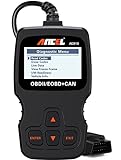
- CEL Doctor: The ANCEL AD310 is one of the best-selling OBD II scanners on the market and is recommended by Scotty Kilmer, a YouTuber and auto mechanic. It can easily determine the cause of the check engine light coming on. After repairing the vehicle's problems, it can quickly read and clear diagnostic trouble codes of emission system, read live data & hard memory data, view freeze frame, I/M monitor readiness and collect vehicle information
- Sturdy and Compact: Equipped with a 2.5 foot cable made of very thick, flexible insulation. It is important to have a sturdy scanner as it can easily fall to the ground when working in a car. The AD310 OBD2 scanner is a well-constructed mechanic tool with a sleek design. It weighs 12 ounces and measures 8.9 x 6.9 x 1.4 inches. Thanks to its compact design and light weight, transporting the device is not a problem. The buttons are clearly labelled and the screen is large and displays results clearly
- Accurate Fast and Easy to Use: The AD310 scanner can help you or your mechanic understand if your car is in good condition, provides exceptionally accurate and fast results, reads and clears engine trouble emission codes in seconds after you fixed the problem. This device will let you know immediately and fix the problem right away without any car knowledge. No need for batteries or a charger, get power directly from the OBDII Data Link Connector in your vehicle
- OBDII Protocols and Car Compatibility: Many cheap scan tools do not really support all OBD2 protocols. AD310 scanner as it can support all OBDII protocols such as KWP2000, J1850 VPW, ISO9141, J1850 PWM and CAN. This device also has extensive vehicle compatibility with 1996 US-based, 2000 EU-based and Asian cars, light trucks, SUVs, as well as newer OBD2 and CAN vehicles both domestic and foreign. Pls confirm with our customer service whether it is compatible with your vehicle before purchasing
- Home Necessity and Worthy to Own: This is an excellent code reader to travel or home with as it weighs less and it is compact in design. You can easily slide it in your backpack as you head to the garage, or put it on the dashboard, this will be a great fit for you. The AD310 is not only portable, but also accurate and fast in performance. Moreover, it covers various car brands and is suitable for people who just need a code reader to check their car
Examples include a dedicated controller for an electric window, a body-control module for lighting and locks, an engine or inverter controller for propulsion, an airbag controller, an ABS controller, and separate infotainment, telematics, and driver-assistance computers. The exact allocation differs by vehicle, supplier, platform, and model year.
This approach has important advantages. A local controller can operate a closed-loop function with predictable timing. A safety-critical system can be independently qualified. Suppliers and engineering teams can develop subsystems separately, and a failure in one ECU may affect only a relatively narrow function.
AUTOSAR’s Classic Platform is designed for this type of deeply embedded environment: applications with hard real-time and safety constraints, including many body, powertrain, chassis, and occupant-safety functions. That does not make distributed architecture obsolete. It explains why dedicated controllers remain useful even in vehicles with central computers.
Why distributed systems become difficult at scale
The disadvantages appear when the vehicle gains more sensors, displays, software features, connected services, electrification controls, and automated-driving capability. Every ECU can bring its own processor, memory, power supply, transceiver, diagnostics, software stack, connector, calibration data, and update process.
The result is duplication. Several computers may each have spare processing capacity but cannot easily share it. Features that span several functions must cross multiple controller and network boundaries. A single customer-facing feature—such as energy-aware route planning, predictive thermal management, automated parking, or personalized cabin behavior—may require data from propulsion, chassis, body, cockpit, connectivity, and ADAS systems.
More controllers also mean more variants to manage. A manufacturer must validate hardware combinations, network configurations, software versions, cybersecurity controls, diagnostic paths, and update dependencies across the vehicle lifecycle. UNECE cybersecurity and software-update regulations reflect this wider problem: connected vehicles need formal processes for managing cyber risk and software changes after production, not just reliable electronics at the factory gate.
2. Domain architecture: consolidation by function
Domain architecture consolidates multiple related functions into larger controllers. The grouping is functional rather than geographical. Common domains include:
- Powertrain and propulsion: engine, transmission, inverter, battery, and energy-management functions;
- Chassis and motion: braking, steering, suspension, stability, and vehicle-motion control;
- Body and comfort: lighting, doors, seats, windows, climate, access, and convenience features;
- Infotainment and cockpit: displays, audio, navigation, user interfaces, and in-cabin applications;
- Connectivity and telematics: cellular connectivity, cloud services, remote functions, and vehicle communications; and
- ADAS or automated driving: perception, sensor processing, planning, and driver-assistance functions.
A domain controller has more computing and communication capacity than a conventional single-function ECU. It can coordinate functions that previously lived in several modules, reducing some duplicated hardware and making functional integration easier.
However, domain consolidation does not necessarily simplify the physical layout. A body or chassis controller may still need connections to components spread throughout the vehicle. A domain controller can reduce the number of boxes while leaving long harness runs, large connector bundles, and complicated gateway arrangements in place.
Domain boundaries can also become inconvenient. A vehicle feature may not fit cleanly into one domain. Energy-aware navigation, for example, can involve the cockpit, connectivity, battery management, propulsion, thermal systems, and automated driving. A domain architecture improves the situation compared with one ECU per component, but it still organizes the vehicle around functional silos.
Mercedes-Benz as a domain-oriented example
Mercedes-Benz’s description of MB.OS illustrates this intermediate strategy. The company describes standardization across four broad areas: infotainment, automated driving, body and comfort, and driving and charging. A common software foundation can reduce variation across hardware and functional domains while still recognizing domain-level organization.
This is an important point: a domain architecture is not merely an outdated step on the way to zoning. It can remain a deliberate design choice where functional independence, safety separation, supplier boundaries, or real-time requirements make it useful.
Recommended Free Tools
3. Zonal architecture: organizing the vehicle by location
A zonal architecture divides the vehicle into physical regions. The zones might roughly correspond to the front, rear, left, right, cabin, or another packaging arrangement chosen by the manufacturer. A zone controller is placed near the hardware in that region.
Nearby sensors, actuators, lights, motors, switches, power loads, and legacy ECUs connect to the local zone controller. The zone controller then communicates with central or domain-level computers over a high-speed vehicle backbone, commonly Automotive Ethernet.
Vehicle application software
        ↓
Central vehicle computers or domain controllers
        ↓  High-speed Ethernet backbone
Zone controller: local I/O, power, gateway, diagnostics
        ↓
Nearby sensors, actuators, lights, motors, CAN/LIN devices
This is often described as separating thinking from acting:
Rank #2
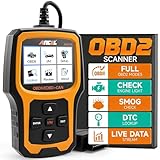
- Understand Your Check Engine Light – The ANCEL AD410 OBD2 scanner helps everyday drivers quickly read and clear engine-related fault codes, view code definitions, and understand why the check engine light is on before visiting a repair shop. With 42,000+ built-in DTC lookups, this car code reader helps reduce guesswork and makes basic vehicle diagnostics easier for beginners and DIY users
- Full OBD2 Diagnostics Made Simple – More than a basic engine code reader, this OBD2 scanner diagnostic tool supports key OBDII functions including reading/clearing codes, live data, freeze frame, I/M readiness, O2 sensor test, EVAP test, vehicle information, and MIL status. It helps you check your car’s condition, verify repairs after the issue is fixed, and communicate with mechanics more confidently
- Live Date & Real-time Vehicle Insights – View real-time engine data such as RPM, coolant temperature, fuel trim, oxygen sensor readings, and other available OBD2 parameters directly on the screen. These live data readings help you better understand how your vehicle is running, spot abnormal patterns, and make more informed repair decisions instead of relying only on a warning light
- Smog Check Readiness At A Glance – Use the I/M readiness function before a smog check or emissions inspection to see whether your vehicle’s monitors are ready. This OBD2 code scanner helps you confirm if recent repairs have brought the system back to a ready state, reducing the chance of failed inspections, retests, wasted trips, and unnecessary inspection fees
- Works With Most OBD2 Vehicles – Compatible with most 1996 and newer U.S.-based OBD2 cars, SUVs, and light trucks, as well as many 2000 and newer EU/Asian OBD2 vehicles. Supports major OBDII protocols including CAN, ISO9141, KWP2000, J1850 VPW, and J1850 PWM. This automotive diagnostic scanner is designed for wide vehicle coverage; please check compatibility with your vehicle before purchase
- Thinking: central computers execute cross-domain applications, data fusion, planning, user-facing software, and vehicle-level coordination.
- Acting: zone controllers perform local signal conversion, I/O management, power switching, gateway functions, diagnostics, and communication with the physical hardware.
The zone controller is therefore not necessarily a miniature domain computer. In many designs its most important job is to provide a standardized local interface between the vehicle’s high-level software and its physical devices.
What’s actually slowing this PC down?
Pick the symptom - the matching free tool is one click away.
What zoning can improve
In a conventional arrangement, a component at the rear of the vehicle may require a long harness running toward a central fuse box or domain controller. In a zonal design, that component can connect to a nearby zone ECU, while only the zone’s power and high-speed data connections need to travel across the vehicle.
Potential benefits include:
- shorter wiring branches;
- fewer long harness runs;
- fewer connector and gateway paths;
- simpler packaging around the vehicle body;
- more standardized local I/O endpoints;
- better access to vehicle-wide data through the Ethernet backbone; and
- easier reuse of a common physical architecture across vehicle variants.
Bosch presents these benefits in its vehicle-centralized, zone-oriented reference architecture and reports potential reductions in control-unit count and wiring-related complexity for its concept. Those figures are supplier-specific architecture claims, not universal production results. The actual savings depend on vehicle size, voltage architecture, safety requirements, redundancy, component placement, connector design, and how much legacy equipment remains.
What zoning does not mean
Zonal architecture does not mean that every ECU disappears or that every function runs in Linux on a central computer. Dedicated controllers may remain where they provide:
- hard real-time closed-loop control;
- high safety integrity and independent qualification;
- electrical isolation;
- local fault containment;
- specialized sensing or actuation;
- operation in extreme temperature, vibration, or electromagnetic conditions; or
- an independent fallback path for a safety-critical function.
Zone controllers may also gateway CAN or LIN subnets rather than replacing every device on those buses. A new zonal vehicle can therefore contain central computers, zone ECUs, dedicated safety controllers, CAN FD, LIN, Ethernet, and specialized links at the same time.
Crashes, No Sound, or Screen Glitches?
Random freezes, missing sound and display glitches usually trace back to one bad driver. Find and replace yours safely.Free scan · under a minutePC Slower Than It Used to Be?
A free scan shows the junk files, broken settings and background clutter dragging Windows down - then fixes them in one click.Free scan · Windows 10 & 114. Centralized architecture: putting more software in fewer computers
Centralized architecture concerns the location of computation. A small number of high-performance computers—sometimes called vehicle computers, central compute platforms, integration platforms, or high-performance computers—host application software that would previously have been spread across several domains and ECUs.
One computer might run applications from infotainment, connectivity, ADAS, energy management, and vehicle coordination. Another might handle motion control or safety-related functions. The exact split depends on required compute performance, safety integrity, thermal limits, redundancy, software ownership, and the manufacturer’s platform strategy.
The goal is not simply to reduce the box count. The deeper objective is to make applications less dependent on a particular ECU, more reusable across vehicle programs, easier to update, and capable of sharing data and processing resources through defined software services.
Centralized compute is not the same as one giant computer
“Centralized” is sometimes used too broadly. A vehicle with five high-performance computers may be described as centralized compared with a vehicle containing more than 100 individual controllers, even though it is not literally controlled by one computer.
Quick wins for a faster PC:
Fix the driver behind crashes, sound loss and screen glitchesFind Drivers →Clear out junk files and repair common Windows errorsFree Scan →Scan for outdated or missing drivers - takes under a minuteDriver Scan →Continental and Infineon have described reference architectures based on central high-performance computers and a smaller number of zone control units rather than potentially more than 100 individual control units. This is an industry architecture proposal, not evidence that every production vehicle uses that exact number or arrangement.
A central architecture can also exist without a full zonal wiring layout. A manufacturer may consolidate several functional domains into central computers while retaining a domain-oriented or distributed harness. Conversely, a vehicle may adopt local zone controllers before moving most application software into central compute.
The new concentration risk
Centralization improves coordination but increases the potential impact of a failure. A defective application, overheated processor, failed power rail, software update error, or cyber compromise in a central computer could affect more vehicle functions than a failure in a dedicated legacy ECU.
That makes the following design elements essential:
- hardware and software partitioning;
- freedom from interference between applications;
- independent power and communication paths where required;
- health monitoring and fault detection;
- redundant computing or sensing for appropriate functions;
- graceful degradation and clearly defined fallback modes;
- secure boot and authenticated software updates;
- network segmentation and access control; and
- thermal management capable of supporting sustained high compute loads.
5. Why manufacturers are moving toward zonal and central architectures
Software-defined features cross old domain boundaries
Modern features increasingly depend on coordinated data rather than one isolated component. Examples include:
- route planning that accounts for battery state, charging, terrain, and thermal conditions;
- predictive battery and cabin thermal management;
- automated parking that combines perception, steering, braking, and user-interface logic;
- driver monitoring integrated with ADAS behavior;
- coordinated chassis and propulsion control;
- personalized cabin settings distributed across seats, climate, displays, and access systems; and
- software-enabled features delivered or modified after the vehicle is sold.
Central compute reduces the number of controller boundaries that these features must cross. It can also allow compute capacity to be allocated dynamically or shared among applications, although safety and timing constraints limit how freely resources can be pooled.
Rank #3

- 【Diagnose Check Engine Light in Seconds – No Mechanic Needed】The FOXWELL NT301 OBD2 scanner instantly reads & clears engine fault codes (DTCs) with one click. Simply plug into the 16-pin DLC port, turn ignition on, and get accurate results within seconds—No prior car knowledge required. Save hundreds on dealership fees by knowing exactly what’s wrong before you visit a shop. The #1 choice car scanner for DIYers and car owners who want to take control of their vehicle’s health
- 【Clear & Reset CEL with Confidence】Unlike cheap code readers that just erase codes temporarily, NT301 works like all professional vehicle code readers: It clears the check engine light only after you’ve fixed the underlying issue. If the problem isn’t fully repaired, the fault code will reappear. So you’ll never get a false pass. Use the foxwell scanner to verify your repair work and drive with peace of mind
- 【Sm-og Check Helper – Know Your Pass/Fail Status Before the Test】With dedicated one-click I/M readiness hotkeys and a simple Red-Yellow-Green LED indicator, you’ll instantly know if your vehicle is ready for annual testing. Built-in speaker provides clear audio feedback. No guesswork—just confidence before you head to the test center. One less thing to worry about when inspection day comes
- 【Advanced OBDII Modes – O- 2 Sensor & EVAP Testing】NT301 go beyond basic code reading with enhanced OBD2 modes. Run an EVAP system check to assess fuel tank condition, and use the O- 2 sensor test to optimize air-fuel ratio, boosting fuel economy, cutting em- issions, and saving you money at the pump. The code reader for cars and trucks is like having a mini em-issions lab in your glove box
- 【Live Data Graphing – Spot Engine Issues in Real Time】View and log live sensor data in easy-to-read graphs with this OBD2 scanner diagnostic tool. Monitor ox- ygen sensors, fuel trims, coolant temperature, RPM, and more to spot suspicious values instantly. This obd scanner gives you professional-grade insight without the pro price tag—a feature you won’t find on basic $20 car code readers
AUTOSAR’s Adaptive Platform is aimed at high-performance ECUs and applications requiring flexible configuration, service-oriented communication, dynamic updates, and modern computing hardware. AUTOSAR identifies Adaptive as suitable for demanding and potentially fail-operational use cases such as autonomous driving, while Classic remains suited to constrained, deterministic embedded systems.
The two platforms are complementary. A central vehicle computer may use Adaptive-based applications, Linux, QNX, or another high-performance software environment, while a zone controller or dedicated actuator ECU may continue to use Classic-based software or an RTOS.
Free tools Windows power users keep installed
One-click scans. No signup required.
Wiring, mass, and packaging
The vehicle harness is one of the largest physical systems in a car. Long branches, connector bundles, gateways, and variant-specific routing add mass, assembly work, packaging constraints, and service complexity.
Zoning can shorten the low-voltage wiring paths by placing I/O and power-management electronics near the loads. But it shifts complexity rather than eliminating it. Engineers still have to solve:
- high-voltage and low-voltage power distribution;
- redundant feeds for safety-relevant zones;
- grounding and electromagnetic compatibility;
- crash-zone packaging;
- connector sealing and service access;
- thermal dissipation from local power electronics;
- solid-state protection and load shedding; and
- vehicle wake, sleep, and recovery behavior.
A shorter harness is therefore a potential benefit, not a guaranteed result. The architecture may reduce copper and branches while adding more capable local power electronics, Ethernet links, protection hardware, and software-managed diagnostics.
Do these 3 things before closing this tab:
1Clear out junk files and repair common Windows errors2Fix the driver behind crashes, sound loss and screen glitches3Repair Windows errors before they cause bigger problemsCompute utilization and platform scalability
In a distributed vehicle, a processor dedicated to one function may sit underutilized much of the time. A central computer can pool some resources and support multiple vehicle variants through software configuration rather than requiring a different ECU for every feature combination.
That scalability depends on stable interfaces, resource isolation, common diagnostics, predictable network behavior, and disciplined software architecture. Without those foundations, centralization can create a very large, tightly coupled software system that is difficult to test and difficult to update.
OTA updates and the vehicle lifecycle
Over-the-air updating is easier to coordinate when more application logic resides on fewer computers, but centralization does not eliminate distributed software. A complete update campaign may still involve:
- central-computer applications;
- zone-controller firmware;
- Classic-platform software in dedicated ECUs;
- gateway and firewall rules;
- calibration data;
- diagnostic descriptions;
- security credentials and certificates; and
- safety documentation and validation evidence.
A robust update system needs cryptographic authorization, compatibility checks, campaign management, interrupted-update recovery, rollback or safe recovery paths, vehicle-state checks, version traceability, and evidence that the new combination remains safe and compliant.
UNECE Regulation No. 155 addresses cybersecurity management systems, including risk assessment and lifecycle processes. UNECE Regulation No. 156 addresses software-update management. These regulations apply through the type-approval systems of jurisdictions that adopt them; they are not a universal substitute for a manufacturer’s own safety and security engineering.
6. The technologies that make the architecture possible
Automotive Ethernet
Automotive Ethernet supplies the bandwidth and IP-oriented communication model needed for cameras, radar, lidar, centralized compute, diagnostics, cloud connectivity, and service-oriented applications.
Vehicle networks may use single-pair Ethernet technologies such as 100BASE-T1 and 1000BASE-T1. Time-Sensitive Networking, synchronization mechanisms, quality-of-service policies, VLANs, and traffic management help provide more predictable behavior for time-critical data while allowing different traffic classes to share an Ethernet backbone.
Ethernet does not automatically provide deterministic behavior. The vehicle still needs carefully engineered topology, scheduling, bandwidth allocation, redundancy, synchronization, fault handling, and validation.
Recommended Free Tools
CAN and LIN remain part of the transition
Zonal migration does not eliminate CAN or LIN. They remain cost-effective and well established for local devices and embedded control. A zone controller can gateway legacy CAN, CAN FD, or LIN networks to the Ethernet backbone and provide the translation, diagnostics, and power-management services needed by older components.
A transitional vehicle may therefore combine Automotive Ethernet, CAN FD, LIN, Diagnostics over IP, SOME/IP, and proprietary or specialized links. This mixed environment is practical, but it makes system diagnostics more complicated. A recent SAE paper on zonal-platform diagnostics highlights the coexistence of CAN, LIN, DoIP, SOME/IP, Linux, QNX, and RTOS environments as a specific challenge.
Rank #4

- OBD2 SCANNER & BATTERY TESTER IN ONE – The INNOVA 5210 OBD2 scanner not only reads and clears check engine light and ABS codes (coverage may vary) but also functions as a car battery tester to check alternator health and prevent unexpected breakdowns.
- LIVE DATA & REAL-TIME DIAGNOSTICS – Get instant access to OBD2 live data, including RPM, engine temperature, fuel trims, and oxygen sensor readings. The drive cycle readiness feature helps pass smog tests and emissions inspections with ease.
- ENGINE CODE READER – This automotive diagnostic tool works with most US, Asian, and European vehicles from 1996 and newer, including Toyota, Ford, Honda, Chevrolet, Nissan, Dodge, and more. Read and erase ABS (coverage may vary) and engine trouble codes with pinpoint accuracy. Please use Innova's Coverage Checker to verify coverage.
- OIL RESET & SMOG CHECK READINESS – The built-in oil light reset feature allows DIYers and mechanics to properly reset maintenance lights after an oil change. Check I/M readiness status to ensure your car is ready for an emissions test.
- NO SUBSCRIPTIONS – VERIFIED FIXES WITH FREE APP – Unlike other OBD2 code readers, the INNOVA 5210 provides verified fixes based on real-world repairs from ASE-certified mechanics. Trusted by 4M users, the RepairSolutions2 app on iPhone & Android gives you step-by-step repair guidance, suggested parts, and cost estimates—no extra fees or hidden subscriptions!
AUTOSAR Classic and Adaptive
| Characteristic | AUTOSAR Classic | AUTOSAR Adaptive |
|---|---|---|
| Typical hardware | Constrained microcontrollers and dedicated ECUs | High-performance processors and vehicle computers |
| Typical workload | Hard real-time, deeply embedded control | Complex applications, service-oriented functions, and dynamic workloads |
| Common uses | Body, powertrain, chassis, occupant safety, and local control | ADAS, automated driving, cockpit, connectivity, and cross-domain applications |
| Software behavior | More static and resource-constrained | More dynamically configurable and updateable |
Adaptive and Classic are not competing answers in which only one survives. A realistic zonal and centralized vehicle will often use Adaptive or another high-performance software stack on central computers and Classic or RTOS-based software on local, safety-critical, or tightly constrained controllers.
Virtualization and mixed-criticality partitioning
Central computers may need to run applications with different operating systems, timing requirements, safety levels, and security domains. Hypervisors, virtual machines, containers, process isolation, controlled inter-process communication, health monitoring, and freedom-from-interference mechanisms become important.
Virtualization can separate an infotainment workload from a safety-related application, but the separation must be demonstrated rather than assumed. Shared processors, memory, storage, networks, clocks, power supplies, and hypervisor services can still create common dependencies.
Power distribution is a first-class architecture problem
A zone controller commonly combines data communication with local power distribution, switching, sensing, and protection. That means a zonal design is not just an Ethernet topology diagram.
Engineers must determine how each zone receives power, how many independent feeds it needs, how faults are isolated, how loads are shed, how the vehicle wakes and sleeps, and how the system recovers after a brownout or controller failure. Solid-state switching can provide software-controlled protection and diagnostics, but it also creates thermal, electromagnetic, software, and failure-analysis requirements.
Do these 3 things before closing this tab:
1Scan for outdated or missing drivers - takes under a minute2Clear out junk files and repair common Windows errors3Fix the driver behind crashes, sound loss and screen glitchesA recent SAE paper identifies power distribution as a bottleneck for next-generation architectures and argues that supplying battery voltage to vehicle zones requires fresh architectural treatment. This is one reason a claimed reduction in data wiring does not automatically translate into a simpler or lighter complete electrical system.
7. Safety and cybersecurity consequences
Functional safety
Centralization can improve system-level coordination, but it enlarges the possible impact of failures. The safety case must address:
- fault containment between applications and zones;
- deterministic communication for time-critical functions;
- independence between redundant paths;
- shared processors, memory, clocks, power, and networks;
- safe states and minimum-risk conditions;
- graceful degradation when compute or communication is lost;
- monitoring of software and hardware health; and
- diagnostic coverage and recovery behavior.
Duplicating a central computer does not automatically create true redundancy. If both computers use the same software defect, sensor input, power source, network, timing source, supplier component, or design assumption, they may fail together. Porsche Engineering has emphasized this common-cause problem: redundancy requires independence and fault analysis, not merely two copies of the same system.
Cybersecurity
A zonal and centralized vehicle may have fewer physical controllers but more connectivity and concentration. A shared Ethernet backbone, central computer, gateway, cloud service, diagnostic interface, or update mechanism can become a high-value attack path.
Security architecture typically needs:
- secure boot and authenticated firmware;
- hardware security modules or equivalent protected key storage;
- cryptographic key and certificate management;
- authenticated diagnostics and controlled service access;
- network segmentation and filtering;
- intrusion detection and security monitoring;
- secure logging and incident response;
- vulnerability tracking across suppliers and software components; and
- secure, traceable update and rollback processes.
UNECE R155 and R156 make cybersecurity and software updates lifecycle responsibilities rather than isolated component features. Manufacturers must be able to identify threats, manage supplier and software risks, control changes, preserve traceability, and show that mitigations remain effective after the vehicle enters service.
Independent reader supportYour contribution helps us test, update, and keep practical guides available for everyone.8. What production and announced architectures show
Public examples demonstrate different points along the transition. They should not be treated as proof that every vehicle from a company uses the same architecture or that a supplier’s reference design is a fleet-wide production measurement.
Bosch reference architectures
Bosch describes a vehicle-centralized, zone-oriented architecture built around a few vehicle computers and zone ECUs. In that concept, vehicle computers provide the main computing layer while zone controllers connect them to sensors, actuators, mechatronics, remaining embedded ECUs, and local power and I/O.
Bosch also describes evolutionary migration for existing platforms and a more systematic approach for clean-sheet vehicle programs. That distinction matters: a manufacturer can introduce central compute or zones gradually without redesigning every subsystem at once.
The Tool Desk
Outbyte Driver Updater FREEScan for outdated or missing drivers - takes under a minuteDriver Scan →Outbyte PC Repair FREERepair Windows errors before they cause bigger problemsFix Now →Mercedes-Benz MB.OS
Mercedes-Benz describes MB.OS as a common software foundation spanning standardized hardware and four broad domains: infotainment, automated driving, body and comfort, and driving and charging. This is an example of software and hardware standardization across functional areas, not necessarily a claim that every vehicle has a completely zonal electrical layout.
Volkswagen Group and Audi E3
Volkswagen Group has reported that Audi’s E3 1.2 architecture uses five high-performance computers covering functions ranging from drive and assistance to infotainment, convenience, safety, and backend networking.
Best Value
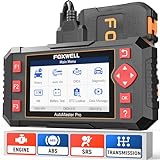
- [Easy to Use—Work Out of the Box] + [FOXWELL 2026 New Version] FOXWELL NT604 Elite scan tool is the 2026 new version from FOXWELL, designed for car owners who want to figure out the cause of issues before fixing car problems by scanning common systems like ABS, SRS, engine, and transmission. The NT604 Elite obd2 scanner diagnostic tool comes with the latest software—no need to waste time downloading software first. Plug the scanner into the OBDII port with OBDII cable to start the diagnosis.
- [Affordable] + [Reliable Car Health Monitor] Will you be confused what happens when the warning light of ABS/SRS/transmission/check engine flashes? Instead of taking your cars to dealership, this FOXWELL scanner will help you do a thorough scanning and detection for your cars and pinpoint the root cause. Note:The device is a diagnostic tool, not a repair tool. To turn off a warning light, you must first physically repair the issue causing it. Only then can the scanner be used to clear the corresponding fault code.
- [5 in 1 Car Diagnostic Scanner] Compared with obd scanners (50-100), NT604 Elite code scanner not only includes their OBDII diagnosis but also serves as ABS/SRS scanner, transmission and check engine code reader. When it’s an odb2 scanner, you can use it to check if your car is ready for annual test through I/M readiness menu. In addition, live data stream, built-in DTC library, data play back and print, all these features are a big plus for it. Note: doesn't support maintenance functions like reset or relearn. For the SRS system, NT604 Elite can read and clear common fault codes not caused by a crash, but crash/collision data cannot be cleared.
- [Fantastic AUTOVIN] + [No extra software fee] Through the AUTOVIN menu, this NT604 Elite car scanner allows you to get your V-IN and vehicle info rapidly, no need to take time to find your V-IN and input one by one. What's more, the NT604 Elite ABS SRS scanner supports 60+ car brands from worldwide (America/Asia/Europe). You don’t need to pay extra software fee. AUTOVIN may not work on some older vehicles or certain vehicle brands. If AUTOVIN fails, please input the vin code manually or go to the Diagnostic Menu to select your vehicle model.
- [Solid protective case KO plastic carrying bag] + [Lifetime update] Almost all same price-level car scanner diagnostic tool only offers plastic bag to hold the scanner.However, NT604 Elite automotive scanner is equipped with solid protective case, preventing your obd2 scanner from damage. Then you don’t need to pay extra money to buy a solid toolbox.
The Group has also reported that its future E3 2.0 direction was reoriented toward a software-defined vehicle zone architecture, with responsibility for that zone architecture moving to the Rivian–Volkswagen joint venture. These statements describe reported program direction. They should not be interpreted as evidence that all Volkswagen Group vehicles currently use a fully zonal architecture.
Stellantis STLA Brain and STLA One
Stellantis has described STLA Brain as a scalable central-compute and software architecture. The company announced in May 2026 that STLA One was planned for launch in 2027 and intended to integrate STLA Brain, STLA SmartCockpit, and steer-by-wire technology.
Those are announced plans and targets, not completed production deployment results. Timing, market availability, feature scope, and vehicle application can change as programs move through development and validation.
Toyota Arene
Toyota describes Arene as a software-development platform and identifies its introduction in the 2026 RAV4 as a first step toward fully software-defined vehicles. This illustrates an incremental route: a manufacturer can introduce a common software platform and development process through a vehicle program without immediately replacing every ECU with a complete central-zonal architecture.
9. The likely migration path
Most manufacturers will evolve rather than replace the entire electrical architecture in one step. A realistic sequence looks like this:
- Distributed baseline: retain existing ECUs and CAN/LIN networks while improving gateways, diagnostics, cybersecurity, and software-update capability.
- Domain consolidation: combine related functions into body, powertrain, chassis, cockpit, connectivity, and ADAS controllers.
- Cross-domain integration: introduce central or integration computers for selected combinations such as cockpit plus ADAS, motion control, or energy management.
- Mixed zonal architecture: deploy zone controllers in selected physical areas while retaining domain controllers and legacy embedded ECUs elsewhere.
- Central-compute expansion: move more application software to a small number of high-performance computers while retaining local real-time and safety controllers where justified.
- More complete zonal vehicle: use zone controllers as standardized I/O and power endpoints connected by high-speed Ethernet and managed through service-oriented software.
This evolutionary model is also the direction described in recent SAE work on zonal architecture. The transition involves distributed and domain stages, function integration, mixed architectures, gradual migration to central platforms, and eventual zonal realization.
Quick wins for a faster PC:
Repair Windows errors before they cause bigger problemsFix Now →Scan for outdated or missing drivers - takes under a minuteDriver Scan →10. What will remain distributed
The phrase “centralized vehicle” should not be interpreted as “all electronics are placed in one box.” Dedicated controllers will remain attractive when a function requires hard real-time response, high safety integrity, electrical isolation, local closed-loop control, independent redundancy, extreme environmental robustness, or specialized certification.
Physical systems also impose limits. Motors, brakes, steering actuators, batteries, sensors, high-voltage components, and safety mechanisms still have to be installed where the vehicle’s mechanical and electrical design requires them. Software consolidation cannot eliminate local power stages, sensor interfaces, actuation electronics, thermal constraints, or crash-related packaging requirements.
The likely mature architecture is therefore heterogeneous:
- central computers for broad applications, data fusion, vehicle coordination, and software-defined features;
- zone controllers for local I/O, power distribution, gateways, and diagnostics;
- dedicated safety controllers for functions requiring strong independence;
- Automotive Ethernet backbones for high-bandwidth and service-oriented traffic;
- CAN, CAN FD, LIN, and specialized links for cost-effective local devices;
- Classic or RTOS-based software for constrained and deterministic control; and
- cloud services for fleet monitoring, analytics, campaign management, and update orchestration.
11. How to evaluate an architecture claim
When a manufacturer or supplier says a vehicle is “centralized,” “software-defined,” or “zonal,” ask what has actually changed:
Crashes, No Sound, or Screen Glitches?
Random freezes, missing sound and display glitches usually trace back to one bad driver. Find and replace yours safely.Free scan · under a minutePC Slower Than It Used to Be?
A free scan shows the junk files, broken settings and background clutter dragging Windows down - then fixes them in one click.Free scan · Windows 10 & 11- Where does the application run? Is it on a central computer, domain controller, zone ECU, or dedicated embedded controller?
- Where does the physical I/O terminate? A central application does not prove a zonal harness.
- Which legacy buses remain? CAN and LIN gateways may still be essential.
- What is the update scope? Check whether OTA covers applications only or also zone firmware, gateways, calibrations, and safety-relevant components.
- How are failures contained? Fewer computers can mean a larger impact when one fails.
- What is the redundancy strategy? Look for independence and common-cause analysis, not just duplicated hardware.
- How is power distributed? Data zoning without an adequate power architecture is incomplete.
- Is the claim a production fact or a reference-architecture target? Supplier demonstrations and future program announcements are not the same as independently measured fleet deployment.
Bottom line: the industry is converging on a hybrid
Domain architecture reduces the number of function-specific controllers. Zonal architecture reorganizes physical connections around vehicle location. Centralized architecture consolidates more computation and application software into high-performance computers.
They solve different problems, so the industry can—and generally will—use all three ideas together. The strongest architecture is not the one with the fewest ECUs or the largest computer. It is the one that provides modular software, efficient wiring and power distribution, predictable real-time behavior, fault containment, secure updates, practical serviceability, and a defensible safety case.
Frequently Asked Questions
Is a zonal architecture the same as a centralized architecture?
No. Zonal architecture organizes local sensors, actuators, power loads, and legacy networks by physical location. Centralized architecture describes moving more computation and application software into a small number of high-performance computers. A vehicle can be zonal without being fully centralized, or centralized in selected domains without using a fully zonal harness.
Does a zonal vehicle eliminate CAN and LIN?
Usually not. Zone controllers can gateway CAN, CAN FD, and LIN subnets to an Automotive Ethernet backbone. Transitional and mature vehicles are likely to continue using Ethernet for high-bandwidth traffic and CAN or LIN for many local, cost-sensitive, or legacy devices.
Free tools Windows power users keep installed
One-click scans. No signup required.
What is the difference between AUTOSAR Classic and Adaptive?
AUTOSAR Classic is intended for constrained, deterministic embedded systems with hard real-time and safety requirements. AUTOSAR Adaptive targets higher-performance computers and supports service-oriented communication, dynamic configuration, and updateable applications. Both can coexist in the same centralized and zonal vehicle.
Are centralized architectures safer than distributed architectures?
Neither is automatically safer. Centralization can improve coordination and monitoring, but it can also increase the number of functions affected by one computer, power, network, or software failure. Safety depends on partitioning, redundancy, fault containment, deterministic communication, health monitoring, and tested fallback behavior.
Will future cars have only one central computer?
Probably not as a general rule. High-performance central computers are likely to work alongside zone controllers and dedicated safety-critical ECUs. Hard real-time control, electrical isolation, local actuation, environmental constraints, and independent redundancy will continue to justify some distributed hardware.
The Bottom Line
Domain groups electronics by function, zonal architecture groups physical connections by location, and centralized architecture groups more computation into fewer powerful computers. The practical future is a hybrid: central compute for cross-domain software, zone controllers for local I/O and power, dedicated safety controllers where independence matters, and a mixture of Ethernet, CAN, LIN, and specialized networks.
Quick Recap
Product prices and availability are accurate as of the date/time indicated and are subject to change. Any price and availability information displayed on Amazon at the time of purchase will apply.