PC Slower Than It Used to Be?
A free scan shows the junk files, broken settings and background clutter dragging Windows down - then fixes them in one click.Free scan · Windows 10 & 11Outdated Drivers Are Slowing You Down
One free scan finds every outdated or missing driver and matches the right update for your exact hardware.Free scan · exact hardware matchSome automaker programs share driving or location data with insurance companies, but the practice is not universal. Sharing depends on the vehicle, service, program, and consent given. To check or stop it, review the privacy notice and settings for your specific car and connected-services account, then use the program’s opt-out or withdrawal process.
What data can a connected car share?
Connected services can collect information generated while a vehicle is being driven or used. Toyota’s U.S. Connected Services Privacy Notice, dated July 1, 2026, gives examples of driving data including acceleration, speed, braking, and steering, as well as location data. The exact information depends on the vehicle, enabled feature, service, and applicable notice.
Insurance-related sharing is one possible use, not the only one. Automakers may also describe data uses for connected services, emergency response, service providers, quality assurance, analysis, research, or product development. A general privacy notice may cover several uses, so look for the specific insurance program and the consent terms that apply to it.
Which automaker programs describe insurance-related sharing?
The arrangements differ in who can receive information, what the driver must do, and which vehicles or services qualify. These examples describe the U.S. notices and terms identified below; they are not a list of every automaker or insurer.
Quick wins for a faster PC:
Scan for outdated or missing drivers - takes under a minuteDriver Scan →Clear out junk files and repair common Windows errorsFree Scan →Fix the driver behind crashes, sound loss and screen glitchesFind Drivers →#1 Best Overall

- FARADAY PHONE POUCH — Blocks cellular, Wi-Fi and Bluetooth communication and cuts GPS reception when sealed, giving you fast control over your phone's wireless connection.
- STOP DIGITAL PICKPOCKETING — RFID/NFC shielding blocks unauthorized contactless communication with compatible cards and passports kept fully inside the pouch.
- HELP STOP KEY FOB RELAY THEFT — Blocks compatible car key-fob radio signals so relay equipment cannot communicate with the enclosed fob while the pouch is properly sealed.
- PRIVATE MEANS OFFLINE — Use the phone blocker bag for travel, meetings, confidential conversations, device storage or any time you want common wireless connections cut.
- PASSIVE FARADAY SHIELD — Conductive layers do the blocking with no battery, transmitter or charging. Approx. 9 x 4.4 in usable interior fits many large smartphones.
| Automaker or program | Data and stated purpose | Consent or eligibility described |
|---|---|---|
| General Motors | GM’s current U.S. privacy statement says it may disclose Driver Behavior Information and Precise Geolocation Information to General Motors Insurance for usage-based insurance offers or to help determine an insurance quote or policy rate. | Affirmative consent is required for the described insurance uses. The current statement concerns a different matter from the enforcement actions about past practices described below. Source: GM U.S. privacy statement. |
| Toyota | Driving Data and Location Data may be used for usage-based insurance and related quality assurance, analysis, research, and product development. Toyota says it may share those data with affiliates and non-affiliated insurance companies for usage-based insurance information and offers. | Express prior consent is required for the described sharing. The July 1, 2026 U.S. notice also distinguishes these uses from other connected-service, emergency, and service-provider disclosures. Source: Toyota Connected Services Privacy Notice. |
| Volkswagen DriveView | The optional service can provide a driver score using factors such as average speed, hard braking, and night driving; its terms describe sharing GPS, driver behavior, and other data with insurance-related companies for consideration for discounts. | Terms cover model-year 2020 and newer Volkswagen vehicles, subject to service requirements. Enrollment requires an active myVW+ plan and Primary Driver status. Check current terms for eligibility and participating companies. Source: Volkswagen DriveView terms. |
| Ford | Ford’s U.S. privacy notice discusses Connected Vehicle Information and vehicle settings. The notice reviewed does not establish that Ford shares connected-vehicle data with insurers in all cases. | Ford points drivers to the in-vehicle Settings menu to change settings and says another driver may change them. Check the specific vehicle and program for any additional insurance-related terms. Source: Ford U.S. privacy notice. |
What happened in the GM data case?
Federal Trade Commission order
On January 14, 2026, the Federal Trade Commission finalized an order resolving allegations concerning GM’s handling of connected-vehicle data. The order restricts GM for five years from disclosing certain consumer data, including geolocation and driver behavior data, to consumer reporting agencies. For the order’s 20-year term, GM must obtain affirmative express consent before collecting, using, or sharing connected-vehicle data covered by the order, subject to exceptions such as emergency response. It also requires GM to provide U.S. consumers with data access and deletion mechanisms.
This is a GM-specific order with defined scope. It is not a general ban on all automakers sharing data with insurers, nor a finding that every automaker has engaged in the same conduct.
Rank #2
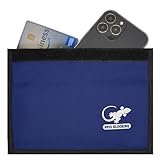
- BLOCK PHONE SIGNALS — Seal your phone inside the Faraday bag to block cellular, Wi-Fi and Bluetooth communication and cut GPS reception. No calls, texts or wireless connections while properly enclosed.
- ANTI-TRACKING PRIVACY — Stop your enclosed phone from communicating with surrounding wireless networks. Blocks common phone signals so the device cannot transmit or receive through those connections while sealed.
- RFID & NFC BLOCKING — Blocks RFID/NFC communication to help stop unauthorized wireless scanning of compatible cards and passports stored completely inside the shielded compartment.
- KEY FOB SIGNAL BLOCKER — Put a compatible car key fob inside to block its radio communication, helping stop relay-style signal access when the pouch is fully closed.
- LARGE PHONE POUCH — Approx. 9.4 x 5.4 in outside with about 9 x 4.4 in usable interior. Fits many large smartphones plus cards, passports or a compatible key fob.
California settlement announcement
In May 2026, the California Privacy Protection Agency announced a separate settlement. The agency said its investigation found that GM sold names, contact information, geolocation, and driving behavior data to LexisNexis Risk Solutions and Verisk from 2020 to 2024. According to the agency, the companies intended to develop a driver-rating product that could be marketed to insurers for potential rate-setting.
The agency’s announcement described $12.75 million in civil penalties and said GM made approximately $20 million nationwide from the sales at issue. It also described a five-year restriction on selling driving data to consumer reporting agencies, deletion of retained data within 180 days subject to stated exceptions, and requests that LexisNexis and Verisk delete the driving data. The announcement said California drivers were not directly affected by those sales, likely because of state insurance laws; that case-specific statement should not be generalized to other states or programs.
Do these 3 things before closing this tab:
1Scan for outdated or missing drivers - takes under a minute2Repair Windows errors before they cause bigger problems3Fix the driver behind crashes, sound loss and screen glitchesRank #3

- 【Fully Compatible with Android & iOS】Works with both Google's Find Hub and Apple Find My. This real-time GPS tracker delivers precise crowdsourced location updates without requiring a SIM card or subscription service. Whether for travel, cargo transportation, vehicles, or personal assets, this is a reliable long-distance tracking solution.
- 【No Subscription | No Monthly Fee | No SIM】Lifetime Free GPS Tracking—Enjoy a truly subscription-free GPS tracker with no contracts and no hidden fees. This tracker comes with no monthly fees and is designed for lifetime use, making it the ideal GPS tracker for vehicles, luggage, pets, and everyday valuables.
- 【Mini Magnetic Design for Hidden Placement】This mini in-vehicle GPS tracker measures just 1.3 inches and weighs only 0.4 oz. It features a built-in, upgraded strong magnet that securely attaches to cars, motorcycles, trucks, trailers, and other metal surfaces, enabling safe and discreet tracking. It is the perfect magnetic GPS tracker for cars, motorcycles.
- 【Multi-Function Tracking: Keep Your Valuables, Pets, and Family Safe】 This device isn’t just for cars. You can use it as a pet tracker to keep tabs on your dog or cat at all times; as a child locator to ensure your child’s safety; or as a lost-and-found tracker to help you locate your bags and valuables. With its extended signal range and ultra-compact design, it can be easily placed in bags, backpacks, suitcases, or pet supplies to meet your asset tracking and vehicle management needs.
- 【Important Note】With the help of Google's & Apple technology, all location information is encrypted. Once paired with your device, this GPS tracker remains invisible to unauthorized users. Only authorized devices can access location data, keeping your privacy protected. Please note: It may still be detectable by professional equipment. If you need a tracker that is visible to everyone or completely undetectable by specialized tools, this product may not be the best fit.
How can telematics affect insurance?
Usage-based insurance (UBI) uses telematics—information about driving, often collected through a vehicle, phone app, or device—to inform an insurance program. The National Association of Insurance Commissioners says UBI is becoming increasingly common and that many auto insurers offer it alongside traditional policies. Its overview describes analysis of factors such as hard braking, speed, and time, including in accident-related contexts; some programs also include safety-related functions. It does not quantify how many insurers or policies use telematics.
A program’s data might be used to offer a discount, provide driving feedback, inform a quote, or affect a policy rate. Which of those applies—and whether participation can affect a quote, discount, renewal, or premium—is determined by the particular program and policy. Ask the insurer directly rather than assuming that enrollment always saves money or always raises a rate.
Rank #4
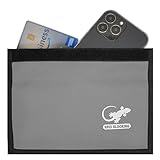
- PHONE FARADAY BAG — Put the phone in, seal the closure and cut the connection. Blocks cellular, Wi-Fi and Bluetooth communication and GPS reception while the device is properly enclosed.
- STOP RFID/NFC SCANNING — RFID blocking sleeve shields compatible credit cards, ID cards and passports from unauthorized wireless reads while they remain fully inside the pouch.
- BLOCK KEY FOB SIGNALS — Use the shielded compartment for a compatible car key fob to stop radio communication and help prevent relay-style keyless-entry signal access.
- PRIVACY ON DEMAND — Use at meetings, while traveling, during focused work or whenever you want an enclosed phone offline and unavailable to common wireless networks.
- ROOM FOR LARGE PHONES — Approx. 9.4 x 5.4 in exterior and 9 x 4.4 in usable interior; portable enough for a purse, backpack, briefcase, vehicle or desk.
How to check whether your car is sharing data—and change it
- Identify active services. Check the automaker account and companion app for connected-services plans, driver-feedback features, and insurance or usage-based driving programs.
- Read the notice for your exact vehicle and service. Use the current privacy notice and program terms for your automaker, model, country or state, and connected-services plan. Note the effective or updated date and search for terms such as “usage-based insurance,” “driver behavior,” “precise geolocation,” and “insurance-related data sharing.”
- Review the enrollment and consent screens. Check whether joining is optional, what information is included, who receives it, and whether consent can be withdrawn. GM and Toyota describe affirmative or express consent for the insurance uses above; do not assume another program has identical terms.
- Inspect vehicle and app settings. Ford specifically directs users to the in-vehicle Settings menu. Check both the car and its companion app for privacy or data-sharing controls, because a setting in one place may not describe every service or enrollment.
- Use the program’s stated withdrawal or rights process. If you are enrolled, follow its instructions to withdraw consent, opt out, access information, or request deletion where available. For GM, the FTC order requires U.S. access and deletion mechanisms under the order’s terms and exceptions.
- Ask your insurer what the data does. Ask whether the program can affect your quote, discount, renewal, or premium, and whether it uses an automaker feed, phone app, plug-in device, or another source. The answer may depend on your policy and state.
- Tell other drivers who use the vehicle. Explain which connected services are active and where settings are managed. Ford notes that another driver may change sharing settings, so check them periodically if multiple people use the car.
What to compare before joining an insurance-data program
- Enrollment and consent: Is participation optional? How can consent be withdrawn?
- Data: Does the program collect driving events, mileage, time, location, vehicle identifiers, or other information, and for what period?
- Recipients and purpose: Is the recipient an automaker affiliate, insurer, broker, or service provider? Is the stated purpose a discount offer, rate calculation, feedback, or product development?
- Pricing: Can the information affect a quote, discount, renewal, or rate? What does the actual policy say?
- Controls: Can you disable collection, opt out, access or delete data, and determine whether another driver changed a setting?
- Eligibility: Which model years, connected services, insurers, and states are covered?
These are questions to ask about the particular program, not controls or practices that every program necessarily offers.
Quick Recap
Product prices and availability are accurate as of the date/time indicated and are subject to change. Any price and availability information displayed on Amazon at the time of purchase will apply.