Turbocharged engines are sometimes less reliable than naturally aspirated engines, but not inherently so. Turbocharging adds heat, cylinder pressure, oil plumbing, boost-control hardware, and other components that can increase complexity and repair exposure. A well-designed, mature, properly maintained turbo engine can nevertheless be just as dependable as a naturally aspirated engine. The specific powertrain—not the turbo label—should guide your decision.
Sometimes—but turbocharging does not automatically make an engine less reliable. A turbocharged engine has more components, higher cylinder pressures, and greater exhaust-side heat than a comparable naturally aspirated engine. That can create more possible failure points and, in some designs, higher repair costs. However, a well-engineered, properly maintained turbo engine can be as dependable as a naturally aspirated engine. The engine family, generation, calibration, oil specification, thermal management, maintenance history, and driving conditions matter more than the word turbo by itself.
The fairest comparison is between specific powertrains, not induction types in the abstract. A conservative turbo engine from a mature engine family may be a better long-term choice than a poorly designed or neglected naturally aspirated engine. Conversely, a highly stressed downsized turbo engine with a history of oil, cooling, or boost problems deserves more caution than a simple, well-proven naturally aspirated engine.
Why turbocharged engines can have a reliability disadvantage
A turbocharger uses energy from the exhaust to spin a turbine. The turbine drives a compressor, which forces more air into the engine. The engine can then burn more fuel and produce more power from a given displacement. Downsizing can also reduce pumping losses during some light-load conditions, which is one reason manufacturers use turbocharging.
Recommended Free Tools
#1 Best Overall

- 3X Stronger than the leading full synthetic*
- 10X Better high stress performance**
- 20,000 miles between oil changes***
- Viscosity breakdown as measured in Kurt Orbahn test on 5W-30 grade
- As measured in Seq IX test under high load/torque conditions vs. API SQ test limits
The tradeoff is that a boosted engine generally operates at higher manifold pressure and higher brake mean effective pressure than a naturally aspirated engine. In practical terms, each piston, connecting rod, bearing, head gasket, fuel-system component, and cooling-system component may face greater load or heat during high-output operation. The exact increase depends on the design and calibration; turbocharging does not impose the same stress level on every engine.
Turbocharging also adds hardware that a naturally aspirated engine does not need, including:
- the turbocharger’s turbine, compressor, shaft, and bearings;
- a wastegate or variable-geometry mechanism to control boost;
- an intercooler or charge-air cooler and its ducts, clamps, and connections;
- modified exhaust manifolds and hot-side heat shielding;
- turbocharger oil-feed and oil-drain plumbing;
- additional sensors, wiring, fasteners, actuators, and control software; and
- cooling and ventilation hardware designed to manage the extra heat.
Each additional part is another possible leak, electrical fault, heat-related failure, or maintenance concern. NHTSA’s technical analysis identifies this added integration hardware as one of the fundamental tradeoffs of turbocharging. More parts do not guarantee more failures, but they do increase system complexity.
Higher heat and pressure are the central tradeoffs
The turbocharger’s exhaust-side components operate in a very hot environment, while its shaft and bearings depend on clean oil delivered and drained correctly. Oil-feed restrictions, degraded oil, leaks, excessive deposits, or cooling problems can damage the turbocharger. Heat can also affect nearby wiring, sensors, hoses, seals, and exhaust components.
The engine itself is not protected from the turbocharger’s higher output. A small engine producing the power of a much larger naturally aspirated engine may have less margin under sustained towing, high-speed driving, extreme temperatures, or poor maintenance. That does not mean the engine is inherently fragile; it means its durability depends heavily on component sizing, cooling capacity, lubrication, fuel control, and calibration.
Low-speed pre-ignition in turbocharged gasoline engines
Turbocharged gasoline direct-injection engines can also face the risk of low-speed pre-ignition, or LSPI. LSPI is an abnormal-combustion event associated particularly with high specific torque at low engine speed. It can create severe pressure spikes inside the cylinder. An SAE study examined how fuel and lubricant composition affect LSPI and emissions.
LSPI is a design and operating risk, not proof that every turbo engine will suffer premature failure. Modern engine controls, fuel requirements, piston design, and oil specifications are intended to manage it. The practical lesson is simple: use the fuel and oil requirements specified for the vehicle, and do not assume that any oil with the same viscosity is equally suitable.
Why naturally aspirated engines can be simpler
A naturally aspirated engine draws air into the cylinders without a turbocharger or supercharger. It generally does not need a turbine-side heat-management system, charge-air cooler, boost-control actuator, or turbo oil plumbing. This simpler arrangement can mean fewer parts to diagnose and replace, fewer opportunities for boost or charge-air leaks, and less hot-side integration complexity.
That simplicity is the strongest general argument for a naturally aspirated reliability advantage. If two engines are equally well designed, equally maintained, and asked to produce similar power, the engine with fewer high-temperature and high-pressure systems may have fewer possible failure modes.
Rank #2

- Advanced protection against the four main causes of engine breakdown: wear friction heat and deposits
- Delivers 40% stronger wear protection than industry standards to reduce friction and improve fuel economy
- Provides 15% better deposit defense vs. industry standards, keeping engines cleaner for smoother performance and longer-lasting protection
- Up to 2.5X better heat protection vs. industry standards to fight harmful sludge formation and thermal breakdown
- Engineered for excellent low-temperature flow, reducing metal-to-metal contact during cold starts — when most engine wear typically occurs
But naturally aspirated does not mean failure-proof. A naturally aspirated engine can still develop oil-consumption problems, timing-chain or timing-belt failures, cooling-system faults, head-gasket failures, fuel-injector problems, variable-valve-timing faults, electronic-control issues, bearing damage, or overheating. An SAE case study even documented thrust-bearing failure during a durability evaluation of a naturally aspirated engine.
Therefore, removing the turbo removes certain failure modes; it does not remove the need to evaluate the complete engine and vehicle.
Turbo versus naturally aspirated: the practical comparison
| Factor | Turbocharged engine | Naturally aspirated engine |
|---|---|---|
| Hardware | Turbocharger, boost-control system, charge plumbing, intercooler, oil lines, and additional heat-management components | Fewer induction and hot-side components |
| Output | More power and torque from a given displacement; often used for downsizing | Power is limited by atmospheric air pressure and engine displacement |
| Operating intensity | Typically higher manifold pressure, cylinder loading, and exhaust-side temperature | Generally lower specific loading for comparable output, although the design still matters |
| Potential failure areas | Turbo bearings, seals, actuators, wastegates, variable-geometry mechanisms, boost leaks, intercooler, oil lines, and heat-damaged components | Does not have those turbo-specific parts, but retains ordinary engine and vehicle failure modes |
| Repair complexity | Potentially more complicated and expensive when turbo or related hardware fails | Often simpler to diagnose and repair, but not necessarily cheaper in every model |
| Reliability verdict | Can be highly reliable when the design, maintenance, and use are favorable | Has a simplicity advantage but is not automatically more durable |
This table describes tendencies, not a universal ranking. A turbocharged engine designed with generous durability margins may outperform a naturally aspirated engine with a known timing, cooling, or bearing weakness.
What real-world reliability evidence shows
There is no single current, apples-to-apples public table that controls for engine displacement, vehicle weight, power output, vehicle age, manufacturer, maintenance, climate, and usage while comparing turbocharged and naturally aspirated engines over their entire lives. That limitation matters because turbo engines are often installed in different vehicles, paired with different transmissions, and tuned to produce different output levels from non-turbo alternatives.
Consumer Reports’ owner-reliability survey provides useful model-specific evidence. Its cited 2018 data found many highly reliable turbo engines, but also found that some turbocharged powertrains had more reported turbocharger, engine-computer, and even engine-replacement problems than comparable non-turbo powertrains. Results differed substantially among manufacturers: Lexus, Honda, and Porsche turbo powertrains performed better in that survey period than Hyundai and Mini turbo powertrains. Those findings should be treated as period- and model-specific—not as a permanent ranking of every turbo engine those companies have ever built.
Consumer Reports also cautioned that newly introduced powertrains can have more problems during their first few years. That makes the engine’s generation and production history important when shopping for a used vehicle.
J.D. Power’s 2026 U.S. Vehicle Dependability Study offers current context about vehicle dependability, but it measures owner-reported problems across nine categories, including powertrain, infotainment, exterior, driving experience, and features. It does not isolate turbocharged engines from naturally aspirated engines. Its finding that gas-powered vehicles averaged fewer reported problems than battery-electric and plug-in-hybrid vehicles is not evidence of a universal turbo-versus-NA result.
Crashes, No Sound, or Screen Glitches?
Random freezes, missing sound and display glitches usually trace back to one bad driver. Find and replace yours safely.Free scan · under a minuteWindows Errors? Fix Them Before They Spread
Repair common Windows errors and clear accumulated junk for a smoother, more stable PC - no reinstall needed.Free scan · no reinstallThe defensible conclusion from the available evidence is limited but useful: some turbocharged engines and powertrains have had higher problem rates than comparable non-turbo engines, while many others have performed well. The specific engine family and generation are more predictive than whether the vehicle has a turbocharger in the first place.
Design factors that matter more than the turbo label
1. How aggressively the engine is downsized
A mild turbo engine producing moderate specific output is not equivalent to a very small engine producing the power of a much larger naturally aspirated engine. NHTSA notes that turbocharging can permit a substantial displacement reduction—roughly 30% in some applications—while maintaining similar peak output. The smaller engine may then operate at higher load levels when producing that output.
Rank #3

- Advanced protection against the four main causes of engine breakdown: wear friction heat and deposits
- Delivers 40% stronger wear protection than industry standards to reduce friction and improve fuel economy
- Provides 15% better deposit defense vs. industry standards, keeping engines cleaner for smoother performance and longer-lasting protection
- Up to 2.5X better heat protection vs. industry standards to fight harmful sludge formation and thermal breakdown
- Engineered for excellent low-temperature flow, reducing metal-to-metal contact during cold starts — when most engine wear typically occurs
When comparing two vehicles, ask how much power and torque the engine produces per liter, how often it must operate near maximum boost, and whether the vehicle is routinely used for towing or heavy loads. High specific output is not automatically unreliable, but it leaves less room for poor calibration, neglected oil, overheating, or abusive use.
2. Engine generation and calibration maturity
A mature engine family with years of production history often gives buyers more information about recurring problems, updated parts, service procedures, and software revisions. A new engine can ultimately be excellent, but its early-production reliability is less certain.
What’s actually slowing this PC down?
Pick the symptom - the matching free tool is one click away.
Look for technical-service-bulletin history, recalls, updated components, and documented repairs rather than relying on the manufacturer’s reputation alone. A known issue that was properly repaired may be less concerning than an undocumented vehicle with a perfect-sounding sales description.
3. Turbocharger architecture
A single, conservatively sized turbocharger has a different risk profile from a twin-turbo system, an electrically assisted turbo, a variable-geometry turbocharger, or a turbocharger closely integrated into the exhaust manifold. More sophisticated hardware can improve response, emissions, packaging, or efficiency, but it can also increase the number of actuators, sensors, control strategies, and heat-management requirements.
Do not use the number of turbochargers as a standalone reliability ranking. Evaluate the specific engine code and service history.
4. Oil, cooling, and thermal management
Correct lubrication is especially important because the turbocharger’s shaft and bearings operate at high speed and depend on the engine’s oil system. The correct oil is not defined by viscosity alone. The manufacturer may require a particular performance category or approval to address deposits, emissions-system compatibility, timing-chain wear, and LSPI protection.
Free tools Windows power users keep installed
One-click scans. No signup required.
API’s ILSAC GF-6 categories include protections related to LSPI, timing-chain wear, high-temperature piston and turbocharger deposits, sludge, varnish, and emissions-system compatibility. API nevertheless directs owners to follow the vehicle manufacturer’s recommendation. Ford likewise instructs owners to use oil meeting the vehicle’s specified requirements, warns against overfilling and unapproved additives, and directs them to the owner’s manual. Chevrolet gives similar vehicle-specific guidance.
If you are buying supplies, choose full synthetic motor oil that meets your owner’s-manual specification—not simply the thickest oil or a product advertised generically for turbo engines. The specification, viscosity, quantity, and change interval must all match the particular engine. Synthetic oil alone cannot compensate for missed oil changes, low oil level, overheating, a blocked oil line, or a mechanical defect.
5. Maintenance and operating conditions
Short trips, towing, heavy loads, extreme temperatures, sustained high-speed operation, extended idling, and repeated stop-and-go use can increase thermal and lubricant stress. Toyota identifies several of these conditions as reasons a vehicle may require more frequent oil changes than it would under ordinary driving.
Rank #4
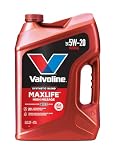
- Formulated for engines with 75,000 miles or more, Valvoline MaxLife High Mileage synthetic blend is formulated with seal conditioners to help prevent oil leaks and reduce oil consumption
- Delivers 20% better wear protection and 15% better sludge defense than industry standards to help prevent engine breakdown
- Extra detergents safeguard against friction, corrosion and deposits to keep high-mileage engines clean
- Advanced friction-fighting additives help maximize performance and improve fuel efficiency
- Provides performance benefits for high mileage, new and re-built engines alike
For either engine type, but especially for a turbocharged engine, owners should:
The Tool Desk
Outbyte PC Repair FREERepair Windows errors before they cause bigger problemsFix Now →Outbyte Driver Updater FREEScan for outdated or missing drivers - takes under a minuteDriver Scan →- check the oil level at the interval specified by the manufacturer or more often if the engine is known to consume oil;
- use the exact viscosity and performance specification listed in the owner’s manual;
- keep the scheduled maintenance current and document the work;
- pay attention to coolant level, overheating, smoke, warning lights, and changes in performance;
- repair oil leaks, boost leaks, and cooling-system faults promptly; and
- avoid assuming that aftermarket additives, a thicker oil, or a generic internet “turbo rule” improves reliability.
There is no universal maintenance shortcut that applies to every turbocharged engine. Follow the manual’s requirements for oil changes, spark plugs, filters, fuel, and any turbo-specific inspection. If the manual specifies a procedure after severe use, follow that procedure rather than applying advice intended for another engine.
Common turbo-related failure areas and symptoms
A turbocharged vehicle can have a problem involving the turbocharger, a related system, or an ordinary engine component. Those are not interchangeable diagnoses.
| Possible problem | What a driver may notice | Why the symptom is not conclusive |
|---|---|---|
| Turbocharger bearing or shaft damage | Unusual whine, smoke, oil consumption, or reduced boost | Intake leaks, exhaust faults, lubrication problems, or ordinary engine wear can produce similar symptoms |
| Wastegate or actuator fault | Underboost or overboost codes, inconsistent power, or limp mode | Sensor, wiring, vacuum, software, or plumbing faults can mimic actuator failure |
| Variable-geometry mechanism sticking | Delayed response, inconsistent boost, or fault codes | Diagnosis requires checking the mechanism and control system, not just reading one code |
| Boost or intercooler leak | Hissing, poor acceleration, underboost, or higher fuel use | A split hose, loose clamp, damaged intercooler, or another intake fault may be responsible |
| Oil-feed or drain-line problem | Oil leaks, smoke, turbo noise, or repeated turbo damage | The underlying cause may be restricted plumbing, poor service, excessive crankcase pressure, or another lubrication fault |
| Heat-damaged wiring, sensors, or exhaust components | Warning lights, rough operation, poor boost control, or drivability complaints | Electronic and exhaust faults can resemble a failed turbocharger |
Loss of boost, smoke, oil consumption, unusual turbo noise, poor acceleration, and limp mode should be investigated promptly. They do not, by themselves, prove that the turbocharger has failed. A failed timing chain, cooling component, fuel injector, ignition part, bearing, piston, head gasket, or control module is an engine or vehicle problem—not necessarily a turbo failure.
A sensible diagnostic sequence
- Record the symptoms. Note whether the problem occurs cold or hot, under acceleration or at idle, and whether smoke, noise, or warning lights are present.
- Check basic conditions. Verify oil level and condition, coolant level, visible leaks, intake hoses, clamps, and obvious wiring damage. Do not continue driving aggressively if the engine is overheating, losing oil, or producing severe noise.
- Read the fault codes. An OBD2 diagnostic scanner can retrieve stored diagnostic trouble codes and useful data on many vehicles. A code is a starting point, not a verdict: an underboost code does not automatically mean the turbocharger must be replaced.
- Test the system. A technician may need to inspect actuator operation, test for boost or intake leaks, verify oil supply and drain flow, check sensor data, and examine the turbocharger mechanically.
- Find the root cause. Replacing a turbo without correcting a blocked oil line, intake leak, cooling fault, or control problem can lead to another failure.
How to evaluate a used turbocharged vehicle
Do not reject a used car solely because it has a turbocharger. Instead, evaluate the exact engine, its history, and its current condition. Before purchase, obtain:
- the exact engine code, model year, trim, and transmission;
- maintenance records showing reasonable service intervals and the correct oil specification;
- evidence of oil-consumption complaints, overheating, boost faults, repeated check-engine lights, or limp-mode events;
- recall and technical-service-bulletin information for that specific vehicle;
- a cold start, when possible, so you can observe smoke, rattles, rough running, and warning lights;
- a road test with smooth acceleration and consistent boost delivery;
- a scan for current, pending, and recently cleared diagnostic codes;
- an independent inspection, including a pressure or boost-leak check where appropriate; and
- warranty terms, including whether modifications or neglected maintenance could affect coverage.
A vehicle-specific repair manual can help a DIY owner verify the correct oil specification, service intervals, inspection points, and engine-specific procedures. It should supplement—not replace—the manufacturer’s current manual and professional diagnosis where the repair involves pressurized, hot, or internally damaged components.
For an expensive purchase, arrange a pre-purchase inspection by an independent technician familiar with the vehicle. The inspector can assess oil leaks, smoke, cooling performance, fault codes, boost behavior, and service evidence. This is usually more informative than a general statement that turbo engines are either good or bad.
What to check on a used naturally aspirated vehicle
Use the same disciplined inspection for an NA vehicle. Check oil consumption, timing-belt or timing-chain maintenance, cooling performance, compression where appropriate, fluid leaks, warning lights, fuel and ignition operation, and any evidence of prior overheating. A naturally aspirated badge eliminates turbo-specific risks, but it does not eliminate the possibility of a costly engine repair.
Which type is the better choice?
Choose based on the priorities and the specific vehicle:
Quick wins for a faster PC:
Clear out junk files and repair common Windows errorsFree Scan →Fix the driver behind crashes, sound loss and screen glitchesFind Drivers →Repair Windows errors before they cause bigger problemsFix Now →Best Value

- 6X better wear protection on critical engine parts than industry standards**
- 1.3X better sludge protection than industry standards*
- 3X Stronger against viscosity breakdown than leading full synthetic^
- Protection for 10,000 miles between oil changes
- As measured in Sequence VH sludge test vs. API SP limits
- Favor a naturally aspirated design if simple hardware, fewer boost-related parts, and straightforward long-term service are your highest priorities—and a particular NA engine has a strong maintenance and reliability history.
- Consider a turbocharged design if you want stronger torque or smaller-displacement performance and are willing to follow vehicle-specific oil, cooling, and maintenance requirements carefully.
- For a used vehicle, favor condition and documentation over induction type. A well-maintained turbo with complete records may be safer than an abused NA vehicle with overheating or neglected timing-system service.
- For a new or recently redesigned powertrain, investigate maturity before purchase. Early production history, recalls, service bulletins, and owner-reported patterns can be more revealing than the manufacturer’s marketing claims.
Turbocharging may make some repairs more expensive because the system adds parts and can make access or diagnosis more complicated. That does not mean every turbo repair is expensive, nor does it establish a fixed ownership-cost difference between all turbo and naturally aspirated vehicles. Parts availability, packaging, labor rates, warranty coverage, and the specific failure determine the bill.
Frequently asked questions
Do turbocharged engines last as long as naturally aspirated engines?
Some do, and some do not. There is no universal mileage limit or lifespan penalty caused by turbocharging alone. A turbo engine’s durability depends on its design margins, output, calibration, cooling, lubrication, manufacturing quality, maintenance, and use. Compare the specific engine family and generation.
Does a turbocharger always fail before the engine?
No. The turbocharger is one possible failure area, but ordinary engine components, cooling systems, electronics, fuel systems, and transmissions can also fail. Conversely, some turbo-related problems are caused by oil lines, boost plumbing, actuators, or sensors rather than the turbocharger itself.
Will full synthetic oil guarantee turbo reliability?
No. Use the oil that meets the vehicle manufacturer’s required viscosity and performance specification. A suitable full synthetic oil can be an appropriate choice where the manual permits or requires it, but no oil guarantees reliability. Correct level, change interval, cooling, and repair of underlying faults matter too.
Do these 3 things before closing this tab:
1Repair Windows errors before they cause bigger problems2Fix the driver behind crashes, sound loss and screen glitches3Clear out junk files and repair common Windows errorsCan an OBD2 scanner prove that the turbocharger is bad?
No. A scanner can retrieve diagnostic codes and operating data, but codes require interpretation. Underboost or overboost may result from a leak, actuator, sensor, wiring, software, exhaust, or lubrication problem. A proper diagnosis may require pressure testing and mechanical inspection.
Are naturally aspirated engines always the safer used-car purchase?
No. They have fewer turbo-specific parts, which is a genuine simplicity advantage, but an NA engine can still have expensive timing, cooling, oil-consumption, bearing, head-gasket, fuel, or electronic problems. Service records and an independent inspection are more useful than the NA label alone.
Frequently Asked Questions
Do turbocharged engines last as long as naturally aspirated engines?
Some turbocharged engines last as long as naturally aspirated engines, while others have higher problem rates. The specific engine family, generation, maintenance, calibration, thermal management, and use pattern matter more than turbocharging alone.
Can an OBD2 scanner prove that a turbocharger is bad?
No. A scanner can retrieve fault codes and operating data, but underboost or overboost codes may be caused by leaks, actuators, sensors, wiring, software, exhaust faults, or lubrication problems. Proper diagnosis may require pressure testing and mechanical inspection.
What oil should be used in a turbocharged engine?
Use the viscosity and performance specification listed in the owner’s manual. A suitable full synthetic oil may be appropriate, but no oil guarantees reliability; oil level, change intervals, cooling, and underlying repairs are also important.
The Bottom Line
Bottom line: Turbocharged engines are potentially more complex and more expensive to repair because they add heat, pressure, and hardware. But a well-designed and well-maintained turbo engine can be as dependable as a naturally aspirated engine. When choosing a vehicle, compare the exact powertrain, engine generation, maintenance history, and intended use—not merely whether it has a turbo.
Quick Recap
Product prices and availability are accurate as of the date/time indicated and are subject to change. Any price and availability information displayed on Amazon at the time of purchase will apply.