Yes—but not in the way its sales numbers suggest. The AMC Javelin never approached the Mustang or Camaro for volume, yet it gave American Motors a serious pony car with distinctive design, usable rear-seat space, broad engine choice, genuine performance equipment and a credible Trans-Am connection. Its smaller production run limited period visibility, but those same differences now make well-preserved Javelins especially compelling to collectors.
The fairest verdict is that the Javelin earned respect from enthusiasts without ever receiving mass-market love. Understanding why requires looking at what AMC built, how buyers responded between 1968 and 1974, and what survives in the collector market today.

As an Amazon Associate I earn from qualifying purchases.
What the AMC Javelin was—and why it mattered
American Motors produced the Javelin from 1968 through 1974, entering the pony-car market after Ford, Chevrolet and Plymouth had already established strong followings. Hagerty’s model history describes the Javelin as a clean, relatively understated fastback designed by Dick Teague. Its swooping tail gave it a recognizable profile, while a rear seat large enough for adults made it more practical than many sporty coupes.
Recommended Free Tools
That combination was the Javelin’s central argument. It looked dramatic without copying the segment leaders, could be ordered with anything from a six-cylinder to a large-displacement V8, and offered equipment intended for enthusiastic driving. It was not merely an appearance package or a stripped-down muscle car; it was AMC’s full answer to the pony-car formula.
#1 Best Overall

- Contents: AMC (American Motors Corporation) founded in 1954. All of our best are small cars as American cars (equivalent to large Japanese vehicles) and we have also entered the category of muscle cars that became popular in the U.S. since the late 1960s (equipped with large exhaust and high output V8 engines for small and medium sized cars). The right wing, is the model equipped with a high powered V8 engine that exceeds 300 horsepower and a universal medium sized car. The Rebel Machine combines authentic tricolor graphics with drag-lace lettering, and the Javelin is a modern and modern professional touring custom
- Country of Origin: Thailand, Recommended Age: 3 years and up
- Perfect Gift: Perfect as a birthday gift, Christmas gift, or anniversary gift for kindergarten or school entrance celebrations
Dick Teague’s design gave the Javelin its own identity
Teague’s shape avoided the visual clutter that often appeared on late-1960s performance cars. The long hood, fastback roofline and tapered rear created a sporty silhouette, but the surfaces remained comparatively restrained. The design was recognizable at a distance without relying on excessive scoops or chrome.
The rear seat was an important practical distinction. Hagerty specifically notes that it could accommodate adults, giving the Javelin a usability advantage for buyers who wanted a performance-oriented car without accepting a token back seat. That did not make it a family sedan, but it broadened the reasons someone could choose it over a strictly two-seat or cramped alternative.
Because the Javelin was less common than a Mustang or Camaro, its styling also aged differently. A mass-market design can become visually familiar through sheer exposure; a Javelin remains unusual. For collectors, that individuality is part of the appeal, provided the car has not been altered beyond recognition.
Do these 3 things before closing this tab:
1Clear out junk files and repair common Windows errors2Scan for outdated or missing drivers - takes under a minute3Repair Windows errors before they cause bigger problemsEngines, trims and performance equipment
The 1968 range covered both economy and muscle
Hagerty lists four engine families for the 1968 Javelin range: a 232-cubic-inch inline six and 290-, 343- and 390-cubic-inch V8s. Exact availability depended on model year, transmission, body configuration and trim, so an engine list should never be treated as proof that every combination was offered in every year.
| Engine listed for the 1968 range | What it represented | Qualification |
|---|---|---|
| 232-cubic-inch six | Entry-level power for buyers prioritizing lower running costs over maximum acceleration | Availability varied by year and configuration |
| 290-cubic-inch V8 | Middle-ground V8 performance | Availability varied by year and configuration |
| 343-cubic-inch V8 | Higher-performance option for buyers seeking stronger muscle-car credentials | Availability varied by year and configuration |
| 390-cubic-inch V8 | Top-end displacement in the listed 1968 lineup | Availability varied by year and configuration |
This spread mattered because it let AMC sell the Javelin as more than one narrowly defined performance model. A buyer could choose a six-cylinder car for style and practicality, while another could specify a V8 and performance equipment. When evaluating a surviving car, verify the factory engine, transmission and option codes rather than assuming that a badge or replacement engine reflects original specification.
What the Go Package added
The available Go Package addressed the parts of the car that mattered when the driver used the Javelin aggressively. Hagerty identifies front disc brakes and heavy-duty suspension among its equipment. Those upgrades were meaningful because they improved stopping and handling capability rather than simply changing appearance.
Rank #2
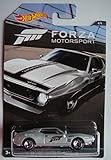
- Collectible Series: 2017 FORZA MOTORSPORT SERIES diecast vehicle from the popular racing game franchise
- Vehicle Model: SILVER AMC JAVELIN AMX 6/6 featuring authentic details and premium silver finish
- Wheel Design: Features classic 5 spoke wheels that complement the muscle car styling
- Scale Model: 1:64 scale Hot Wheels diecast car with detailed body work and paint application
- Collector Item: Part 6 of 6 in the Forza Motorsport series making it a must-have for completing your collection
Go Package content and availability were tied to year and configuration. A period-correct Javelin with documented Go equipment is therefore different from a standard car wearing aftermarket wheels or badges. Documentation is essential when a seller assigns a premium to a performance package.
SST was a trim designation, not a separate model line
Javelin listings commonly use the SST name. SST identified an available trim level within the Javelin range; it did not turn the car into a separate two-seat model. Equipment, styling details and availability changed during the 1968–1974 run, so the year-specific trim description and factory documentation matter more than the badge alone.
AMX means two different things depending on the year
The AMX name causes frequent confusion. For 1968 through 1970, the AMX was a separate, shorter two-seat model related to the Javelin but not simply a Javelin trim. From 1971 through 1974, AMX became a performance-oriented Javelin trim designation. A listing that says “Javelin AMX” must therefore be read in context: a 1968–1970 AMX is a distinct two-seater, while a 1971–1974 AMX is a Javelin-based performance version.
Sales were modest beside the segment leaders
Lower sales do not prove that a car was poorly engineered, but they do explain why the Javelin received less public attention. Hagerty’s retrospective comparison reports more than 55,000 Javelins sold in 1968, versus 235,000 Chevrolet Camaros, 300,000 Ford Mustangs and 45,000 Plymouth Barracudas. The same account places Javelin sales at 40,000 in 1969 and 28,000 in 1970.
| Model year or period | Javelin sales in Hagerty’s retrospective | Comparison figures in the same account |
|---|---|---|
| 1968 | More than 55,000 | Camaro: 235,000; Mustang: 300,000; Barracuda: 45,000 |
| 1969 | 40,000 | Comparable figures not stated |
| 1970 | 28,000 | Comparable figures not stated |
These numbers are Hagerty’s undated retrospective figures, not a complete AMC production ledger. They are still useful for scale: the Javelin was a minority player in a crowded category. Dealer reach, brand size, buyer familiarity and the stronger advertising presence of rivals all affected that result. None of those factors erase the Javelin’s equipment or design strengths.
What’s actually slowing this PC down?
Pick the symptom - the matching free tool is one click away.
How the Javelin compared with a Mustang, Camaro or Barracuda
The Javelin occupied the same broad market but offered a different balance of attributes.
Rank #3
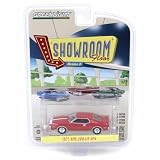
- Recommended for Collectors Age 14+, For display only, not for play
- 1/64 Diecast replica by Greenlight Collectibles
- Diecast Metal Replica with Rubber Tires & some plastic components
- Part of the Showroom Floor Series 6
- Approximate dimensions of vehicle: 3in L x 1in H x 1.25in W
| Area | Javelin’s documented position | What that meant to a buyer |
|---|---|---|
| Sales scale | Far lower than Mustang and Camaro in 1968; also below the Barracuda in Hagerty’s comparison | Less common on the road and less supported by mass-market familiarity |
| Styling | Teague-designed fastback with a swooping tail and restrained surfaces | A distinctive alternative rather than a lookalike of the category leaders |
| Passenger space | Rear seat described by Hagerty as large enough for adults | More practical for occasional rear passengers than a strict two-seat sports car |
| Powertrain choice | 1968 range included a 232 six and 290-, 343- and 390-cubic-inch V8s | Could be specified as a practical cruiser or a serious V8 performance car |
| Performance equipment | Go Package included front disc brakes and heavy-duty suspension | Performance intent extended beyond engine size |
| Racing association | Connected to AMC’s Trans-Am program and later special editions | Gave the car competition credibility even without rival-level sales |
Period pricing and matched acceleration tests are not established here, so it would be misleading to claim that every Javelin outperformed a comparable Mustang, Camaro or Barracuda. The defensible comparison is one of character: the Javelin delivered its own styling, adult-usable rear seating and a broad specification range while competing for the same enthusiast audience.
Performance credibility and the Trans-Am connection
The Javelin’s racing identity helped AMC demonstrate that its pony car belonged in performance conversations. The connection was not just a decal exercise: AMC used competition imagery and performance-oriented editions to associate the street car with the Trans-Am era.
Detailed season-by-season results, individual wins and driver quotations require a dedicated racing-history source, so they should not be inferred from the existence of the program alone. What can be stated confidently is that the racing association strengthened the Javelin’s image and gave AMC a platform for limited-production street versions.
The Tool Desk
Outbyte Driver Updater FREEFix the driver behind crashes, sound loss and screen glitchesFind Drivers →Outbyte PC Repair FREEClear out junk files and repair common Windows errorsFree Scan →The 1970 special editions
Hagerty records two particularly scarce 1970 versions: 2,501 Mark Donohue Signature Edition cars and 100 Trans-Am Edition cars. Their production totals are a major reason documented examples command attention today.
| 1970 version | Reported production | Why it matters now |
|---|---|---|
| Mark Donohue Signature Edition | 2,501 cars | Recognizable limited edition tied to the Javelin’s performance and racing image |
| Trans-Am Edition | 100 cars | Extremely scarce version whose authenticity and documentation are critical |
Rarity alone does not guarantee a high-value car. An undocumented claim, an incomplete restoration or a heavily modified drivetrain can reduce the premium that a genuine limited edition would otherwise command. Buyers should match the vehicle identification number, option documentation, body details and ownership history before paying for a special-edition story.
Independent reader supportYour contribution helps us test, update, and keep practical guides available for everyone.Why did the Javelin receive less love when new?
It arrived after buyers had already formed habits
By 1968, shoppers already knew where to find a Mustang or Camaro. AMC had to persuade them to consider a newer nameplate while competing against established dealer networks and advertising budgets. A car can be distinctive and capable yet still lose attention when buyers default to familiar choices.
Lower volume reduced visibility
Sales created a feedback loop. Fewer Javelins meant fewer examples in showrooms, fewer owners recommending them to friends and less visibility in traffic. That scarcity was a disadvantage when the car was new, even though it later became an attraction for collectors.
Its strengths were not one-dimensional
The Javelin could be a six-cylinder cruiser, a V8 muscle car, a Go Package performance car or a limited edition. That breadth was useful, but it made the model harder to summarize in a single advertising message. Rivals often benefited from a simpler public identity, while the Javelin asked buyers to understand its trim and engine combinations.
Being different is not the same as being universally loved
The Javelin’s styling appealed to people who wanted something less common, but distinctive design naturally divides opinion. Its rear-seat practicality broadened its usefulness, yet buyers seeking the most familiar badge or the strongest resale expectation could still choose a rival. “Underrated” is therefore fair only if it means overlooked relative to its capabilities—not that every driver secretly preferred it.
What the collector market says today
Collector interest confirms that the Javelin has moved beyond simple obscurity. Hagerty’s valuation page captured a 12-month sample of 15 Javelins with an average sale price of $37,900 on October 13, 2026. That is a time-bound market indicator, not a universal price for every year, engine, trim or condition. Auction results and valuation estimates change as new cars sell.
| Market figure | How to read it |
|---|---|
| Average sale price: $37,900 | Hagerty page snapshot accessed October 13, 2026 |
| Sample size: 15 Javelins | 12-month sample shown on that page; too small to represent every configuration |
| Model-year and condition mix | Must be checked on the live valuation page before using the figure for a specific car |
A buyer should treat the average as a starting reference only. The actual value of an individual Javelin depends on year, engine, transmission, trim, factory options, originality, restoration quality, rust history, documentation and the venue where it is sold.
A practical inspection framework
- Identify the exact model. Confirm the model year and determine whether an AMX reference means the separate 1968–1970 two-seat AMX or the 1971–1974 Javelin AMX trim.
- Verify the drivetrain. Record the engine displacement, transmission and major option codes. Compare them with period documentation rather than relying on a seller’s description.
- Authenticate special editions. For a Mark Donohue Signature Edition or Trans-Am Edition, require documentation supporting the production claim and inspect for inconsistencies between the car and its stated specification.
- Assess condition before rarity. Examine the body, structure, paint, interior, glass, trim and mechanical systems. A rare car needing extensive work can be a poorer purchase than a less rare, documented driver.
- Compare several current sales. Use recent transactions for the same year and configuration. Do not apply the $37,900 sample average to a six-cylinder base car, a modified example and a concours restoration equally.
- Budget for verification. A marque-knowledgeable inspection and paperwork review can prevent an expensive mistake, especially when a car is marketed as a limited edition.
What makes a Javelin desirable now?
- Individuality: Its fastback shape is immediately recognizable without being as common as rival pony cars.
- Usability: The adult-capable rear seat makes it more practical than a strict two-seater for occasional passengers.
- Specification variety: Six-cylinder and multiple V8 choices allow buyers to pursue originality, cruising or performance.
- Period equipment: A documented Go Package adds significance because it included functional upgrades such as front disc brakes and heavy-duty suspension.
- Racing association: The Trans-Am connection and 1970 limited editions provide historical depth.
- Rarity: Lower production means fewer surviving examples, although scarcity must be balanced against condition and parts or service realities for each individual car.
The answer: yes, but its reward was selective
The AMC Javelin deserved more recognition than its sales totals delivered. It was thoughtfully styled, offered genuine choice from a 232 six to large-displacement V8s, could be equipped for serious driving, and carried a racing identity that few buyers could dismiss. Its rear seat added everyday usefulness, while the 1970 special editions created lasting collector interest.
It did not deserve to outsell the Mustang or Camaro simply because it was different. Those cars had stronger market momentum, and the Javelin’s modest sales remain part of its documented history. The more accurate conclusion is narrower and stronger: AMC built a credible, distinctive pony car that earned enthusiast respect, lost the volume contest, and became more appreciated as rarity and originality gained importance. For today’s buyer, the right Javelin is not the one with the loudest claim; it is the one whose year, configuration, condition and history can all be proven.
Quick Recap
Product prices and availability are accurate as of the date/time indicated and are subject to change. Any price and availability information displayed on Amazon at the time of purchase will apply.




