The fastest way to troubleshoot an Allison transmission PTO is to trace the system in order: PTO request and TCM enable logic, electrical supply, solenoid operation, air or hydraulic shift pressure, PTO mechanics, and the attached pump or driveline. That sequence prevents a common and expensive mistake: replacing the PTO or transmission before proving where the fault actually is.
Because Allison PTO installations differ by transmission family, chassis, control generation, PTO manufacturer, shift type, and vocation, there is no universal Allison PTO pinout, pressure setting, coil-resistance value, backlash specification, or lubrication connection. The manufacturer manual for the exact installation controls.
As an Amazon Associate I earn from qualifying purchases.
Quick symptom guide
| Symptom | Start with | Do not assume |
|---|---|---|
| PTO will not engage | Fuse, battery voltage, grounds, activation conditions, solenoid voltage, and shift pressure | That the PTO itself has failed |
| Indicator light stays off | Determine whether the PTO is actually operating, then test the bulb, pressure switch, wiring, and ground | That a dark light proves the PTO is disengaged |
| PTO engages but slips or has the wrong speed | Ratio, load timing, TCM signaling, clutch pressure, and driven-equipment load | That the Allison transmission needs replacement |
| Whining, chatter, or vibration | Gear clearance, mounting contact, pump or driveline condition, and whether the noise existed before installation | That every PTO noise is an internal transmission problem |
| Repeated gear, shaft, or clutch failure | Application, torque, duty cycle, shock loads, lubrication, alignment, and pump or compressor seizure | That installing another PTO will solve the root cause |
An Allison PTO is a complete system: transmission family and control generation, chassis wiring, TCM programming, PTO model, shift method, air or hydraulic circuit, lubrication, pump or driveline, and operating load all matter. The most reliable diagnosis traces that chain in order: request and enable logic → electrical supply → shift pressure → PTO mechanics → driven equipment.
Outdated Drivers Are Slowing You Down
One free scan finds every outdated or missing driver and matches the right update for your exact hardware.Free scan · exact hardware matchWindows Errors? Fix Them Before They Spread
Repair common Windows errors and clear accumulated junk for a smoother, more stable PC - no reinstall needed.Free scan · no reinstall1. Identify the exact Allison PTO installation
Before measuring anything, write down the information that determines which test values and wiring diagrams apply:
#1 Best Overall

- Versatile Digital Multimeter - Accurately measures AC/DC Current, AC/DC Voltage, Capacitance, Frequency, Duty Cycle, Resistance, Diode, Continuity and Temperature.
- Thoughtful Design - Support Data Hold, Large LCD Backlit Screen, Auto Shut-off and Kickstand make the process of measurements easier. Professional level is reflected in some features include Auto-Ranging capability, and True RMS for measuring both AC Current and Voltage.
- Suitable For Many Occasions - This Multimeter is a golden partner to help to troubleshoot a variety of automotive and household electrical problems safely and accurately.
- Ensure Safety - Double ceramic fuse is anti-burn and protects from overloading,and it will be more secure and reliable; F400mA/600V and F10A/600V explosion-proof ceramic fuse tubes can protect the multimeter effectively.
- Additional Tips - Please take off the cap before using the test leads. Check the manual for more usage information.
- Allison transmission model or family and serial number
- Vehicle and chassis model, vocation, and control generation
- PTO manufacturer and complete model number
- Mechanical, air-shift, or hydraulic-shift PTO
- System voltage, such as 12 or 24 volts
- Air or hydraulic pressure source and the port being tested
- Pump, compressor, winch, generator, or driveline attached to the PTO
- The precise symptom, including whether it occurs cold, hot, unloaded, under load, or only at a particular engine speed
Do not copy a connector pinout, resistance value, pressure threshold, backlash setting, or lubrication arrangement from another Allison vehicle. PTO wiring and control logic vary with the transmission model, vocation code, chassis, PTO model, and TCM generation.
Allison technical publications are organized by product family, including 1000/2000, 3000/4000, 5000/6000, 8000, and 9000 Series. Obtain the correct Allison transmission troubleshooting manual or service publication for the specific family and control generation before diagnosing transmission-side faults.
Verify the application before replacing parts
Compare the PTO specification with the transmission opening, gear arrangement, speed ratio, torque requirement, duty cycle, lubrication method, and vocation. Chelsea service guidance places incorrect application near the top of the list for premature or repeated PTO failure. A PTO that is technically capable of mounting to a transmission may still be wrong for the required speed, torque, engagement method, or continuous duty.
Do these 3 things before closing this tab:
1Clear out junk files and repair common Windows errors2Scan for outdated or missing drivers - takes under a minute3Repair Windows errors before they cause bigger problemsFor many Allison 3000/4000 installations, Chelsea recommends a vehicle interface module, or an equivalent chassis-manufacturer controller, to manage PTO Request and PTO Enable. PTO Enable is important because it tells the TCM to maintain the line pressure needed for PTO operation. A missing or incorrect enable signal can cause inadequate PTO operation and damage the PTO or transmission. This is not a universal pinout or wiring instruction; use the diagram for the actual vehicle and PTO.
2. PTO will not engage
First check the activation conditions
A functioning PTO may refuse to engage when one required vehicle condition is missing. Depending on the chassis and programming, check whether the system requires:
- Neutral or park status
- Parking-brake application
- A permitted engine-speed range
- Cruise-control or preset-throttle logic
- A valid PTO Request from the switch or body controller
- A PTO Enable relay or TCM output
- Correct vehicle programming and vocation configuration
- Connection to the correct upfitter or chassis interface connector
Some GM vehicles with Allison transmissions have nearby transmission and upfitter connectors. Muncie’s GM/Allison installation guidance warns that connecting to the wrong one can prevent PTO operation. Inspect connector labels, terminal retention, and the vehicle-specific schematic rather than relying on physical location or wire color.
Use an electrical test to find the missing link
For the electrical portion of the diagnosis, an automotive digital multimeter is more useful than guessing from a switch position or listening for a relay. Choose suitable CAT-rated equipment for the vehicle voltage and follow the PTO manual’s ignition and engine-state instructions.
Quick wins for a faster PC:
Repair Windows errors before they cause bigger problemsFix Now →Fix the driver behind crashes, sound loss and screen glitchesFind Drivers →Clear out junk files and repair common Windows errorsFree Scan →- Check battery voltage and the PTO circuit fuse.
- Verify relay input, relay output, and switch output when the PTO is commanded.
- Measure voltage at the solenoid connector rather than only at the dashboard switch.
- Check the ground circuit, preferably under load where the service procedure allows it. A ground can show continuity with no load and still fail when the solenoid is energized.
- Inspect terminals for corrosion, loose retention, pushed-back pins, water intrusion, rubbed insulation, and pinched wiring.
- Check continuity between the relevant switch, relay, interface module, solenoid, indicator, and ground points.
A blown fuse is a symptom as well as a fault. If a replacement fuse opens again, look for a shorted harness, damaged solenoid coil, incorrect connection, or a component drawing excessive current. Do not install a larger fuse to keep the PTO operating.
Test the solenoid without overinterpreting a click
Listen for the solenoid when the PTO is commanded, but treat a click only as evidence that something moved. It does not prove that the valve shifted fully, that adequate pressure reached the PTO, or that the clutch is transmitting torque.
Rank #2

- Additional Tips - The following incorrect operations may cause the multimeter not to show results: Firstly, the plugs of test leads are not fully inserted or not inserted into the correct sockets. Secondly, the manual rotary switch is not placed in the correct position. In addition, this meter can not test all AC Current and below 100mV AC Voltage. Please check the user manual carefully before measurement.
- Versatile Digital Multimeter - Accurately measures AC/DC Voltage, DC Current, Resistance, and Diode. This Multimeter is a really useful tool for solving industrial and household electrical issues. Suitable for Household Outlets, Fuses, Batteries (including Vehicles), Automotive Circuit Troubleshooting, Charging Systems, Testing electronics in Cars etc.
- Troubleshooting with Accuracy - This Multimeter has a sampling speed of 2 times per second; Built-in a backlight LCD display with 3 ½ digits (1999 count) 0.6”, and high polarity including negative and positive readings.
- Ensures Safety - Double fuse is anti-burn and protects from overloading. The silicone cover can protect the multimeter from failing damage and prevent electric shocks. And low battery indication will be displayed when battery power is low.
- Ease of Use - Support Data Hold and Continuity Buzzer. Includes Convenient feature like LCD Backlit Screen makes it easy to use in dimly light areas. Batteries/Set of Test Leads/User Manual are Included.
For one listed GM/Allison application, Muncie specifies at least 10.2 VDC at the coil and approximately 8 ohms of coil resistance. Those are application-specific reference values, not a universal Allison specification. The actual PTO installation manual takes precedence because Muncie’s general solenoid guidance gives model-specific resistance and current ranges.
A solenoid with correct supply voltage can still fail because of a poor ground, an open or shorted coil, a sticking spool, contamination in the screen or valve, a bent cartridge, or insufficient mechanical clearance. Clean or remove the valve only as directed by the PTO manual. Replace the solenoid assembly when testing identifies a failed component rather than repeatedly cycling a damaged valve.
Free tools Windows power users keep installed
One-click scans. No signup required.
Confirm hydraulic or air pressure
If the PTO is hydraulically shifted, connect a calibrated gauge at the pressure-test location specified by the PTO manufacturer. A 400 PSI hydraulic pressure gauge kit may be useful for applicable installations, but the correct gauge range, hose, fittings, and adapter depend on the PTO model. Pressure testing can involve hot, pressurized fluid, so use the manufacturer’s procedure and protective equipment.
Manufacturer examples illustrate why a universal threshold is unsafe. One Muncie GM/Allison guide specifies at least 100 psi at the solenoid inlet for a listed hydraulic application. A broader Muncie indicator-light guide gives example minimums of 150 psi for hydraulically shifted PTOs and 70 psi for air-shifted PTOs. These are not universal Allison requirements.
If hydraulic pressure is low, inspect the transmission pressure connection, hose routing, fittings, restrictions, leaks, contamination, solenoid valve, and pressure source. If pressure at the indicator-switch port does not rise when the PTO is commanded, the solenoid may not be actuating. If both activation pressure and switch-port pressure fall when the PTO engages, a failed internal O-ring is one possible cause and the PTO may require disassembly and repair.
For an air-shift PTO, verify pressure at the PTO itself, not merely at the vehicle reservoir. Check air lines, leaks, restrictions, fittings, and the correct shift-cover configuration. Never substitute an air-pressure threshold from a different PTO family.
What’s actually slowing this PC down?
Pick the symptom - the matching free tool is one click away.
3. The PTO works but the indicator light stays off
Begin by separating an indication fault from an engagement fault. If the PTO is operating, test the indicator circuit. Check the bulb or LED, fuse, power supply, ground, pressure or mechanical indicator switch, and continuity between the switch and light.
Muncie recommends temporarily jumpering the indicator circuit with the ignition on and engine off, when permitted by the installation instructions. If the light illuminates, the light and much of its circuit are likely functional, shifting attention to the pressure switch, mechanical switch, pressure supply, or switch wiring. If the light remains dark, test the light, fuse, power, and ground directly.
On a clutch-shift PTO, the pressure switch commonly closes to ground when clutch-pack pressure is present. The light may therefore remain on whenever pressure exists, even if the rocker-switch position would lead you to expect it to be off. Test pressure-switch continuity while the PTO is engaged and compare the result with the PTO wiring diagram.
Rank #3

- VERSATILE FUNCTIONALITY: Measures AC/DC voltage up to 600V, 10A DC current, 2MΩ resistance; additional features include continuity, diode test and battery test
- LEAD-ALERT PROTECTION: LEDs on the meter illuminate to indicate proper test lead placement, enhancing accuracy and safety during measurements
- BACKLIT DISPLAY: LCD shows clear readings in low-light conditions for enhanced visibility
- BATTERY TEST: Battery test mode can be used for checking if batteries are working
- CONVENIENT FEATURES: Test lead holders on the back of the meter, kickstand and optional magnetic hanger (Cat. Nos. 69445 or 69417) for hands-free operation
- Light off, PTO operating: suspect the bulb or LED, fuse, switch, ground, pressure switch, or wiring.
- Light off, PTO not operating: move upstream to PTO Request, relay, solenoid voltage and ground, activation pressure, and TCM logic.
- Light on, PTO not operating: suspect a worn clutch pack on a clutch-shift PTO or a damaged clutch collar or shift cover on a mechanical-shift PTO.
4. PTO engages but output speed or power is wrong
Confirm the expected output speed mathematically and operationally before changing components. Check the PTO ratio, engine speed, transmission state, torque-converter condition, and the pump or driveline requirement. A correct PTO can appear to be underperforming when the selected ratio does not match the application or when the driven equipment is demanding more torque than the system can provide.
The Tool Desk
Outbyte PC Repair FREERepair Windows errors before they cause bigger problemsFix Now →Outbyte Driver Updater FREEScan for outdated or missing drivers - takes under a minuteDriver Scan →On listed GM/Allison applications, Muncie identifies missing TCM signaling, applying load before turbine-shaft lockup, a weak or intermittent positive-indicator or pressure-switch signal, and a worn or damaged clutch pack as possible causes of incorrect PTO speed or performance. Some applications require a signal to a specified TCM pin and require the operator to reduce load until torque-converter lockup occurs. Those details are chassis- and PTO-specific, not instructions for every Allison installation.
When the PTO slips or loses speed under load
A PTO that engages normally but slows under load, slips, or generates heat may have:
- Worn friction discs or clutch-pack components
- Insufficient clutch pressure
- An internal hydraulic leak or failed O-ring
- Contaminated or incorrect fluid
- Excessive pump, compressor, winch, or other driven load
- Incorrect PTO ratio or engine-speed selection
- A seized or failing auxiliary component
Measure pressure under the operating condition specified by the PTO manual, then compare it with actual output speed and load. A pressure test that is normal with no load does not prove that the clutch maintains pressure while transmitting torque. Inspect the PTO before condemning the Allison transmission, especially when the transmission shifts normally in road operation.
5. PTO noise, whining, chatter, or vibration
Establish whether the PTO caused the noise
Ask whether the noise existed before installation and whether it changes when the attached pump or driveline is disconnected. If safe and practical, temporarily isolate the driven equipment according to the service procedure. This can distinguish PTO gear noise from pump cavitation, hose vibration, driveline phasing, universal-joint angle problems, or noise generated by the auxiliary machine.
Muncie recommends running the application without the PTO when appropriate, inspecting both transmission and PTO gears for handling damage, and spinning the PTO gear before mounting. Do not put hands near rotating parts or perform this test with personnel in the vehicle path.
Check gear clearance and mounting
Too little gear backlash can create a high-pitched whine and excessive loading on the idler shaft and bearings. Too much backlash can produce chatter or clatter. Muncie gives 0.006–0.012 inches as a typical range for many of its PTOs, but notes that Allison 3000/4000 applications may have backlash predetermined by the transmission manufacturer and may not require an installer backlash check. The applicable PTO installation manual controls.
Also check whether the PTO is contacting the floorboard, frame rail, bracket, crossmember, spring shackle, or another structure. Engine and transmission movement can make a clearance problem appear only under load.
Mounting too tightly can cause whining; mounting too loosely can cause clatter. Missing filler blocks, spacers, or gaskets can create an abnormal gear-wear pattern that progresses to fatigue and tooth failure. Verify fastener torque, gasket or shim arrangement, housing condition, and clearance rather than trying to quiet the PTO with thicker fluid or an improvised spacer.
Rank #4
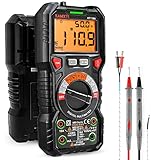
- WIDE APPLICATIONS: KAIWEETS HT118A Multimeter measures up to 1000V DC voltage and 750V AC voltage, 10A AC/DC current and 60 MOhms resistance, electrical tester also tests temperature, capacitance, frequency, duty-cycle, wire on-off, and test diodes and continuity
- EASY OPERATION: Switch the dial to the function you need, and the LED lights on the jacks will shine accordingly. To plug in the leads is easy. Autoranging saves you the hassle of having to know which range of value. Large 2.9” LCD backlight display, easy-to-read digits offer a 6000-count resolution
- MULTI-FUNCTION: Non-contact voltage testing and Live function with sound and light alarm. Flashlight on the back ensures easy use in dimly lit places. Min/Max/Average to record signal fluctuations. Stable kickstand, Pen slot on the back, Low battery prompt, Data retention, Auto power-off
- SAFETY FIRST: IEC Rated CAT III 1000V, CAT IV 600V, CE, RoHS certified. Anti-Burn with double ceramic fuse and thermistor protection circuit. High Voltage Protection is active on all ranges. Double insulated unit. Silicone protective case prevents it from falling damage
- AFTERSALES: KAIWEETS provides a 36-Month after-sale service, lifetime technical support. Please feel free to contact us if you have any concerns. Package includes multimeter, test leads, thermocouple, batteries and user manual. ( Note: Please take off the cap before using the leads)
6. Repeated gear, shaft, or clutch failure
Repeated failure is usually an application or installation investigation, not a simple parts-replacement exercise. Recheck:
- PTO torque capacity and speed rating
- Duty cycle and continuous-versus-intermittent operation
- Engagement procedure and whether load is applied too quickly
- Gear ratio and engine speed
- Mounting, filler blocks, spacers, gaskets, and fastener torque
- Lubrication method and fluid compatibility
- Pump, compressor, hydraulic circuit, winch, or driveline condition
- Universal-joint angles, driveline phasing, and alignment
Chelsea identifies improper installation and operator misuse as leading causes of PTO failure. Shock loads can result from torque overload, improper shifting, driven-equipment failure, or a short-duration load that exceeds the PTO’s capacity. A system can survive normal average demand and still fail from repeated impact loading.
Read the failed parts
Inspect gears for severe pitting, chipped teeth, abnormal contact patterns, and contamination. Severe pitting can progress to tooth failure. Replace a chipped gear promptly because loose material can damage the mating gear, bearings, and housing.
The appearance of a broken PTO shaft can also help identify the cause. Chelsea associates an irregular break with torsional overload and a smooth, flat break with bending fatigue. For a shaft failure, check speed, universal-joint operating angle, driveline phasing, alignment, and the driven equipment before installing another shaft.
Investigate auxiliary-equipment freeze-up or seizure before installing a replacement PTO. A locked pump, compressor, winch, hydraulic circuit, or driveline can destroy a new PTO quickly.
When the PTO model is known and a component has been proven defective, use model-specific Chelsea PTO replacement parts or Muncie Allison-compatible PTO parts and service components through the applicable manufacturer or authorized distributor. Do not select a solenoid, pressure switch, gasket, installation kit, or replacement PTO from the transmission family alone.
Independent reader supportYour contribution helps us test, update, and keep practical guides available for everyone.7. Lubrication and installation cautions
Lubrication is not interchangeable across Allison families or PTO models. Chelsea’s Allison application material states that Allison prohibits using transmission line pressure for PTO lubrication on 1000/2000 Series transmissions. Other applications may use a specified cooler-return or pressure-lube arrangement. That distinction makes an improvised tee, hose, or fitting particularly risky.
Use the exact PTO owner’s manual, Allison documentation, and chassis instructions to verify:
Recommended Free Tools
- Approved lubrication source and pressure
- Fluid type and compatibility
- Required fluid level and inspection procedure
- Hose size, routing, fittings, and protection from abrasion
- Seals, gaskets, filler blocks, and mounting hardware
- Leak checks after installation and after the first operating cycle
For Allison 3000/4000 installations, confirm that the vehicle interface properly implements PTO Request and PTO Enable. An inadequate enable signal may fail to maintain the pressure required by the PTO even though the switch, fuse, and solenoid appear to function.
Best Value
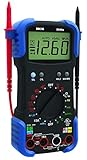
- Designed to pinpoint engine problems; tests alternator diodes, duty cycle, solenoids, breaker points, wiring, switches and more
- Features auto-ranging, auto shut-off and over-load protection
- Measures up to 15 amps for device testing
- 10 MegOhm input impedance; safe for electrical and automotive use; prevents damage to the vehicle’s ECU
- Includes temperature probe, inductive RPM clamp and carrying case
8. A field-ready Allison PTO diagnostic workflow
- Record the system: transmission family and serial number, vehicle, PTO model, shift type, voltage, pressure source, attachment, and operating symptom.
- Make it safe: park, brake, chock, isolate rotating equipment, and follow the applicable lockout and service procedure.
- Verify fitment: check the transmission opening, gear arrangement, ratio, torque rating, duty cycle, mounting, and lubrication requirements.
- Check basic power: battery voltage, fuse, relay, grounds, connectors, and harness condition.
- Check activation logic: neutral or park, parking brake, engine-speed limits, cruise or preset-throttle requirements, PTO Request, PTO Enable, relay operation, and the correct chassis connector.
- Check the TCM side: verify that the vehicle is configured for the PTO and that the TCM receives the required request and maintains the required enable logic.
- Test the solenoid: supply voltage, ground, coil resistance, audible operation, valve condition, and contamination.
- Measure shift pressure: use the PTO-specific hydraulic or air specification at the correct test port.
- Compare the light with reality: determine whether the pressure switch or indicator agrees with actual PTO engagement.
- Check operating conditions: engine speed, torque-converter or turbine-shaft lockup, load timing, output ratio, and driven-equipment demand.
- Inspect mechanics: gear contact, backlash where applicable, mounting clearance, lubrication, pump or driveline alignment, universal-joint angles, and evidence of shock load.
- Retrieve codes when controls are implicated: use the appropriate Allison product-family troubleshooting material and, for qualified commercial-vehicle technicians, Allison DOC diagnostic software. Allison DOC is a professional diagnostic ecosystem, and activation requires the applicable subscription or technical access; it is not the same as buying a generic scan tool.
9. When to stop troubleshooting and escalate
Refer the vehicle to an Allison authorized service center or qualified PTO manufacturer service channel when the fault involves TCM programming, internal transmission repair, unsafe pressure testing, damaged gears, clutch-pack rebuilding, or unexplained repeated failure. Professional escalation is also appropriate when the PTO remains inoperative after the request, electrical, pressure, and application checks agree that the vehicle-side controls are functioning.
Bring the technician the transmission serial number, PTO model, wiring diagram, fault codes, pressure readings, coil measurements, photographs of damaged parts, and a description of when the failure occurs. That evidence is more useful than reporting only that the PTO is dead or noisy.
What not to conclude prematurely
- A dark indicator light does not prove the PTO is disengaged.
- A clicking solenoid does not prove sufficient pressure or torque transmission.
- PTO noise does not automatically prove that the Allison transmission is defective.
- A PTO engagement fault does not automatically mean the PTO must be replaced.
- A normal no-load pressure reading does not prove the clutch will hold under load.
- A pressure, resistance, pin, voltage, backlash, torque, ratio, or lubrication value from one PTO manual cannot be generalized to every Allison installation.
The evidence should identify whether the fault is in vehicle logic, wiring, the solenoid, pressure supply, PTO internals, lubrication, mounting, pump or driveline, or the driven load. Replacing the most expensive component first usually destroys that evidence and may leave the original fault in place.
Frequently Asked Questions
What pressure should an Allison PTO have?
No. Allison PTO pressure requirements vary by PTO model, shift type, transmission application, and test location. Examples in Muncie material include at least 100 psi at the solenoid inlet for one listed hydraulic application, 150 psi for some hydraulically shifted units, and 70 psi for some air-shifted units. Use the exact PTO manual rather than treating any figure as a universal Allison specification.
Why does my Allison PTO work but the indicator light stay off?
First verify that the PTO is actually disengaged. If it is operating, test the bulb or LED, fuse, power, ground, indicator or pressure switch, and wiring. If neither the light nor PTO works, test the activation logic, solenoid voltage and ground, and shift pressure. A dark light alone is not proof that the PTO is off.
Why does my PTO solenoid click but the PTO will not engage?
A click confirms only that the solenoid may have moved. It does not prove adequate voltage under load, a good ground, correct coil condition, a clean valve, sufficient air or hydraulic pressure, or clutch engagement. Measure the electrical values and pressure specified for the actual PTO.
Why does an Allison PTO engage but lose speed under load?
Check the PTO ratio, engine speed, load timing, TCM signaling, torque-converter or turbine-shaft lockup requirements, clutch pressure, and driven-equipment load. Slipping under load can indicate worn friction components, an internal leak, inadequate pressure, contamination, overload, or an incorrect ratio.
Do these 3 things before closing this tab:
1Clear out junk files and repair common Windows errors2Scan for outdated or missing drivers - takes under a minute3Repair Windows errors before they cause bigger problemsWhat causes an Allison PTO to whine or chatter?
Whining can result from excessive gear preload or insufficient backlash, while chatter can result from excessive backlash. Mounting contact, missing spacers or filler blocks, pump cavitation, hose vibration, driveline phasing, and universal-joint angles can also create noise. Backlash values are PTO-specific; Muncie’s 0.006–0.012-inch example does not apply universally, and some Allison 3000/4000 installations have predetermined backlash.
Why does my Allison PTO keep breaking gears or shafts?
Do not install another PTO until you investigate torque capacity, duty cycle, shock loading, engagement procedure, lubrication, mounting, alignment, and the condition of the pump, compressor, winch, hydraulic circuit, or driveline. Pitted or chipped gears, torsionally broken shafts, bending fatigue, and auxiliary-equipment seizure each point to different corrective work.
The Bottom Line
Bottom line: Diagnose an Allison PTO from the vehicle controls outward: verify the application, PTO Request and PTO Enable logic, power and grounds, solenoid operation, model-specific air or hydraulic pressure, and finally the PTO gears, clutch, lubrication, and driven equipment. Use manufacturer-specific values only, and escalate TCM, internal transmission, unsafe pressure, and repeated-failure problems to qualified Allison or PTO service personnel.
Quick Recap
Product prices and availability are accurate as of the date/time indicated and are subject to change. Any price and availability information displayed on Amazon at the time of purchase will apply.




