Yes—with an important qualification. The Toyota 3UR-FE is one of Toyota’s most durable modern gasoline V8 engines, but “most reliable” is a reputation-based conclusion rather than a scientifically proven universal ranking. Its naturally aspirated 5.7-liter design and long service history are major advantages; its water pump, secondary-air system, fuel system, and maintenance history still deserve careful inspection.
Yes—but “Toyota’s most reliable V8” should be treated as a well-supported reputation, not a proven universal ranking. The Toyota 3UR-FE—and the closely related flex-fuel 3UR-FBE—is one of Toyota’s most durable modern gasoline V8s. Its naturally aspirated 5.7-liter design, conventional six-speed automatic pairing, broad use across Toyota and Lexus vehicles, and long production history give it an unusually strong durability case.

As an Amazon Associate I earn from qualifying purchases.
That does not make every 3UR-powered Tundra indestructible. Secondary-air-injection faults, water-pump leaks, fuel-system problems, oil leaks, timing-related noise, neglected cooling systems, and poor maintenance can still turn a reliable engine into an expensive ownership proposition. For a used buyer, documented service history and a proper inspection matter more than the seller’s claim that the engine is “bulletproof.”
Recommended Free Tools
What is the Toyota 3UR engine?
The 3UR is Toyota’s 5.7-liter gasoline V8 family used in the Tundra and several other full-size Toyota and Lexus vehicles. In Tundra documentation, the gasoline version is identified as the 3UR-FE, while flex-fuel trucks may use the 3UR-FBE designation. Always confirm the engine code from the vehicle identification information rather than assuming that every 5.7-liter truck has identical calibration or equipment.
#1 Best Overall
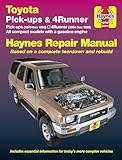
- Step-by-step procedures written from a complete teardown and rebuild, giving you the confidence to tackle repairs at any skill level.
- Over 700+ clear photos and diagrams that simplify complex systems, helping you complete jobs faster and with fewer mistakes.
- Comprehensive troubleshooting and fault-finding guides to quickly diagnose problems and reduce costly downtime.
Toyota describes the engine as an aluminum-block, aluminum-head, double-overhead-camshaft V8 with four valves per cylinder, Dual Independent VVT-i, and an Acoustic Control Induction System. In the Tundra application, it uses a port-oriented fuel system rather than relying on turbocharging to make its power.
| Specification | 3UR Tundra detail |
|---|---|
| Displacement | 5.7 liters |
| Configuration | V8, four-cycle gasoline engine |
| Construction | Aluminum block and aluminum heads |
| Valve train | DOHC, four valves per cylinder, Dual Independent VVT-i |
| Output | 381 horsepower at 5,600 rpm and 401 lb.-ft. of torque at 3,600 rpm in the 2021 Tundra |
| Transmission pairing | Six-speed electronically controlled automatic |
| Fuel variants | 3UR-FE gasoline and 3UR-FBE flex-fuel configurations, depending on truck |
Toyota’s 2021 Tundra documentation states that every Tundra used the 5.7-liter i-FORCE V8 that year. Toyota’s 2014 material also lists gasoline and flex-fuel versions with the same headline output of 381 horsepower and 401 lb.-ft. of torque. Equipment, emissions calibration, fuel type, drivetrain, and model year can still affect parts selection and service procedures.
Which Tundras use the 3UR-FE?
The 3UR-powered Tundra belongs primarily to the second-generation Tundra era and remained in the truck through the 2021 model year. Toyota’s 2021 release is particularly significant because it confirms that the 5.7-liter V8 powered the entire Tundra range for that model year, rather than being limited to a premium trim or a specific body configuration.
The same basic 5.7-liter V8 family also appeared in the Toyota Sequoia, Toyota Land Cruiser, and Lexus LX 570. That cross-platform use expanded the service history, technician familiarity, and parts ecosystem surrounding the engine. It does not mean that every component is interchangeable: packaging, intake and exhaust systems, engine management, accessories, and calibration can differ by vehicle.
Why the 3UR has such a strong reliability reputation
1. It is naturally aspirated
The 3UR makes its power without turbochargers. That removes turbochargers, charge-air plumbing, and some of the additional high-temperature, high-pressure hardware found in newer forced-induction powertrains. This is an engineering reason to expect a relatively straightforward long-term ownership experience, not a Toyota-published guarantee that the engine will never fail.
Naturally aspirated does not mean low-stress in every situation. A Tundra can spend years towing, idling, carrying heavy loads, or operating in extreme heat. The cooling system, oil supply, accessory drive, emissions equipment, and transmission still have to survive those conditions.
2. The underlying architecture is mature and conventional
An aluminum DOHC V8 with Dual VVT-i is sophisticated enough to produce strong power and efficiency for its era, but it is mechanically less complicated than many modern turbocharged engines. The Tundra’s port-oriented fuel system and six-speed automatic also form a mature combination with a long service history.
The six-speed transmission should not be confused with proof that every drivetrain component is trouble-free. Transmission fluid condition, differential service, towing use, and neglected maintenance can still determine how well the complete truck ages. The point is that the engine is not an experimental, short-production platform with little repair history behind it.
3. It produces useful torque without needing high engine speed
The 3UR’s 401 lb.-ft. of torque gives the Tundra a relaxed character when moving a heavy trailer. Toyota stated that the related 5.7-liter V8 produces approximately 90 percent of peak torque at about 2,200 rpm in Sequoia and Land Cruiser applications. Exact torque behavior varies with calibration and vehicle, but the figure helps explain why the engine feels well suited to towing and loaded driving.
4. It was used across several Toyota and Lexus platforms
Long production and multi-model use are valuable reliability evidence, even though they are not the same as a controlled failure-rate study. Recurring repairs become better understood, aftermarket and OEM parts are easier to identify, and technicians accumulate more experience with the engine’s systems.
5. Toyota provided a clear maintenance framework
Toyota’s maintenance documentation specifies recurring oil and filter service and identifies 0W-20 as the certified oil for applicable Tundra engines. A documented service schedule gives owners a practical way to preserve the engine. It also gives used buyers something objective to request instead of relying on vague statements such as “all services were done.”
The Tool Desk
Outbyte Driver Updater FREEScan for outdated or missing drivers - takes under a minuteDriver Scan →Outbyte PC Repair FREERepair Windows errors before they cause bigger problemsFix Now →How capable is a 3UR Tundra for towing?
Toyota reported maximum Tundra towing capacities of up to 10,200 pounds for 2021 and up to 10,500 pounds in earlier configurations. Those are maximum figures for specific combinations, not a universal rating for every 3UR truck.
Cab style, bed length, two-wheel drive or four-wheel drive, axle ratio, payload, hitch equipment, cooling equipment, and other factory options can change the rating. Use the truck’s configuration-specific Toyota rating and vehicle labels before selecting a trailer. The general model-year headline should never override the rating for that particular VIN and equipment configuration.
Toyota once used a stock 2012 Tundra CrewMax 4×4 with the 5.7-liter V8 to tow the Space Shuttle Endeavour display. It is an impressive illustration of the platform’s capability, but it is not laboratory proof of engine reliability and does not mean every Tundra can safely duplicate that tow. Trailer weight, tongue weight, braking, hitch equipment, payload, route, and local regulations still apply.
Known 3UR-FE problems and inspection points
The following issues deserve attention when evaluating a Tundra. A Toyota technical bulletin confirms that a system or symptom exists; it does not prove that every truck will experience it or establish a universal failure rate.
Secondary-air-injection-system faults
Toyota issued service bulletins for 3UR-FE and 3UR-FBE Tundra and Sequoia vehicles with malfunction-indicator-light codes related to the secondary-air-injection system. One bulletin covering certain 2012–2013 vehicles identifies DTC P0418 and/or P2445 and describes ECM reprogramming and air-pump-related repair procedures.
A related Toyota warranty bulletin lists air pumps, electric air-control valves, gaskets, and intake-manifold gaskets for 3UR applications. Repairs can become expensive because the system has multiple components and unfavorable access. A used truck should be scanned for current, pending, and historical codes, and the seller should provide paperwork for any previous air-injection repair.
Be cautious if the system has been disabled, bypassed, or fitted with an improvised emulator. That can hide a fault, create emissions-compliance problems, and make future diagnosis more difficult.
Water-pump leaks
Toyota published a water-pump leak inspection and diagnostic bulletin covering Tundra model years from 2010 through 2021. The bulletin does not establish that the pump is guaranteed to fail, but it makes the water pump a legitimate inspection item on any used 3UR Tundra.
Outdated Drivers Are Slowing You Down
One free scan finds every outdated or missing driver and matches the right update for your exact hardware.Free scan · exact hardware matchWindows Errors? Fix Them Before They Spread
Repair common Windows errors and clear accumulated junk for a smoother, more stable PC - no reinstall needed.Free scan · no reinstallLook for dried coolant residue, an active drip, a low coolant level, belt-area contamination, a history of overheating, or evidence that the pump has already been replaced. A clean engine does not eliminate the need for a pressure test if the coolant level is low or the truck has an unexplained overheating history.
Fuel-pump and fuel-pressure concerns
Toyota’s 2023 technical bulletin includes a fuel-pump installation procedure for 3UR-FE applications in 2018–2020 Tundras and describes a fuel-pressure-related repair path. This is a documented service concern, not proof that all trucks from those years will develop a fuel-pump failure.
During a test drive, pay attention to hard starting, hesitation, stalling, loss of power, or an engine that behaves worse under load. These symptoms can have several causes, so a professional fuel-pressure diagnosis is preferable to replacing parts based only on a code or a guess.
Oil leaks and timing-related noise
Independent repair coverage and owner communities frequently discuss oil leaks around upper-engine sealing areas, valve-cover areas, cam and timing-related components, and other coolant or oil sealing points. These reports are useful for creating an inspection checklist, but they are not Toyota failure-rate data.
Inspect for active oil leaks rather than treating light staining as proof of imminent engine failure. On a cold start, listen for abnormal rattling or timing noise, and watch for misfires, rough running, warning lights, variable-valve-timing symptoms, or low oil pressure. A brief inspection at operating temperature can miss a noise that appears only after the truck has sat overnight.
Recalls and safety campaigns
A strong engine reputation is no reason to skip recall research. NHTSA records show multiple Toyota recalls involving Tundra vehicles, including a 2010 accelerator-pedal recall affecting certain trucks and Takata-airbag coverage involving some 2003–2006 Tundras. Not every recall applies to a 3UR-powered truck, and some cited model years predate the 3UR Tundra application.
Check the VIN through NHTSA and Toyota’s owner resources. Model-year descriptions are not enough because recall applicability depends on the specific truck, equipment, region, and repair history.
3UR-FE maintenance that matters most
Follow the correct oil specification and interval
Toyota’s 2017 Tundra Warranty and Maintenance Guide identifies Genuine Toyota 0W-20 for vehicles certified for that viscosity. It states that the 10,000-mile or 12-month oil-and-filter interval applies when 0W-20 is used. If 0W-20 is unavailable and 5W-20 mineral oil is used, the guide calls for replacement at 5,000 miles or six months before returning to 0W-20 at the normal interval.
Free tools Windows power users keep installed
One-click scans. No signup required.
Do not apply that schedule blindly to every 3UR truck in every market. Match the oil grade and interval to the truck’s model year, engine variant, operating conditions, and current Toyota maintenance guide. Towing, dust, extreme temperatures, frequent idling, and prior neglect are reasons to ask a Toyota-qualified technician whether a more conservative schedule is appropriate.
Rank #3
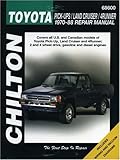
- 1970 - 1988 Toyota Pick-ups, Land Cruiser and 4Runner, Chilton's Total Car Care Manual
For owners doing their own service, a 3UR-FE oil-change kit can be convenient, but verify the model year, engine code, oil viscosity, filter type, and market before ordering. A Toyota Tundra 5.7L oil-filter cap wrench may also be useful for the cartridge-style filter housing, but aftermarket fitment varies and the tool should be confirmed against the truck before purchase.
Do not neglect the cooling system
Check coolant condition and level, inspect hoses and the radiator area, and investigate any residue or unexplained coolant loss. The engine’s towing capability makes cooling-system condition especially important. An engine that runs normally unloaded can show a marginal cooling problem while climbing a grade with a trailer.
Keep up with ignition and fluid service
Prioritize documented spark-plug replacement, belt inspection, transmission-fluid history, and differential-fluid service where applicable. The exact interval depends on the model year, drivetrain, usage, and Toyota’s maintenance guide. If records are missing, treat the service as unknown rather than assuming it was performed.
Quick wins for a faster PC:
Clear out junk files and repair common Windows errorsFree Scan →Fix the driver behind crashes, sound loss and screen glitchesFind Drivers →For detailed procedures, owners can consult the Toyota Tundra 5.7L V8 repair manual, provided they verify model year, 3UR-FE versus 3UR-FBE configuration, drivetrain, and system coverage. A general repair manual can help with routine work, but it is not a substitute for Toyota’s official technical-information subscription or model-specific service information.
Toyota’s official Tundra maintenance guide should be the starting point for oil grade, service timing, and vehicle-specific maintenance requirements. Official technical information is preferable for diagnostic procedures, wiring, torque specifications, and system reprogramming.
Independent reader supportYour contribution helps us test, update, and keep practical guides available for everyone.Used-buying checklist for a 3UR Tundra
- Confirm the truck’s identity. Verify the VIN, model year, engine code, gasoline or flex-fuel configuration, drivetrain, cab, bed, axle, and towing equipment. Do not assume that two 5.7-liter Tundras have identical parts or ratings.
- Check recalls and campaigns. Run the VIN through NHTSA and Toyota’s owner resources. Ask for proof that completed campaigns were actually repaired.
- Review service records. Look for regular oil and filter changes, cooling-system work, spark-plug replacement, belt inspections, transmission and differential-fluid service, and documented repairs to the air-injection, water-pump, fuel-pump, and emissions systems.
- Start it cold. Arrange to see the truck before it has been warmed up. Listen for abnormal timing noise, observe the first few seconds of operation, and check for smoke, misfire, rough running, warning lights, or unusually long cranking.
- Scan the truck. Use an OBD2 diagnostic scanner to check current, pending, and historical engine codes. A basic scanner may not access every Toyota-specific module or perform dealer-level tests, so a clean generic scan is not a complete health certificate.
- Inspect for coolant leaks. Examine the water-pump area and nearby surfaces for residue or fresh coolant. Check the level only when the engine is cold and ask about any overheating history.
- Inspect for oil leaks. Check valve-cover, upper-engine, cam-area, timing-cover, and underside surfaces. Distinguish old staining from active wet leakage, and investigate any low oil level.
- Verify the air-injection system is intact. Look for missing components, bypass wiring, unplugged valves, or evidence that the system was disabled to suppress warning lights.
- Test-drive under varied conditions. Check cold and warm starting, idle quality, acceleration, cruising, downshifts, and moderate load. Hesitation, stalling, reduced power, hard starting, misfire, or warning lights require diagnosis before purchase.
- Check operation under load when practical. Confirm that the temperature remains stable and that there is no coolant loss or overheating history. Do not create an unsafe towing test merely to evaluate the truck.
- Verify towing capacity from the configuration. Use Toyota’s rating for that particular truck and its equipment—not only the 10,200- or 10,500-pound headline figures.
- Pay for an independent pre-purchase inspection. This is particularly important for high-mileage, heavily used, lifted, tuned, off-road, or modified trucks. A compression or leak-down test may be appropriate when there are symptoms or questionable records.
Buy, inspect further, or walk away?
| Situation | Best response |
|---|---|
| Complete maintenance records, stock configuration, clean scan, stable temperature, and no active leaks | A strong candidate for long-term ownership, subject to price and the rest of the truck’s condition |
| Minor seepage with documented maintenance and no warning symptoms | Obtain a professional diagnosis and price the repair before making an offer |
| Stored or pending secondary-air codes, fuel-pressure symptoms, coolant loss, or cold-start timing noise | Do not rely on the reliability reputation; get a documented diagnosis and repair estimate |
| Disabled emissions equipment, extensive tuning, neglected fluids, or no service records | Usually a higher-risk purchase unless the price reflects unknown repairs and an inspection supports it |
| Seller refuses a cold start, scan, or independent inspection | Walk away; the engine’s reputation cannot compensate for withheld evidence |
Final verdict: is the 3UR Toyota’s most reliable V8?
The 3UR-FE deserves to be called one of Toyota’s most reliable modern V8 engines. Its naturally aspirated layout, aluminum DOHC construction, Dual VVT-i, strong low-speed torque, mature six-speed drivetrain pairing, and use in the Tundra, Sequoia, Land Cruiser, and Lexus LX 570 create a credible durability reputation.
The more accurate conclusion is conditional: a well-maintained, unmodified 3UR Tundra with verified service history can be an unusually durable long-term truck. A neglected example can still develop costly secondary-air, cooling, fuel, sealing, timing, or emissions problems. Buy the maintenance history and inspection results—not the “bulletproof” label.
What’s actually slowing this PC down?
Pick the symptom - the matching free tool is one click away.
What the evidence supports
Toyota’s Tundra specifications and press materials support the engine’s displacement, construction, valve-train design, output, transmission pairing, and towing figures. Toyota maintenance guides support the oil-service requirements, while Toyota technical and warranty bulletins document the secondary-air, water-pump, and fuel-system service concerns. NHTSA records support the need for VIN-specific recall checks. Those sources support a strong reliability reputation, but they do not establish a universal ranking or a guaranteed service life for every 3UR engine.
Frequently Asked Questions
Is the Toyota 3UR-FE really Toyota’s most reliable V8?
The 3UR-FE is one of Toyota’s most durable modern gasoline V8s, but there is no scientifically established universal ranking proving it is the company’s single most reliable V8. Its naturally aspirated design, mature architecture, broad Toyota and Lexus use, and long service history support the reputation. Maintenance history and condition still determine the reliability of an individual truck.
What is the difference between the 3UR-FE and 3UR-FBE?
The 3UR-FE is the gasoline configuration. The related 3UR-FBE is the flex-fuel configuration used in some Tundras. Confirm the engine code, fuel configuration, VIN, and parts catalog before ordering components or applying service information.
How much can a 3UR Tundra tow?
Toyota rated the 2021 Tundra 5.7-liter V8 at 381 horsepower and 401 lb.-ft. of torque. Toyota also published maximum towing figures of up to 10,200 pounds for 2021 and up to 10,500 pounds in earlier configurations, but the correct rating depends on cab, bed, drivetrain, axle, and equipment.
Do these 3 things before closing this tab:
1Scan for outdated or missing drivers - takes under a minute2Repair Windows errors before they cause bigger problems3Fix the driver behind crashes, sound loss and screen glitchesWhat problems should I check before buying a 3UR Tundra?
Important inspection areas include the secondary-air-injection system, water pump, fuel-pressure system on applicable trucks, oil leaks, timing-related noise, cooling performance, and maintenance records. Scan for current, pending, and historical codes and arrange an independent inspection before buying.
What oil and change interval does the 3UR-FE use?
Toyota’s applicable maintenance guide identifies 0W-20 for certified Tundra applications and states that a 10,000-mile or 12-month interval applies when that oil is used. If 0W-20 is unavailable and 5W-20 mineral oil is used, Toyota’s 2017 guide specifies a 5,000-mile or six-month change before returning to 0W-20. Verify the schedule for the truck’s model year, engine variant, market, and operating conditions.
How many miles will a 3UR-FE last?
There is no honest mileage number that guarantees a 3UR will remain reliable. A high-mileage engine with complete oil, cooling, ignition, and fluid records can be a better purchase than a lower-mileage truck with neglected maintenance, warning lights, modifications, or an unknown history.
The Bottom Line
Bottom line: The Toyota 3UR-FE is one of the brand’s strongest modern gasoline V8s, but it is not failure-proof. A documented, unmodified Tundra that passes a cold-start inspection, diagnostic scan, cooling-system check, and independent pre-purchase inspection is the version worth buying.
Quick Recap
Product prices and availability are accurate as of the date/time indicated and are subject to change. Any price and availability information displayed on Amazon at the time of purchase will apply.




