The lithium battery upgrade that makes sense for some cars is not a larger electric-vehicle traction pack. It is a much smaller replacement for the familiar 12-volt battery under the hood: a 12.8V lithium-iron-phosphate (LiFePO4) starter battery.
Compared with lead-acid, a suitable LiFePO4 battery can remove a meaningful amount of weight and provide strong cranking performance. But it is expensive, sensitive to charging conditions, and not automatically compatible with every vehicle. The battery, charging system, climate, and intended use all matter.
As an Amazon Associate I earn from qualifying purchases.
What is actually being upgraded?
A conventional car battery is a 12V lead-acid unit, but the car’s electrical system depends on it for far more than starting the engine. It supplies power to control modules, lighting, locks, alarms, infotainment, fuel pumps, and other low-voltage equipment. Hybrids and electric vehicles still use a 12V battery for these systems even though a separate high-voltage battery runs the electric motor.
Crashes, No Sound, or Screen Glitches?
Random freezes, missing sound and display glitches usually trace back to one bad driver. Find and replace yours safely.Free scan · under a minuteWindows Errors? Fix Them Before They Spread
Repair common Windows errors and clear accumulated junk for a smoother, more stable PC - no reinstall needed.Free scan · no reinstallA LiFePO4 starter battery replaces that low-voltage battery. It does not increase an EV’s driving range, replace its traction battery, or turn a conventional car into a hybrid. The “lithium-ion” label describes the battery family; this application uses the comparatively stable lithium-iron-phosphate chemistry in a 12.8V pack.
#1 Best Overall

- 𝐓𝐢𝐩: 𝐓𝐨 𝐄𝐱𝐭𝐞𝐧𝐝 𝐓𝐡𝐞 𝐒𝐞𝐫𝐯𝐢𝐜𝐞 𝐋𝐢𝐟𝐞 𝐎𝐟 𝐓𝐡𝐞 𝐁𝐚𝐭𝐭𝐞𝐫𝐲, 𝐖𝐞 𝐑𝐞𝐜𝐨𝐦𝐦𝐞𝐧𝐝 𝐓𝐡𝐚𝐭 𝐘𝐨𝐮 𝐅𝐮𝐥𝐥𝐲 𝐂𝐡𝐚𝐫𝐠𝐞 𝐈𝐭 𝐁𝐞𝐟𝐨𝐫𝐞 𝐓𝐡𝐞 𝐅𝐢𝐫𝐬𝐭 𝐔𝐬𝐞. 𝐓𝐡𝐢𝐬 𝐜𝐚𝐫 𝐛𝐚𝐭𝐭𝐞𝐫𝐲 𝐢𝐬 𝐬𝐮𝐢𝐭𝐚𝐛𝐥𝐞 𝐟𝐨𝐫 𝐯𝐞𝐡𝐢𝐜𝐥𝐞𝐬 𝐰𝐢𝐭𝐡 𝐚𝐧 𝐞𝐧𝐠𝐢𝐧𝐞 𝐝𝐢𝐬𝐩𝐥𝐚𝐜𝐞𝐦𝐞𝐧𝐭 𝐛𝐞𝐥𝐨𝐰 𝟐.𝟎𝐋. 𝐈𝐟 𝐲𝐨𝐮 𝐚𝐫𝐞 𝐮𝐧𝐬𝐮𝐫𝐞 𝐰𝐡𝐞𝐭𝐡𝐞𝐫 𝐭𝐡𝐢𝐬 𝐜𝐚𝐫 𝐛𝐚𝐭𝐭𝐞𝐫𝐲 𝐢𝐬 𝐜𝐨𝐦𝐩𝐚𝐭𝐢𝐛𝐥𝐞 𝐰𝐢𝐭𝐡 𝐲𝐨𝐮𝐫 𝐯𝐞𝐡𝐢𝐜𝐥𝐞 𝐦𝐨𝐝𝐞𝐥, 𝐩𝐥𝐞𝐚𝐬𝐞 𝐜𝐨𝐧𝐭𝐚𝐜𝐭 𝐮𝐬 𝐟𝐨𝐫 𝐚𝐬𝐬𝐢𝐬𝐭𝐚𝐧𝐜𝐞.
- 【Compact Size&Strong Power】Our 12V 40Ah start-stop car battery measures 9.5x6.9x8in and weighs 14.8 pounds. IP66 waterproof ensures you to use lithium batteries anywhere safely. This car battery originally had threaded terminals. For compatibility with more vehicle models, we've added M8 screws to the battery pack. You can install an M8 screw on the negative terminal. The screw height is 30mm(1.18in)—when installed, it will increase the total battery height to 9.18in. Please verify this dimension fits your vehicle.
- 【Good Replacement for Lead-acid Battery】The lithium car battery is the good replacement to lead-acid batteries. It has a longer service life, deeper cycle times, higher energy density and is maintenance-free. This auto battery is equipped with a BMS protection, which can better protect automotive battery to prevent over charge, over discharge, over load, over voltage, over current, over heating and short circuit,ensure the health of the battery.
- 【Excellent Performance of LiFePO4 Automotive Battery】The 12V 40Ah automotive replacement batteries feature 100RC and 660CCA performance, ensuring immediate ignition even in extreme temperatures. Charge:32°F-113°F(0℃-45℃) Discharge: -40°F-140°F(-20℃-60℃) Storage: 32°F-113°F(0℃-45℃). Our car batteries are equipped with a battery heating process. When the temperature is extremely low, the BMS will warm up the battery to ensure its discharge performance at low temperatures and extend its service life.
- 【NO Heavy Metals&Strong Stability】Our auto battery products do not contain any lead, chromium heavy metals, it has higher energy efficiency, longer service life and also reduce CO₂ emissions. This is very helpful for the improvement of the environment.
The weight saving is the compelling part
The clearest benefit is mass. In a test of an Antigravity H7 battery in a late-model Dodge Challenger, the original lead-acid battery weighed 45 pounds. The lithium replacement weighed approximately 15.8 pounds, cutting roughly 29 pounds from the vehicle.
That is not enough to transform an ordinary road car, but it is useful weight reduction in a performance car, track car, or vehicle where every pound matters. The saving is also located at one end of the car, where reducing mass can have a small effect on handling as well as acceleration and braking.
Other potential advantages include low self-discharge, high cranking output for the battery’s size, and better tolerance of repeated shallow cycling than a conventional starter battery. Those benefits are most valuable to cars that sit for long periods, see motorsport use, or run accessories without a large battery bank.
Current H7/Group 94R options
Antigravity’s current catalog lists its H7/Group 94R RE-START batteries in three capacities. They share a stated case size of 12.25 × 7 × 7.5 inches and a maximum charge rate of 15A.
| Model | Capacity | Cranking rating | Weight | April 2025 MSRP/MAP* |
|---|---|---|---|---|
| AG-H7-40-RS | 40Ah | 1,500 CA | 15.6 lb | $949.99 |
| AG-H7-60-RS | 60Ah | 1,800 CA | 18.5 lb | $1,049.99 |
| AG-H7-80-RS | 80Ah | Approximately 2,000 CA | 25.5 lb | $1,349.99 |
*The prices are from the manufacturer’s April 2025 price sheet, not a guarantee of current retail pricing. The original 2021 test quoted $829 for an H7, so that figure should not be treated as a current price.
Capacity is important. A smaller battery may be perfect for a lightweight track car but provide less reserve for a luxury vehicle with numerous electronic modules, alarms, or accessories. Choosing the largest model solely because it has a higher amp-hour rating also misses the point if the extra weight and cost do not suit the car.
What RE-START does—and does not do
RE-START is the name Antigravity gives its built-in emergency reserve system. The battery-management system monitors a deeply discharged battery and can disconnect the load before the cells are completely depleted. The remaining reserve can then be used for an emergency start.
Recommended Free Tools
Rank #2

- Perfect Fit & Compatibility: Dimensions: 9.60" x 6.92" x 7.75" (L x W x H), Polarity: [- +], Weight: 11.02 lbs, Voltage: 12.8V, Cold Cranking Amperage (CCA): 600A, tested up to 850 CCA. Ensure a perfect match by measuring your current battery and confirming compatibility with Wuldnmar Battery for seamless installation
- Advanced Lithium Technology for Superior Performance: Built with cutting-edge LiFePO4 technology, this battery offers superior energy density, providing excellent performance with a longer lifespan than traditional lead-acid batteries. Designed to deliver thousands of charge cycles for unmatched reliability(Please choose a 12V 10A LiFePO4 charger for recharging)
- Enhanced Safety Features: Equipped with advanced BMS (Battery Management System), this LiFePO4 battery provides enhanced safety with overcharge, over-discharge, and overcurrent protection. It safely powers high-demand electronic systems, including start/stop functions, and outperforms conventional lead-acid batteries
- Eco-Friendly & Efficient Upgrade: Lightweight and energy-efficient, this battery reduces fuel consumption by up to 20%. With smart protection circuits, it prevents regular maintenance issues and extends battery longevity, making it an ideal upgrade for your vehicle’s energy needs.
- Wide Compatibility with G47 Battery Models: This high-performance G47 lithium-ion battery is compatible with a wide range of vehicles, including popular models from Chevrolet, Toyota, Ford, Honda, BMW, and more. Compatible vehicles include the Chevrolet Malibu, Toyota Camry, Ford Fusion, Honda Civic, BMW 3 Series, and many others.Before purchasing, please double-check your vehicle's battery specifications (size, voltage, and cold cranking amps) to ensure perfect fitment and compatibility. If you’re unsure, feel free to reach out to us for guidance!
Depending on the battery and equipment, the system can be awakened using the button on the battery or a compatible wireless key fob. That is more useful than carrying a jump pack for a car that has been left with a light on, but it is not a cure for a bad alternator, a parasitic drain, or neglect.
After using the reserve function, the battery should be fully recharged as soon as possible. If the car repeatedly activates RE-START, diagnose the underlying problem with a multimeter and a proper parasitic-draw test. A battery that is continuously drained will eventually be discharged beyond the point where any emergency reserve is useful.
Check compatibility before buying
Physical fit is only the first check. A battery that drops into the tray may still be wrong for the vehicle.
- Confirm the battery group size. Check the vehicle handbook, the original battery label, or a reputable application guide. H7 and Group 94R are not universal substitutes for every similarly sized battery.
- Verify polarity and terminal position. The positive and negative posts must be on the correct sides, with cables able to reach without tension or crossing dangerous components.
- Check the hold-down. The battery must be secured by the vehicle’s correct clamp or bracket. Do not rely on its weight to keep it in place.
- Compare reserve requirements. Consider the car’s alarm, remote systems, control modules, audio equipment, heated accessories, and how long it normally sits with the engine off.
- Test the charging system. Look for abnormal alternator voltage, poor grounds, damaged cables, and aftermarket charging equipment before fitting an expensive battery.
- Read the exact battery manual. Lithium starter batteries are not interchangeable just because they have the same nominal voltage or case size.
Antigravity’s automotive instructions limit these batteries to stock 12V systems and warn against connecting them in series or parallel. The company also warns that modified or malfunctioning charging systems can overcharge the battery. Its manual says the vehicle should not charge above 14.6V.
The Tool Desk
Outbyte Driver Updater FREEScan for outdated or missing drivers - takes under a minuteDriver Scan →Outbyte PC Repair FREEClear out junk files and repair common Windows errorsFree Scan →Charging is where the important differences appear
A 12.8V LiFePO4 battery is not compatible with every charger sold for a “lithium” battery. Use a charger specifically designed for 12.8V LiFePO4 chemistry and follow the battery manufacturer’s instructions. An unsuitable charger can damage the cells or trigger the battery-management system.
The H7 models listed in Antigravity’s catalog have a maximum charge rate of 15A. That limit applies to external charging and is also a useful reason to investigate a vehicle whose charging system behaves abnormally. Charging should not be left unattended.
Do not use a standard lead-acid charger unless its documentation specifically supports the required LiFePO4 charging profile. Automatic desulfation, repair, or high-voltage modes can be inappropriate for a lithium battery.
Rank #3
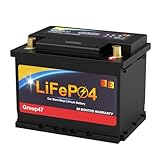
- Battery Dimensions :Update battery display button and start button, Group size 47, (L*W*H)9.6 x 6.9 x 7.75 inches, Terminal Layout: Left: - Right: +. Tips: Please check battery size before purchasing. Size, cold cranking amps,terminal location,and battery type are key pieces to getting the right unit. please measure your old battery and compare the dimensions with this battery.
- LiFePo4 lithium automotive battery with excellent safety performance: we use safe, stable, high-multiplier lithium iron phosphate battery material, the battery is equipped with BMS control circuit, the safety performance is better than ordinary lead-acid batteries. Supports complex on-board electronic systems with high power demand, including start/stop functions.
- Strong starting performance: high rate power imported lithium iron phosphate battery pack, starting ability than ordinary lead-acid battery starting ability is 1 times higher; not afraid of high temperature, cold and extreme road conditions. Strong cold start performance, the engine can still start normally in low temperature or low load condition.
- Convenient maintenance: Ordinary batteries do not have BMS control board, it is very easy to forget to turn off the lights or stop and listen to music, long-term unused car battery damage, maintenance is relatively troublesome without regularity, LiFePo4 lithium-ion batteries have a comprehensive intelligent protection circuit, overcharge, over-discharge, over-voltage, overcurrent and other protections.
- Upgraded LiFePo4 car batteries: These batteries are lightweight, long-lasting, and have excellent charging and discharging performance. If you need to replace your battery or are looking to upgrade, our LiFePo4 lithium-ion automotive batteries are your best choice. If you have any questions, please feel free to ask and we will respond within 24 hours.
Cold weather creates a separate problem
The battery’s operating and charging temperature ranges are not the same. Antigravity’s automotive manual specifies operation from 23°F to 140°F (-5°C to 60°C), but charging only from 33°F to 113°F (0°C to 45°C). It also says not to charge a frozen battery.
That means a car may be able to start in conditions near or below freezing while its battery is still too cold to accept charging safely. In a cold climate, the battery’s location, engine heat, storage conditions, and charging strategy deserve attention. This is one reason a lithium starter battery is not automatically a better winter replacement for every daily driver.
Independent reader supportYour contribution helps us test, update, and keep practical guides available for everyone.Battery monitoring is useful, but not essential
Antigravity’s optional Battery Tracker connects to the battery terminals and reports status to a phone over Bluetooth. To set it up, install the app listed as “Battery Tracker” from the Apple App Store or Google Play, enable Bluetooth, and grant the requested location and notification permissions.
A monitor can help reveal voltage trends and warn that a stored car is losing charge. It does not replace a multimeter, a charging-system test, or diagnosis of a parasitic draw. It also cannot make an incorrectly sized battery suitable for a vehicle.
Is the price justified?
For most ordinary commuters, the financial case is weak. The listed H7 prices—roughly $950 to $1,350 before any retailer-specific discount—are several times the cost of many lead-acid batteries and higher than many AGM replacements. The lower weight and long-storage advantages may not repay that premium during normal daily driving.
Do these 3 things before closing this tab:
1Fix the driver behind crashes, sound loss and screen glitches2Repair Windows errors before they cause bigger problems3Scan for outdated or missing drivers - takes under a minuteThe calculation changes for a track car, competition vehicle, high-performance build, or a car that spends much of the year stored. Removing nearly 30 pounds from a vehicle can be worthwhile in those cases, and the RE-START feature may be convenient insurance against an occasional forgotten accessory.
For a road car, AGM may be the more practical upgrade when the vehicle needs greater cycling ability, vibration resistance, or start-stop capability without changing chemistry or charging requirements. The correct choice depends on the vehicle manufacturer’s specification and the battery’s application guide—not on the word “lithium” alone.
Rank #4

- Instant Cold-Weather Starts: 800 CCA fires up your Camry, Civic, 3 Series, or Malibu in -30°C. No hesitation, no jump starts—just reliable ignition
- Built for Start-Stop, Built to Last: Premium LiFePO4 cells outlast lead-acid by years with thousands of cycles. Perfect for start-stop systems that kill ordinary batteries in under 2 years
- Lighter Front End, Sharper Handling: At just 20 lbs, this automotive battery sheds 30% weight vs. factory lead-acid. Less front axle strain means quicker steering and better ride feel
- Smart BMS + Voltage Display: 8-layer BMS protects against overcharge, over-discharge, and shorts. Built-in voltage display lets you check battery health at a glance
- Double-Check Fit Before Order: Group 47/H5: 9.60" x 6.92" x 7.75". Polarity: [- +] (Negative Left, Positive Right). Backed by warranty and responsive support
Safe installation basics
- Park on a stable surface, switch off all electrical loads, and keep sparks and flames away from the battery.
- Confirm the replacement’s dimensions, terminal layout, polarity, and hold-down before disconnecting the old battery.
- Disconnect the negative cable first, then the positive cable. Keep the positive terminal from contacting the body or tools.
- Secure the new battery firmly in the correct tray and reconnect positive first, then negative.
- Check that cables are not rubbing, stretched, or close to hot exhaust components.
- Measure charging voltage with the engine running and investigate readings above the manufacturer’s 14.6V limit.
- Record or reset any vehicle settings required after battery replacement, following the vehicle service information.
When in doubt, have the charging system and battery fitment checked by a technician familiar with LiFePO4 automotive batteries. A wrong installation can be expensive; a wrong charging system can damage the battery and create a safety problem.
FAQ
Can a LiFePO4 starter battery replace any 12V car battery?
No. The vehicle must have a compatible 12V system, correct battery group size, terminal orientation, hold-down, polarity, reserve capacity, and charging system. Always check the exact battery application guide.
Free tools Windows power users keep installed
One-click scans. No signup required.
Does RE-START mean the battery can never go flat?
No. RE-START can preserve an emergency reserve after some deep-discharge events, but it does not fix a parasitic drain, failed alternator, or lack of maintenance. Recharge the battery promptly after using the feature.
Can I charge it with any lithium battery charger?
No. Use a charger designed for 12.8V LiFePO4 batteries and stay within the manufacturer’s charging limits. A generic lithium or lead-acid charger may use an unsuitable charging profile.
Are lithium starter batteries good for winter?
They can provide starting power in cold conditions, but the manufacturer specifies separate operating and charging limits. The cited automotive manual permits operation down to 23°F (-5°C) but charging only from 33°F (0°C), and a frozen battery must not be charged.
The Bottom Line
A 12.8V LiFePO4 starter battery is a genuine weight-saving upgrade, not an EV traction-battery replacement. It makes the most sense in performance cars, track builds, and vehicles where low self-discharge and storage convenience justify the price. For a normal daily driver, verify fitment and charging compatibility carefully before paying a premium that may never be recovered.
What’s actually slowing this PC down?
Pick the symptom - the matching free tool is one click away.
Quick Recap
Product prices and availability are accurate as of the date/time indicated and are subject to change. Any price and availability information displayed on Amazon at the time of purchase will apply.




