Free tools Windows power users keep installed
One-click scans. No signup required.
A brief history of Vespa scooters begins with the Vespa 98, publicly presented in April 1946, and follows a series of design pivots: the 150 GS added performance, Primavera defined youthful mobility, PX preserved manual touring, and 946 and Elettrica reinterpreted the iconic scooter for premium design and electric power.
Vespa did not remain successful by preserving one unchanged machine. Piaggio repeatedly updated the engineering, audience, and purpose while retaining the shield, step-through layout, curved bodywork, and visual identity that made the scooter instantly recognizable.
As an Amazon Associate I earn from qualifying purchases.
Key takeaways
- The first Vespa, the 98, was publicly presented in April 1946, and Museo Piaggio records 2,484 units produced during its first year.
- Corradino d’Ascanio’s step-through layout, enclosed bodywork, and aviation-influenced engineering created the recognizable Vespa formula.
- The 1955 Vespa 150 GS transformed the scooter from practical transport into a performance-oriented machine with a four-speed gearbox and 10-inch wheels.
- The Primavera became Vespa’s youthful classic after its 1967 unveiling, remaining in continuous production from 1968 through 1982.
- The PX preserved Vespa’s manual, long-distance character, while the 946 and Elettrica represented premium design and electric mobility.
- Current Vespa models and specifications vary by market; the U.S. range includes Primavera, Sprint, GTS, GTV, Elettrica, and 946 families.
How did Vespa scooters begin?
The history of Vespa scooters began in postwar Italy, when Piaggio needed an inexpensive vehicle to help restore everyday mobility. The company’s first attempt was the MP5 prototype, nicknamed “Paperino” by factory workers. Enrico Piaggio rejected the design and asked aviation engineer Corradino d’Ascanio to create something more ambitious.
D’Ascanio’s MP6 prototype became the direct precursor to the Vespa. Its step-through frame made mounting easier, its broad shield protected the rider from road dirt, and its enclosed mechanical parts reduced the exposed chains and greasy components associated with many motorcycles. The layout also made maintenance and everyday riding more approachable.
#1 Best Overall

- DIECAST SCOOTER: Complete or add to your diecast collection with the 1:18 Scale Model Replica Vespa 150 (1970) Scooter. This model moped features true-to-scale detail with rotating rubber tires, working kick stand, adjustable handle bars, and adjustable front wheel.
- OFFICIALLY LICENSED: Metal diecast scooter is 1:18 scale and is officially licensed. This miniature moped is great for collectors, Vespa enthusiasts and more.
- GREAT FOR COLLECTING: Mini scooter is made of diecast metal with plastic parts. Our scooter collectibles will look great displayed with your die cast collection, sitting on a bookshelf, or as a Vespa cake topper.
- MINI SCOOTER: 1:18 scale moped looks like a mini version of the real thing. The perfect addition to your diecast collection, or gift a friend their very own scooter.
- COLLECT THEM ALL: Perfect for diecast collectors, Vespa enthusiast gifts or for use as a scooter cake topper, our diecast dirt bike is the perfect Vespa gift. Not for children under 16 years old. Great for collecting!
According to Vespa’s official historical timeline, Enrico Piaggio heard the MP6’s 98cc engine and exclaimed, It sounds like a vespa!
The name referred to the machine’s buzzing sound and suggested the narrow-waisted shape of a wasp. Vespa’s official timeline preserves that origin story.
What was the original Vespa model?
The original production model was the Vespa 98, publicly presented in April 1946 at the Rome golf club. The first fifty examples were produced at Piaggio’s Pontedera factory around the time of the presentation. According to Museo Piaggio’s Vespa 98 and MP6 archive, Piaggio produced 2,484 Vespa 98 scooters during the first year.
The Vespa 98 used a 98cc engine, had a claimed maximum speed of 60 km/h in standard form, and used drum brakes. Those specifications made the scooter practical rather than fast, but the significance of the Vespa 98 was its complete design proposition: a compact step-through machine with protected mechanical components, a distinctive front shield, and a riding position that felt less intimidating than a conventional motorcycle.
The 98 was not a fully finished version of every later Vespa idea. Piaggio revised the design quickly, improving access to the mechanical components and adapting the scooter for different riders and markets.
How did the Vespa 125 improve the original design?
The Vespa 125 followed the 98 in 1948–49 and moved the brand from an ingenious postwar novelty toward a broader vehicle family. The 125 received changes to its front suspension arm and engine hood, making mechanical access easier. Piaggio also developed a sidecar version that increased carrying capacity and comfort.
The transition from 98 to 125 shows an important pattern in Vespa history: Piaggio kept the essential silhouette and step-through concept while refining the parts that mattered in daily use. Vespa’s design language was stable, but the engineering beneath it was not static.
Why did the 1955 Vespa 150 GS become a turning point?
The 1955 Vespa 150 GS changed expectations of what a scooter could be. The GS combined a sportier identity with a quieter engine, direct admission into the cylinder, a four-speed gearbox, an elongated seat, and larger 10-inch wheels. The official Vespa timeline lists output at 8 hp at 7,500 rpm. The official 1955 Vespa account describes the GS as a milestone for both Vespa and the scooter market.
The GS mattered because it brought performance and aspiration into a vehicle category usually associated with inexpensive commuting. Piaggio’s racing experience helped give the GS credibility with enthusiasts, while the scooter’s basic architecture remained familiar and approachable.
Rank #2

- Scale: 1: 12
- Scooter brand: Vespa
- Assorted colors
The 150 GS therefore became more than another engine-size upgrade. It established a performance identity that later appeared in sportier Vespa models, including the Super Sport and Super Sprint variants. The Piaggio Museum’s model archive records several GS generations and shows how central the name became to Vespa’s historical range.
Which Vespa models defined the late 1950s and 1960s?
Vespa expanded in several directions during the late 1950s and 1960s. The range included small-capacity models for younger riders, larger scooters for everyday transport, and increasingly specialized versions aimed at sport and style.
| Model or family | Historical role | Why it matters |
|---|---|---|
| Vespa 400 | Four-wheeled expansion | Extended the Vespa name beyond two-wheeled scooters. |
| 90 and 50cc models | Accessible urban mobility | Small engines helped Vespa reach younger riders and markets with licensing restrictions. |
| 90 SS Super Sprint | Specialized sport styling | Showed that Vespa could create a compact, more focused enthusiast model. |
| 180 Super Sport | Performance-oriented scooter | Continued the move toward greater performance and visual drama. |
| 125 GT and 150 models | Practical refinement | Served riders who wanted more capacity without abandoning the core Vespa format. |
The period also connected Vespa with postwar Italian style. The scooter was useful transportation, but its shield, curves, colors, and compact proportions made it visually distinctive in a way many utilitarian vehicles were not.
What’s actually slowing this PC down?
Pick the symptom - the matching free tool is one click away.
Why is the Vespa Primavera so iconic?
The Vespa Primavera became iconic because it combined compact dimensions, lively performance, and a youthful visual identity. Piaggio unveiled the first Primavera at the 1967 Milan motorcycle show, and the model reached the market in 1968. According to Piaggio Group’s history of the Primavera, the first generation remained in continuous production until 1982.
The Primavera was small and nimble enough for crowded urban streets, but its appeal went beyond maneuverability. The clean shape and energetic name made the scooter a symbol of independence and personal freedom for a younger generation. The Primavera was not merely a smaller Vespa; it became Vespa’s clearest youthful classic.
Piaggio revived the Primavera in modern form in 2013. The modern model presents itself as a rebirth of the classic while retaining the Primavera identity. That approach illustrates Vespa’s broader strategy: update the mechanical package and equipment, but preserve the visual cues that allow the model to remain recognizable.
How did the PX preserve Vespa’s manual and touring tradition?
The PX represented Vespa as a long-distance travel machine as well as an urban runabout. Its manual transmission, straightforward mechanical character, and durable touring reputation made it especially important to riders who valued a direct connection with the machine.
The PX also became part of Vespa’s travel mythology. The Piaggio Museum preserves a Vespa 125 PX associated with Giorgio Bettinelli’s Alaska-to-Tierra-del-Fuego journey. The example does not mean every PX was used for an expedition, but it demonstrates the model’s historical role as a machine capable of carrying Vespa’s story far beyond the city.
Rank #3

- Detailed toy model of a Vespa 125 GTS to play with and collect, for both small and big fans of iconic Italian vehicles
- Sturdy and stable design thanks to metal body, True to original profile, Headlights, Very enjoyable rolling due to rubber tyres, Moving handlebars and stand
- Ideal as a gift for children Suitable for birthdays or other occasions, but also as a decorative gift for an adult's birthday or a wedding present
- Can be taken anywhere without taking up too much space, long-lasting fun thanks to the countless combination possibilities in the siku play world
- Contents: 1x siku 1296, Vespa 125 GTS Super, Material: Metal/Plastic, Dimensions: 5.6 x 2.1 x 3.5 cm, Weight: 0.0173 kg, Colour: Mint, Series: SIKU SUPER
Other important models from the 1970s and 1980s included the 50 Special, 125 ET3 Primavera, 200 Rally, PK, PX T5, and Cosa. Collectors often value these scooters for their manual shifting, repairable mechanical systems, and connection to earlier forms of riding. Those are reasons for their continuing appeal, not a universal ranking of collectibility or value.
What changed when Vespa introduced the ET in the 1990s?
The Vespa ET, launched around the brand’s fiftieth anniversary in 1996, helped bring Vespa to a new generation after the long manual-model era. The ET modernized the scooter for contemporary urban use and formed a bridge between classic manual Vespas and the automatic models that later became dominant.
The ET was an example of continuity through modernization. The scooter retained the recognizable shield and compact proportions, while its contemporary equipment and automatic-oriented approach made it more accessible to riders who did not specifically want the older manual experience.
PC Slower Than It Used to Be?
A free scan shows the junk files, broken settings and background clutter dragging Windows down - then fixes them in one click.Free scan · Windows 10 & 11Crashes, No Sound, or Screen Glitches?
Random freezes, missing sound and display glitches usually trace back to one bad driver. Find and replace yours safely.Free scan · under a minuteWhat is the difference between the Primavera, Sprint, GTS, GTV, 946, and Elettrica?
The main difference between these iconic Vespa models is their intended role: Primavera emphasizes compact classic style, Sprint adds a sportier interpretation, GTS serves larger-engine performance and touring, GTV emphasizes distinctive styling, 946 is a premium design statement, and Elettrica brings electric propulsion to the Vespa format.
| Model | Primary role | Mechanical or design character | Historical significance |
|---|---|---|---|
| Vespa 98 | Original postwar mobility | 98cc step-through scooter with enclosed bodywork | Established the foundational Vespa formula in 1946. |
| Vespa 150 GS | Sport and performance | Four-speed gearbox, 10-inch wheels, 8 hp at 7,500 rpm | Proved that a scooter could have genuine performance aspirations. |
| Vespa Primavera | Compact urban riding and youth culture | Small, nimble, lively classic; revived in 2013 | Became one of Vespa’s most successful and recognizable models. |
| Vespa PX | Manual riding and touring | Long-running manual scooter associated with travel | Preserved the traditional rider-machine connection. |
| Vespa 946 | Premium design and collecting | Luxury reinterpretation of the Vespa silhouette | Turned the scooter into a design-led, collaboration-friendly object. |
| Vespa Elettrica | Electric urban mobility | Electric power, quiet operation, and connectivity | Extended Vespa’s visual language into electric mobility in 2018. |
The Primavera and Sprint are the compact choices in the modern family, with the Sprint taking a sportier visual direction. The GTS occupies the larger-engine, performance-and-touring side of the range. The GTV is the styling-led alternative, while the 946 is best understood as a premium design object rather than a direct replacement for a mainstream Vespa. Elettrica is the choice for riders who want electric propulsion without giving up the Vespa silhouette.
How did the 946 and Elettrica reinvent Vespa?
The 946 reframed Vespa as a premium design object. Rather than simply modernizing a familiar commuter model, the 946 elevated the scooter’s proportions and visual identity, creating a platform for fashion collaborations and special editions such as the 946 Emporio Armani and 946 Bellissima. The Piaggio Museum archive documents those editions alongside the wider Vespa range.
Vespa Elettrica, launched in 2018, made a different kind of statement. Piaggio Group presented Elettrica as an electric interpretation focused on quietness, connectivity, accessibility, and environmental considerations while retaining the recognizable Vespa design. Elettrica shows that Vespa can change its propulsion system without discarding the shield, curved bodywork, and visual proportions that define the brand.
The Tool Desk
Outbyte PC Repair FREERepair Windows errors before they cause bigger problemsFix Now →Outbyte Driver Updater FREEScan for outdated or missing drivers - takes under a minuteDriver Scan →Was the Vespa in Roman Holiday?
Yes. The Vespa ride through Rome in the 1953 film Roman Holiday is one of the most recognizable cinematic associations with the scooter. The film helped cement Vespa in the popular imagination as a vehicle of freedom, spontaneity, and stylish urban exploration.
Rank #4
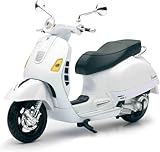
- Scale: 1:12
- Vehicle brand: Vespa
- Colour: white
The film is best treated as a cultural milestone rather than proof of a specific sales increase. The research does not establish a causal sales statistic linking Roman Holiday to Vespa purchases. Readers who want to revisit the film can check where to watch Roman Holiday in the United States, but rental, purchase, and streaming availability changes by service and date.
How large did Vespa become?
Vespa’s growth can be measured through several historically dated milestones, but the figures should not be treated as a current sales total.
| Figure | Owner and date | What it describes |
|---|---|---|
| 2,484 scooters | Museo Piaggio, 1946 context | Vespa 98 production during the first year. |
| 10 million vehicles | Piaggio Group corporate history, 1988 | Vespa production milestone reached by 1988. |
| 19 million vehicles | Vespa’s 75th-anniversary article, 2021 context | Vehicles sold by 2021, as reported in that anniversary context. |
| More than 160 models | Vespa’s 80th-anniversary material, 2026 | Models created across eight decades, according to the brand. |
According to Piaggio Group’s corporate history, Vespa reached 10 million vehicles by 1988 and 19 million vehicles by 2021 in the company’s anniversary reporting. Vespa’s official 2026 anniversary article says the brand celebrated its eightieth anniversary on April 23, 2026, and had created more than 160 models over eight decades. Historical totals belong to their stated years and should not be presented as a live 2026 sales figure.
Recommended Free Tools
Is Vespa still made in Italy?
Vespa remains an Italian brand with its historic connection to Piaggio and Pontedera, but a complete answer about manufacturing should be qualified by model, market, and production arrangement. The supplied official material establishes Vespa’s Pontedera origins and current global product history, but it does not provide a model-by-model manufacturing statement sufficient to say that every current Vespa sold worldwide is made in Italy.
For current ownership, market matters. The U.S. store currently presents Primavera, Sprint, GTS, GTV, Elettrica, and 946 families. The U.S. FAQ lists 50cc, 150cc, and 310cc engine offerings and says 125cc models are not sold in the United States. Current trims, prices, equipment, and availability should be checked on the official Vespa U.S. models page immediately before purchase.
Which Vespa should you buy?
The right Vespa depends on whether you prioritize compact urban use, performance, electric mobility, or design collecting. Historical fame does not automatically make a model the best choice for a modern rider.
| Rider priority | Model family to investigate | Why | Important qualification |
|---|---|---|---|
| Compact city riding and classic Vespa character | Primavera | Small, lively, and closely connected to Vespa’s youthful classic. | Verify current engine, equipment, licensing, and market availability. |
| Compact scooter with sportier styling | Sprint | Modernizes the compact platform with a more athletic visual identity. | Specifications and trims vary by market and model year. |
| Larger-engine riding and touring | GTS | Represents Vespa’s larger, performance-oriented side. | Check the exact current engine and local licensing requirements. |
| Distinctive appearance | GTV | Prioritizes a visibly different styling treatment within the current family. | Confirm local availability and equipment. |
| Electric mobility | Elettrica | Uses electric propulsion while preserving Vespa’s visual language. | Check charging, range, local incentives, and current specifications. |
| Premium design and collecting | 946 | Approaches Vespa as a luxury design object. | Availability and editions are especially market-specific. |
Anyone moving from historical interest to ownership should also investigate properly approved protective equipment, luggage, locks, and model-specific parts. Vespa’s official accessories pages list Vespa helmets and other equipment, but helmet certification and legal requirements depend on jurisdiction.
Quick wins for a faster PC:
Clear out junk files and repair common Windows errorsFree Scan →Fix the driver behind crashes, sound loss and screen glitchesFind Drivers →Repair Windows errors before they cause bigger problemsFix Now →Why has Vespa remained iconic?
Vespa endured because it repeatedly modernized the scooter without abandoning its recognizable visual language. The 98 made postwar mobility approachable; the GS added performance; the Primavera connected the brand with youth; the PX carried the manual tradition into touring; the ET modernized urban use; the 946 elevated the silhouette into design culture; and Elettrica adapted it to electric mobility.
Best Value

- Collectible miniature scooter 1/18
- Each model is screwed on a base, and delivered in a flexible blister shell: see photo
- Very nice reproduction by MAISTO of the original model
- An original gift for any collector
That sequence explains why “iconic” is more useful as a historical judgment than as a blanket label. Each model earns its place by introducing a new use, audience, technology, or design direction. Vespa’s strength was not freezing one perfect scooter in time. Its strength was changing the machine while making the change look unmistakably like a Vespa.
Continue the story
Readers who want a visual and design-focused follow-up can look for a Vespa history book, including the English-language Assouline title listed in Vespa’s official accessories catalog. Edition, stock, and retailer availability should be verified before purchase.
Frequently Asked Questions
When was the first Vespa made?
The first Vespa was the Vespa 98, publicly presented in April 1946. The first fifty examples were produced at Pontedera, and Museo Piaggio records 2,484 units produced during the first year.
What is the most famous Vespa model?
The most famous Vespa model depends on the audience, but the Vespa 98 is the historic origin, the Vespa 150 GS is the performance breakthrough, and the Primavera is arguably the best-known youthful classic. No single model can be called universally most famous without a defined ranking.
What is the difference between a Vespa Primavera, Sprint, and GTS?
The Vespa Primavera is the compact, youthful classic; the Sprint is its sportier modern counterpart; and the GTS is the larger-engine family aimed more at performance and touring. Exact engines, trims, prices, and availability vary by market and model year.
Which Vespa models are collectible?
The Vespa PX is especially important to collectors and restorers because it represents Vespa’s long-running manual and touring tradition. The 150 GS, Primavera, 90 SS Super Sprint, Rally, and selected special editions can also attract collector interest, but collectibility depends on originality, condition, provenance, rarity, and market.
The Bottom Line
Vespa’s history is a story of controlled reinvention: the 1946 Vespa 98 established the template, the 150 GS added performance, Primavera made the scooter youthful, PX preserved its touring soul, and 946 and Elettrica carried the design into premium and electric territory.
Do these 3 things before closing this tab:
1Scan for outdated or missing drivers - takes under a minute2Repair Windows errors before they cause bigger problems3Fix the driver behind crashes, sound loss and screen glitchesQuick Recap
Product prices and availability are accurate as of the date/time indicated and are subject to change. Any price and availability information displayed on Amazon at the time of purchase will apply.




