The Tool Desk
Outbyte Driver Updater FREEScan for outdated or missing drivers - takes under a minuteDriver Scan →Outbyte PC Repair FREEClear out junk files and repair common Windows errorsFree Scan →If your car battery keeps going flat, the battery itself may not be the only problem. An aging or damaged battery, a charging-system fault, power draw while parked, and driving or storage habits can all leave a 12-volt starting battery too weak to start the engine. These causes can overlap, so repeated jump-starts are a reason to test the battery and charging system—not proof that the battery needs replacing.
Why a car battery keeps dying
A starting battery supplies the power needed to start the engine. Once the engine is running, the alternator helps power the vehicle and recharge the battery. A battery can lose charge because it is worn, because it is not being replenished, or because something continues to use power when the car is off.
1. The battery is old or internally weakened
AAA Club Alliance gives three to five years as a typical car-battery lifespan, not a guarantee for every vehicle or climate. Age is a clue, not a diagnosis: an older battery may still test well, while a newer one can fail. Slow cranking, repeated jump-starts, or difficulty holding charge are reasons to have it tested.
2. The alternator or charging system is not replenishing it
A failing alternator or another charging-system problem can leave the battery undercharged even after driving. A fault may also overcharge the battery and shorten its life. A battery warning light signals an electrical-system problem; it does not, by itself, establish that the battery is bad. A charging-system test can help distinguish these possibilities.
#1 Best Overall

- High density negative paste, improves performance and increases battery life
- Enhanced life alloy or Silver Calcium stamped alloy increases cycle life and improves performance
- Calcium lead positive grid, maximizes conductivity and allows for low resistance
- Robust envelope separator with puncture resistant back, allows for increased acid circulation and prevents shorts. Improved acid circulation, helps the battery to remain cool, and extend battery life
- Vent cap design that resists acid leakage
3. Something draws power while the car is parked
Interior or exterior lights, chargers, optional electronics, an electrical short, or incorrectly installed aftermarket equipment can continue using power after shutdown. Switch off lights and unplug optional devices. If the battery still drains while parked, a technician may need to test for a persistent electrical draw; removing accessories does not rule out a wiring fault.
4. Frequent short trips do not leave enough time to recharge
Starting uses battery power, and a series of short drives may not give the alternator enough time to restore it. When practical, combine errands rather than making repeated very short trips. If your regular driving pattern leaves the battery undercharged, ask a technician whether a maintainer is appropriate.
Rank #2

- ✅Batter dimensions: 10.75" L x 6.81" W x 8.98" H, Terminal: Tapered terminal (Left negative (-), Right positive (+)). ✅Please ensure to verify the dimensions and terminal position before making a purchase to guarantee compatibility with your vehicle to avoid any fitment issues.
- With a 70AH capacity and 710 cold cranking amps (CCA). Provides reliable performance and long service life, Up to 2 times the cycle life of conventional batteries. If your car's original battery is an AGM type, you must continue using an AGM battery, as your car will not accept a "downgrade" to a flooded battery. Nominal Voltage:12V. Charging Voltage:14.4~15.0V. Acceptable Charging Current:0~21A. Operating Temperature Range: -22°F~158°F.
- Heat / Cold Resistance: The materials used in the construction of AGM batteries (such as glass fiber mats and specialized separators) have better heat resistance. This allows AGM batteries to maintain their performance and capacity even in the hottest climates, They are also more resistant to extreme temperatures, making them ideal for hot or cold regions.
- Low Self-Discharge: AGM batteries have lower self-discharge rates compared to flooded batteries. Self-discharge refers to the loss of capacity that batteries experience over time when not in use. In hot climates, when the battery may need to be stored for extended periods or not frequently used, AGM batteries can better maintain charge, providing higher voltage output and easier engine start-up in any climate.
- Enhanced Safety: AGM batteries have a lower risk of acid leaks and spills compared to flooded batteries. This is because the acid is absorbed and held within the glass fiber mats, reducing the risk of corrosion or damage to surrounding components,this makes AGM batteries more durable and long-lasting, is also two to three times longer than flooded batteries. AGM batteries also have a lower risk of explosion and are safer to handle, making them ideal for high-performance vehicles.
5. The car sits unused for long periods
A battery gradually loses charge in storage, while the vehicle’s electronics may continue to use some power. For prolonged inactivity or infrequent use, AAA recommends a battery tender or maintainer. Use a model suitable for your battery and follow its instructions; a maintainer can help preserve charge, but it will not repair a fault that drains the battery.
6. Corroded, dirty, or loose connections interfere with current
Corrosion or loose connections can impede starting and recharging. Dirt or oil on the battery case can also contribute to current drain. Inspect the battery and terminals visually, but follow the owner’s manual or seek service before cleaning: battery acid can burn, and charging batteries can produce ignitable hydrogen gas.
Do these 3 things before closing this tab:
1Clear out junk files and repair common Windows errors2Scan for outdated or missing drivers - takes under a minute3Repair Windows errors before they cause bigger problemsRank #3

- Fast Starting Power: This 12V 70Ah 760 CCA delivers strong, steady starts is ready for any weather in any season.
- Made to Last: With its 120-minute Reserve Capacity supports longer run times and a longer overall battery lifespan.
- All Power, No Mess AGM Design: Sealed and spill-proof, the MM-H6 is built with high discharge output and deep discharge recovery to keep power steady when it counts.
- Strength That Starts on the Inside: The rugged construction resists shock, vibration, and harsh conditions, delivering reliable performance across a wide range of temperatures and tough environments.
- Tested Tough & Certified Safe: Mighty Max batteries are built in an ISO-certified facility and meet CE standards for quality, safety, and reliability
7. Extreme heat or cold stresses the battery
Heat accelerates battery degradation. Cold reduces starting performance and can make recharging harder. If practical, park in a shaded or covered location to limit exposure. There is no single temperature threshold that applies to every vehicle and battery type.
8. Vibration or poor mounting damages the battery
A battery that is not secured properly can vibrate, potentially damaging internal components. Check that it is held firmly in place and is the correct fit for the vehicle. If the hold-down or tray is damaged, have it repaired rather than improvising a restraint.
Rank #4
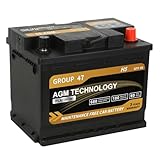
- ✅ Perfect Fit & Compatibility: BCI Group Size 47 (H5), 12V 60Ah, 680CCA, 100RC. Dimensions: 9.52" L x 6.89" W x 7.48" H. Terminal: Tapered terminal (Left negative (-), Right positive (+)). Ensure proper fit by comparing the size, terminal position, and CCA with your original battery. This ensures compatibility and avoids any fitment issues for your vehicle.
- ✅ Reliable Starting Power in All Conditions: Delivers 680 Cold Cranking Amps (CCA) for reliable engine starts, even in freezing weather. This automotive battery is built to perform consistently within a wide temperature range from -22°F to 158°F, withstanding short-term extremes from -40°F to 75°F, ensuring maximum performance no matter the weather.
- ✅ Advanced AGM Technology for High Performance: Specially designed for vehicles with start-stop technology and those requiring greater power, this AGM battery delivers up to 2X the cycle life of conventional batteries. With its high-density negative paste, it ensures improved conductivity, longer battery life, and faster recharge times. Maintenance-free design—no need to add liquid or water.
- ✅ Durable & Safe Design: This group 47 battery is 18X more vibration-resistant than standard batteries, ensuring a longer service life and reliable performance. Its leak-proof, non-spillable design offers enhanced safety, and the absence of free acid guarantees stable performance, preventing acid leakage and internal corrosion. Ideal for tough conditions.
- ✅ Not for Deep Cycle Applications: Please note that this is a starting battery and is not designed for deep-cycle applications such as solar or marine use. It is ideal for vehicles with higher electrical accessory loads or those that need a high CCA starting battery with enhanced cyclic performance. Verify that the battery type and specifications match your vehicle's requirements.
How to narrow down the cause
Symptoms can point to several causes at once. Use them to decide what to test, not to identify a failed part with certainty.
| Possibility | Clues | What can confirm it |
|---|---|---|
| Battery condition | Age, slow cranking, repeated jump-starts, or failure to hold charge | A battery test and condition inspection |
| Charging system or alternator | Battery warning light, or charge loss despite driving | A charging-system test; the warning light alone does not identify the failed component |
| Parked electrical draw or connections | Battery drains while parked, or accessories or wiring may remain powered | Electrical-draw testing and connection inspection by a qualified technician |
Slow cranking, clicking, dim lights, visible corrosion, a warning light, or repeated jump-starts are all reasons to investigate. None alone proves whether the battery, alternator, wiring, or another part is at fault. An at-home voltage reading is not a complete battery-health or alternator diagnosis. If the cause is unclear, AAA recommends professional diagnostic testing.
Quick Recap
Best Value
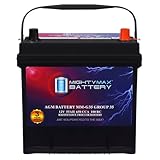
- Fast Starting Power: This 12V 55Ah 650 CCA delivers strong, steady starts is ready for any weather in any season.
- Made to Last: With its 100-minute Reserve Capacity supports longer run times and a longer overall battery lifespan.
- All Power, No Mess AGM Design: Sealed and spill-proof, the MM-G35 is built with high discharge output and deep discharge recovery to keep power steady when it counts.
- Strength That Starts on the Inside: The rugged construction resists shock, vibration, and harsh conditions, delivering reliable performance across a wide range of temperatures and tough environments.
- Tested Tough & Certified Safe: Mighty Max batteries are built in an ISO-certified facility and meet CE standards for quality, safety, and reliability
What to do if the battery keeps going flat
- After parking, turn off lights and accessories and unplug optional devices.
- If you often make very short drives, combine errands when practical instead of relying on those trips to restore charge.
- If the car will sit unused for an extended period, consider an appropriate 12-volt battery maintainer and follow its manufacturer’s instructions.
- Check connections and the battery hold-down visually. Use the owner’s manual for maintenance guidance, or have a professional handle cleaning or repairs.
- If the battery repeatedly needs a jump-start or will not hold charge, ask for battery, starting-system, and charging-system tests before replacing parts.
- If testing shows the battery needs replacement, confirm that the new battery matches the vehicle’s required size, terminal location, and cranking specifications.
Prevention that matches the cause
- For parked drain: switch off lights, unplug optional devices, and have persistent drain diagnosed.
- For infrequent use: use a compatible maintainer during prolonged storage, as directed by its manufacturer.
- For short-trip driving: combine errands when possible and investigate recurring low-charge symptoms rather than assuming the battery is defective.
- For corrosion or movement: keep connections clean and secure, and make sure the battery is properly held down.
- For suspected component failure: test the battery and charging system before buying a replacement. A new battery will not resolve an alternator fault or an ongoing electrical draw.
Product prices and availability are accurate as of the date/time indicated and are subject to change. Any price and availability information displayed on Amazon at the time of purchase will apply.




