A low engine oil pressure warning is not the same as a low oil-level warning. It means the engine may not be receiving enough oil pressure to protect its bearings, camshafts, turbocharger, and other lubricated parts. Sometimes the cause is as simple as a low dipstick reading. Other times, the warning points to a blocked pickup, failing oil pump, or worn engine bearings.
Stop the engine as soon as it is safe to do so. Check the oil level, but do not keep driving if the warning remains on, returns, or is accompanied by ticking, knocking, or other unusual noise.
As an Amazon Associate I earn from qualifying purchases.
What to do when the oil-pressure light comes on
- Pull over safely and switch off the engine.
- Park on level ground and wait several minutes for the oil to drain back into the pan.
- Check the dipstick. Add the manufacturer-specified oil if the level is below the minimum mark.
- Look underneath the vehicle for fresh oil and check around the filter, drain plug, oil pan, and engine seals.
- Restart only if the owner’s manual allows it and the oil level was low. If the red warning remains on or returns, shut the engine off and have the vehicle towed.
Do not assume the engine is safe because it still runs normally. Bearing damage can begin before the engine makes an obvious noise. Ford and Toyota owner instructions treat a low oil-pressure warning while the engine is running as an urgent problem requiring the engine to be stopped and checked.
What’s actually slowing this PC down?
Pick the symptom - the matching free tool is one click away.
First, confirm that pressure is actually low
A defective oil-pressure switch or sender can turn on the warning light even when the engine has normal pressure. A plugged sender port, damaged wiring, loose connector, or faulty gauge can create the same symptom.
#1 Best Overall

- Direct replacement - this engine oil pressure sensor is designed to match the fit and function of an original sensor on specified vehicles
- Ideal solution - engineered to help accurately monitor oil pressure when an original sensor has failed from heat or internal component damage
- Durable construction - designed and manufactured to strict specifications for reliable performance
- Trustworthy quality - backed by a team of product experts in the United States and more than a century of automotive experience
- Ensure fit - Input your vehicle into the garage tool and check Confirmed Fit bar at the top of the page. If there is an “i” in a blue circle, additional verification is needed. Please hover over the "i" to verify fitment notes match your vehicle.
The proper check is to remove the electrical sender and install a mechanical oil-pressure gauge at the engine’s pressure port. The technician should record readings at cold start, hot idle, and the test engine speed specified by the service manual. There is no universal normal pressure number: pressure depends on the engine design, oil temperature, and RPM. The commonly repeated rule of “10 psi per 1,000 RPM” is not a substitute for the manufacturer’s specifications.
Replacing the sender without measuring pressure first can waste money and leave a real lubrication problem unresolved.
1. Low oil level from a leak, burning oil, or neglect
The most straightforward cause is not enough oil in the crankcase. A low level can allow the pump to draw air or uncover the pickup during acceleration, cornering, or braking. The oil-pressure light indicates pressure, not necessarily oil quantity, so the dipstick is still the first physical check.
Oil can leave the engine through a leaking oil pan, drain plug, filter, valve-cover gasket, oil cooler, front seal, or rear main seal. An engine can also consume oil through worn valve seals, piston rings, or cylinder wear. Blue exhaust smoke, oily deposits, or an oil level that repeatedly drops without a visible puddle may point to consumption rather than an external leak.
Fixes to try
- Check the level on level ground with the engine off and the oil settled.
- Add the exact oil grade specified by the owner’s manual. Stop at the full mark; do not overfill.
- Inspect the engine and parking area for leaks.
- Have a rapidly falling oil level diagnosed instead of repeatedly topping it off.
Adding oil may restore pressure temporarily, but it does not repair the leak or worn internal parts. If the warning appeared while the engine was running, inspect for damage and verify pressure rather than treating the oil addition as a complete repair.
Rank #2
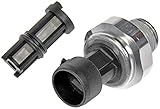
- Direct replacement - this engine oil pressure sensor is designed to match the fit and function of an original sensor on specified vehicles
- Ideal solution - engineered to help accurately monitor oil pressure when an original sensor has failed from heat or internal component damage
- Durable construction - designed and manufactured to strict specifications for reliable performance
- Trustworthy quality - backed by a team of product experts in the United States and more than a century of automotive experience
- Ensure fit - to make sure this part fits your exact vehicle, input your make, model and trim level into the garage tool
2. Incorrect, thin, degraded, or aerated oil
Oil viscosity has a direct effect on pressure. Oil that is too thin, fuel-diluted, overheated, or badly degraded can produce especially low pressure at hot idle. Using a heavier oil may increase a gauge reading, but it can also slow cold-start flow and may be wrong for the engine’s bearings, variable valve timing system, or turbocharger.
Use the viscosity and performance specification listed in the owner’s manual—not a generic “high-mileage” recommendation from a parts counter. Fuel dilution is a concern when the oil smells strongly of gasoline or diesel, looks unusually thin, or the dipstick level has risen instead of fallen. Coolant contamination may make the oil look tan or milky, although short-trip condensation can sometimes cause similar deposits under the oil cap.
Free tools Windows power users keep installed
One-click scans. No signup required.
Overfilling can also reduce pressure. A crankshaft whipping through an overfilled sump can turn oil into foam. The pump may then ingest an aerated mixture rather than a solid column of oil. Sludge or restricted oil-return passages can create oil starvation as well.
Fixes to try
- Confirm that the level is between the minimum and maximum marks.
- Check that the viscosity and oil specification match the manufacturer’s requirements.
- Change contaminated or severely degraded oil and replace the filter.
- Investigate fuel dilution, coolant contamination, or repeated overfilling before continuing to drive.
- Inspect the drained oil for metal particles or abnormal contamination.
Do not use thicker oil simply to hide low pressure unless the manufacturer specifically permits that grade.
3. A restricted oil filter, pickup screen, or oil passage
The oil pump cannot maintain pressure if it cannot obtain enough oil. Sludge, varnish, silicone sealant, failed gasket material, or metal debris can block the pickup screen or an internal oil passage. A restricted filter can also reduce flow. Most filters have a bypass valve that opens when restriction becomes high, but that does not guarantee normal pressure or clean oil circulation.
Rank #3

- Some GM Genuine Parts may have formerly appeared as ACDelco GM Original Equipment (OE)
- GM Genuine Parts are designed, engineered and tested to rigorous standards, and are backed by General Motors
- GM Engineers design and validate OE parts specifically for your Chevrolet, Buick, GMC, or Cadillac vehicle
- GM regularly updates production and service part designs to integrate new materials and technologies
A loose or cracked pickup tube can cause a similar problem. Instead of drawing a steady supply of oil, the pump may pull air through a damaged tube or pickup seal. A pickup restriction may become more obvious at higher RPM, when the engine demands more oil than the restricted screen can supply.
Do these 3 things before closing this tab:
1Repair Windows errors before they cause bigger problems2Fix the driver behind crashes, sound loss and screen glitches3Clear out junk files and repair common Windows errorsFixes to try
- Install the correct oil filter and change the oil if the service history or oil condition is questionable.
- If pressure remains low, remove the oil pan when the engine design permits and inspect the pickup screen.
- Check the pickup tube for cracks, looseness, and a damaged sealing ring.
- Look for sludge, sealant, or metal debris in the pan and oil passages.
- Inspect carefully after an engine rebuild or gasket repair, when excess silicone can break loose and block the pickup.
Replacing the filter is not enough if the warning light stays on. A pickup screen commonly must be removed and physically inspected; spraying the visible portion or flushing the engine may not remove trapped debris.
4. A worn oil pump or stuck pressure-relief valve
An oil pump can lose its ability to build pressure as its gears, rotors, housing, or cover wear. Excessive internal clearance lets oil leak backward inside the pump. A pressure-relief valve that sticks open, leaks, or is held open by debris can send oil back toward the crankcase instead of allowing system pressure to rise.
The pump drive is another possible failure point. Depending on the engine, the pump may be driven by a chain, gear, shaft, or directly from another component. A damaged drive can leave the pump turning slowly or not turning at all.
Fixes to try
- Measure actual pressure with a mechanical gauge before condemning the pump.
- Compare hot and cold readings with the service-manual limits.
- Inspect the pickup and relief valve before installing a replacement pump.
- Check the pump drive for broken, worn, or misaligned components.
- Prime the lubrication system after pump replacement or engine assembly if the service procedure requires it.
A new pump will not solve a blocked pickup or severely worn bearings. The surrounding lubrication system must be checked at the same time.
Recommended Free Tools
Rank #4

- Some ACDelco GM Original Equipment parts may have formerly appeared as GM Genuine Parts (OE) or ACDelco Professional.
- ACDelco GM Original Equipment parts are designed, engineered and tested to rigorous standards, and are backed by General Motors.
- GM Engineers design and validate OE parts specifically for your Chevrolet, Buick, GMC, or Cadillac vehicle.
- GM regularly updates production and service part designs to integrate new materials and technologies.
5. Excessive bearing clearance or other internal engine wear
Worn main or connecting-rod bearings allow too much oil to escape through the clearance around the crankshaft. Pressure loss is often most noticeable when the engine is hot because warm oil is thinner. Worn camshaft bearings, journals, or other internal surfaces can produce the same result.
Common clues include low hot-idle pressure, valve-train ticking, knocking, metal in the oil or filter, and pressure that has gradually worsened over time. If the oil film fails, the crankshaft and bearing surfaces can contact each other directly, turning a pressure problem into a major engine failure.
Fixes to try
- Verify pressure with a mechanical gauge at cold start, hot idle, and the specified test RPM.
- Compare every reading with the manufacturer’s limits.
- Cut open the oil filter or inspect the drained oil for bearing material and metallic debris.
- If the oil level, filter, pickup, and pump check out, inspect bearing clearances and crankshaft journals.
- Repair the engine with the correct bearings, machining, or overhaul procedure as required.
An oil change or additive cannot restore excessive bearing clearance. Internal repair may involve replacing bearings, machining or replacing the crankshaft, repairing cam-bearing surfaces, or replacing the engine.
Quick diagnostic guide
| Symptom | Possible direction | Next check |
|---|---|---|
| Warning light with low dipstick level | Leak, oil consumption, or neglect | Top up with the correct oil and find why the level fell |
| Warning light but normal oil level and no noise | Faulty sender or actual pressure problem | Test with a mechanical gauge |
| Pressure falls mainly when hot | Thin oil, worn pump, or bearing clearance | Verify hot pressure against the service specification |
| Pressure worsens at higher RPM | Restricted pickup or oil starvation | Inspect the pan, pickup tube, and screen |
| Low pressure with knocking or metal in oil | Internal bearing damage | Stop running the engine and arrange an internal inspection |
Can you drive with low oil pressure?
Usually, no. A vehicle with a low oil-pressure warning should be shut off as soon as safely possible. Check the level, but do not continue driving if the warning remains or returns after adding oil. Ticking, knocking, loss of power, or a rapidly flashing warning makes restarting especially risky. A tow is cheaper than replacing an engine damaged by oil starvation.
FAQ
Can low oil level cause low oil pressure?
Yes. If the crankcase is sufficiently low, the oil pump may draw air or uncover the pickup during vehicle movement. Check for leaks or oil consumption because adding oil only treats the immediate shortage.
Best Value

- 【High Quality】A ABIGAIL Oil Pressure Sensor is made of high quality material which is reliability, and durability. With the new sensor on, your vehicle will have a new life.
- 【Package Includes】1 x Oil Pressure Sensor, 1 x Filter and 1 x (1 1/16 Inch) Socket (Fits 3/8" Drive or 1 1/8" Hex Wrench) , The Oil Pressure Sensor used to to keep track of the oil pressure in the vehicle and then transmit this information straight to the combination meter or the ind this information to the module where it can be calculated.
- 【Interchange Part Number】Replaces # 12556117,926040,12614969,12585328,12585328,12614969,12616646,12677836,1S10786,D1846A,OP6196,OP6196SB,PS308,PS308T,PS340,PT1825,S4202,S4202P - OEM Fit, it will meet or exceed OEM standards, Compatible With Buick, Chevrolet, Silverado, Cadillac, GMC, Pontiac Vehicles. Please check the description and compatibility chart to make sure if the sensor fits your vehicle before your purchasing.
- 【Application】This Oil Pressure Sensor Socket set is Compatible with 2007-2008 Chevy Avalanche,5.3L/6.0L, 1997-2008 Chevy Corvett 5.7L/6.0L/6.2L/7.0L, 2003-2008 Chevy Express 1500 2500 3500,4.8L/5.3L/6.0, 2006-2008 Chevy Impala 5.3L, 2006-2007 Chevy Monte Carl 5.3L, 2003-2008 Chevy Silverado 1500 2500 3500 4.8L/5.3L/6.0L, 2003-2006 Chevy SSR,5.3L/6.0L, 2003-2008 Chevy Suburban 1500 2500,5.3L 6.0L, 2003-2008 Chevy Tahoe, 4.8L/5.3L/6.0L/6.2L, 2003-2008 Chevy Trailblazer,5.3L/6.0L.
- 【Application】This Oil Pressure Sensor Switch is Compatible With 2003-2008 GMC Envoy,5.3L,2003-2008 GMC Savana 1500 2500 3500,4.8L/5.3L/6.0L, 2003-2008 GMC Sierra1500 2500 3500,4.8L/5.3L/6.0L/6.2L , 2003-2008 GMC Yukon 1500 2500,4.8L/5.3L/6.0L/6.2L.
Will thicker oil fix low oil pressure?
Not reliably. Thicker oil can change the reading but may cause poor cold-start lubrication and may not meet the engine’s requirements. Confirm the actual pressure and use only an approved viscosity.
How do I know whether the oil-pressure sensor is bad?
A mechanical gauge must be installed at the engine’s pressure port and compared with the manufacturer’s specifications. A normal gauge reading with a warning light points toward the sender, wiring, connector, or gauge.
What does low oil pressure at hot idle usually mean?
It can result from oil that is too thin or degraded, a worn oil pump, a relief valve problem, or excessive bearing clearance. A hot mechanical-pressure test is needed to distinguish among them.
The Tool Desk
Outbyte PC Repair FREEClear out junk files and repair common Windows errorsFree Scan →Outbyte Driver Updater FREEFix the driver behind crashes, sound loss and screen glitchesFind Drivers →The Bottom Line
Start with the oil level, oil condition, and obvious leaks—but treat a low-pressure warning as an engine-protection emergency. If the warning does not disappear immediately after correcting a genuinely low level, shut the engine off. Mechanical gauge testing is the key next step, followed by inspection of the sender, filter, pickup, pump, and internal bearing clearances in that order.
Quick Recap
Product prices and availability are accurate as of the date/time indicated and are subject to change. Any price and availability information displayed on Amazon at the time of purchase will apply.




