Honda’s 1.5-liter turbocharged four-cylinder is neither the automatic disaster some online discussions suggest nor a carefree substitute for Honda’s older naturally aspirated engines. Many owners report well over 100,000 miles with routine maintenance. Others have encountered fuel dilution, recurring misfires, fuel-pump failures, turbocharger problems, or expensive head-gasket repairs.
The difference often comes down to the vehicle application, model year, driving pattern, climate, maintenance history, and whether Honda’s VIN-specific updates and recalls were completed. A used 1.5T can be a sensible purchase, but it deserves a more thorough inspection than its Honda badge alone might suggest.
As an Amazon Associate I earn from qualifying purchases.
Which Honda vehicles use the 1.5L turbo?
In the United States, the engine has been used in several versions of the Civic, CR-V, and Accord. The applications most often discussed in connection with oil dilution and head-gasket complaints include:
| Vehicle | Relevant model years commonly discussed | Important context |
|---|---|---|
| Honda Civic | 2016–2022 | Early cold-weather oil-dilution updates and later head-gasket allegations apply to specific vehicles, not automatically every Civic. |
| Honda CR-V | 2017–2022 | Early vehicles received a product update addressing oil dilution, rich-mixture codes, and drivability complaints in specified cold-weather states. |
| Honda Accord | 2018–2022 | Certain 1.5T Accords were included in a fuel-pump safety recall. Head-gasket failures have also been reported and alleged in litigation. |
These are not identical powertrains in every detail. Engine calibration, boost settings, cooling systems, vehicle weight, transmission pairing, production changes, and regional specifications can vary. A problem associated with one model or production group should not automatically be assigned to every Honda 1.5T.
#1 Best Overall
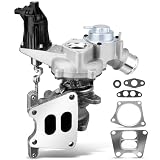
- 【APPLICATION】 Compatible with Honda models with L15BM/L15BN 1.5-liter four-cylinder engine, including Accord LX/EX-L/Sport 2018-2022; Accord EX 2018-2020; Accord Sport SE 2021-2022; Accord Touring 2018. Please refer to picture for detailed models
- 【OEM PART NUMBER】6A0-F4-T/C, 1890064A01, 1890064AA11, 1890064CH01, 189006A0001, 189006A002, 189006A0003, 1890A6A0A01, 1890A6A0A010, 180810528E, 181201132E, serves as a seamless replacement for original equipment, ensuring a precise fit in your vehicle
- 【EXQUISITE WORKMANSHIP】 Crafted from high-grade aluminum and iron, our turbocharger provides excellent abrasion resistance. Precision-machined housing ensures tight sealing, prevents leakage, longevity and reliability, guarantees superior performance
- 【ULTIMATE SOLUTION】 A Failed turbocharger may lead to power loss, leaking, smoking and increased oil consumption. Our turbocharger goes beyond merely fixing these problems and improves engine performance, offering unmatched efficiency and fuel economy
- 【PURCHASE WITH CONFIDENCE】 We provide one year product quality support to our customers, providing you with assurance and reliability on every driving. If you have any questions about our products, please contact us, we will reply to you within 24 hours
What owners say about long-term reliability
Owner experience is divided. Some drivers report passing 100,000 miles, and in some cases considerably more, with regular oil changes and no major internal-engine repair. That is consistent with the engine’s basic strengths: it is compact, reasonably efficient, widely supported, and not inherently incapable of high mileage.
Other owners report more expensive experiences, including repeated misfires, injector or fuel-system problems, turbocharger replacement, coolant loss, and head-gasket failure at moderate mileage. Both groups are real, but online owner reports cannot tell us how frequently each outcome occurs. Drivers with a failure are much more likely to post about the vehicle than drivers whose car simply performs normally.
The fairest summary is that the 1.5T can be durable when maintained properly, but it does not have the same low-risk reputation as Honda’s older naturally aspirated four-cylinder engines. A buyer should evaluate the individual car rather than relying on either Honda’s reputation or the worst forum story.
Free tools Windows power users keep installed
One-click scans. No signup required.
Oil dilution: the best-documented early concern
Fuel dilution occurs when gasoline reaches the engine oil, often because cold-start fuel does not fully vaporize before the engine warms up. Repeated short trips in cold weather make the condition more likely. Excessive fuel in the oil can reduce its viscosity and weaken its ability to protect bearings, cylinder walls, and other lubricated parts.
Honda issued product updates for certain 2017–2018 CR-Vs sold in specified cold-weather states. The repair path included ECU and TCU software updates, an A/C control-unit replacement where applicable, and an engine-oil change. Honda identified software and operating thresholds as contributors and listed possible symptoms including lack of power, misfire codes, and a rich-mixture code.
A related update covered certain 2016–2018 Civic 1.5T vehicles in the same group of 21 cold-weather states. These actions were product updates, not a universal safety recall affecting every Honda 1.5T.
Honda also stated that some degree of fuel dilution is a characteristic of the engine and that most cases would not result in drivability problems or unusual engine wear. That position should not be interpreted as permission to ignore a serious symptom. Check the oil if the level is rising, the oil smells strongly of gasoline, the engine is misfiring, a low-oil-pressure warning appears, or unusual mechanical noise develops.
PC Slower Than It Used to Be?
A free scan shows the junk files, broken settings and background clutter dragging Windows down - then fixes them in one click.Free scan · Windows 10 & 11Outdated Drivers Are Slowing You Down
One free scan finds every outdated or missing driver and matches the right update for your exact hardware.Free scan · exact hardware matchWhat to check for oil dilution
- Measure the oil level on level ground after the engine has been off for several minutes.
- Look for an oil level above the full mark.
- Smell the dipstick for an unusually strong gasoline odor.
- Ask whether the vehicle was used primarily for short trips in cold weather.
- Confirm that the applicable software update and oil change were documented.
A fuel smell by itself does not prove the engine is damaged. It does justify checking the oil condition and finding out whether the level is increasing.
Misfires and rough running have several possible causes
Honda’s service information for affected CR-Vs identifies diagnostic trouble codes P0300, P0301, P0302, P0303, P0304, and P0172. These represent random or cylinder-specific misfires and an excessively rich fuel-system condition.
It is a mistake to diagnose every 1.5T misfire as a failed fuel injector. Possible causes include:
- Worn or fouled spark plugs.
- Ignition-coil problems.
- Fuel injectors or other fuel-delivery faults.
- Engine-control software issues.
- Fuel dilution.
- Intake-valve carbon buildup.
- Coolant entering a cylinder because of a head-gasket or cylinder-head problem.
The engine uses direct fuel injection. Because gasoline is not routinely sprayed over the intake valves, deposits can build up and contribute to rough running or misfires. Honda diagnostic guidance distinguishes carbon buildup from injector, ignition, and other faults, so a parts-swapping repair is not a sufficient diagnosis.
What’s actually slowing this PC down?
Pick the symptom - the matching free tool is one click away.
On a used vehicle, scan for current, stored, and pending codes. A car that has no illuminated check-engine light may still have a history of misfires or a problem that has not yet matured enough to trigger the light.
Fuel-pump failures affect certain Accords
Honda issued a safety recall for certain 2018–2022 Accord 1.5T vehicles. A defective fuel-pump impeller could swell and seize the pump, potentially causing loss of engine operation or a stall while driving.
This is a VIN-specific recall. Do not assume that every Accord of those model years is affected, and do not assume that a car is clear because the seller says the fuel pump was replaced. Check the 17-character VIN through NHTSA’s recall lookup and Honda’s owner website. Authorized Honda dealers perform open safety-recall repairs at no charge.
Rank #2

- ▶Compatible Vehicles: 1.5 Turbo Turbocharger w/ Actuator & Gasket Kit for Honda Accord LX 1.5L L15BM/L15BN 2018-2022, for Accord EX-L 1.5L L15BM/L15BN 2018-2022, for Accord Sport 1.5L L15BM/L15BN 2018-2022, for Accord EX 1.5L L15BM/L15BN 2018-2020, for Accord Sport SE 1.5L L15BM/L15BN 2021-2022, for Accord Touring 1.5L L15BM/L15BN 2018
- ▶Replace Part Number: 1.5l Turbo Kit replaces 6A0-F4-T/C, 1890064A01, 1890064AA11, 1890064CH01, 189006A0001, 189006A002, 189006A0003, 1890A6A0A01, 1890A6A0A010, 180810528E, 181201132E
- ▶Features: Delivers stable and abundant power reserve for daily road travels while extending the full service life of the turbocharger assembly for long-term use
- ▶Quality Guarantee: All products are professionally inspected before delivery to ensure stable performance and reliable quality. Meanwhile, we provide a one-year quality guarantee. Welcome to shop in our store.
- ▶Note: Please confirm the part number and vehicle compatibility before ordering
The head-gasket issue: real reports, but no proven universal failure rate
Premature head-gasket failure is the most serious and controversial concern surrounding the Honda 1.5T. Owners have reported coolant loss, cold-start misfires, rough running, overheating, and costly cylinder-head or engine repairs. A proposed federal class action alleges that certain Honda turbo engines were not adequately designed to manage turbocharger-related heat and cylinder pressure.
Quick wins for a faster PC:
Clear out junk files and repair common Windows errorsFree Scan →Fix the driver behind crashes, sound loss and screen glitchesFind Drivers →Repair Windows errors before they cause bigger problemsFix Now →The commonly discussed vehicle groups are 2016–2022 Civics, 2017–2022 CR-Vs, and 2018–2022 Accords. However, the lawsuit’s vehicle list is a plaintiff allegation, not proof that every vehicle in those ranges shares a defect or will fail.
Bissell v. American Honda Motor Co. was filed in the Southern District of California on December 6, 2024. Publicly indexed filings reviewed for this article show continuing litigation and consolidation-related proceedings, including an order for an amended consolidated complaint in February 2026. The case is not the same as a government safety recall, a finding that every engine is defective, or a verified failure-rate study.
There is currently no reliable public dataset establishing what percentage of Honda 1.5T engines develop head-gasket failure. Complaints and lawsuits show that failures occur; they do not establish their frequency among all engines sold.
Symptoms that deserve immediate investigation
- Repeated misfire during a cold start.
- White exhaust smoke after the engine is warm or under acceleration.
- Coolant loss without an obvious external leak.
- Bubbles or combustion gases in the coolant reservoir.
- Overheating or a low-coolant warning.
- A check-engine light accompanied by several driver-assistance warning lights.
- Rough running that improves as the engine reaches operating temperature.
These symptoms are not conclusive by themselves. A professional diagnosis may require a cooling-system pressure test, combustion-gas test, compression test, leak-down test, and scan-tool data. A seller who refuses those checks is increasing the purchase risk.
Recommended Free Tools
How to assess a used Honda 1.5T
- Run the VIN. Check NHTSA and Honda for open safety recalls, product updates, and any warranty extensions. Do this before negotiating, not after buying.
- Review maintenance records. Look for consistent oil changes and ask about the vehicle’s typical use. Short-trip, cold-climate use makes oil condition particularly important.
- Inspect the oil. Verify that the level is not above the full mark and investigate a strong gasoline smell or unusually thin oil.
- Scan the vehicle. Check current, pending, and stored trouble codes, including misfire history. A basic pre-purchase inspection should include an electronic scan.
- Start it cold. Do not allow the seller to warm the vehicle before arrival. Listen for an uneven idle, watch for smoke, and note whether the check-engine light illuminates briefly during the bulb check.
- Check the cooling system. Low coolant, residue around the reservoir, unexplained pressure, or cold-start misfires justify pressure and combustion-gas testing.
- Verify Accord fuel-pump work. For a 2018–2022 Accord 1.5T, confirm recall completion by VIN and obtain the repair record if possible.
- Budget for specialist diagnosis. A pre-purchase inspection is inexpensive compared with replacing a cylinder head or engine. Turbocharged direct-injection systems deserve more than a visual inspection and a short test drive.
Does driving style affect reliability?
Yes. Frequent short trips can leave the engine operating below full temperature, increasing the opportunity for fuel dilution. Hard use, skipped oil changes, incorrect oil level, neglected spark plugs, and continued driving with a misfire can also turn a manageable problem into major engine damage.
That does not mean every owner needs to avoid city driving or treat the 1.5T delicately. It means the maintenance schedule and oil condition matter. Drivers who routinely make short winter trips should be especially alert to oil-level changes and should follow Honda’s specified oil and service procedures rather than extending intervals casually.
Is the Honda 1.5T reliable enough to buy?
It can be. A well-maintained example with complete records, completed campaigns, no misfire history, stable coolant level, clean oil, and a satisfactory inspection may provide many years of service. The engine’s documented problems do not make every vehicle a bad purchase.
However, a poorly documented 1.5T is a different proposition. A low price does not compensate for unexplained coolant loss, recurring misfire codes, oil above the full mark, or a seller unwilling to provide the VIN. Buyers seeking the lowest possible mechanical risk may prefer a naturally aspirated Honda engine, even if the 1.5T offers better low-speed torque and fuel economy.
FAQ
Is Honda’s 1.5L turbo engine reliable?
It can be reliable, and many owners report more than 100,000 miles without major engine work. Its risk profile is less reassuring than Honda’s older naturally aspirated four-cylinders because of documented oil-dilution updates, misfire and fuel-system problems, and reported head-gasket failures.
Which Honda 1.5T years should I avoid?
There is no evidence that every vehicle from one model year is guaranteed to fail, so a blanket avoid list would be misleading. Early 2016–2018 Civic and 2017–2018 CR-V applications deserve careful checking for cold-weather product updates, while 2018–2022 Accords should be checked for the fuel-pump recall and all vehicles should be inspected for coolant and misfire symptoms.
How can I tell if a Honda 1.5T has a bad head gasket?
Look for repeated cold-start misfires, unexplained coolant loss, white exhaust smoke after warm-up, overheating, or combustion gases in the coolant. These symptoms have other possible causes, so confirmation should include appropriate scan-tool, cooling-system, compression, leak-down, or combustion-gas testing.
Does Honda’s oil-dilution issue mean the engine will fail?
No. Honda stated that some dilution is a characteristic of the engine and that most cases did not cause unusual wear. Excessive dilution should still be diagnosed, particularly if the oil level rises, smells strongly of gasoline, or is accompanied by misfires, low oil pressure, or engine noise.
The Bottom Line
Honda’s 1.5L turbo can deliver high mileage, but it should not be judged solely by Honda’s reputation. Early oil-dilution concerns, documented drivability updates, a fuel-pump recall on certain Accords, and ongoing head-gasket litigation make service records and VIN checks essential. A clean, well-maintained example with completed campaigns and no cooling-system or misfire symptoms can be a reasonable buy. An undocumented car showing rising oil, coolant loss, or cold-start misfires is one to leave behind—or inspect extensively before making an offer.
Quick Recap
Product prices and availability are accurate as of the date/time indicated and are subject to change. Any price and availability information displayed on Amazon at the time of purchase will apply.




