Yes—a three-cylinder car can be genuinely fun to drive. The Ford Fiesta ST and Toyota GR Yaris show why cylinder count alone says little about performance: turbo response, gearing, chassis, weight and driven wheels matter just as much. One prioritizes a lively, usable front-wheel-drive package; the other pairs its three-cylinder engine with more power and four-wheel drive for stronger acceleration and traction.
What makes a three-cylinder car fun?
A three-cylinder engine is a layout, not a verdict on a car’s character. Small displacement can be paired with turbocharging to produce strong output, while the transmission, chassis and tires determine how that power reaches the road. The experience also depends on response and sound: in Auto Express’s road test, the Fiesta ST Edition’s engine pulled strongly from low speeds with minimal turbo lag, and its three-cylinder note was described as bassy. Those are impressions of that car, not qualities guaranteed by every three-cylinder engine.
Ford’s 2017 launch announcement for the next-generation Fiesta ST specified a 1.5-litre turbocharged three-cylinder EcoBoost producing 200 PS and 290 Nm, with 0–100 km/h anticipated in 6.7 seconds. Those were manufacturer launch figures, not results from the later comparison with the GR Yaris. Ford described the engine as combining port and direct fuel injection, turbocharging and variable cam timing. It also said that, under light demand, cylinder deactivation could stop fuel delivery and valve operation for one cylinder, with disengagement or re-engagement in 14 milliseconds. These are Ford’s descriptions of its technology, not independently measured economy results. Ford’s 2017 Fiesta ST announcement also describes selectable Normal, Sport and Track settings that alter engine, steering and stability-control behavior.
Fiesta ST and GR Yaris: two different performance packages
Auto Express compared the Fiesta ST Edition with the GR Yaris and listed their specifications as follows. The figures belong to that comparison; they are not a direct comparison with Ford’s earlier anticipated 0–100 km/h launch time.
PC Slower Than It Used to Be?
A free scan shows the junk files, broken settings and background clutter dragging Windows down - then fixes them in one click.Free scan · Windows 10 & 11Crashes, No Sound, or Screen Glitches?
Random freezes, missing sound and display glitches usually trace back to one bad driver. Find and replace yours safely.Free scan · under a minute#1 Best Overall
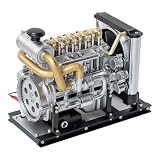
- Exquisite Mechanical Decoration: The ingeniously designed mini OHV inline four-cylinder diesel model, with premium quality & extremely textured metal parts, briefs you on the wonderful world of mechanical engineering in an immersive environment.
- All Included For Building This Engine Model: The engine consists of 300+pcs parts and comes with a paper English instruction manual. You will personally experience the whole process of assembling from small parts to the finished product and build a shocking engine model.
- Superb STEM Activity: The wonderful activity allows adults to cooperate with children for assembly to spend their leisure time, which enhances parent-child interaction, walks children through popular industrial knowledge, increases their knowledge and imagination, develops mental and logical thinking as well as improves innovation and creativity.
- Special Gifts: This engine will make great industrial technology in the form of inheritance in the hands of every owner. Packed in a high-end gift box, the product makes a perfect gift for children or adults that is irresistible and satisfying.
- Applicable age:14+
| In the Auto Express comparison | Ford Fiesta ST Edition | Toyota GR Yaris |
|---|---|---|
| Engine | 1.5-litre turbocharged three-cylinder | 1.6-litre turbocharged three-cylinder |
| Listed power | 197 bhp | 257 bhp |
| Listed 0–62 mph time | 6.5 seconds | 5.5 seconds |
| Driven wheels | Front-wheel drive | Four-wheel drive |
| Fuel economy in that test | 33.8 mpg | 29.9 mpg |
Auto Express found the Toyota accelerated more strongly and had greater traction when exiting corners. Its four-wheel-drive system helps put power down, while the Fiesta’s front wheels handle both steering and acceleration. In the same comparison, the Fiesta was judged more practical, with more boot capacity and rear-seat space. The result is a useful contrast: the GR Yaris emphasizes pace and traction, while the Fiesta balances brisk performance with everyday usability.
The fuel-economy figures are results from this one comparison, not guaranteed owner figures. Driving style and use can change real-world consumption, and the two cars differ in output and driven wheels; a smaller engine alone does not establish that a car will use less fuel. See Auto Express’s GR Yaris and Fiesta ST Edition comparison for its road-test judgments and specifications.
Rank #2

- ⚙️【Classic Vintage Engine Replica】Inspired by early industrial diesel engine designs, this miniature single-cylinder four-stroke gasoline engine faithfully recreates the structure and motion of classic mechanical power systems, offering a highly realistic engineering display model.
- 🔩【Precision Metal Construction】Manufactured with finely machined metal components including a cast iron cylinder sleeve, stainless steel flywheels, and precision mechanical parts, delivering durability, smooth operation, and an authentic industrial appearance.
- 💧【Integrated Cooling & Lubrication Design】Equipped with an evaporative water-cooling structure and independent lubrication channels within the crankshaft and connecting rod system, supporting stable operation and improved mechanical reliability.
- 🔥【Smooth Mechanical Performance】Dual stainless steel flywheels provide increased rotational inertia, allowing the engine to run with steady rhythm and visually impressive mechanical motion once started.
- 🎁【Collector-Grade Display Model】Mounted on a refined wooden base and equipped with ignition components for operation, this vintage engine model serves as a distinctive desk display, mechanical demonstration piece, and collectible gift for engineering enthusiasts.
What the standard Yaris platform can—and cannot—tell you
Toyota’s 2019 announcement about the new standard Yaris is useful context for the broader point that an engine is only part of a car. Toyota described a 1.5-litre inline three-cylinder Dynamic Force engine and said the GA-B platform was 50 kg lighter, at least 30 percent more torsionally rigid and had a center of gravity 15 mm lower than the preceding model. Those are Toyota’s claims for the standard Yaris and its platform, not GR Yaris test results or proof that every Yaris derivative shares the same engine.
Toyota said the standard Yaris engine used high-speed combustion technology to target low fuel consumption and high output. Chief engineer Yasunori Suezawa described pleasurable driving as a development priority alongside efficiency and safety. That statement explains Toyota’s intent; it does not establish an independently verified efficiency ranking. Toyota’s 2019 new-Yaris announcement gives the original platform and engine context.
Rank #3

- Motorized Mechanical Motion: After assembly, an electric motor drives the crankshaft, pistons, timing chain, pulleys and dual overhead camshafts in synchronized motion, clearly revealing how the complete inline-four system works together.
- Precision metal craftsmanship: Anodized aluminum alloy and stainless steel give the completed engine substantial weight, durable surfaces and finely resolved mechanical detail.
- 250+ piece advanced build: Follow the full-color manual through about four hours of assembly. Numbered parts arrive organized in protective foam, with basic tools included.
- Open DOHC engineering: Inspired by pioneering inline-four racing engines, the exposed twin-cam, chain-driven timing layout reveals how motion travels from crankshaft to valvetrain.
- Collector-ready presentation: At 6.24 x 4.61 x 7.17 inches and about 4.72 pounds, the completed model brings real presence to a home, office or workshop. A durable metal case protects and organizes the kit.
Which approach suits your kind of driving?
Choose the Fiesta ST character for a usable hot hatch
The Fiesta makes a case for fun that includes ordinary journeys. Auto Express’s test impression of strong low-speed pull and minimal turbo lag points to accessible response, while its reported extra rear-seat and boot space makes it the more practical of the two in that comparison. Its front-wheel-drive layout is a different traction compromise from the Toyota’s four-wheel drive, not evidence that a three-cylinder engine cannot deliver engaging performance.
Choose the GR Yaris character for pace and traction
The GR Yaris’s comparison figures show the quicker car in a straight line, and Auto Express also found it stronger accelerating out of corners. Its higher listed power and four-wheel drive suit a driver who values acceleration and traction over the Fiesta’s reported space advantage. That performance comes with the lower fuel-economy result in this particular test, not a universal ownership forecast.
Rank #4
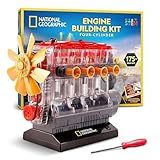
- BUILD YOUR OWN ENGINE – Assemble a clear 4-cylinder engine model kit with 175+ durable pieces. A fun DIY engineering toy engine that shows how pistons, valves, and gears really move.
- WORKING MODEL ENGINE – Install 3 AA batteries (not included), press start, and see this visible engine model kit come to life as pistons, valves, and gears move just like a real car engine.
- COMPLETE STEM ACTIVITY KIT – This kids engine build kit includes everything needed: 175+ parts, tools, illustrated instructions, and a Learning Guide for an engaging STEM toy experience.
- FUN & EDUCATIONAL – Encourages problem-solving skills and curiosity while teaching kids about mechanics and engineering. Perfect model engine kit for young builders and hobby kits for boys and girls.
- GREAT STEM GIFT – An exciting engine building kit for kids who love cars, building toys, and model kits. Inspires creativity and discovery through hands-on STEM play!
Are three-cylinder engines powerful enough for a hot hatch?
These examples show that they can be. In Auto Express’s comparison, both cars used turbocharged three-cylinder engines, and the GR Yaris was listed at 257 bhp while the Fiesta ST Edition was listed at 197 bhp. Those numbers describe these specific models; they are not a limit or typical output for three-cylinder cars generally. The broader lesson is that output matters, but so do delivery, traction, gearing, chassis behavior and the car’s intended use.
Availability: the Fiesta ST is now a used-car choice
The Fiesta ST discussed here is not a universally available new-car option. Top Gear says Fiesta production had ended by July 2023 and describes the 2018–2023 ST on the used market. New-car availability varies by market and date, so check local listings rather than assuming a new Fiesta ST can be ordered. Top Gear’s 2018–2023 Fiesta ST review covers that model generation.
Quick Recap
Best Value

- Wonderfully Detailed Model: Our 5-Cylinder Radial engine model kits feature genuine precision-cast and machined parts in anodized aluminum and stainless steel. Each piece is accurate, detailed and directly correlates to assemblies found in modern, high-performance automobile engines. This is a superb introduction into engineering and mechanics.
- Complete Accessories: The kit contains over 230 parts. Each finely-crafted part is labeled, and packaged in custom foam carriers to ensure they are organized, complete, and undamaged. A clear, full-color instruction manual is included. While the engine is complex, step-by-step instructions – along with some patience – ensure excellent results.
- Simulation Model: A real electric motor inside the starter motor housing drives the 5-Cylinder Radial engine. The crankshaft, rods and pistons can be observed through special viewing windows. You can observe the operation of the 5-Cylinder Radial engine during the whole process. It is not only a beautiful decoration, but also a simulation dynamic model that can simulate the operation of a real 5-Cylinder Radial engine. Even when not in motion, it is an impressive machine to see.
- Excellent Learning Activity: This kit is not recommended for unsupervised children under the age of 14, due to its small parts. However, it provides a great opportunity for adults to spend time with children. The child will learn to understand and follow illustrated instructions, manipulate parts and basic tools, and to know the accomplishment of a job well-done. It fosters an appreciation for the ingenuity in today’s technology as well as the need for it in coming generations.
Product prices and availability are accurate as of the date/time indicated and are subject to change. Any price and availability information displayed on Amazon at the time of purchase will apply.




