Choose the 2026 Mustang EcoBoost if you want the lower listed price and a 10-speed automatic. Choose the Mustang GT if you specifically want a 5.0-liter V8, a standard six-speed manual with rev matching, and GT-specific chassis and braking equipment. The right answer depends less on a generic “best Mustang” and more on which powertrain, transmission, and hardware you will actually use. The figures below are Ford specifications for the U.S. market, not independent acceleration tests or driving impressions.
2026 Mustang EcoBoost vs. GT at a glance
Ford’s comparison material and 2026 order guide describe two substantially different versions of the same Mustang generation. The EcoBoost is the entry point with a turbocharged four-cylinder and automatic transmission. The GT is the V8 model, with a manual transmission included as standard equipment and an automatic available.
As an Amazon Associate I earn from qualifying purchases.
| 2026 trim | Engine and output | Transmission | Ford starting MSRP |
|---|---|---|---|
| EcoBoost Fastback | 2.3L EcoBoost; 315 hp and 350 lb-ft | 10-speed automatic | $32,995 |
| GT Fastback | 5.0L Ti-VCT V8; 480 hp and 415 lb-ft | Six-speed manual with rev matching standard; 10-speed automatic available | $47,800 |
| GT with available active valve performance exhaust | 5.0L Ti-VCT V8; 486 hp and 418 lb-ft | Configuration dependent | Verify configuration and pricing |
Ford specifies the output figures using 93-octane fuel. The prices are manufacturer starting MSRPs, not guaranteed transaction prices; destination charges, taxes, dealer fees, options, incentives, and availability can change the amount you pay.
What separates the EcoBoost from the GT?
Different engines, not just different trim badges
The EcoBoost uses a 2.3-liter turbocharged four-cylinder rated at 315 horsepower and 350 pound-feet of torque. The GT uses a 5.0-liter Ti-VCT V8 rated at 480 horsepower and 415 pound-feet. Those are manufacturer ratings, so they establish the advertised output but do not establish a particular 0–60-mph time, quarter-mile result, sound level, or subjective sense of speed.
#1 Best Overall
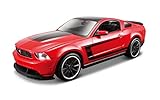
- These highly detailed kits come with everything you need to build them including the screwdriver
- Opening parts, Rolling Wheels
- Easy assembly, Pre-painted metal body
- When finished the vehicles are fully functional
- Rolling die-cast replica
The available active valve performance exhaust changes the GT’s listed rating to 486 horsepower and 418 pound-feet. Because that output is tied to a particular exhaust configuration, do not assume every GT has the higher figure. Ask the dealer to identify the exact exhaust equipment on the vehicle or build sheet you are considering.
Transmission choice is a major decision
Ford lists the EcoBoost with a 10-speed automatic. If you want to operate a clutch pedal and select gears yourself, the EcoBoost is not the straightforward choice in this comparison. The GT includes a six-speed manual with rev matching as standard and can also be ordered with a 10-speed automatic.
That makes transmission preference a practical dividing line. A buyer who is committed to a manual can focus on GT configurations. A buyer who wants an automatic can consider either trim and then decide whether the GT’s V8 and additional hardware justify its higher price.
The Tool Desk
Outbyte Driver Updater FREEFix the driver behind crashes, sound loss and screen glitchesFind Drivers →Outbyte PC Repair FREEClear out junk files and repair common Windows errorsFree Scan →GT-specific equipment goes beyond the engine
Ford’s 2026 order guide lists several GT items as standard GT equipment: a 3.55 limited-slip rear axle, larger brake rotors with four-piston fixed calipers, GT dual exhaust, a hood vent, and a unique front fascia. These details matter to shoppers who are choosing the GT for more than its badge or peak horsepower.
The order guide describes the equipment associated with the GT trim; it does not mean every option package, appearance treatment, or body style has the same content. Confirm the actual equipment list for the specific stock number or build configuration.
How much more does a GT cost?
Comparing the two listed Fastback MSRPs produces a $14,805 starting-price difference before destination, taxes, registration, dealer charges, and options. That is a meaningful budget decision, but it is not an out-the-door quote and should not be treated as one.
Make an apples-to-apples price comparison
- Match the body style. The cited prices are for Fastbacks. Convertibles and Premium trims are listed separately and have different pricing.
- Match equipment. Compare vehicles with similar appearance, technology, wheel, brake, and exhaust options. A heavily optioned EcoBoost and a base GT may not reflect the simple starting-price spread.
- Request a written breakdown. Ask for MSRP, destination charge, installed options, dealer fees, taxes, registration, and any discount or incentive on separate lines.
- Check the model year and market. The figures here apply to the 2026 U.S.-market cars. A different model year, country, or remaining inventory can carry different equipment and prices.
What the price difference does and does not tell you
The higher GT MSRP pays for a different engine, the manual-transmission option, and the GT equipment listed by Ford. The data available for this comparison does not establish whether the GT will cost more to insure, maintain, fuel, or resell in your situation. Those costs vary by driver, location, coverage, fuel prices, service history, mileage, and market conditions, so obtain actual quotes rather than assuming a fixed ownership premium.
Do these 3 things before closing this tab:
1Repair Windows errors before they cause bigger problems2Fix the driver behind crashes, sound loss and screen glitches3Clear out junk files and repair common Windows errorsThink in terms of the car you will actually buy
The $14,805 spread is a comparison of two base Fastbacks. It is not a universal “EcoBoost versus GT” surcharge. Adding Premium content, choosing a convertible, selecting an exhaust, or comparing different dealer-installed accessories can move either vehicle away from its starting MSRP. A realistic worksheet should therefore show the exact trim, body style, transmission, factory options, destination charge, and dealer fees for each candidate.
Rank #2
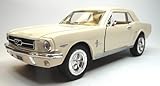
- Authentic 1:36 Scale: Meticulously crafted 1964 1/2 Ford Mustang model car with impressive 5-inch length.
- Realistic Details: Die-cast metal body with opening doors and eye-catching blue finish.
- Interactive Play: Engaging pull-back action for thrilling motion across smooth surfaces.
- Collectible Quality: Ideal for model car enthusiasts and collectors seeking miniature automotive replicas.
- Brand: KiNSMART, a trusted name in die-cast vehicle models and toys.
Financing also changes the monthly payment, but the figures provided here do not establish interest rates, loan terms, incentives, or payment estimates. Keep the vehicle price separate from financing cost so a lower monthly payment does not obscure a higher total amount paid.
Which Mustang fits your priorities?
Choose EcoBoost when the lower entry price is the priority
The EcoBoost is the logical starting point when you want a new Mustang fastback at Ford’s lower listed MSRP and are comfortable with a 10-speed automatic. Its 2.3-liter engine delivers a substantial advertised torque figure without requiring you to move to the GT’s price level. This is a value decision, not a claim that the EcoBoost is faster, more economical, or cheaper to own; the supplied specifications do not include independent performance or fuel-economy testing.
It can also be the sensible choice for a buyer who simply prefers two-pedal driving and does not place a high value on a V8. The important test is whether you would use the GT’s additional engine, transmission, and hardware. If not, paying the GT premium may not align with your priorities, even though the GT has higher published output.
Choose GT when you specifically want a V8
If the character and configuration of a 5.0-liter V8 are central to why you are shopping for a Mustang, the GT is the relevant trim. The GT’s advertised output is materially higher than the EcoBoost’s, and the available active valve performance exhaust provides a separate higher-output configuration. Select the GT because that engine is important to you, not because a brochure number guarantees a particular driving experience.
Choose GT when a manual transmission is non-negotiable
The GT is the clear choice for a buyer who requires a manual. Ford lists its six-speed manual with rev matching as standard, while the EcoBoost is listed with a 10-speed automatic. If you prefer two-pedal driving, the GT automatic remains available, but verify that the car on the lot has the transmission you intended before discussing price.
Choose GT when its standard hardware matters
Some buyers care about the mechanical equipment as much as the engine. The GT’s listed 3.55 limited-slip rear axle, larger brake rotors, four-piston fixed calipers, dual exhaust, hood vent, and unique front fascia give you concrete reasons to select that trim. Treat these as the GT’s stated standard equipment and confirm details against the build sheet, especially if you are comparing a GT with packages to an EcoBoost with options.
Choose based on priorities, not a horsepower-only ranking
The GT leads the published power figures, but “more horsepower” does not answer every buying question. A shopper who values the lowest listed price and an automatic may be better served by EcoBoost. A shopper who wants manual control, V8 ownership, or the GT’s listed brake and axle hardware has a clear reason to spend more. Neither trim is automatically right for every driver, and the available figures do not prove a universal winner in fuel use, insurance, maintenance, comfort, or resale.
What’s actually slowing this PC down?
Pick the symptom - the matching free tool is one click away.
Understanding the output figures
Horsepower and torque are not acceleration times
Horsepower describes the rate at which an engine can perform work, while torque is the twisting force produced by the engine. In a vehicle, gearing, traction, vehicle mass, calibration, tires, temperature, fuel, and driver inputs all influence acceleration. Therefore, Ford’s 315-hp, 480-hp, and 486-hp figures are useful for comparing the manufacturer’s power ratings but cannot substitute for an independent test.
Rank #3

- Limited Edition
- Diecast metal body and chassis
- 1/43 true-to-scale detail
- Made by GreenLight Collectibles
Why the fuel qualification matters
Ford attaches the published horsepower and torque ratings to 93-octane fuel. Keep that qualification with the number when comparing specifications. Do not rewrite the ratings as if they were measured on an unspecified fuel grade, and consult the vehicle’s current owner information for the fuel recommended for the exact car you purchase.
Read the active-exhaust figure correctly
The 486-hp and 418-lb-ft numbers describe a GT equipped with the available active valve performance exhaust. They are not a replacement for the base GT’s 480-hp and 415-lb-ft figures, and they should not be applied to every GT in a listing. The exhaust equipment must be verified on the window sticker, order summary, or build sheet.
Body styles, trims, and configuration traps
Fastback prices are not universal Mustang prices
The two headline MSRPs apply specifically to EcoBoost Fastback and GT Fastback. Ford also lists convertible and Premium configurations. A convertible can carry a different starting price, while Premium equipment can change both the price and the content. Comparing an EcoBoost Premium convertible with a base GT Fastback does not answer the simple EcoBoost-versus-GT question unless you account for those differences.
Recommended Free Tools
Active exhaust is a configuration, not a universal GT specification
The 486-hp, 418-lb-ft rating belongs to the GT with the available active valve performance exhaust. The base GT figures remain 480 horsepower and 415 pound-feet. Verify whether the car has that exhaust before using the higher figures in a comparison, insurance discussion, or purchase worksheet.
Packages can change the equipment mix
The order guide identifies GT standard equipment, but individual packages and options can add or alter appearance and performance-related content. Use the window sticker, order summary, or dealer build sheet for the exact vehicle rather than relying on a trim name alone.
Do not mix model years or markets
These figures describe 2026 U.S.-market vehicles. A leftover 2025 model, a car advertised for another country, or a used Mustang can have different equipment, pricing, and output specifications. Confirm the model year and market before comparing a dealer quote with the figures in this guide.
A practical buying process
- Write down your non-negotiables. Decide whether your priorities are the lowest listed price, a V8, a manual, an automatic, the GT’s listed brake and axle hardware, a convertible body, or a Premium trim.
- Choose the body style first. Start with Fastback or convertible so you do not compare incompatible starting prices.
- Select the powertrain and transmission. Mark EcoBoost automatic, GT manual, or GT automatic. If you select GT, decide whether the available active valve performance exhaust is part of your target configuration.
- Obtain the exact equipment list. Ask for the vehicle identification information and a written list of standard and optional equipment. Confirm the limited-slip axle, brake configuration, exhaust, hood vent, and front fascia when evaluating a GT.
- Build a complete purchase worksheet. Include MSRP, destination, options, dealer charges, taxes, registration, financing terms, and trade-in treatment. Keep recurring costs separate from the purchase total.
- Verify the fuel and specification assumptions. Remember that Ford’s published output ratings use 93-octane fuel and that the cited figures are not independent test results.
- Compare actual cars, not just trim names. A dealer may have an optioned EcoBoost, a base GT, a Premium model, or a convertible. Match the equipment and body style before drawing a conclusion.
- Recheck the quote at signing. Make sure the VIN, model year, transmission, body style, installed options, destination charge, taxes, and dealer fees match the written worksheet.
Questions to ask a dealer
- Is this a 2026 U.S.-market car, and is the quoted price for a Fastback or convertible?
- Is the car an EcoBoost or GT, and which transmission is installed?
- If it is a GT, does it have the six-speed manual or the available 10-speed automatic?
- Does the GT have the active valve performance exhaust associated with the 486-hp and 418-lb-ft rating?
- Which GT equipment is standard on this vehicle, and which items are package-dependent?
- What are the destination charge, dealer fees, taxes, registration, and installed options?
- Can you provide the window sticker or build sheet so the quoted equipment and MSRP can be checked?
- Are any listed discounts, incentives, or dealer-installed accessories conditional on financing or another purchase?
- Does the written quote identify the exact model year and VIN?
What this comparison cannot tell you
Ford’s specifications establish the engines, rated outputs, listed transmissions, starting MSRPs, and GT equipment described above. They do not establish EPA fuel-economy ratings, insurance premiums, maintenance costs, resale values, independent acceleration results, braking-test results, ride quality, exhaust loudness from the driver’s seat, or comparative driving impressions. Those are separate questions that require current vehicle-specific data or a direct evaluation of the car you plan to buy.
That limitation is important when someone presents a horsepower number as proof of overall superiority. The GT has the higher published output and additional listed hardware; the EcoBoost has the lower listed Fastback starting price and automatic configuration. Neither fact alone determines which car is less expensive to own or more enjoyable for every driver.
Rank #4

- Crafted from durable materials such as 100% die - cast metal and premium rubber tires
- ur high - end casting method allows for feature rich details, such as an opening hood, doors , detailed interior, and trunk
- Scale is 1:24
- Collect them all
- Suitable for ages 8+
Final decision
Buy the 2026 Mustang EcoBoost Fastback when your priority is entering Mustang ownership at Ford’s lower listed price with a 10-speed automatic and you do not need the GT’s V8 or manual option. Buy the 2026 Mustang GT when the 5.0-liter V8, standard six-speed manual with rev matching, or GT-specific axle, brake, exhaust, hood, and fascia equipment is worth the additional budget to you. Before signing, compare identical body styles, verify the exact transmission and options, and treat Ford’s figures as manufacturer specifications rather than independent performance or ownership claims.
Frequently Asked Questions
What is the main difference between the 2026 Mustang EcoBoost and GT?
The EcoBoost uses a 2.3-liter turbocharged four-cylinder rated at 315 hp and 350 lb-ft and is listed with a 10-speed automatic. The GT uses a 5.0-liter Ti-VCT V8 rated at 480 hp and 415 lb-ft, includes a six-speed manual with rev matching as standard, and offers a 10-speed automatic.
How much more does the 2026 Mustang GT cost than the EcoBoost?
Ford lists the EcoBoost Fastback at $32,995 and the GT Fastback at $47,800, a $14,805 starting-MSRP difference. Destination, taxes, dealer fees, options, incentives, and body style can change the final transaction price.
Free tools Windows power users keep installed
One-click scans. No signup required.
Is the Mustang EcoBoost available with a manual transmission?
Ford lists the 2026 EcoBoost with a 10-speed automatic. The GT is the trim to consider if a manual is required because its six-speed manual with rev matching is standard.
What horsepower does the 2026 Mustang GT have?
The GT is rated at 480 hp and 415 lb-ft. With the available active valve performance exhaust, Ford lists 486 hp and 418 lb-ft. Confirm the exhaust configuration before using the higher figures.
What GT equipment is standard?
Ford’s 2026 order guide lists a 3.55 limited-slip rear axle, larger brake rotors with four-piston fixed calipers, GT dual exhaust, a hood vent, and a unique front fascia as standard GT equipment. Exact content should be checked on the vehicle’s build sheet.
Are the quoted prices for every Mustang body style?
No. The $32,995 and $47,800 figures are specifically for EcoBoost Fastback and GT Fastback models. Convertibles and Premium trims have different prices and equipment.
Quick wins for a faster PC:
Clear out junk files and repair common Windows errorsFree Scan →Scan for outdated or missing drivers - takes under a minuteDriver Scan →Repair Windows errors before they cause bigger problemsFix Now →Does the GT automatically cost more to own?
The available Ford figures do not establish insurance, fuel, maintenance, or resale costs. Those depend on the driver, location, coverage, fuel prices, service history, mileage, and market conditions, so obtain vehicle-specific quotes.
Are Ford’s horsepower figures independent test results?
No. They are Ford manufacturer specifications stated with 93-octane fuel. They do not establish a particular acceleration time, braking result, sound level, or driving impression.
The Bottom Line
Bottom line: The 2026 EcoBoost Fastback is the lower-price, automatic Mustang at $32,995. The $47,800 GT Fastback adds the 480-hp V8, standard six-speed manual, and GT-specific hardware. Spend the extra $14,805 only if those features match what you actually want, and compare exact body styles and equipment before accepting a quote.
Quick Recap
Product prices and availability are accurate as of the date/time indicated and are subject to change. Any price and availability information displayed on Amazon at the time of purchase will apply.




