Free tools Windows power users keep installed
One-click scans. No signup required.
There is no defensible single ranking of the fastest motorcycles of the 1970s in the available evidence: the figures mix factory claims, period road tests, later estimates and tuned specials. The strongest contemporary road-test anchor is the 1978 Yamaha XS1100, which Cycle World reported at 135 mph—with an important qualification about how that speed was determined. Below are 20 notable fast bikes and performance standouts, with the evidence type identified rather than treated as a standardized leaderboard.
How fast were the fastest motorcycles of the 1970s?
Some leading road-going machines were reported or claimed in the range of roughly 120 to 140 mph, while a rare tuned special was later reported at 154.2 mph. Those figures are not directly comparable: they come from different sources, years, variants and methods. A manufacturer claim is not a measured result, and a race-course speed trap is not a production-road-bike top speed.
For a clear period benchmark, Cycle World’s February 1978 Yamaha XS1100 test recorded 11.78 seconds at 114.21 mph in the standing quarter-mile and called it “the quickest production motorcycle we’ve ever tested.” Its 135-mph top-speed figure was not a certified-radar half-mile result: the magazine observed 135 mph on the tachometer because the venue did not suit its usual procedure, and noted higher speeds on a slight downhill at Yamaha’s test track. The magazine judged 135 mph the appropriate figure to report.
20 fast motorcycles and performance standouts
This is a guide to notable contenders, not a verified ranking from fastest to slowest. Where a speed comes from a retrospective rather than a documented period test, it is labeled accordingly; three entries are included for their performance significance even though the cited material does not establish a road top speed.
#1 Best Overall
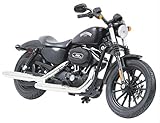
- 2014 Harley Davidson Sportster Iron 883 Motorcycle Model 1/12 by Maisto 32326
1. 1975 MV Agusta 750S America
Evidence: manufacturer claim and a separate period-test figure reported retrospectively. A Jalopnik retrospective gives the 750S America a claimed 130 mph. It also reports that Cycle World measured 114 mph while reviewing a version without the full fairing. Those are different variants or configurations and evidence types, not competing results from a like-for-like test. Jalopnik’s retrospective is the source for both figures.
2. 1978 Van Veen OCR 1000
Evidence: retrospective secondary figure. Jalopnik gives the rotary-powered Van Veen OCR 1000 a 132-mph figure for 1978. The cited account does not provide a period road-test protocol for that number, so it should be read as retrospective reporting, not a standardized measurement.
3. 1978 Yamaha XS1100
Evidence: contemporary road test. The XS1100 is the most clearly documented road-bike example here: Cycle World reported 135 mph, with the test-method caveat described above, and 11.78 seconds at 114.21 mph in the standing quarter-mile. The magazine’s “quickest production motorcycle” judgment refers to the production bikes it had tested by February 1978, not every motorcycle built in the decade.
4. Kawasaki Z1 900
Evidence: manufacturer claim and a constrained period test, both reported retrospectively. Jalopnik says Kawasaki claimed 135 mph and that Cycle World recorded 120 mph in a test limited by the runway. Kawasaki’s heritage account places the Z1’s arrival in 1972 and describes its performance reputation, but the retrieved page does not validate either top-speed figure. Kawasaki’s heritage history is useful for chronology, not as confirmation of the speeds.
The Tool Desk
Outbyte PC Repair FREEClear out junk files and repair common Windows errorsFree Scan →Outbyte Driver Updater FREEScan for outdated or missing drivers - takes under a minuteDriver Scan →Rank #2

- Collectible quality True-to-scale detailed vehicle
- Die-cast metal body with plastic parts
- Officially licensed Harley Davidson product by Maisto International
- Highly-detailed die-cast precision model for collectible or play
- Detailed die-cast precision model
5. 1975 Ducati 900 Super Sport
Evidence: retrospective secondary figure. Jalopnik gives the 1975 900 Super Sport a 135-mph top speed. The figure is not accompanied by a period test protocol in the cited material.
6. 1978 Suzuki GS1000
Evidence: retrospective secondary figure. Jalopnik reports 137 mph for the 1978 GS1000. Its racing successes are a separate part of the model’s history; race results do not establish the road bike’s top speed.
7. 1978 Honda CBX1000
Evidence: retrospective figure and Honda historical specifications. Jalopnik gives the 1978 CBX1000 a 140-mph figure. Honda’s historical feature says the model debuted at the end of 1978 with 105 CV and a maximum speed near 225 km/h (about 140 mph). Honda also says 1979 changes increased frame stiffness while reducing stated output to about 100 CV. The launch specification and the later model-year change should not be collapsed into one unqualified figure. Honda’s CBX1000 history supports the manufacturer’s account.
8. Bimota KB1
Evidence: retrospective secondary figure. Jalopnik reports about 140 mph and identifies the KB1 as using a Kawasaki Z1000 engine; it also says 827 were produced. These are retrospective claims, not a period road-test result in the cited material.
Rank #3

- Vintage motorcycle model, used for home office room desk decoration, or even collections.
- Fully handmade, excellent workmanship and vintage plating technology, shows a sense of age and history.
- The motorcycle can stand on its own; The wheels can rotate 360 degrees.
- Material: Iron; Model Name: Vintage Motorcycle; Color: Bronze
- Product Size (L x H): 21 x 11 cm / 8.3 x 4.3 in; Net Weight: 460 g / 1 lb
9. 1976 Laverda Jota
Evidence: retrospective record claim. Jalopnik describes the Jota as the first production motorcycle to break the 140-mph barrier. That is a secondary-source claim here, not an independently verified record supported by a cited primary test.
10. Dunstall Suzuki GS1000 CS
Evidence: retrospective figure for a tuned special. Jalopnik reports 154.2 mph for the GS1000 CS, a rare machine based on the GS1000 but modified with tuning, a fairing and taller gearing. It was sold through Suzuki dealerships, but it is not the speed of a stock GS1000. Its striking figure belongs to this specific special and should not be used as a stock-production-bike comparison.
11. Suzuki GT750
Evidence: retrospective estimate. SlashGear puts the GT750 at about 120 mph and notes its liquid-cooled, three-cylinder engine and substantial weight. The cited figure is a later estimate, not a period test result identified in the source. SlashGear’s retrospective supplies the speed and model context.
12. 1977–78 Kawasaki Z1000 / KZ1000
Evidence: retrospective range. SlashGear gives the Z1000/KZ1000 a speed of about 120–125 mph and notes that market naming varied. It identifies the 1978 A2 as following the 1977 A1. The range is the secondary source’s estimate, not a single test result for every market or variant.
Rank #4

- The Motorcycle Model are made of iron.
- Color: Silver.
- Motorbike Model is very good birthday or festival gift for motor lover, husband, dad, boyfriend.
- Great for collection and home office decor.
- An aesthetic photo prop to bright up photos.
13. 1970 Honda CB750
Evidence: retrospective figures. SlashGear gives the 1970 CB750 a 125-mph top speed and a 14-second quarter-mile time. The CB750 line began in 1969, but this particular example is a 1970 model within the decade.
14. 1975 Moto Guzzi Le Mans Mk I
Evidence: retrospective figure. SlashGear says the first-generation Le Mans was unveiled in 1975 and gives it a 130-mph top speed. The cited passage does not identify a period test protocol.
15. 1976 Laverda 1000 3C
Evidence: later-model retrospective figure; separate pre-production claim. SlashGear gives its 1976 example 140 mph and 78 hp. A Cycle World archive retrospective says the early 1000 Triple’s pre-production specification sheet claimed 75 hp at 6,700 rpm and 125 mph. The latter is an advance specification claim, not a measured speed, and it should not be substituted for the later model figure. Cycle World’s archive retrospective describes that early specification sheet.
16. 1974 Ducati 750 Super Sport
Evidence: retrospective figure. SlashGear reports 140 mph for a 1974 750 Super Sport. This is a separate model from the Ducati 900 Super Sport listed above; their reported speeds should not be merged.
What’s actually slowing this PC down?
Pick the symptom - the matching free tool is one click away.
Best Value
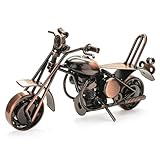
- Unique Motorcycle Gifts for Men & Women – Handmade metal motorcycle sculpture, perfect as a thoughtful gift for motorcycle enthusiasts, bikers, or riders. Ideal for birthdays, Christmas, Father’s Day, anniversary, or housewarming gifts for dad, husband, friend, or vintage model collector.
- Handcrafted Scrap Metal Motorcycle Model – Each motorcycle figurine is individually welded from metal chains, bolts, nuts, springs, and bearings. A detailed miniature metal sculpture combining vintage industrial charm and collectible value.
- Vintage & Industrial Home, Office, or Man Cave Decor – Add rugged style to desks, shelves, coffee bars, workspaces, or garages. This metal motorcycle model is a stylish accent for home offices, workshops, or biker rooms.
- Durable Metal Motorcycle Model – Secure welding and a protective finish make this metal motorcycle statue sturdy and designed for long-term display. Ideal as shelf decor, garage desk decoration, or decorative tabletop sculpture.
- Compact Bike Display Figurine – Measures 6.3 × 2.8 × 3.15 inches. Fits easily on desks, mantels, bookshelves, or coffee tables. A unique collectible for motorcycle hobbyists, riding enthusiasts, and vintage decor lovers.
17. 1978 Kawasaki Z1R-TC
Evidence: secondary-source testing claim with unspecified protocol. SlashGear says the Z1R-TC reached 145 mph in testing. The retrieved account does not identify who performed the test or how, so the number is less securely comparable than a named period road test.
18. 1977 Kawasaki Z650 B1
Evidence: official model history; no cited top-speed figure. Kawasaki’s UK heritage page says the Z650 launched in 1977 with 64 horsepower and praises its chassis and suspension. It does not state a top speed in the cited passage. It belongs here as a performance standout whose balance mattered, not as a verified speed-ranked entry.
19. 1972 Kawasaki H2 street model
Evidence: official model history; no cited road-bike top-speed figure. Kawasaki says the 750cc, three-cylinder two-stroke Mach IV reached the streets in 1972 and describes its fierce performance. The retrieved heritage passage gives no road-model top speed. The 191-mph figure sometimes associated with Kawasaki’s era belongs to a racer, not this street motorcycle.
20. 1979 Suzuki GS1000S
Evidence: model identification and broad retrospective description; no usable exact speed. An illustrated-history book’s search-result description identifies the 1979 GS1000S among its coverage and calls it one of the fastest of its day. The book’s hosted PDF was unavailable, so an exact speed cannot be responsibly assigned from that material. Suzuki’s archive can help identify domestic Japanese-specification models, but its model coverage is not a top-speed test. Suzuki’s digital archive explicitly focuses chiefly on Japanese specifications or domestic models.
Recommended Free Tools
Why the numbers do not make a clean leaderboard
- Different evidence: a claimed speed, a contemporary instrument observation, a later estimate and a reported test are not interchangeable.
- Different configurations: fairings, gearing, tuning and model-year updates can change results. The MV Agusta figures illustrate a fairing difference; the Dunstall GS1000 CS is a tuned special, not a stock GS1000.
- Different test conditions: venue, surface, wind, gradient, instrumentation and test protocol matter. The XS1100’s 135 mph was selected after the magazine could not use its usual certified-radar half-mile procedure.
- Different kinds of motorcycle: production road bikes, tuned specials and racers must remain distinct. A speed achieved on a race course cannot be transferred to a similarly named street model.
Do not confuse a racer’s speed with a street bike’s
Kawasaki’s heritage page reports that Mick Grant was speed-trapped at 191 mph on the KR750 at the Isle of Man TT. That is a race-course result for a racing machine, not evidence that the Kawasaki H2 or another production road bike reached 191 mph. Kawasaki’s heritage history identifies the KR750 context and the speed trap.
What the decade’s fastest-bike story actually shows
The evidence supports a story of rapid escalation, but not a precise twenty-place ranking. Period testing makes the XS1100 the clearest benchmark in this group; Honda’s late-1978 CBX shows the scale of the engine-and-power race; and models such as the Jota and the Dunstall GS1000 CS demonstrate why stock production machines and tuned specials need separate treatment. The exact headline number matters less than knowing who claimed or measured it, on which version, and under what conditions.
Quick Recap
Product prices and availability are accurate as of the date/time indicated and are subject to change. Any price and availability information displayed on Amazon at the time of purchase will apply.




